Varicose Veins in Human Calves: Anatomical Illustration and Visual Understanding
A vector illustration that focuses on varicose veins in the human calves serves as an important visual tool for understanding how venous disorders develop in the lower limbs. The calves play a significant role in supporting blood flow back to the upper body, and their deep and superficial vein networks work continuously against gravity. When these veins weaken, widen or lose structural integrity, the visible condition known as varicose veins begins to form. A high-quality vector illustration helps explain this change with clarity, showing how the veins expand, twist and bulge beneath the skin surface. This visual style is especially useful for educational content, health awareness materials, wellness infographics and clinical reference designs.
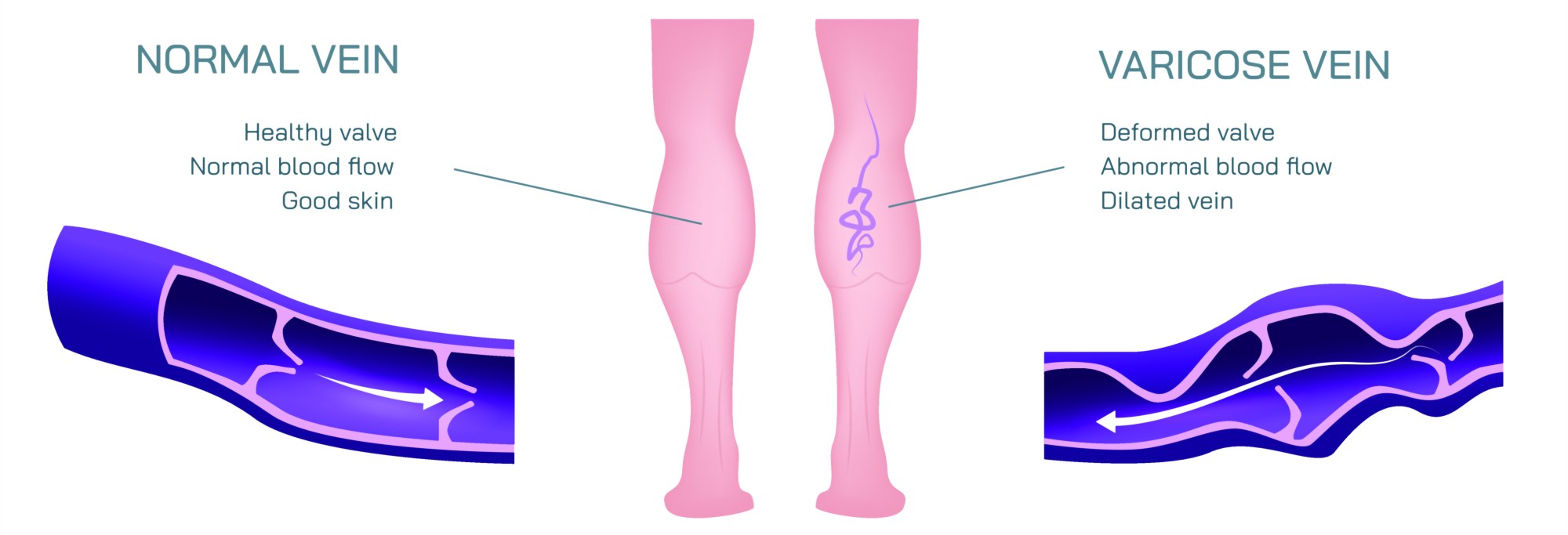
Varicose veins in the calves typically arise when the one-way valves inside the veins no longer function efficiently. These valves are responsible for preventing blood from flowing backward. When they weaken, blood begins to accumulate in certain regions of the vein, creating pressure and causing the vessel walls to stretch. Over time, this pressure results in a visible network of enlarged veins that appear as bluish or purplish lines. A detailed vector approach allows each layer of the calf to be represented clearly—skin, underlying tissue, superficial veins and deeper vascular channels—giving viewers an intuitive idea of how the condition develops.
The calf muscles are sometimes referred to as a natural pump because they help move blood upward when a person walks or flexes their legs. This pump effect is essential for maintaining healthy circulation. A vector illustration can highlight this functional relationship by contrasting the normal flow pattern with the disrupted pattern found in varicose veins. The enlarged, winding paths of the veins stand out visually, helping users understand why discomfort, heaviness or swelling often accompanies the condition. The precision of vector artwork ensures these details remain sharp, whether displayed in small medical brochures or enlarged for educational posters and digital presentations.
Depicting varicose veins in a vector style also brings attention to the surrounding structures of the calves. The artist can show smooth gradients to represent the skin, subtle shading to define muscular contour and clean linework to indicate the vein pathways. This balance of realism and clarity ensures that the illustration does not overwhelm the viewer but still conveys the complexity of the underlying anatomy. It becomes easier to grasp why lifestyle factors such as prolonged standing, reduced movement or increased body pressure can influence the veins in this region more than in other parts of the body.
Another advantage of a vector design is its ability to isolate problem zones. For example, the illustration can highlight areas where veins appear most prominent, where the walls stretch more noticeably or where clusters of swollen veins form. These visual cues help explain the symptoms many individuals experience, such as calf fatigue, throbbing sensations, tingling or visible discoloration. By seeing the condition mapped out on a simplified yet accurate anatomical backdrop, viewers gain a better understanding of how varicose veins evolve and why professional evaluation is often recommended.
The calves also represent an area where aesthetic and physical discomfort intersect. People often first notice varicose veins here due to the visibility of the veins against the skin. A thoughtful vector illustration can communicate this aspect by presenting the condition clearly but respectfully, maintaining scientific accuracy while preserving visual appeal. This is especially valuable in materials designed for wellness clinics, physiotherapy centers, fitness platforms and healthcare publications, where clear and approachable medical illustration enhances communication.
Overall, a vector set dedicated to varicose veins in human calves provides a highly useful and visually engaging representation of a common circulatory condition. By combining anatomical clarity, refined shading, precise outlines and expressive color cues, such artwork supports deeper understanding of vein health, calf anatomy and the broader importance of maintaining strong venous circulation.