Normal Prostate vs Enlarged Prostate: Medical Comparison of Structure, Symptoms, and Urinary Effects
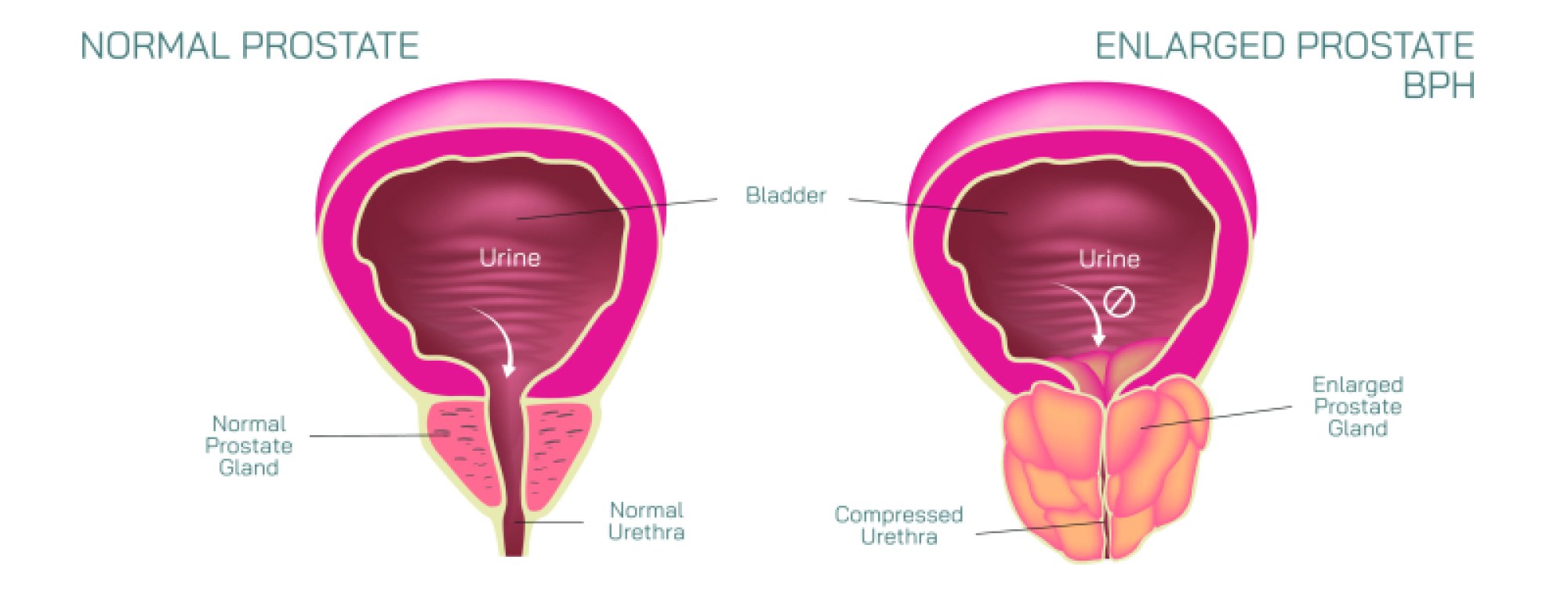
The prostate is a small yet highly significant gland of the male reproductive system, positioned just below the bladder and encircling the urethra, the tube responsible for carrying urine out of the body. In its normal state, the prostate remains roughly the size of a walnut and maintains a smooth, symmetrically firm structure that assists in producing seminal fluid, which nourishes and transports sperm during ejaculation. Through adulthood, the prostate grows gradually, guided by hormonal balance, especially the influence of testosterone and its derivative dihydrotestosterone. In early life and young adulthood, this growth is typically stable and non-problematic, allowing the urethra to remain fully open so urine can pass freely from the bladder without obstruction. The flow of urine under normal conditions remains steady, strong, and complete, and the bladder empties efficiently without strain or discomfort. During this stage, most men are unaware of the prostate’s activity, as it operates quietly within the reproductive system without causing urinary symptoms or pain. Its structure and size maintain a harmonious anatomical relationship with the bladder and urinary tract, providing reproductive functionality without interfering with urination.
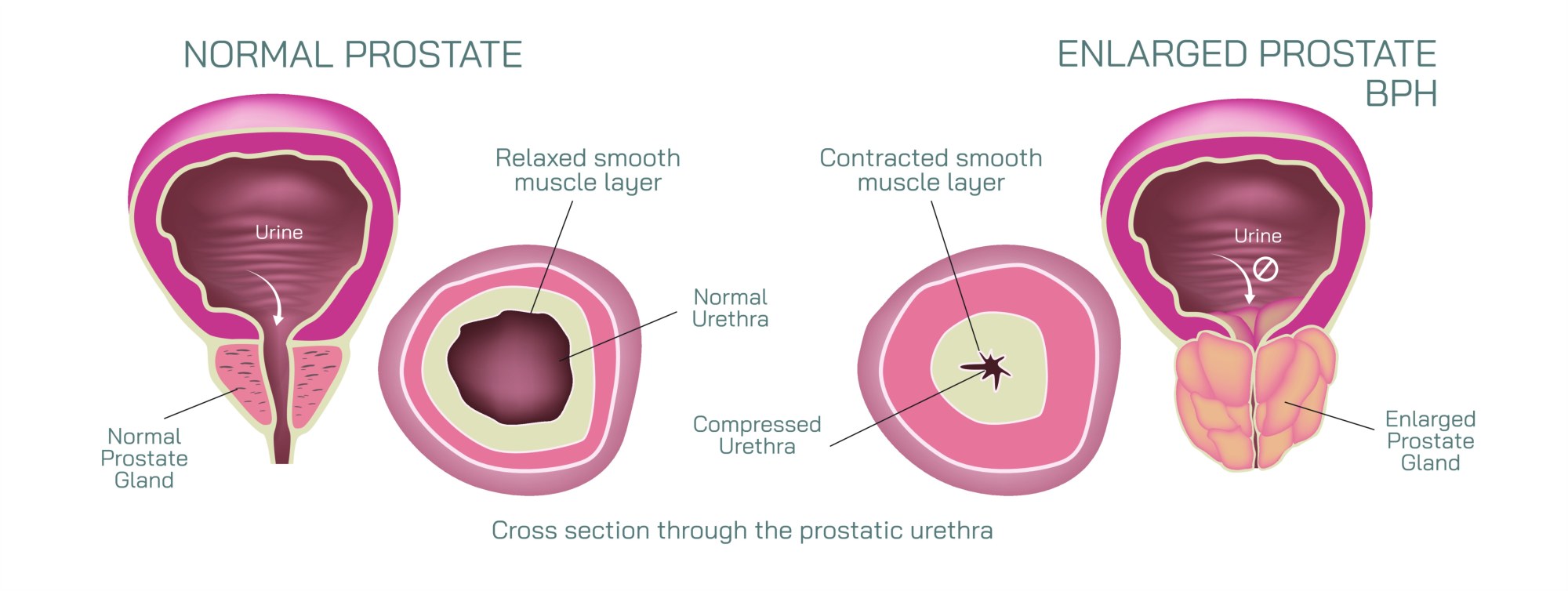
As men age, especially beyond the age of 40 or 50, the prostate commonly begins to enlarge in a gradual process known as benign prostatic hyperplasia. Unlike malignancy or aggressive pathology, benign enlargement is not cancerous but represents a non-destructive buildup of prostate tissue driven largely by hormonal changes associated with aging. This increase in size, however, poses mechanical challenges because of the gland’s unique location around the urethra. As tissue accumulates, the prostate exerts pressure on the urethral channel, causing it to narrow and making the passage of urine more difficult. The bladder, in turn, must work harder to expel urine against this narrowing. At first, the bladder may compensate, and symptoms may be subtle. But as enlargement progresses, the impact becomes more pronounced, often transforming the once effortless act of urination into a task requiring focus, repeated attempts, and increasing discomfort. While the normal prostate remains structurally unobtrusive, the enlarged prostate becomes a dominant physical presence that impairs urinary flow and alters daily activities and sleep patterns, illustrating a clear structural difference that reflects a deeper functional disruption.
The symptoms associated with an enlarged prostate are primarily urinary, arising from the mechanical obstruction of the urethra and the resulting pressure changes within the bladder. Men experiencing benign prostatic hyperplasia often report a weakening of urinary stream, hesitation before urine begins to flow, and a sensation that the bladder has not emptied completely even after urination. Because the bladder struggles to compensate for reduced urethral diameter, it becomes increasingly sensitive and may contract more frequently, leading to recurrent urges to urinate. These urges may occur suddenly and with difficulty to control, sometimes causing urinary leakage or urgency. Nighttime urination becomes a defining symptom as affected individuals may wake multiple times to empty their bladder, disrupting rest and increasing fatigue. Over time, the strain on the bladder may lead to muscle thickening and reduced flexibility, which further worsens urinary symptoms. The normal prostate does not cause any of these struggles; urination remains continuous, comfortable, and predictable, and the bladder empties without needing repeated attempts or nighttime disruptions. The contrast between the two states—one silent and supportive, the other intrusive and burdensome—reveals the profound effect prostate enlargement has on urinary health.
Beyond the immediate urinary challenges, the effects of an enlarged prostate also extend into emotional, social, and physical well-being. Many men initially dismiss or ignore symptoms because they develop gradually, or because urinary difficulties can feel embarrassing to discuss. As symptoms worsen, they may interfere with work, travel, rest, and personal confidence. The repeated need to locate restrooms during daily routines, interrupted sleep cycles, and anxiety over possible urine leakage can create persistent stress. In severe cases, urinary retention can develop, in which the bladder cannot empty at all, requiring urgent medical intervention. Residual urine that remains in the bladder after incomplete emptying can increase the risk of urinary tract infections and bladder stones. None of these complications occur with a normal prostate, where proper urine flow maintains bladder hygiene and prevents stagnation. The difference illustrates how prostate enlargement, although benign in nature, can erode quality of life if left unaddressed and how significantly structure influences function within the male urinary system.
Despite the discomfort associated with benign prostatic hyperplasia, it is important to recognize that enlargement itself does not indicate prostate cancer, nor does it always progress to life-threatening disease. Many men manage the condition through lifestyle modifications, proper hydration habits, avoidance of bladder irritants, and medical evaluation when symptoms arise. Modern screening tools, physical examination, and prostate-specific antigen testing help identify and differentiate benign enlargement from malignancy. Treatments, when necessary, range from medications that relax prostate and bladder muscles to reduce obstruction, to therapies that gradually reduce prostate volume, and to surgical or minimally invasive procedures designed to widen the urinary channel or remove obstructive tissue. A normal prostate remains uninvolved in such interventions because it maintains supportive function without causing obstruction. Early examination and open dialogue with healthcare providers form an essential part of managing benign enlargement, emphasizing that prostate changes are not an inevitable burden but rather a condition that responds effectively to awareness and treatment.
Examining the normal prostate alongside its enlarged counterpart provides a lens through which to understand how aging interacts with anatomy and physiology. The structure of the prostate, while small and easily overlooked in youth, becomes a central determinant of urinary comfort later in life as hormonal patterns shift and tissue growth accelerates. The urinary symptoms that arise from enlargement are not random but stem from a predictable chain of mechanical, muscular, and neurological consequences rooted in the gland’s position around the urethra. Through this comparison, the importance of monitoring prostate health becomes evident, not only to prevent complications but to preserve quality of life and independence. Awareness encourages early evaluation before symptoms cause persistent discomfort, while familiarity with normal and abnormal functioning reduces fear and empowers individuals to make informed choices about their health. The difference between a normal prostate and an enlarged prostate thus extends far beyond size alone; it reflects a transition that affects structure, urinary performance, rest, confidence, and overall well-being. Understanding this contrast offers clarity, reassurance, and a pathway toward proactive care as men navigate the natural course of aging.