Standard Hydrogen Electrode (SHE) — Principle, Construction, and Applications
The Standard Hydrogen Electrode (SHE) is a fundamental reference electrode used in electrochemistry to measure and compare the tendencies of chemical species to gain or lose electrons. It is widely recognized as the zero point for standard electrode potentials, making it a universal benchmark for studying redox reactions.
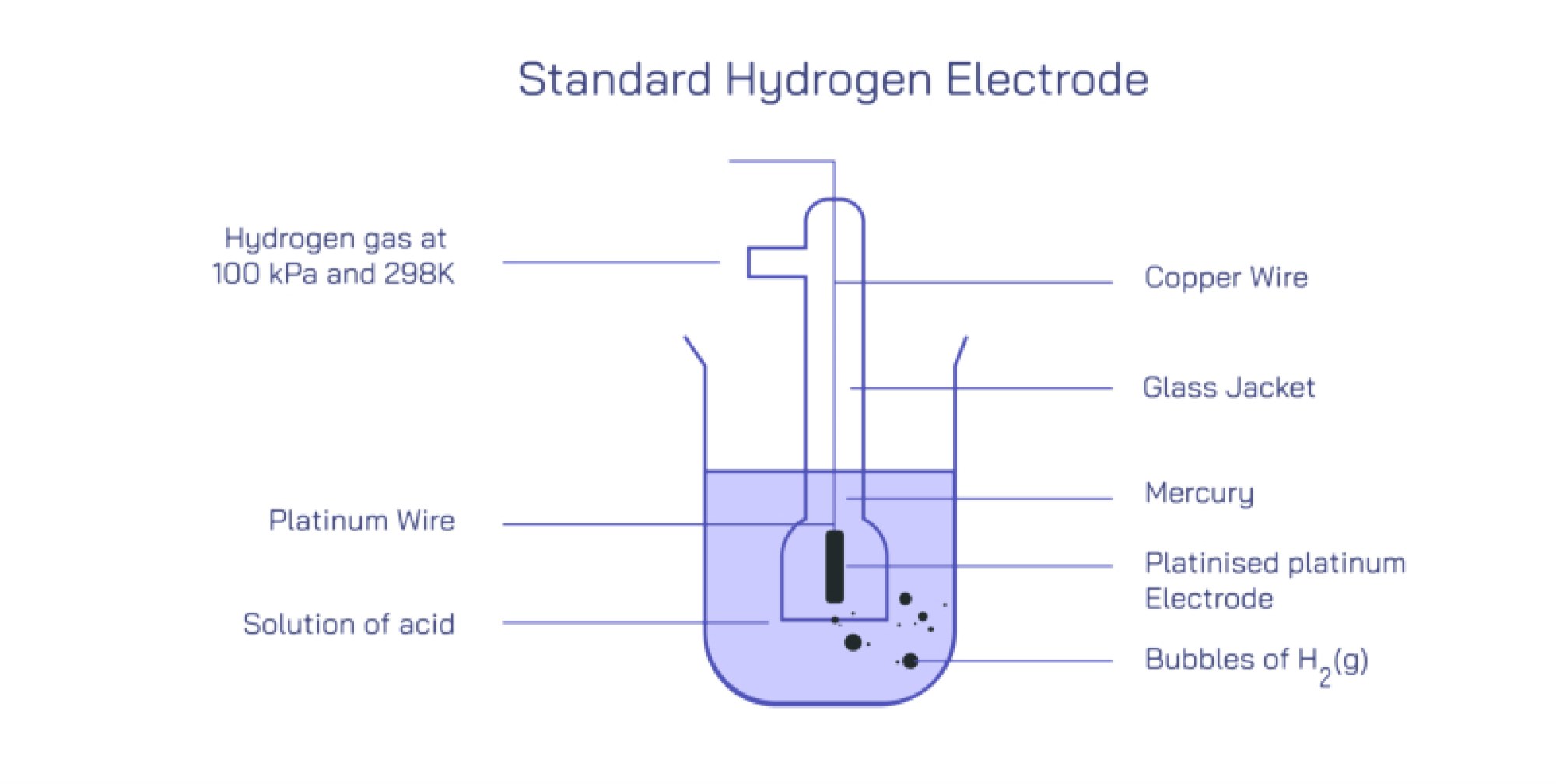
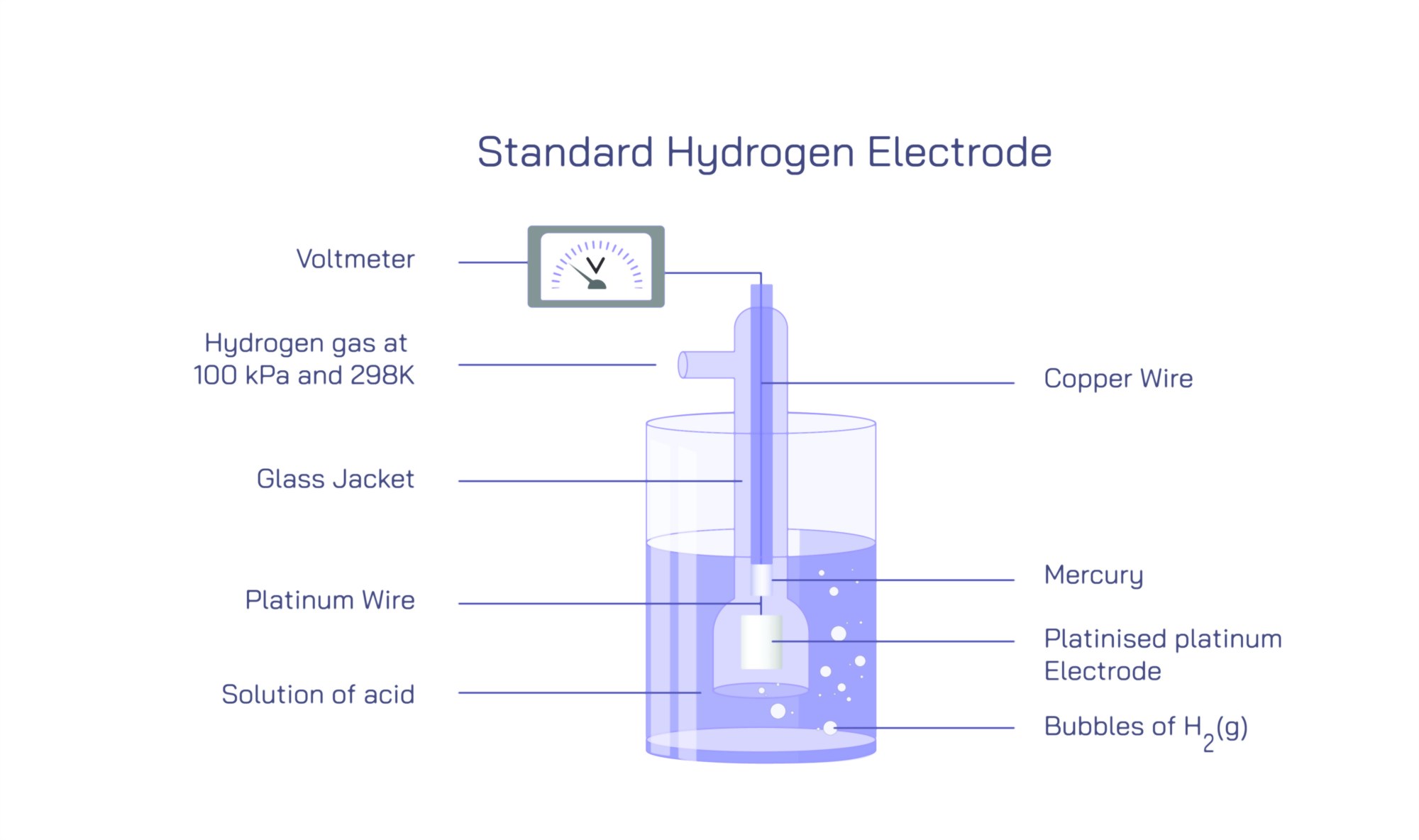
The SHE is constructed using a platinum electrode coated with platinum black, which increases its surface area and facilitates electron transfer. This electrode is immersed in an acidic solution containing hydrogen ions, while pure hydrogen gas is continuously bubbled over the surface. The setup is maintained under controlled conditions of pressure and temperature to ensure accurate and reproducible results. The electrode can either donate or accept electrons depending on the connected half-cell, which allows chemists to determine the relative electrochemical potential of various reactions.
In practice, the SHE is essential for calibrating other electrodes, conducting electrochemical experiments, and teaching fundamental concepts in chemistry. Its role extends to research, battery development, corrosion studies, and sensor technology. Accurate use of the SHE provides insights into reaction tendencies, energy changes, and chemical stability.
Educational illustrations of the standard hydrogen electrode typically depict the platinum electrode, the bubbling system for hydrogen gas, the acidic solution container, and connections to an external circuit. These visual tools are invaluable for students, educators, and researchers, helping them understand both the construction and functional significance of this critical electrochemical reference.