Nickel Nitrate — Molecular Structure and Industrial Applications
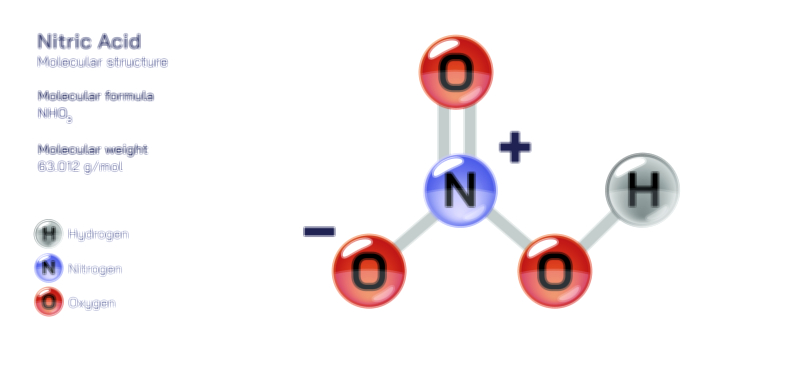
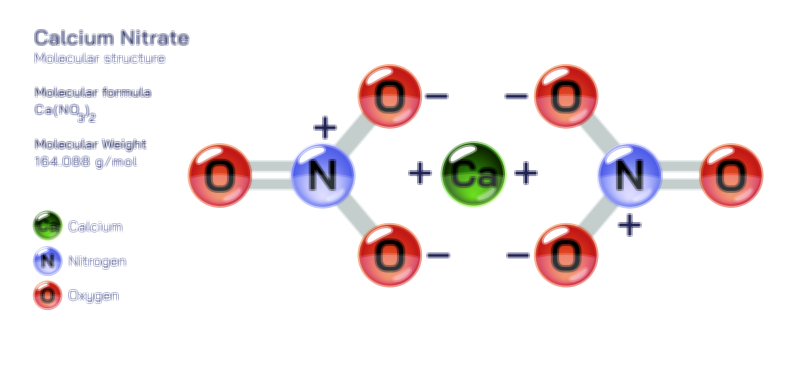
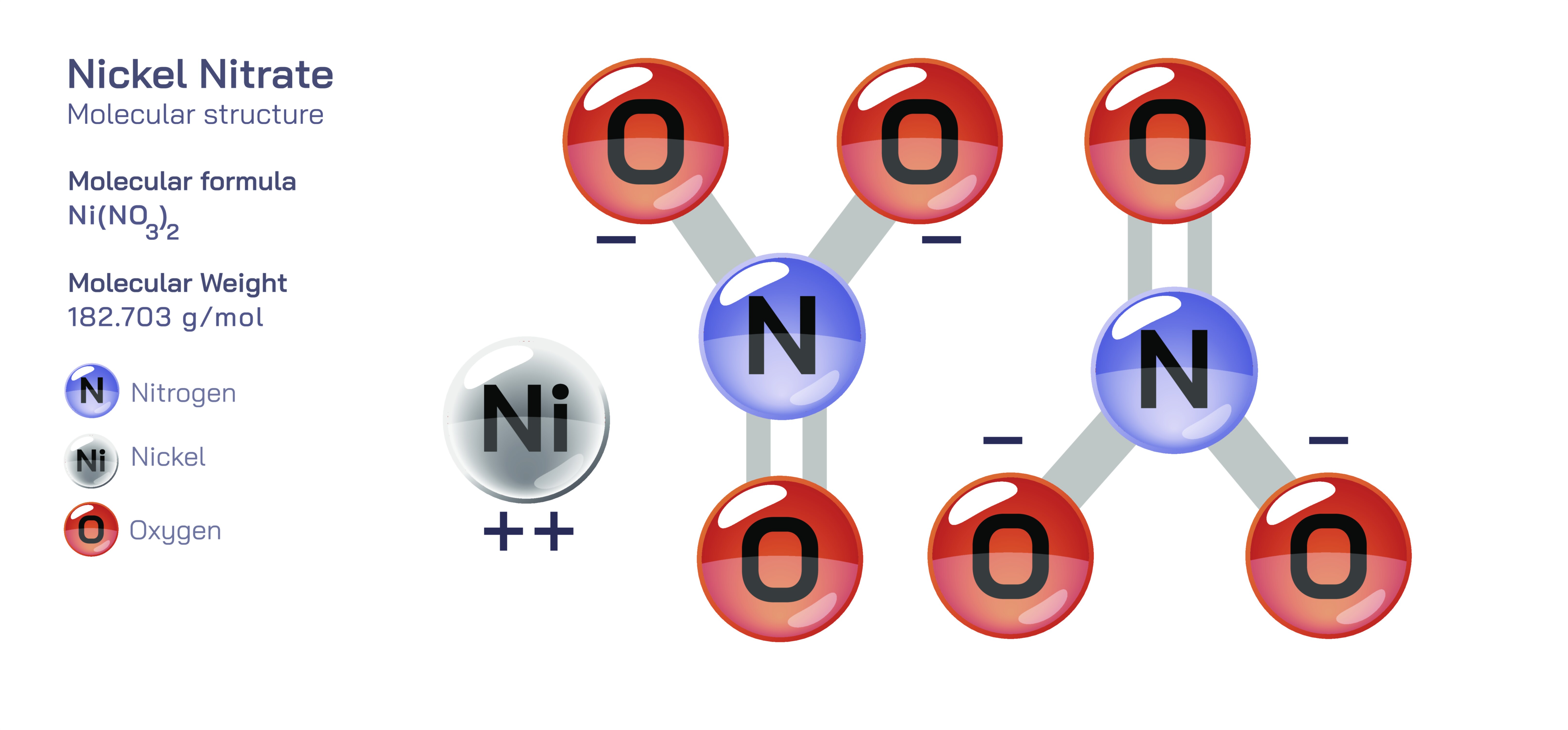
Nickel nitrate is an inorganic compound whose molecular structure and physicochemical behavior have made it a significant material in electroplating, catalyst production, advanced ceramics, battery chemistry, laboratory synthesis, pigments, metal finishing, and environmental research. Most commonly encountered as nickel(II) nitrate hexahydrate, its formula is written as Ni(NO₃)₂·6H₂O, and this hydrated crystalline form presents a vivid green coloration associated with the presence of nickel ions coordinated in an octahedral geometry. At the molecular level, the compound consists of a divalent nickel cation (Ni²⁺) paired with two nitrate anions (NO₃⁻). Each nitrate ion is a trigonal planar group in which a central nitrogen atom is surrounded by three oxygen atoms in a resonance-stabilized arrangement that distributes charge evenly across the oxygens. In aqueous solution, the nitrate ions dissociate from the nickel cation, allowing the Ni²⁺ ion to become solvated by water molecules while the nitrates remain as free anions, which makes nickel nitrate a highly soluble compound with excellent ionic mobility. When the compound exists as a hexahydrate, six coordinated water molecules occupy positions in the nickel ion’s coordination sphere, maintaining structural stability while giving the crystalline solid its physical properties. When represented in a vector illustration, nickel occupies the center of the diagram in an octahedral coordination environment surrounded by oxygen donors from water molecules, while the nitrate groups appear as threefold symmetric triangular shapes, illustrating how each oxygen participates in an extended network of electrostatic interactions. This visual layout demonstrates that the nickel center, though stabilized by hydration, remains chemically accessible, which is precisely why nickel nitrate dissolves so readily and delivers nickel ions efficiently into industrial chemical processes.
The most prominent industrial use of nickel nitrate is in the formation of catalysts, especially nickel-based catalytic surfaces and nanoparticles that support both organic and inorganic chemical reactions. Because nickel nitrate breaks down predictably when heated, it becomes an ideal precursor for producing nickel oxide (NiO) and mixed-metal oxides that serve as catalytic materials in hydrogenation, hydrogen evolution reactions, methanation, electrocatalytic reduction of carbon dioxide, biomass conversion, steam reforming, and numerous other chemical transformations. During thermal decomposition, the nitrate groups release nitrogen oxides while the nickel ion becomes nickel oxide, allowing researchers and manufacturers to deposit NiO uniformly on ceramic supports, carbon substrates, or nanostructured surfaces. This uniformity is important because catalytic efficiency depends heavily on the dispersion of active metal sites rather than the bulk composition. In energy science, nickel catalysts derived from nickel nitrate support advanced fuel cell electrodes, battery materials, and photocatalytic systems focused on green energy conversion. In this context, the molecular accessibility of the nickel cation, supported by the solubility of the compound, makes nickel nitrate the preferred starting point for synthesizing nanoscale materials with high surface areas and tailored electrochemical behavior.
In electroplating and metal surface finishing, nickel nitrate plays a complementary role to nickel salts such as nickel acetate, nickel sulfate, and nickel chloride. Nickel nitrate solutions help condition metal surfaces, modify plating baths, and adjust solution properties such as conductivity, nitrate ion concentration, and pH buffering. In chemical conversion coatings, nickel nitrate allows controlled deposition of nickel-containing complexes that enhance corrosion resistance on metal substrates. In aluminum finishing systems, nickel nitrate is sometimes used in sealing processes to convert porous anodized oxide surfaces into water-resistant, abrasion-resistant structures. When dissolved into sealing baths, nickel ions penetrate the surface pores and react with the hydrated alumina structure to increase hardness and chemical durability. The nitrate component assists in maintaining solution clarity and ionic dispersion, enabling homogeneous sealing performance even over large metal surfaces. The widespread industrial significance of nickel nitrate in surface technology demonstrates how solubility, dissociation, and coordination chemistry enable a compound to become a structural component of protective coatings that safeguard metal infrastructure across automotive, aerospace, architectural, and mechanical sectors.
Nickel nitrate also plays a crucial role in the production of functional ceramics, pigments, and glass materials, thanks to the way the nitrate ligands break down during heating. Ceramic and glass systems often require transition metals to achieve precise coloration, magnetic properties, thermal resistance, or electrical behavior. Because nickel nitrate can distribute uniformly within precursor mixtures and then decompose cleanly into nickel oxide during calcination, it enables predictable doping and dispersion of nickel throughout ceramic matrices. Nickel oxide derived from nickel nitrate contributes green, brown, grey, and black hues in glass and ceramic glazes depending on composition, atmosphere, and co-colorants present during firing. In technical ceramics such as ferrites and dielectric materials, nickel nitrate becomes a route for integrating nickel into the oxide lattice, affecting magnetic permeability, dielectric constant, thermal conductivity, and structural durability. Again, the utility of the compound stems from its coordination chemistry: the nitrate anions stabilize nickel long enough for uniform mixing and then break down without leaving undesirable residue, creating consistent structural modifications across the ceramic network.
Another major application lies in battery and electronic materials, where nickel nitrate serves as a precursor to nickel oxide and mixed-metal oxides used in electrodes for lithium-ion batteries, supercapacitors, solid-oxide fuel cells, and high-performance capacitive energy storage systems. Controlled precipitation from nickel nitrate solutions allows researchers to synthesize layered nickel compounds, spinel structures, and core-shell nanoparticles with high electrochemical activity. In supercapacitors and electrochemical sensors, nanostructured nickel oxides derived from nickel nitrate exhibit strong redox behavior and high electrical conductivity, properties essential for fast charge–discharge performance. The nitrate group is critical here because its removal during thermal or chemical processing helps create porous structures with high surface areas, enhancing electron transfer and catalytic activity.
In textile treatments and pigments, nickel nitrate acts as a mordant, forming coordination complexes between dye molecules and fiber surfaces to improve wash fastness, color vibrancy, and resistance to fading. The soluble nature of nickel nitrate allows it to be applied in water-based dye solutions, where nickel ions form metal–dye complexes that anchor pigments to natural and synthetic fibers more securely than organic dyes alone. Similar chemistry applies in industrial printing inks and coatings, where nickel ions help bind pigments to substrates such as glass, metal, and specialized polymers. These interactions reflect the affinity of nickel ions for functional groups in dyes and binders, revealing how the compound’s molecular structure determines its behavior in surface modification applications.
Nickel nitrate is also a significant compound in environmental science and wastewater treatment research, not as a pollutant control chemical but as a controlled source of nickel used to study metal adsorption, ion exchange processes, catalytic degradation reactions, and sorption behavior in filtration media. Because nickel nitrate dissolves completely and uniformly, researchers can use it to measure how porous materials, biopolymers, activated carbon, and metal-oxide composites capture or neutralize heavy metal ions. In catalytic wastewater treatment systems, nickel oxide produced from nickel nitrate acts as a degrader of dyes, pharmaceutical residues, and industrial solvents through redox reactions driven by light, electricity, or chemical oxidants. These roles demonstrate that nickel nitrate contributes not only to manufacturing but also to sustainability-driven technologies that aim to restore environmental quality.
Despite its broad usefulness, nickel nitrate requires careful handling and responsible industrial management because nickel compounds can cause skin sensitization and allergic reactions in susceptible individuals, and nitrate ions contribute to ecological sensitivity under uncontrolled release. Safety measures include protective clothing, controlled ventilation, and wastewater treatment systems optimized to capture and recycle nickel rather than allow it to accumulate in aquatic environments. Electroplating facilities and manufacturing plants frequently employ recovery strategies that extract nickel from spent baths and processing wastewater, reducing both economic losses and environmental burden. The need for safety does not diminish the value of nickel nitrate; it instead highlights the importance of aligning industrial chemistry with occupational and environmental responsibility.
Across all of its sectors of use — from electroplating to catalysts, from glass coloration to advanced battery materials — nickel nitrate exemplifies the principle that molecular structure determines industrial function. The dissociation of Ni²⁺ and NO₃⁻ in solution, the octahedral hydration of the nickel center, and the thermal decomposition behavior of nitrate ligands collectively shape how the compound behaves during manufacturing, deposition, heat treatment, catalysis, and chemical transformation. These microscopic features scale upward into real-world performance, allowing nickel nitrate to strengthen protective coatings, accelerate reactions, modify ceramic materials, enhance catalytic surfaces, and contribute to the evolution of clean energy systems. When depicted in a vector illustration, the structure may appear as a small arrangement of atoms and bonds, but contained within that structure is the logic that supports some of the most advanced technologies in modern industry. Nickel nitrate is therefore not only an important chemical reagent but also a compelling example of how the architecture of matter at the molecular level determines outcomes in science, technology, and manufacturing.