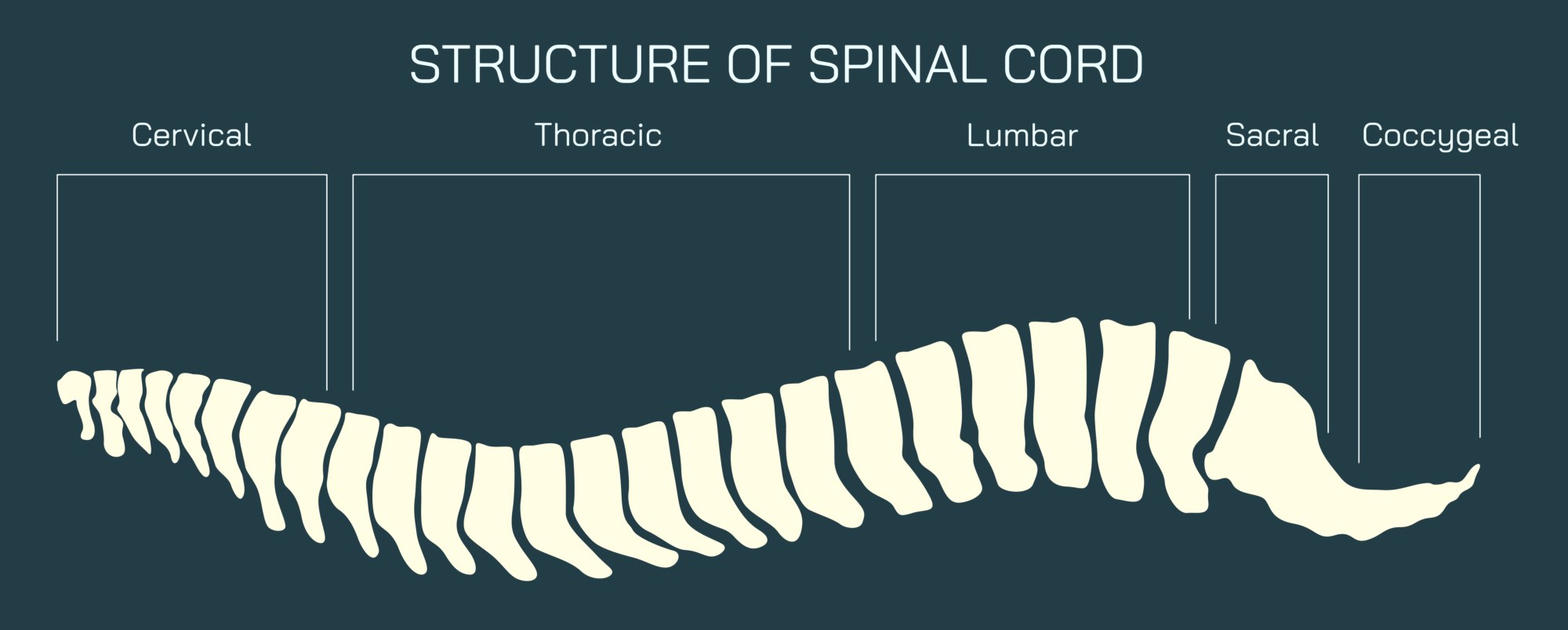
Structure of Spinal Cord — Human Body Anatomy and Functions
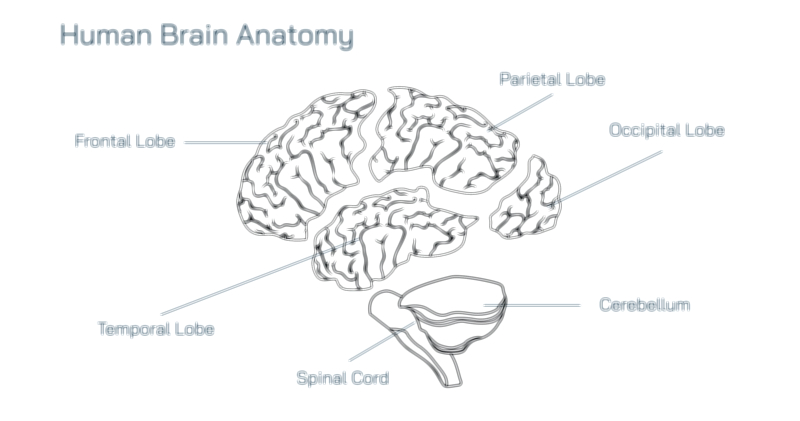
The spinal cord is a cylindrical structure of the central nervous system that extends from the brainstem down through the vertebral column, protected by vertebrae, meninges, and cerebrospinal fluid. It serves as a major conduit for transmitting sensory information from the body to the brain and motor commands from the brain to various muscles and organs. The spinal cord is divided into regions and segments, with distinct structural and functional components that ensure efficient communication between the brain and body.
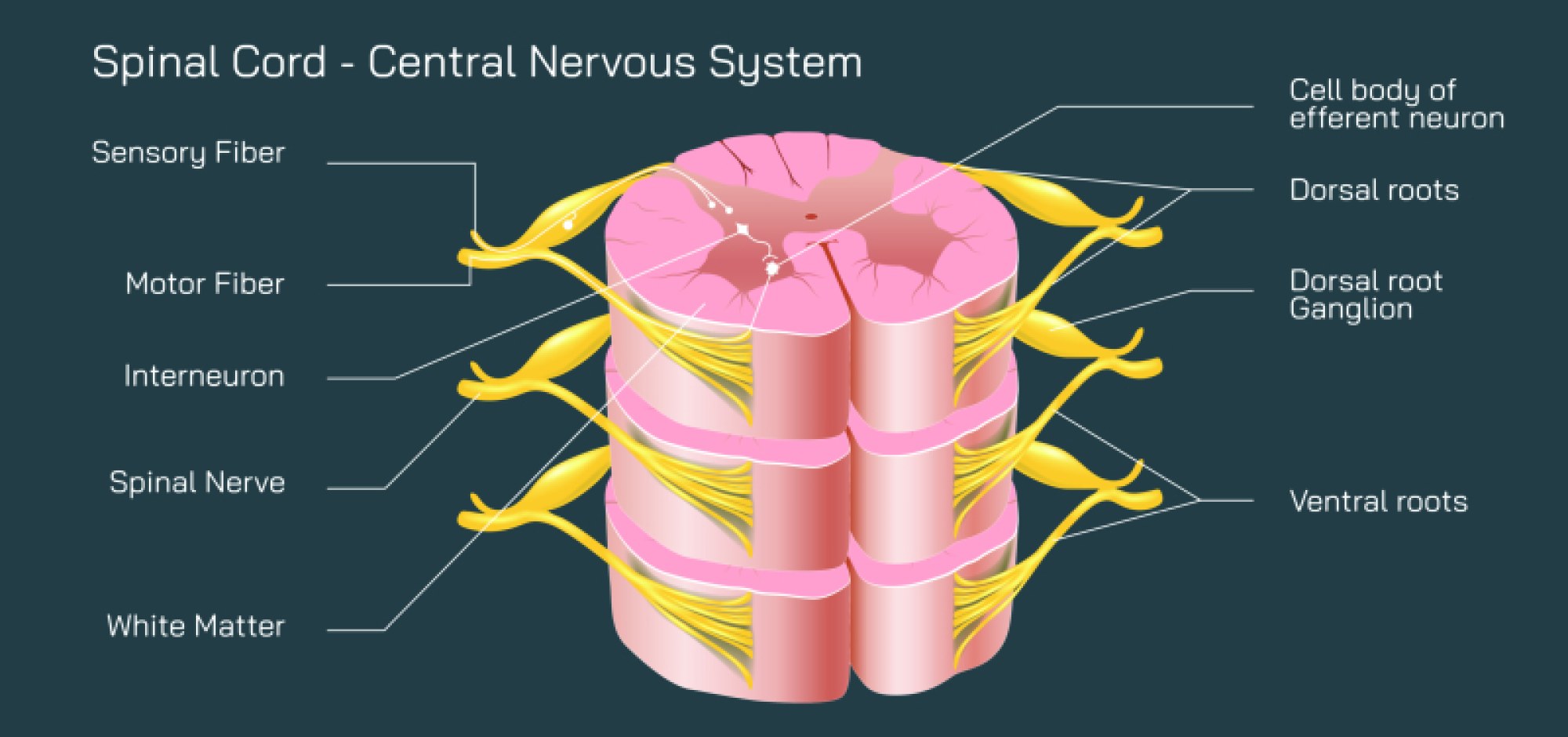
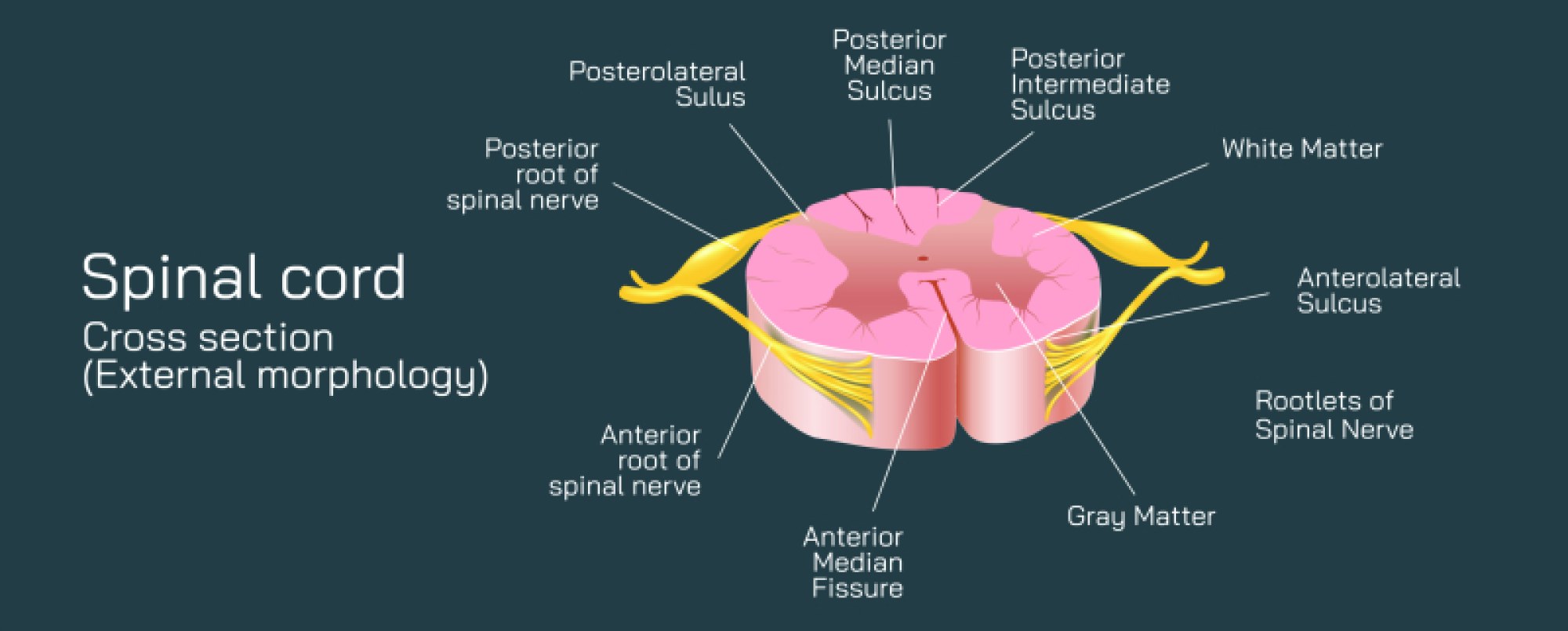
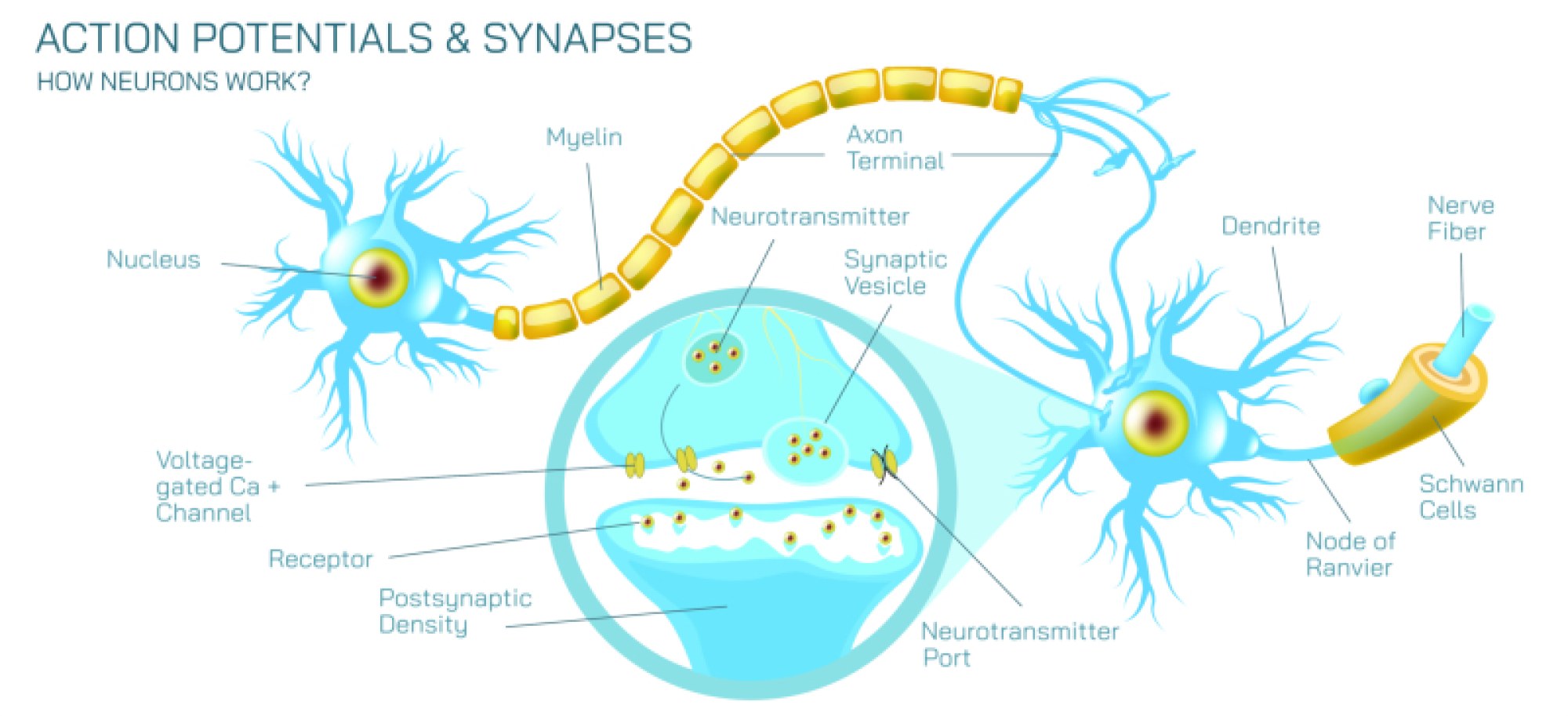
Structurally, the spinal cord consists of gray matter in the center, forming an H-shaped or butterfly-like configuration, surrounded by white matter. The gray matter contains neuronal cell bodies, interneurons, and synapses, responsible for processing information and coordinating reflexes. The white matter is composed of myelinated axons that transmit nerve impulses vertically along the spinal cord. Each side of the spinal cord has a dorsal (posterior) root, carrying sensory signals into the cord, and a ventral (anterior) root, transmitting motor signals from the cord to muscles. The dorsal root often contains a dorsal root ganglion, where sensory neuron cell bodies are located.
The spinal cord is divided into segments corresponding to different levels of the body: cervical, thoracic, lumbar, sacral, and coccygeal regions. Each segment gives rise to paired spinal nerves that branch out to innervate specific regions of the body. These nerves form complex networks that facilitate voluntary movement, sensory perception, and reflex actions. Reflex arcs, which bypass the brain for rapid responses, are mediated entirely within the spinal cord, highlighting its role in protective and automatic body functions.
The spinal cord’s protection is reinforced by vertebrae, cerebrospinal fluid, and protective meninges. The cervical enlargement and lumbar enlargement are specialized regions that accommodate the increased number of neurons required to control the upper and lower limbs. Damage to the spinal cord can disrupt nerve signal transmission, leading to sensory or motor deficits depending on the level and severity of the injury.
In conclusion, the human spinal cord is a central structure in the nervous system, composed of gray and white matter, dorsal and ventral roots, and segmented spinal nerves. It functions as a critical communication pathway, enabling sensory input, motor output, and reflex coordination. Understanding its structure provides essential insights into human anatomy, neurophysiology, and medical applications related to spinal health, nerve injuries, and neurological disorders.