Brain Anatomy — Limbic System Showing Emotional Control, Memory Function, and Neural Structure in the Human Brain
The limbic system represents one of the most fascinating and deeply influential networks within the human brain, functioning as the epicenter of emotion, memory, motivation, survival instinct, and social bonding. Rather than existing as one isolated structure, the limbic system is a constellation of interconnected brain regions working together to regulate inner experience and behavioral response. It is sometimes referred to as the “emotional brain,” but this term only hints at its true scope. Every lived feeling—joy, fear, nostalgia, anger, desire, safety, grief, compassion—arises from limbic activity. Every long-term memory that shapes personality, every attachment that anchors relationships, and every instinctual signal that warns us of danger originates from this intricate biological circuit. Anatomically nested deep within the brain between the cerebral cortex and the brainstem, the limbic system acts as a bridge between instinct and intellect, allowing emotional experience to influence conscious decision-making while also enabling rational thought to guide emotional response.
The foundational structures of the limbic system form a functional map of how emotions and memories develop and influence behavior. The amygdala, an almond-shaped cluster of nuclei on each side of the brain, is the most widely recognized limbic structure because of its role in evaluating emotional meaning and generating rapid protective responses. It detects threats, processes fear, interprets facial expressions, and determines whether situations are safe or dangerous. When the amygdala senses danger—whether physical or social—it activates the autonomic nervous system to prepare the body for action, increasing alertness and emotional intensity. Even subtle signals, such as a disapproving expression or sudden noise, are filtered through this structure, which explains why emotional responses can surface before conscious thought catches up. However, the amygdala does far more than trigger fear; it registers excitement and reward, contributing to enthusiasm and anticipation. In this way, it forms the emotional compass that guides the brain toward or away from experiences.
Working alongside the amygdala, the hippocampus plays a central role in memory formation and spatial learning. This seahorse-shaped structure encodes new experiences and converts them into long-term memories, enabling the brain to learn from the past and form continuity across time. When a person recalls a childhood detail, navigates through a familiar space, or integrates new information into existing knowledge, hippocampal activity is at work. Memory is not merely archival; it is relational, contextual, and emotional. The hippocampus and amygdala are closely connected, which is why emotional events are remembered more vividly than neutral ones. Joy, fear, embarrassment, and pride leave deep neural impressions because emotion intensifies memory encoding. When aging or neurological disorders weaken the hippocampus, memories fade, time becomes disorganized, and the ability to learn or recall begins to falter—revealing how vital this structure is to the sense of self.
Surrounding and connecting these two core structures are additional components that enrich the limbic network’s complexity. The hypothalamus regulates the physical expression of emotional states by controlling hormones, appetite, sleep, stress response, body temperature, and sexual behavior. It translates emotional experience into physical regulation—when stress accelerates heart rate, when comfort evokes relaxation, or when love stimulates bonding hormones, the hypothalamus is the mediator. The cingulate gyrus processes emotional awareness and empathy, synchronizing attention with internal states, allowing a person to feel emotionally connected and socially attuned. The nucleus accumbens, often referred to as the brain’s reward center, generates motivation, pleasure, reinforcement, and goal pursuit. Through dopamine signaling, it transforms expectation into drive and achievement into satisfaction. Together, these regions illustrate that the limbic system is not only about emotion or memory but also about what makes life meaningful—desire, learning, connection, and resilience.
One of the most profound aspects of the limbic system is its influence on behavior and identity. When the emotional and memory circuits operate in harmony, individuals can regulate impulses, learn from experience, interpret social cues, communicate compassionately, and bounce back from stress. When limbic activity becomes imbalanced—through chronic stress, trauma, neurochemical disruption, or disease—emotional responses can override rational control, leading to anxiety, aggression, depression, memory disturbances, or dissociation. The prefrontal cortex, responsible for executive thinking, maintains a continuous partnership with the limbic system, working to regulate emotions and align decisions with long-term goals. When the prefrontal cortex exerts strong modulation, the limbic system becomes a source of emotional intelligence rather than emotional volatility. When limbic signals become dominant, decisions may become impulsive or reactive. This interplay highlights the biological basis of self-control, emotional maturity, and psychological resilience.
The limbic system is also deeply involved in social bonding, attachment, motivation, and meaning. Hormones such as oxytocin, vasopressin, dopamine, and serotonin circulate through limbic pathways to support trust, empathy, romantic attachment, family connection, and the desire to belong. Human survival historically depended on group affiliation, and the limbic system evolved to reinforce bonds that protect and nurture. The feeling of comfort in the presence of loved ones, the emotional pain of isolation, and the joy of shared experience all originate here. Meaning and memory intertwine—places become sentimental, music becomes nostalgic, and relationships become emotionally anchored through limbic reinforcement.
A deeper understanding of the limbic system also reveals how emotional healing is possible. Neural plasticity allows limbic pathways to reorganize through new experiences, therapy, mindfulness, healthy relationships, and supportive environments. Over time, new memories and emotional patterns can gradually weaken traumatic associations and strengthen adaptive ones. The ability to regulate stress more effectively, build trust again after betrayal, develop emotional tolerance, or reshape behavioral habits originates from biological restructuring within limbic circuits. In this sense, personal growth is not abstract—it is physically encoded within neural tissue.
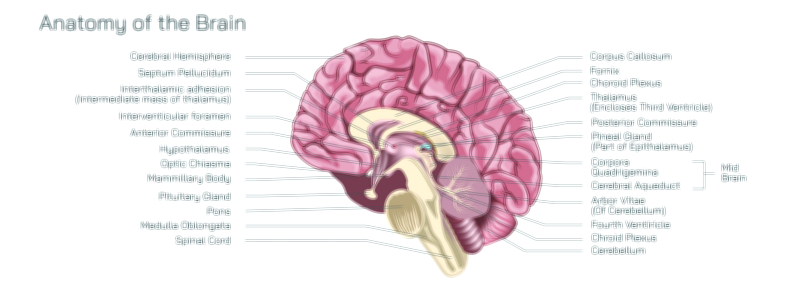
When anatomical diagrams depict the limbic system, they show more than structural arrangement. They show the neural architecture of emotional life. The amygdala represents emotional vigilance and sensitivity; the hippocampus signifies memory and personal history; the cingulate gyrus aligns emotion with attention; the hypothalamus mediates bodily expression of feeling; and the nucleus accumbens encapsulates reward, motivation, and reinforcement. Sensory input arrives from across the brain and body, flows through these structures, and emerges as the textures of emotional experience that guide behavior across a lifetime.
In its fullest view, the limbic system is not just a region of the brain; it is the biological interface between memory and identity, between sensation and feeling, between instinct and meaning. It creates the emotional color of life while storing the memories that define who a person is. It influences the simplest reflexes of survival and the most profound human expressions of empathy, love, and purpose. Through its interconnected networks, the limbic system supports both the primal and the deeply human, weaving together memory, emotion, and motivation into the continuous experience of living.