Types of Transformations in Geometry: Translation, Rotation, Reflection, and Scaling
Geometry uses transformations to change the position, size, or orientation of shapes without altering their essential properties. These transformations help us understand how objects move in space and how their relationships evolve on a coordinate plane. The four fundamental transformations—translation, rotation, reflection, and scaling—form the foundation of spatial reasoning, design, animation, architecture, and mathematical problem-solving. Each of these plays a vital role in both pure mathematics and real-world applications, from computer graphics to engineering.
1. Translation
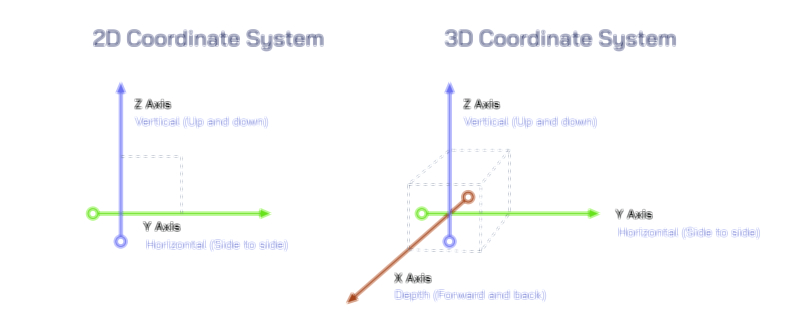
Translation is the simplest geometric transformation. It moves a shape from one location to another without changing its size, angle, or orientation. Imagine sliding a book across a table—its position changes, but the book itself doesn’t rotate, flip, or stretch. In the coordinate plane, translation adds or subtracts the same value to every point of a shape. This preserves the shape’s congruency, meaning the original and translated shapes remain identical in size and proportional structure. Translations maintain parallelism, distances, and angles, making them rigid transformations.
2. Rotation
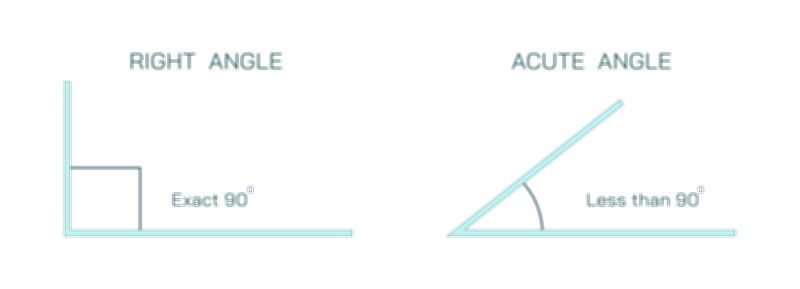
Rotation turns a shape around a fixed point known as the center of rotation. The amount of turning is measured in degrees, commonly 90°, 180°, or 270°, either clockwise or counterclockwise. When a shape rotates, its size and shape stay the same, but its orientation changes. Imagine spinning a wheel around its center—every point moves in a circular path while maintaining a constant distance from the center. On a coordinate grid, rotations follow specific rules depending on the angle, often involving switching and negating coordinates. Rotations are also rigid transformations, preserving congruency.
3. Reflection
Reflection flips a figure over a line, creating a mirror image. The line of reflection acts like a mirror, producing a shape that looks reversed but maintains the same size and proportions as the original. Reflecting across the x-axis, y-axis, or any defined line changes the orientation but preserves distance and angle measures. A reflected object is congruent to its original, but its orientation becomes opposite—left becomes right, and up becomes down depending on the reflection axis. Reflections help illustrate symmetry, especially in nature, design, and pattern formation.
4. Scaling (Dilation)
Scaling changes the size of a shape while maintaining its proportions. It may enlarge or reduce a figure based on a scale factor. When the scale factor is greater than 1, the figure expands; when it is between 0 and 1, the figure contracts. Unlike the previous transformations, scaling is not rigid—it does not preserve distance. However, it does preserve angles and shape similarity. Scaling is widely used in graphics, map reading, and architectural modeling, where objects must maintain proportion but vary in size.
Conclusion
The four primary geometric transformations—translation, rotation, reflection, and scaling—allow us to understand spatial changes in a structured and predictable way. Each transformation affects shapes differently, yet all contribute to deeper mathematical reasoning and practical applications. Whether used in engineering, animation, design, or analytical geometry, these transformations form the fundamental concepts that help us interpret and manipulate the world around us.