Horizontal and Vertical Lines — Geometry and Graph Representation Explained
Horizontal and vertical lines are among the simplest yet most powerful geometric elements because they form the structural backbone of graphs, coordinate systems, architectural layouts, visual design, and spatial navigation. Although they appear straightforward to the eye—one running flat and the other standing upright—their meaning in mathematics and geometry reflects deep ideas about direction, position, orientation, and relationships between numbers and space. Understanding horizontal and vertical lines is not just a matter of recognizing their orientation on a page; it reveals how movement is measured, how distances are compared, how graphs communicate patterns, and how algebra connects with geometry to create a unified language of representation. These two types of lines provide a reference framework that allows every other geometric object—points, slopes, curves, and shapes—to be meaningfully placed and understood.
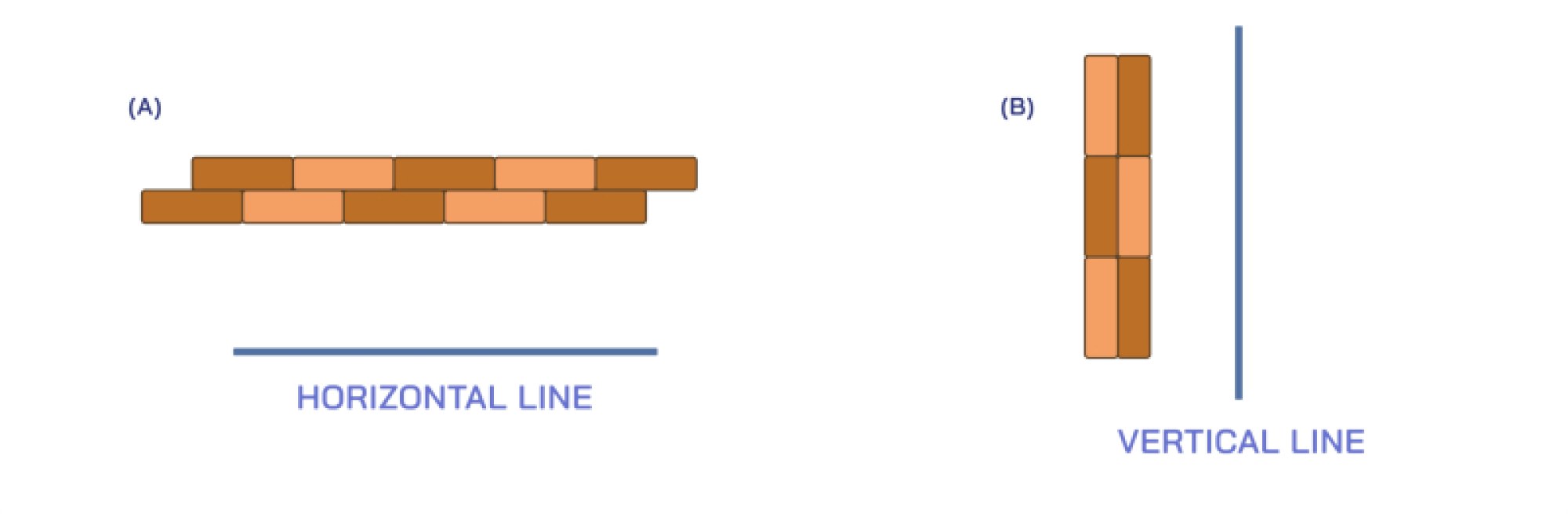
5. This idea becomes a powerful geometric statement: a horizontal line is not defined by its length or location but by its constant vertical position. Horizontality therefore represents stability in the vertical dimension, and in graph interpretation it visually communicates a lack of upward or downward change. In everyday contexts, the concept of horizontal alignment is used to describe level ground, calm water surfaces, balanced structures, and evenness across a plane. Each of these reflects the geometric principle of uniform height.
4. This illustrates that a vertical line is defined not by where it reaches but by its fixed left–right position. Vertically, there is no limit to extension, demonstrating that the line’s orientation represents persistence along the height dimension, not horizontal shift. In real environments, verticality often corresponds to upright stability—walls, poles, pillars, tree trunks, and structures built against gravity echo the same geometric notion: constant horizontal position with uninterrupted vertical presence.
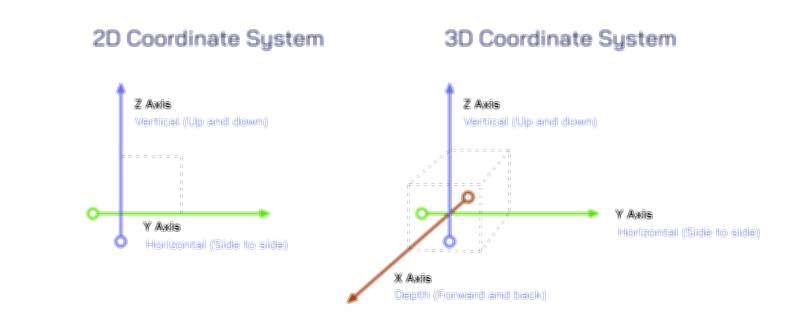
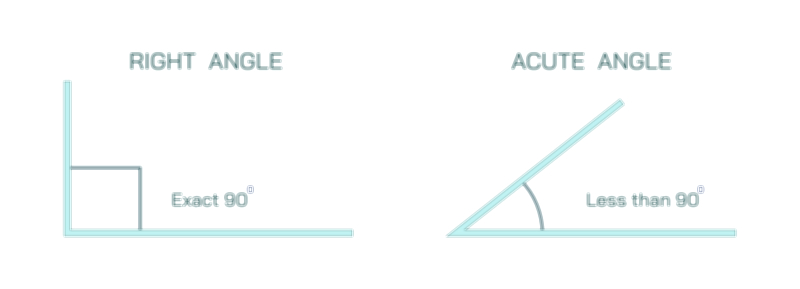
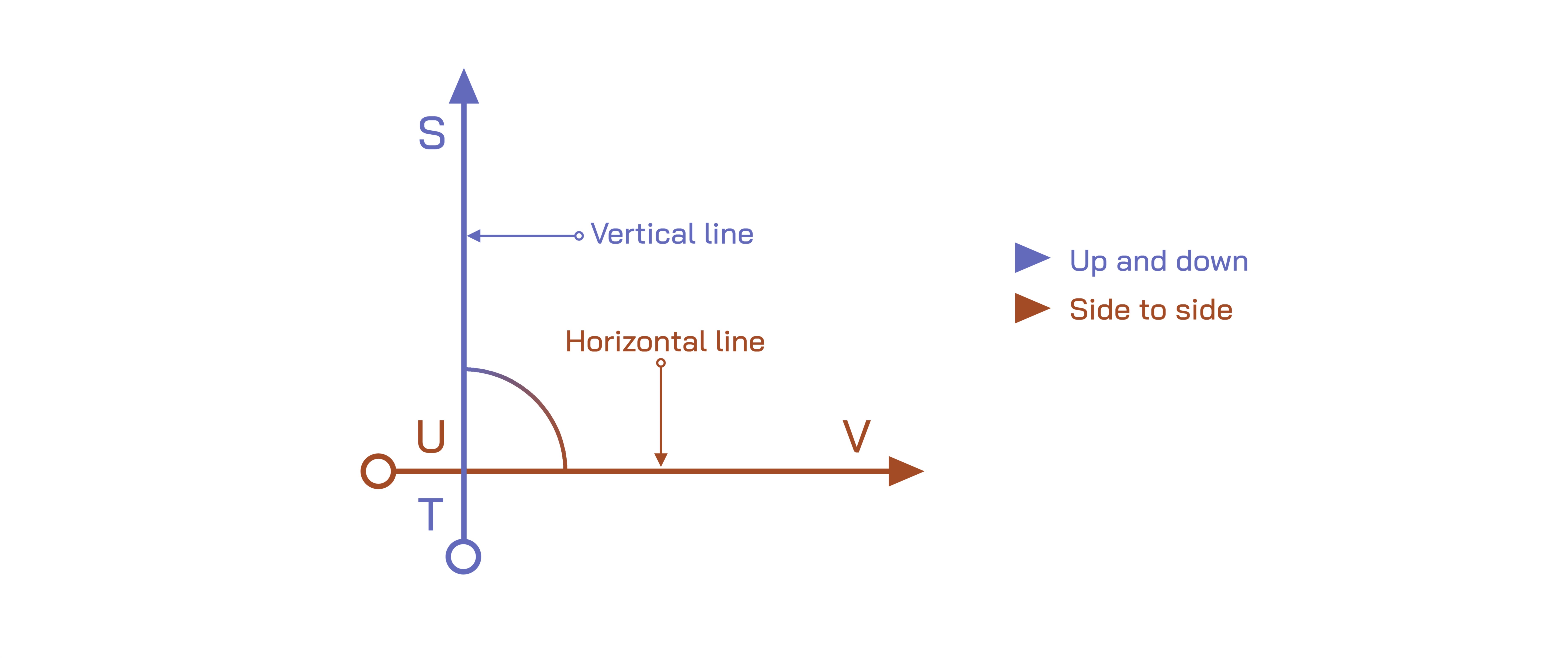
0. This alignment serves as a reference from which all other points and directions are measured. When one speaks of moving “up,” “down,” “left,” or “right” on a graph, the instruction implicitly depends on the recognition of horizontal and vertical directions. Thus, these two line orientations form a visual compass that allows every mathematical location to be described reliably. The coordinate grid seen in geometry textbooks, data graphs, navigation systems, and digital design software works only because of this fixed perpendicular relationship between left–right and up–down directions.
The visual messages conveyed by horizontal and vertical lines in graphs are especially meaningful. In a graph representing data over time, a horizontal line shows that the measured quantity remains unchanged; the variable does not increase or decrease. A student who consistently scores 80 on repeated tests, for example, produces a horizontal plot indicating performance stability. In temperature monitoring, a flat line may indicate a steady climate. In scientific readings, a constant value across trials appears as a horizontal trace. The line does not need numbers to communicate its meaning—viewers intuitively understand stability or equilibrium from the constant vertical level. In contrast, a vertical line in a graph often represents something instantaneous rather than continuous—a sudden jump in time or input without corresponding progression in output. For example, in scientific tests and computer signals, a vertical spike may appear when a measurement changes immediately at a given moment. In the coordinate plane, however, vertical lines hold a special status because they represent a set of x-values that do not form a functional relationship with y, giving them a unique place in algebra and graph interpretation.
3. Regardless of the x-value chosen, the solution always remains on the same horizontal level. A vertical line, in turn, is represented by an equation of the form x = constant, such as x = 2 or x = −5. Regardless of the y-value selected, the point remains on the same vertical line. What makes this remarkable is that the equations require no additional operations or variables—they are pure geometric statements translated into algebra. This reveals the elegant symmetry between spatial representation and symbolic representation: geometry describes the visual world, algebra describes the symbolic world, and horizontal and vertical lines show how the two connect seamlessly.
In the study of slopes and linear functions, horizontal and vertical lines form the boundary cases that define the extremes of behavior. A horizontal line has a slope of zero, meaning no vertical change occurs for changes in the x-direction. A vertical line, by contrast, exhibits a slope that is undefined, because its vertical progression does not correspond to horizontal movement. These distinctions matter greatly in understanding how lines tilt or remain level and how relationships between variables are interpreted. For example, the slope of a road, the incline of a ramp, or the steepness of a graph showing population growth is measured relative to the horizontal direction. A perfectly horizontal line means the quantity remains constant, while a line growing closer to vertical represents increasingly rapid change. Although horizontal and vertical lines may appear simple, they create reference extremes that help interpret every slanted line that lies between them.
It is also valuable to recognize how horizontal and vertical lines contribute to symmetry, orientation, and structure in both mathematics and visual perception. When architects design buildings, they depend on horizontal floors and vertical supports to ensure balance, stability, and comfort. Furniture, shelving, books, windows, and roads trace horizontal and vertical arrangements to create a sense of order in physical space. In graphic design, layouts often use invisible horizontal and vertical guides to align text, images, and shapes for visual clarity. Even handwriting develops visually along a horizontal baseline because the human brain associates horizontally aligned structure with readability and stability. These real-world examples reflect that geometric thinking is embedded in everyday sensory experience.
In mapping and navigation, horizontal and vertical lines also support spatial orientation. Maps use horizontal parallels and vertical meridians to determine position on Earth. Floor plans indicate horizontal walls and vertical ceiling heights. GPS signals report latitude and longitude using an explicit horizontal-vertical coordinate logic. Across each of these contexts, horizontal and vertical are not isolated geometric constructs—they are the organizing principles that allow position to be communicated precisely.
Taken together, horizontal and vertical lines demonstrate how simplicity becomes foundational in mathematics. What begins as recognition of basic line directions evolves into a complete spatial framework for number placement, graph interpretation, and visual representation. These lines allow the coordinate plane to exist, let algebra describe geometry, provide reference extremes for slope, enable clear real-world layouts, and support navigation and design thinking across disciplines. They show how mathematical abstraction mirrors physical reality: one direction stabilizes height while the other stabilizes width, and the perpendicular relationship between them creates ordered space.
Understanding horizontal and vertical lines deeply means recognizing them not only as visual patterns on paper but as structural rules that guide how people interpret space, analyze change, communicate location, and translate motion into mathematical meaning. Whether reading a graph, building a structure, laying out a map, designing an interface, or teaching geometry, the concepts of horizontal and vertical act as the invisible framework holding everything together.