Similar and Dissimilar Illustration Showing Comparison of Objects, Shapes, and Characteristics
A similar and dissimilar illustration is a visual tool designed to highlight both the likenesses and differences between objects, shapes, or characteristics in a way that the mind can process instantly, often without spoken or written explanation. The purpose of such a comparison is not simply to place two items side by side, but to communicate how certain features align while others diverge. When examining two or more objects in this kind of depiction, the eye is naturally drawn to what elements match—such as form, size, color, pattern, or function—before shifting toward what deviates from that pattern. This transition between recognition and surprise forms the foundation of how comparison-based learning takes place. The familiar features help the brain identify category or relationship, while the differing traits sharpen understanding by forcing attention to what makes each object unique. Whether the comparison involves geometric shapes, animals, household tools, letters of the alphabet, scientific diagrams, or consumer products, the arrangement of similarities and differences builds mental mapping that supports memory, classification, observation, and reasoning.
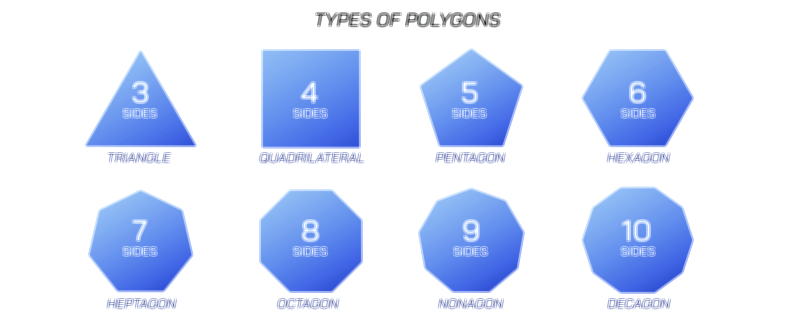
In educational contexts, similar–dissimilar illustrations often involve simple shapes such as triangles, circles, rectangles, or pentagons, arranged in a way that immediately communicates shared geometric identities while emphasizing distinctions in angle, edge length, curvature, or dimensionality. When two circles are shown among squares, the viewer instantly classifies them as similar to each other yet dissimilar to the squares based on shape rather than color or size. If a collection of triangles includes both isosceles and scalene versions, a diagram might emphasize their similarity in outline but their difference in symmetry or side length. These comparisons sharpen geometric recognition and demonstrate how classification is not always rigid but layered across characteristics. Similarity links objects into groups based on shared attributes, whereas dissimilarity separates them into categories based on divergent properties. Even when two objects appear alike in most respects, a subtle dissimilarity may prompt deeper observation and a higher level of analytical engagement by encouraging the viewer to notice details that might otherwise be overlooked.
Outside mathematics, similar and dissimilar illustrations frequently support science education by comparing anatomical structures, biological species, food types, or mechanical components. For example, a diagram comparing a dolphin and a shark may show that both have streamlined bodies, dorsal fins, and aquatic adaptations, yet highlight that one is a mammal and the other a fish. The similarities help articulate the environmental forces shaping body design, while the differences explain evolutionary lineage and biological identity. In the realm of plant biology, a side-by-side illustration of a leaf from two species might present shared venation patterns but distinct margins or pigmentation. In chemistry, three molecules may be shown with comparable structural frameworks yet varying functional groups that influence reactivity. When used in physics, two machines might be shown operating through identical mechanical principles while expressing differences in design or output. Across all of these examples, similarity and dissimilarity become keys to understanding both unity and variation in natural and man-made systems. The illustration becomes a bridge between the complexity of scientific detail and the accessibility of visual recognition.
In consumer-oriented or industrial settings, similar–dissimilar comparisons help individuals make informed decisions by laying objects in a comparative format that highlights what is unique about each choice. A design sketch comparing two chairs may show that both offer back support but differ in material, height, or weight distribution. Product catalogs frequently rely on tables or diagrams that show laptops or phones with identical screen sizes but different storage capacities, battery durations, or camera configurations. In these cases, the similarity provides reassurance that the options belong to the category being sought, while the dissimilarity reveals what distinguishes each option and justifies consumer preference. This same principle applies in workplace training, where new employees might learn to distinguish between visually similar tools or safety equipment by recognizing the small differences that matter in a real operational environment. The illustration acts as a silent instructor that teaches through visual sorting rather than verbal explanation.
Regardless of the domain, the true value of a similar and dissimilar illustration lies in the balance it achieves between connection and separation. If the objects compared are too similar without meaningful differences, the illustration loses educational power because there is no point of contrast to stimulate critical thought. Conversely, if they are too dissimilar without shared structure or purpose, the viewer cannot make productive comparisons because there is no familiar reference point anchoring the visual field. The best illustrations therefore place objects close enough in type to spark recognition but far enough apart in characteristics to prompt analysis. A well-designed comparison directs attention first to the shared core of identity, then gradually to the diverging traits that shape uniqueness. This sequential perception reflects the way the human brain prefers to learn—first by grouping, then by sorting.
A visual example may involve three objects that appear nearly identical in outline, such as three bottles or three toys, but with small differences in shape curvature, cap design, or pattern imprint. Another may portray a series of shapes that share the same number of sides yet differ in symmetry, such as a regular hexagon, an elongated hexagon, and a hexagon with alternating edge lengths. By placing these objects within the same space, a viewer naturally traces patterns of resemblance while mentally cataloging what separates them. The result is a deeper appreciation of detail and structure, a skill especially valuable in fields that rely on classification—architecture, biology, engineering, product design, anatomy, and data science, among many others.
A similar–dissimilar illustration can also support cognitive development in early learning by training observation and reasoning. Children encountering such diagrams in books or classrooms begin to understand that objects belong to groups not only through intuitive appearance but also through defined characteristics. They begin by noticing “these are the same shape,” and later learn to articulate “they are similar because they share form, but dissimilar because they differ in size or pattern.” This transition from implicit recognition to deliberate articulation lays the foundation for higher-order thinking skills, such as categorizing, predicting, abstracting, and problem solving. As learners grow older, these same visual comparison skills evolve into the ability to analyze graphs, interpret scientific diagrams, compare data sets, and evaluate arguments across different academic disciplines.
From an artistic perspective, similar and dissimilar comparisons illuminate how repetition, variation, and contrast drive visual appeal. Painters and illustrators often place repeated forms with slight differences inside a scene to evoke rhythm, movement, or emotional tension. Designers manipulate similarity to create harmony and unity while introducing dissimilarity to generate points of emphasis, interest, or surprise. Whether the subject is abstract shapes or realistic objects, the visual balance between consistency and variation shapes the aesthetic experience and provides coherence without monotony.
Ultimately, a similar and dissimilar illustration becomes more than a comparison chart. It is a visual language that helps people understand relationships within the world by revealing how identity and contrast coexist in every object or system. The similarities show that things belong together, that they share purpose, function, or design, while the differences show individuality, specialization, and diversity. Whether the topic is scientific, educational, artistic, or practical, the power of this type of illustration lies in its ability to guide the viewer beyond surface-level recognition and toward a deeper comprehension of structure, pattern, and meaning. Through careful observation of similarities and differences, the mind not only sees objects clearly but also understands the logic that connects and separates them in the larger landscape of knowledge.