Types of Angles – Understanding Angle Classification, Direction, Rotation, Degree Measurement, Geometric Relationships, and the Meaning Behind Angle Representations in Vector Diagrams
Angles form a central foundation of geometry because they describe how two rays, lines, or vectors diverge from a shared point and express the amount of rotation between them. When studying the types of angles, the simplest description might focus only on sharp or wide openings, yet the full concept extends into mathematical reasoning, geometric construction, physics, motion, navigation, engineering, and graphic design. In vector diagrams, angles become even more crucial because they communicate direction and magnitude relationships, helping us understand how forces interact, how objects move, and how shapes transform. Every type of angle carries its own structural meaning, and examining them closely reveals why angle classification is more than memorizing definitions—it is a tool for understanding how geometric elements relate to each other in space.
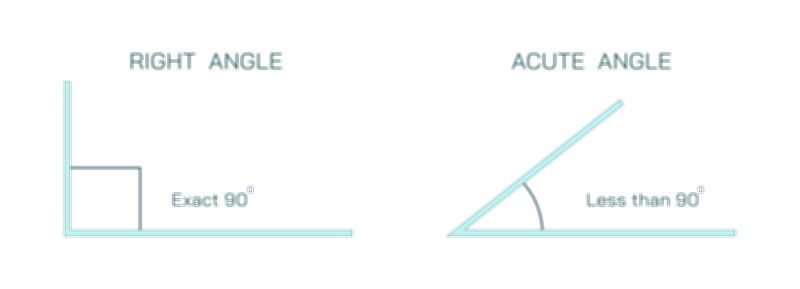
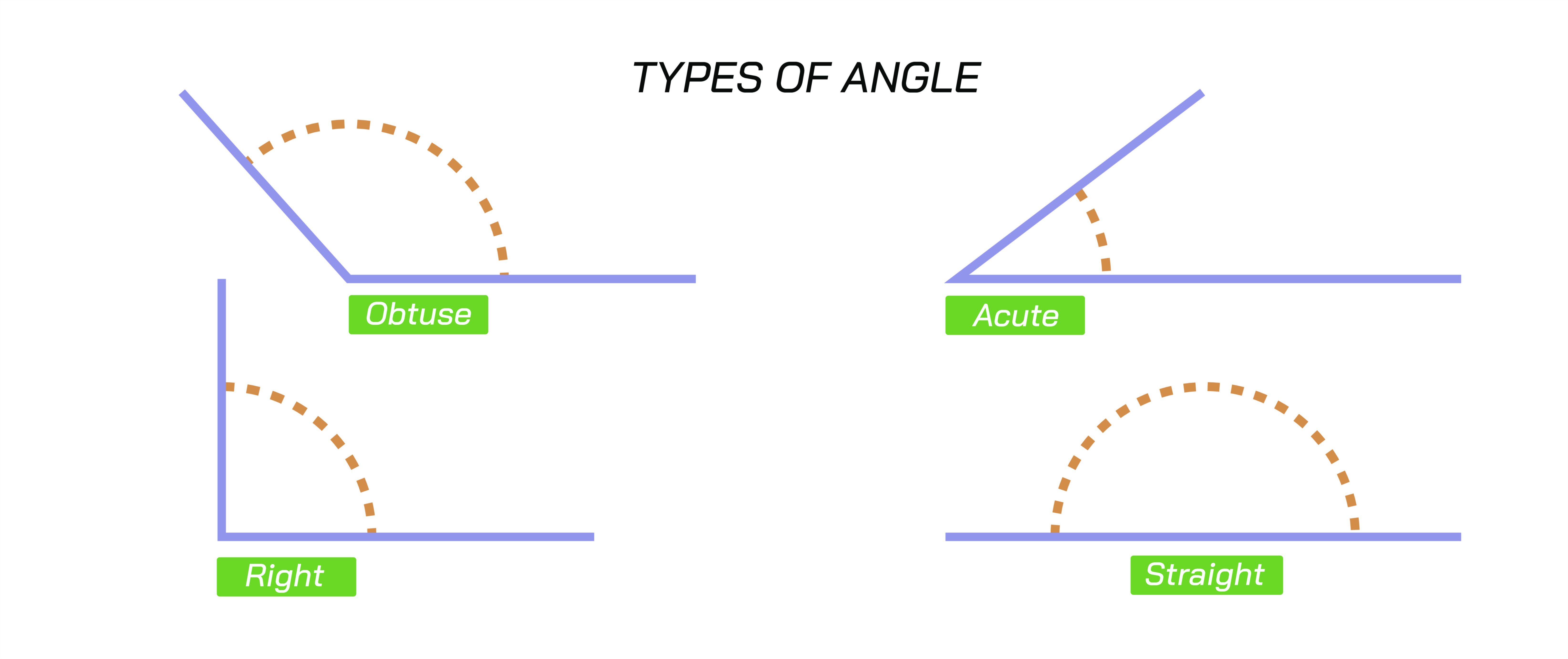
When rays or vectors meet and form an opening less than 90 degrees, the result is known as an acute angle, and this type appears in countless geometric forms. The narrow opening of an acute angle suggests precision, sharpness, and compact spatial structure. In vector representation, an acute angle can depict a small directional change such as the shift in velocity of a moving object or the slight deviation of a force acting on a structure. Acute angles dominate in triangular shapes, particularly in equilateral and acute triangles, where all interior angles are less than 90 degrees. In physical movements, acute joint angles occur when limbs bend tightly, such as in sprinting or weightlifting. In architecture and art, acute angles create sharp edges and pointed designs that influence visual tension and symmetry. The acute angle becomes a key introductory form from which more complex angles are later compared and understood.
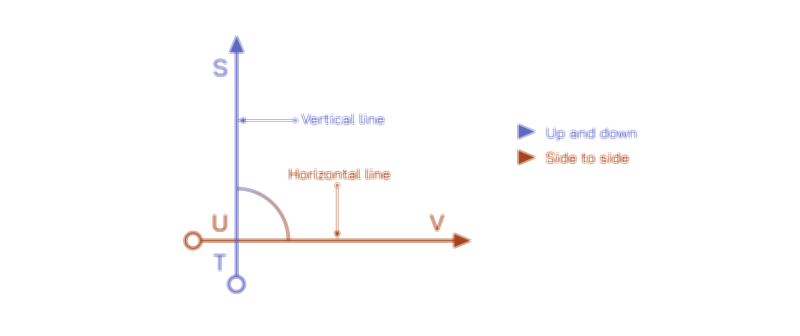
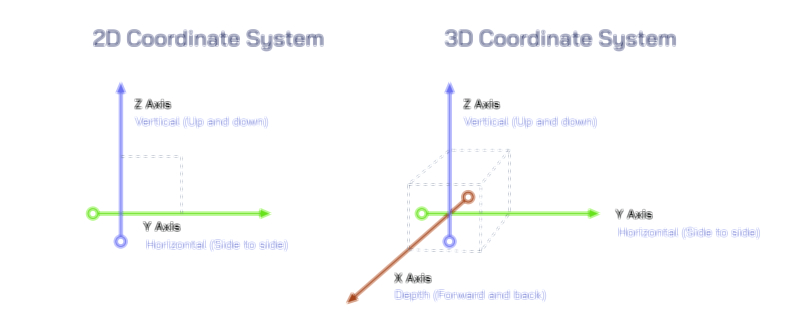
The right angle, measuring exactly 90 degrees, represents a perfect perpendicular intersection and serves as the universal reference standard for all angle classifications. Seen as the corner of a square or rectangle, the right angle defines order and stability in both geometric figures and engineered structures. In vector diagrams, a right angle is critical because orthogonal vectors indicate independence—one direction has no influence on the other. This principle appears in coordinate geometry when the horizontal and vertical axes intersect at ninety degrees, forming the basis of graphing and spatial measurement. In daily life, right angles frame doorways, tiles, sidewalks, and buildings; their constant presence reflects how mathematics naturally supports human architecture and planning. Because many geometric proofs rely on perpendicularity, right angles carry structural certainty and underpin the logic that connects lines, shapes, and coordinate systems.
When an angle exceeds 90 degrees but remains below 180 degrees, it is classified as an obtuse angle, and it communicates a wide, open, and relaxed spatial separation. In vector applications, an obtuse angle reflects opposition or divergence between directions, suggesting that the effect of one vector partially counteracts another without directly reversing it. This idea becomes particularly relevant in physics when forces act in wide separation and still produce net directional outcomes. Geometrically, obtuse angles appear in triangles with one angle greater than 90 degrees, altering side-length relationships and creating longer opposite edges. The visual impression of obtuse angles—gentle rather than sharp—shows that geometry not only quantifies shape but also influences aesthetic perception. Designers utilize obtuse angles to create flowing, open forms in roads, buildings, and graphic layouts, revealing that angle classification extends into visual storytelling.
Extending the opening further produces the straight angle, which measures exactly 180 degrees and represents the ultimate directional reversal without rotation beyond a flat line. It appears as two rays pointing in opposite directions from the same origin, forming a straight path. In vector analysis, a straight angle signifies two vectors pointing exactly opposite each other with equal direction but potentially different magnitudes. This representation helps illustrate cancellation of forces, opposing velocities, or directional reversals in mechanical systems. In geometry, straight angles also become the backbone of linear and supplementary angle relationships because the two parts of a straight line always sum to 180 degrees. Understanding the straight angle teaches learners that even forms that appear static—like a straight line—represent a rotational measurement that can be analyzed mathematically.
When an angle expands beyond 180 degrees but remains under 360 degrees, the shape becomes a reflex angle, wrapping around past the straight-angle stage. Reflex angles are sometimes less intuitive to visualize because they describe the larger external rotation rather than the smaller interior opening between rays. In rotational mechanics and vector diagrams, reflex angles represent rotational overshoot, reversal loops, and angular displacement beyond halfway around a circle. They occur in machinery with pivoting joints, swinging arms, or multiple-turn rotation mechanisms, where objects pass beyond the straight line before returning to a starting direction. In geometric art and star polygons, reflex angles create dramatic outward spikes and complex interior structures. The presence of reflex angles deepens understanding of rotation by showing that circle-based measurement does not stop once a shape becomes flat but continues as part of a full continuum.
Completing the sequence is the full angle, a complete 360-degree rotation that begins and ends at the same direction. Although its beginning and ending rays overlap, the full angle represents a full turn rather than the absence of change. In mathematics, a full angle demonstrates periodicity—the idea that cycles repeat in the same pattern. This concept forms the backbone of trigonometry, wave functions, circular motion, and rotational symmetries. In vector applications, a full turn reflects complete directional cycling, such as turbines, gears, wheels, and gyroscopes. In navigation and astronomy, 360-degree angular reference systems guide mapping, satellite positioning, compass headings, and celestial coordinate systems. The full angle reveals how geometry models phenomena that operate cyclically rather than linearly.
Beyond classification by magnitude, angles gain deeper meaning when interpreted through relationships between rays and vectors. When two angles share a vertex and their sides form opposite directions, they become vertical angles, always equal because the intersecting lines mirror each other across a point. When two angles lie side-by-side and together occupy a straight line, forming a linear pair, they demonstrate the principle of supplementary angles summing to 180 degrees. These relationships allow geometric proofs to show that angle measures remain consistent even under rotation, translation, or transformation of line segments. In vector composition, angle relationships determine whether two directional components reinforce or oppose one another, influencing the net result of forces and movements. Thus, the type of angle not only describes rotation but helps predict combined outcomes.
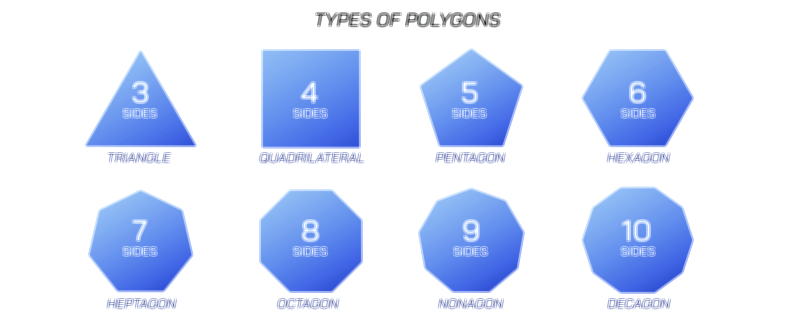
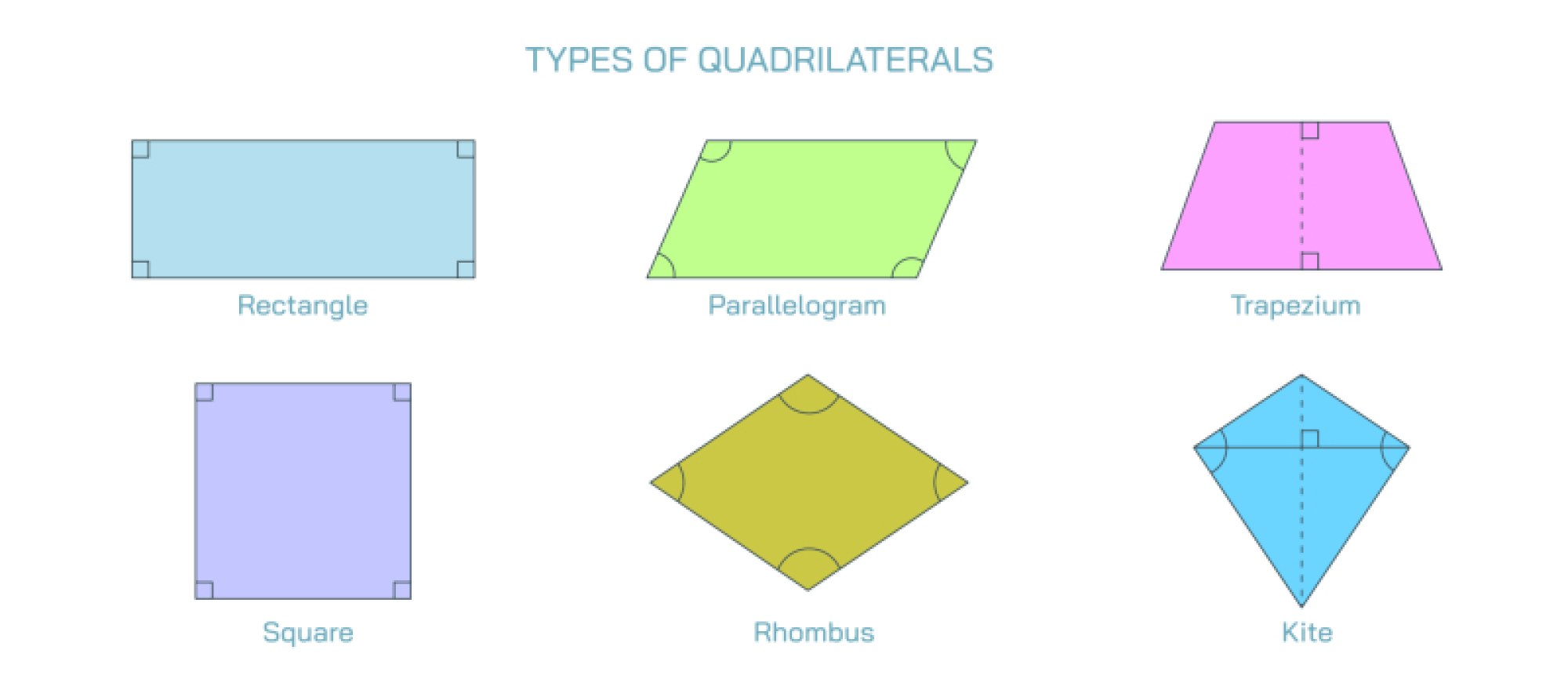
In parallelograms, trapezoids, and polygons of all sizes, angle types dictate interior relationships. Acute angles create sharp corners in regular polygons, right angles characterize rectangles and squares, and obtuse angles define rhombuses or obtuse triangles. Reflex angles emerge in star polygons or self-intersecting polygons. Recognizing these connections enables learners to reason about shapes based on angles alone, reinforcing that angle classification supports the study of congruence, similarity, and symmetry. Once students understand how angles combine to shape geometric figures, they also gain access to transformation geometry, where angle measures remain invariant under reflection, rotation, or dilation. This invariance provides the mathematical stability used to create computer graphics, animated models, and CAD designs.
Technology extends the significance of angles into modern devices and digital imaging. Screen orientation, camera stabilization, AR/VR head tracking, graphic shadow rendering, and motion-capture software all depend on precise angle calculations. Smartphone accelerometers detect orientation by analyzing changes in angular acceleration. GPS systems triangulate positions using angle-based geometry. Engineering simulations rely on angles to predict stress distributions in beams and bridges, while robotics uses angular measurement to coordinate joints during automated tasks. Through these applications, the types of angles become more than geometric names—they form the practical language that connects mathematics to technology and innovation.
Ultimately, the study of angles illustrates how mathematics transforms spatial relationships into measurable, predictable, and useful concepts. Whether the angle is acute, right, obtuse, straight, reflex, or full, each type communicates a precise amount of rotation, and each appears repeatedly in physical structures, digital systems, and abstract reasoning. Classifying angles opens a doorway not only to geometry but to physics, engineering, optics, and computer science. By understanding types of angles in vector-based diagrams and geometric systems, students develop spatial reasoning that enables them to interpret and model the shapes, motions, and interactions that define the visual and functional world.