Types of Polygons — Geometry Shapes and Sides
Polygons lie at the very core of geometric understanding because they represent one of the simplest but most powerful ways to describe shapes using straight lines. A polygon is formed when line segments connect end to end, creating a closed figure with distinct sides, angles, and vertices. Yet, behind this simple definition lies an entire world of mathematical structure, classification techniques, and spatial concepts that help us analyze architectural forms, natural patterns, computer graphics, engineering structures, and the fundamental rules that shape how two-dimensional forms behave. When exploring the types of polygons through their shapes and sides, we gain insight into why some polygons tessellate perfectly, why others provide structural rigidity, how symmetry emerges from simple rules, and how shape complexity increases with each additional side. By understanding polygons through the dual lens of geometry and side count, we also reveal why these shapes serve as essential building blocks not only for elementary geometry but for advanced mathematical reasoning.
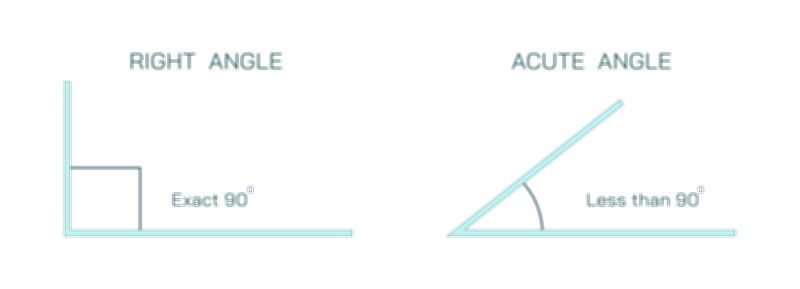
The classification of polygons begins with the number of sides they possess, and this single property provides one of the most intuitive organizing principles. The simplest polygons begin with three-sided shapes, the triangles. Triangles are fundamental because they are the smallest unit that can form a polygon, and their properties make them uniquely important in geometry. Unlike other polygons, triangles are inherently rigid, meaning that if their sides are fixed, the shape cannot change. This property is vital in engineering, where triangular bracing stabilizes bridges, towers, and roof trusses. Triangles come in numerous variations—equilateral, isosceles, scalene—and may be classified further by their angles: acute, right, or obtuse. Their interior angles always sum to a constant amount, a feature that sets a pattern for understanding angle behavior in larger polygons.
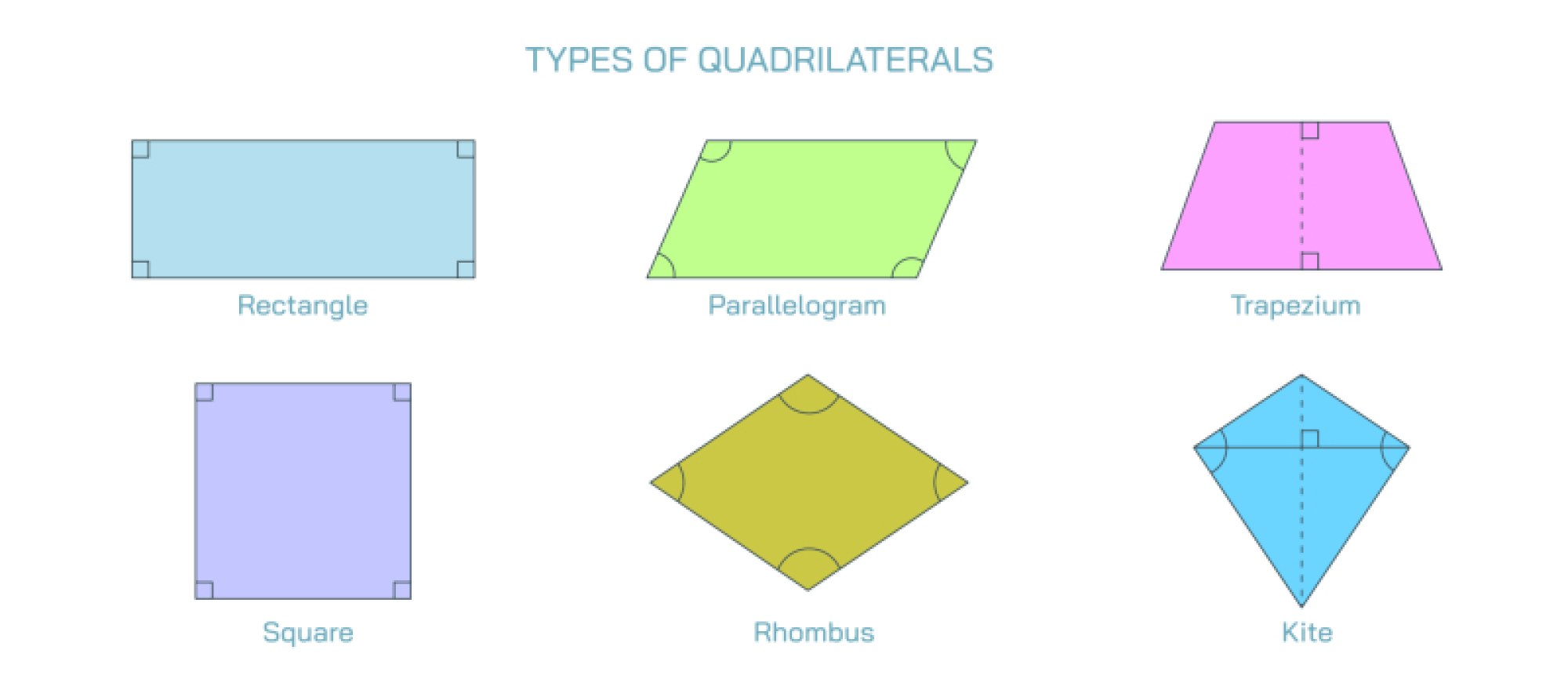
Once we move to quadrilaterals, polygons with four sides, the structural behavior and visual variety expand dramatically. Quadrilaterals include some of the most familiar geometric shapes: squares, rectangles, parallelograms, rhombuses, kites, and trapezoids. Each variation emerges from different relationships between side lengths and angle measures. The square epitomizes geometric symmetry by combining equal sides with right angles, making it a staple of tiling, architecture, and coordinate geometry. Rectangles relax the condition of equal sides but retain equal angles, making them essential for constructing practical spaces and designing efficient layouts. Parallelograms emphasize opposite-side parallelism while allowing angles to vary, and trapezoids reduce the symmetry even further by requiring only one pair of parallel sides. Quadrilaterals illustrate how, even with the same number of sides, small adjustments to constraints create a wide spectrum of geometric personalities and uses.
Polygons with five or more sides—pentagons, hexagons, heptagons, octagons, nonagons, and beyond—expand this diversity into more complex territory. Each additional side adds more potential configurations and angle combinations. Among these, regular polygons hold a special place because they combine equal side lengths with equal angles. A regular pentagon exhibits a pleasing symmetry that appears not only in geometry but in art, architecture, and nature, such as starfish and certain flowers. The regular hexagon stands out as one of the most efficient tiling shapes in nature, appearing in honeycombs because it fits together without gaps and uses minimal material to enclose space. Octagons, with their eight sides, balance near-circularity with geometric clarity, making them visually striking and functionally useful, such as in traffic signage. As polygons accumulate more sides, their shapes tend to approximate circles more closely, providing a bridge between polygonal geometry and curvilinear forms.
The number of sides also influences polygon naming through a systematic linguistic pattern. Greek and Latin numerical roots denote side count: “penta-” for five, “hexa-” for six, “hepta-” for seven, “octa-” for eight, and so forth. This naming system reflects how geometry has been shaped historically by ancient civilizations whose linguistic frameworks still influence modern mathematical terminology. The relationship between polygon identity and side count becomes even more nuanced when we consider that polygons can be classified not only by side number but also by side equality and angle equality. Regular polygons combine both characteristics, making them the most symmetric and mathematically elegant examples in polygonal classification.
A major conceptual divide in polygon types emerges between regular and irregular forms. Regular polygons achieve perfect uniformity with congruent sides and angles. This symmetry simplifies calculations involving angles, perimeter, and area, and supports applications in design that require uniform tiling or consistent structural behavior. Irregular polygons, by contrast, allow for limitless variation. A polygon may have equal sides but different angles, different sides but equal angles, or differences in both. Irregular polygons appear far more frequently in natural and architectural contexts, where perfect symmetry is rare. They demonstrate how polygons extend beyond idealized mathematical models into real-world shapes that require flexible definitions and analytical adaptability.
Another essential distinction arises between convex and concave polygons. A convex polygon is defined by the property that all interior angles are less than a straight angle and each diagonal lies inside the polygon. Convex polygons appear stable, balanced, and outward-facing. Concave polygons, however, contain at least one interior angle that bends inward, creating “dents” or recesses in the shape. These shapes behave differently in geometric analysis because some diagonals extend outside the boundaries. Concave polygons illustrate how a simple change in angle direction transforms geometric behavior, influencing spatial relationships, area consideration, and structural balance. This classification highlights how polygons can convey both simplicity and complexity simultaneously depending on their internal configuration.
A more advanced classification separates simple polygons from complex, or self-intersecting, polygons. Simple polygons have boundaries that never cross over themselves, ensuring a clear interior and exterior region. These are the polygons most commonly encountered in elementary geometry. Complex polygons, such as star polygons, break this rule intentionally. Their sides may cross, creating intricate and visually striking shapes like the pentagram. These figures challenge the typical notions of interior and exterior, blending geometric rules with symbolic, artistic, and decorative uses. Despite their complexity, they remain mathematically valuable for understanding symmetry, patterning, and combinatorial geometry.
Another cornerstone of polygon study relates to the interior and exterior angles, which reveal deep rules governing polygonal structure. The sum of interior angles increases consistently with each additional side, starting at 180 degrees for triangles and increasing by the same amount with each new side. This steady progression illustrates how geometric principles extend smoothly across different families of polygons. Exterior angles, by contrast, always sum to a constant amount for any convex polygon, a property that reveals the cyclical nature of rotation around a closed figure. These angular relationships serve as powerful tools for understanding shape structure, constructing polygons, and solving geometric problems.
Polygons also play a central role in tessellation, where they must satisfy the condition of filling a plane without gaps or overlaps. In this context, only certain polygons qualify naturally. Regular triangles, squares, and hexagons tessellate perfectly because their interior angles divide evenly into a full rotation. Other polygons require special configurations or irregular adjustments to tessellate successfully. This idea connects polygon geometry to architecture, crystallography, artistic pattern design, and computational algorithms for surface tiling.
In modern contexts, polygons have become indispensable in computer graphics, where every three-dimensional object is approximated using polygonal meshes. Triangles, in particular, dominate this digital landscape because they guarantee geometric stability. Polygons within these meshes bend, twist, and deform mathematically to simulate realistic surfaces, shadows, and motion. The translation of polygon theory into digital modeling demonstrates how ancient geometric concepts power some of the most advanced visual technologies today.
Polygons also influence engineering and architecture, where their structural properties affect how forces distribute across beams, floors, and walls. The triangular form’s rigidity contrasts with quadrilaterals’ need for reinforcement, showing how polygon selection influences material strength and building stability. Even in natural structures—such as volcanic basalt columns, crystalline formations, or the arrangement of cells—polygonal organization emerges as a natural optimization strategy.
In essence, the types of polygons reflect much more than a simple count of sides. They represent a rich interplay between shape, symmetry, structural behavior, and spatial reasoning. Whether regular or irregular, convex or concave, simple or complex, polygons form the scaffold upon which much of geometry, design, architecture, and computational modeling is built. Through the study of these shapes and their sides, we gain a deeper appreciation of how structured the visual world is, how mathematical rules govern spatial forms, and how such rules allow humans to build, represent, and understand the world around them.