CAST Diagram — Visualizing Trigonometric Quadrants and Function Signs Explained
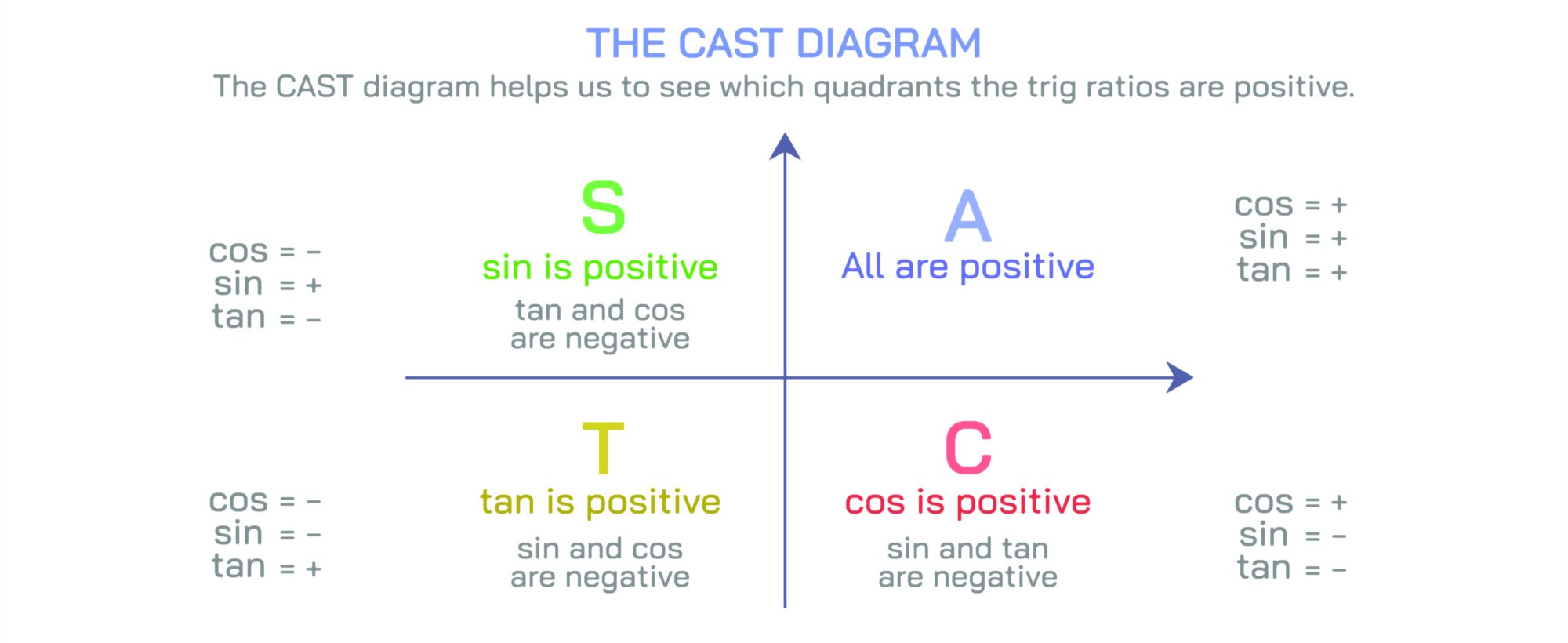
The CAST diagram is a foundational concept in trigonometry because it teaches how the signs of trigonometric functions change across the four quadrants of the Cartesian coordinate plane. Understanding this diagram offers more than memorization of positive or negative values; it builds an intuitive map of the angle system used in mathematics, physics, navigation, astronomy, and engineering. Every time angles are measured around a coordinate plane, the sign of the trigonometric function depends on the coordinates of the point at which the terminal side of the angle intersects the unit circle. The CAST diagram turns this rule into a simple and powerful visual memory tool. The letters C–A–S–T refer to the sign patterns of trig functions by quadrant: C (Cosine is positive) in the fourth quadrant, A (All trig functions are positive) in the first quadrant, S (Sine is positive) in the second quadrant, and T (Tangent is positive) in the third quadrant. Although these four letters appear in a clockwise sequence beginning in the bottom right quadrant, their importance lies in helping learners immediately determine the sign of sine, cosine, tangent, and their reciprocal identities — cosecant, secant, and cotangent — as an angle increases from 0° to 360° or from 0 to 2π radians. The CAST diagram forms a bridge between algebra and geometry because it links coordinates, angle rotation, and function values in a single conceptual map.
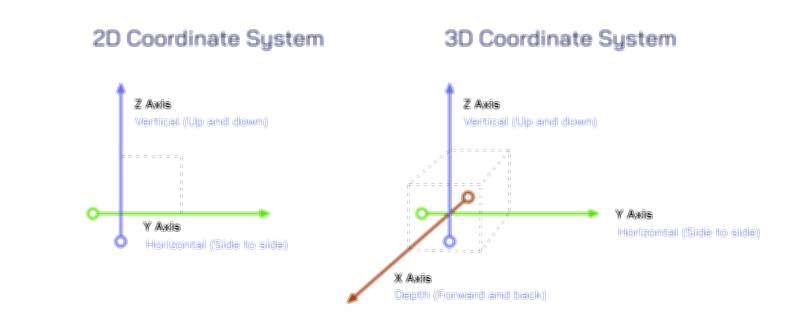
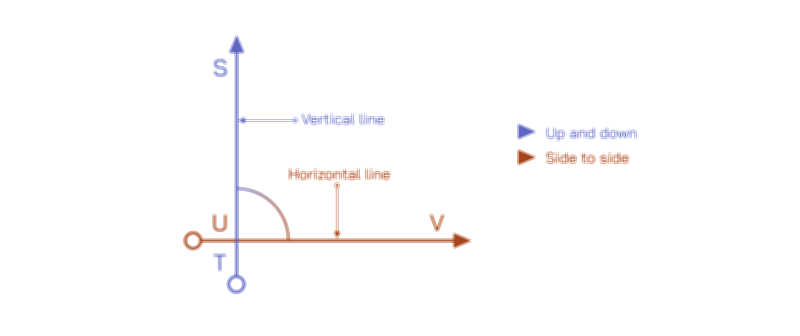
To fully appreciate CAST, it helps to explore the geometry of the coordinate plane and the unit circle, because trigonometric function signs originate from coordinate signs. In the first quadrant — between 0° and 90° (or 0 to π/2 radians) — both the x and y coordinates are positive. Since cosine corresponds to the x-coordinate on the unit circle and sine corresponds to the y-coordinate, their values are positive here. Tangent, which is defined as sine/cosine, also becomes positive because the ratio of two positive numbers is positive. This quadrant is symbolized by the A in CAST, where All trigonometric functions are positive. Moving to the second quadrant — between 90° and 180° (π/2 to π radians) — the coordinates change: x becomes negative and y remains positive. This change immediately alters the signs of trig functions. Sine stays positive because it matches the positive y-coordinate, while cosine becomes negative because the x-value is now negative. Tangent, defined as sine divided by cosine, becomes negative because a positive y-value divided by a negative x-value produces a negative ratio. This quadrant corresponds to S, meaning Sine is positive while the rest turn negative. The names and symbols serve only as shortcuts; the true logic always returns to coordinate signs.
In the third quadrant — between 180° and 270° (π to 3π/2 radians) — both the x and y coordinates become negative. With both sine and cosine depending on these negative values, they both become negative in this region. However, tangent becomes positive again because the ratio of two negative numbers yields a positive result. This quadrant, therefore, highlights T — Tangent is positive while sine and cosine are negative. The fourth quadrant — between 270° and 360° (3π/2 to 2π radians) — shifts again as coordinates move into positive x but negative y. Cosine becomes positive because it relies on the x-coordinate, while sine becomes negative because it depends on the y-value. Tangent, defined as sine divided by cosine, becomes negative because a negative numerator divided by a positive denominator produces a negative ratio. This quadrant corresponds to C — Cosine is positive while the other functions are negative. Thus, the CAST diagram does not impose arbitrary signs; it reflects how coordinate geometry governs function output.
Beyond the three basic trigonometric functions, the CAST diagram also applies to their reciprocals. Since cosecant is the reciprocal of sine, secant is the reciprocal of cosine, and cotangent is the reciprocal of tangent, these functions retain the same signs as the primary function they depend on. In the first quadrant, all reciprocals are positive. In the second, cosecant is positive while secant and cotangent are negative. In the third, tangent and cotangent are both positive while sine and cosecant remain negative. In the fourth, cosine and secant are both positive while sine, tangent, and their reciprocals are negative. This direct mapping demonstrates why the CAST diagram becomes a universal sign reference rather than something restricted to sine–cosine–tangent only. Students quickly notice that the diagram dramatically reduces the cognitive load required to analyze angles, especially when working with trigonometric identities, inverse functions, non-acute angles, and the newly introduced idea of reference angles.
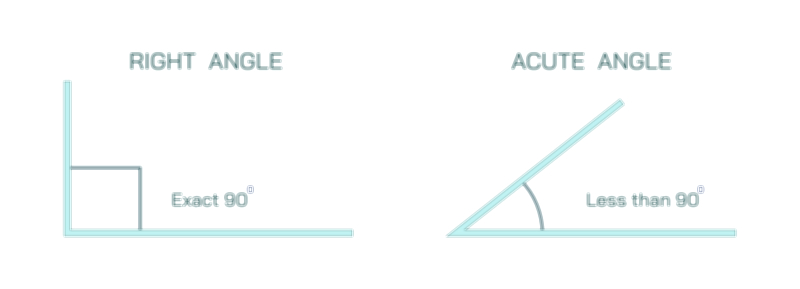
The CAST diagram works hand-in-hand with rotation direction and reference angle concepts. When an angle lies inside a quadrant, its acute reference angle — the angle between the terminal side and the nearest horizontal axis — helps evaluate the magnitude of trig values using familiar triangles from first-quadrant geometry. The CAST diagram then contributes the sign. For example, if an angle of 150° lies in the second quadrant, the reference angle is 30°. Trig tables or unit circle memory supply the magnitude based on 30°, while the CAST diagram supplies the sign: 150° lies in quadrant two, meaning sine is positive while cosine and tangent are negative. This system transforms the intimidating process of dealing with angles greater than 90° into a simple two-step approach: find the reference angle for magnitudes, use CAST for signs. The elegance of the process explains why CAST is so strongly engrained in trigonometry instruction worldwide.
The CAST framework also clarifies how the trig graphs behave because knowing the signs of functions across quadrants aligns perfectly with curve behaviors. When sine crosses from quadrant one to two, it remains positive until 180° and then turns negative in quadrant three. Cosine starts positive, turns negative at 90°, remains negative through quadrant three, and switches back to positive in quadrant four. Tangent transitions positively through quadrant one, becomes negative in quadrant two, turns positive again in quadrant three, and returns to negative in quadrant four. Every section of standard sine, cosine, and tangent graphs reflects the quadrant-based sign structure of the CAST diagram rather than arbitrary plot behavior.
CAST also proves useful in real-world fields. In physics, especially rotational motion and oscillation, determining whether trigonometric values are positive or negative at a given point helps compute direction of force, torque, and displacement. In navigation and engineering, quadrants determine directional components of vectors. In electrical engineering, alternating current behavior depends on phase angle, making the signs of trig calculations essential for correct modeling. Even astronomy uses quadrants to map celestial objects and predict their motion mathematically. Without a system like CAST, sign errors would become a major source of miscalculation in any system involving periodic motion, rotation, or wave patterns.
Ultimately, the CAST diagram is not simply a memory trick for passing trigonometry tests — it is a conceptual map that connects geometry, algebra, and physical interpretation of angles. It condenses a large amount of information into an easy visual cue but remains deeply tied to the logic of coordinate signs. Every quadrant tells a story about how angles behave, and every trigonometric expression can be made predictable with this model. When students learn CAST not as a superficial acronym but as a meaningful visual representation of angle rotation and coordinate geometry, they develop a powerful and intuitive understanding of trigonometric functions. Instead of relying on memorization or guesswork, they gain the confidence to evaluate functions for any angle — whether positive, negative, reflex, coterminal, or rotational — simply by grounding their reasoning in the inherent symmetry of the coordinate plane.