Geometry Shapes and Lines — Basic Geometric Figures, Angles, and Patterns Explained
Geometry provides a language for describing the structure of space by studying shapes, lines, angles, and patterns that appear both in the physical world and in abstract reasoning. It is one of the oldest branches of mathematics, yet its concepts remain timeless because they mirror the way nature arranges objects, how humans build structures, and how visual representation functions in art, design, engineering, and architecture. At its core, geometry helps us understand how forms are created, how they relate to one another, and how they occupy space. Even the simplest geometric elements—dots, lines, and curves—serve as the building blocks for more complex structures such as polygons, circles, polyhedra, spirals, and tessellations. Through a deep conceptual exploration of geometric figures, angles, and patterns, the logic behind shapes becomes intuitive, revealing that geometry is both a mathematical discipline and a descriptive framework for understanding the visual and spatial world.
The most foundational concept in geometry is the point, a location with no dimension. Although a point has no length, width, or depth, it defines an exact position in space, serving as a reference for constructing all other shapes. When two points are connected, they form a line, the simplest geometric figure that extends infinitely in both directions. A line is one-dimensional and is the basis for all linear relationships in geometry. If a line is confined to a segment between two endpoints, it becomes a line segment, a finite figure with measurable length. Another variation is the ray, which begins at a single point and extends infinitely in one direction. These basic linear forms create the skeletal structure for more complex geometric systems. Every shape can be seen as a collection of line segments or curves linked together, showing that the most advanced geometric patterns emerge from combining simple elements in orderly ways.
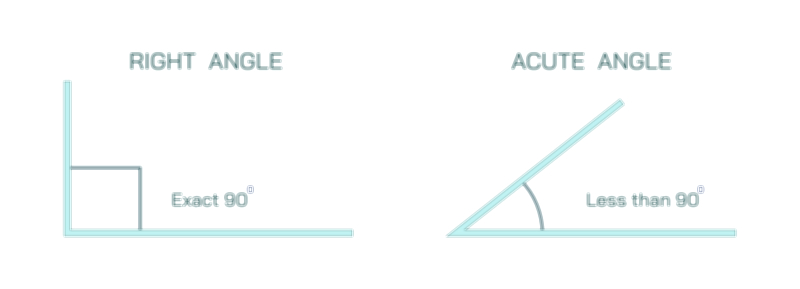
From linear structures arise angles, formed when two rays share a common endpoint called the vertex. Angles provide a way of measuring rotation and orientation in space. They come in distinct types depending on their size: acute angles are less than ninety degrees, right angles equal exactly ninety degrees, obtuse angles range between ninety and one hundred eighty degrees, and straight angles measure exactly one hundred eighty degrees. Angles exceeding one hundred eighty degrees form reflex angles, which curve outward beyond a straight line. Understanding angles is crucial because every polygon, triangle, and geometric figure is shaped by how its sides meet. Angles influence the structural stability of real-world constructions, determine the slopes of roofs and ramps, guide the layout of roads and intersections, and define the aesthetic qualities of art and architectural space. Measuring angles gives insight into rotation, symmetry, and orientation, allowing geometry to serve as a bridge between static form and dynamic movement.
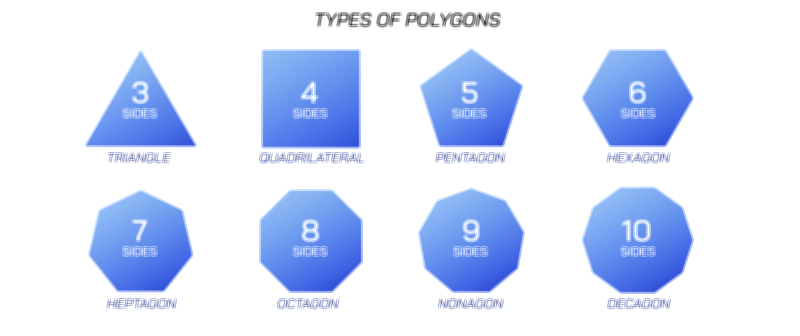
When several line segments join to enclose a space, they form polygons, two-dimensional closed shapes characterized by straight sides. The simplest polygon, the triangle, has three sides and three angles and plays a special role in geometry because no other polygon is more rigid or structurally stable. The triangle's rigidity explains why it appears in roof trusses, bridge supports, and structural frameworks. Triangles can be classified by their side lengths (equilateral, isosceles, scalene) or by their angles (acute, right, obtuse). Beyond triangles lies the quadrilateral family—four-sided figures such as squares, rectangles, parallelograms, trapeziums, and rhombuses. Each quadrilateral type has its own combination of parallel sides, equal lengths, and right angles, illustrating how small variations in line relationships create completely different shapes. Polygons continue to increase in number of sides to form pentagons, hexagons, octagons, and beyond. As the number of sides increases, the shape grows closer to a circle, emphasizing the gradual relationship between straight-edged figures and curved forms.
Curved shapes form another essential category of geometry. The circle stands out because every point along its boundary is equidistant from the center. This property creates perfect rotational symmetry and makes the circle useful in wheels, gears, clocks, piping systems, domes, and countless natural structures such as tree rings, ripples in water, and planetary orbits projected into two dimensions. A circle represents not only an ideal shape but also a system that balances geometry and motion. Curved geometry extends further to ellipses, which look like stretched circles and describe planetary paths and conic sections. Spirals and arcs appear in shells, whirlpools, wind patterns, galaxies, and artistic motifs across cultures. These curved forms highlight how geometry extends beyond rigid straight lines to embrace the fluid and organic patterns of nature.
Geometry becomes even more fascinating when viewed in three dimensions, where shapes occupy volume. Cubes, spheres, cylinders, pyramids, cone-shaped forms, and prisms reflect the three-dimensional analogs of flat polygons and curved shapes. A cuboid relates to rectangles; a cylinder corresponds to circles; and pyramids relate to triangular and polygonal bases. These solid figures fill real space and therefore simulate real objects in the world—buildings, containers, mechanical parts, furniture, and every object we interact with daily. In engineering and manufacturing, understanding three-dimensional geometry ensures that parts fit together, withstand forces, and function efficiently. Even the study of shadows, projections, and cross-sections—how 3D objects look when sliced or viewed in 2D—reveals deep geometric principles used in architecture, medical imaging, technical drawing, and virtual modeling.
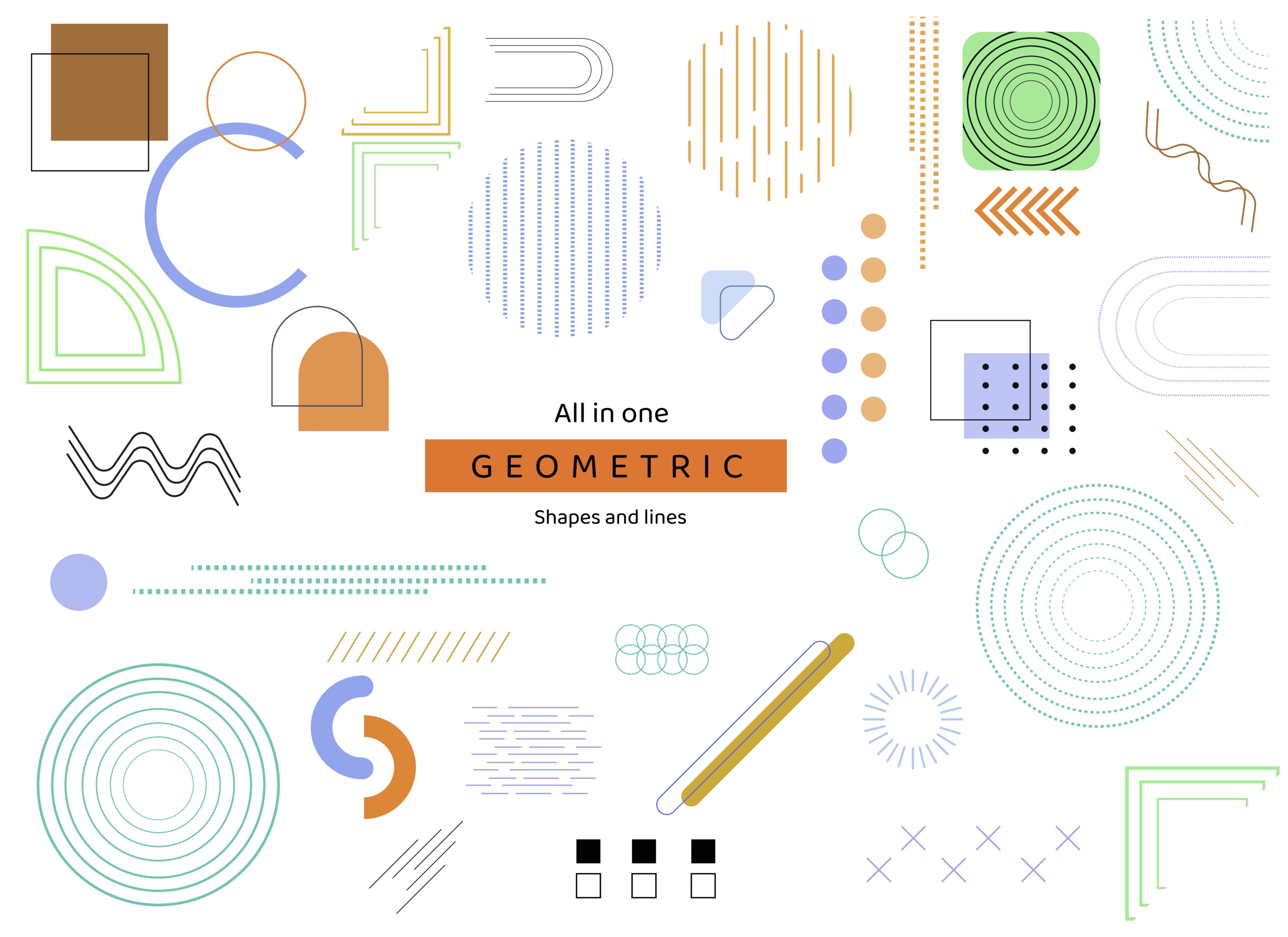
The idea of patterns and symmetry arises naturally as geometry scales from individual shapes to arrangements of shapes in space. Symmetry describes balance and repetition, seen when parts of a figure mirror each other across a line or around a point. Reflection symmetry appears in butterflies, leaves, and human faces; rotational symmetry appears in flowers, gears, wheels, and decorative designs; translational symmetry appears when a pattern repeats across space, such as flooring tiles or textile designs. Tessellations extend this repetition further by covering a surface completely without gaps or overlaps. Regular shapes like squares, triangles, and hexagons tessellate naturally, producing patterns used in paving blocks, mosaics, wallpapers, carpets, and digital graphics. Nature also displays geometric patterns such as honeycomb hexagons, branching fractal trees, molecular lattices, snowflakes, and the arrangement of sunflower seeds—themes that show how structure and repetition arise even in living systems.
Even the slope of a line, the orientation of edges, and the relationships between multiple shapes give geometry its analytical strength. Shapes may be congruent, sharing the same size and form, or similar, sharing proportional dimensions and overall appearance despite differences in scale. Similarity explains why small and large triangles can share identical angle values and why architectural scale models match the buildings they represent. Spatial reasoning extends into transformations, including translation, rotation, reflection, and enlargement. These transformations demonstrate that shapes can change position, size, and orientation while retaining certain properties. Such ideas become the foundation for computer graphics, animation, CAD design, robotics, and motion tracking, where objects are manipulated through geometric rules rather than physical force.
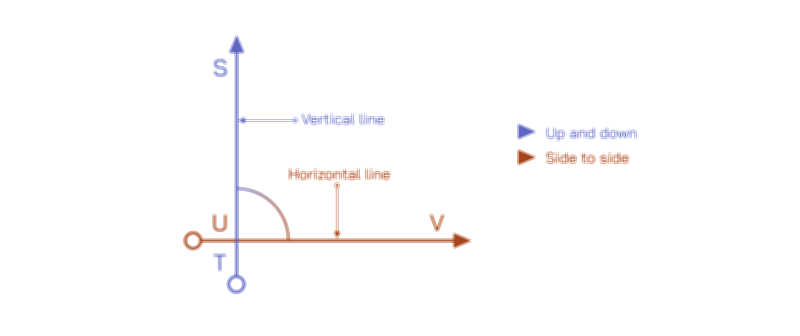
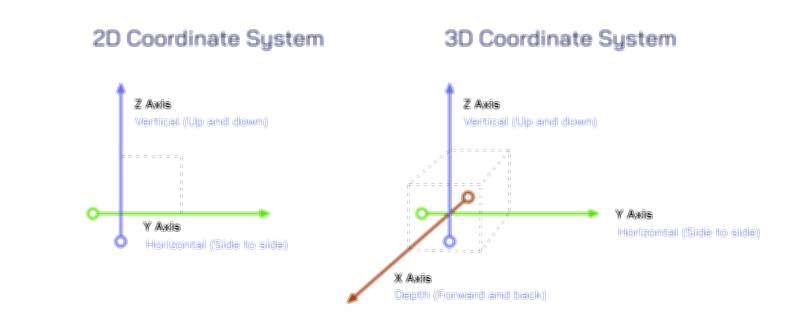
Geometry also excels at revealing relationships that are invisible without abstraction. Parallel lines never intersect and define consistent direction, while perpendicular lines intersect to form right angles, allowing us to construct grids, coordinates, and mapping systems. Coordinate geometry brings algebra into geometric reasoning, enabling shapes to exist not only visually but also numerically through positions on an axis. Through this connection, geometry and algebra merge to give rise to analytic geometry, supporting map navigation, satellite systems, digital rendering, and scientific measurement.
Ultimately, geometry is more than a catalog of shapes; it is a way of interpreting space logically. It explains how forms can be classified, compared, measured, transformed, and combined. It describes structure in both man-made and natural systems and turns visual intuition into mathematical understanding. Whether observing the framework of a building, the petal layout of a flower, the pattern of tiles on a floor, the structure of a snowflake, the projection of shadows on a wall, or the properties of crystals and molecules, geometry reveals that space is not random but highly organized. By studying basic geometric figures, angles, and patterns, one gains not only mathematical knowledge but also the ability to perceive order, symmetry, proportion, and design in the world around us.