Geometry Shapes and Their Shadow Projections: Understanding Light, Form, and Dimensional Transformation
The relationship between geometric shapes and their shadow projections is one of the most visually profound concepts in mathematics and physics, revealing how objects in three-dimensional space interact with light to produce two-dimensional silhouettes. When a source of light illuminates a solid figure, it creates a shadow that depends not only on the object’s form but also on the orientation and distance of the light source. Shadows are not mere silhouettes; they hold information about structure, orientation, symmetry, and dimensional transition. The study of shadows becomes a bridge between geometry and perception, allowing the human mind to understand forms beyond direct observation by interpreting the transformations cast upon surrounding surfaces. Throughout history, artists, architects, physicists, and mathematicians have studied shadows to decode visual depth, recreate realistic imagery, calculate sizes of distant objects, and explore the mysterious idea of higher-dimensional shapes and their projections.
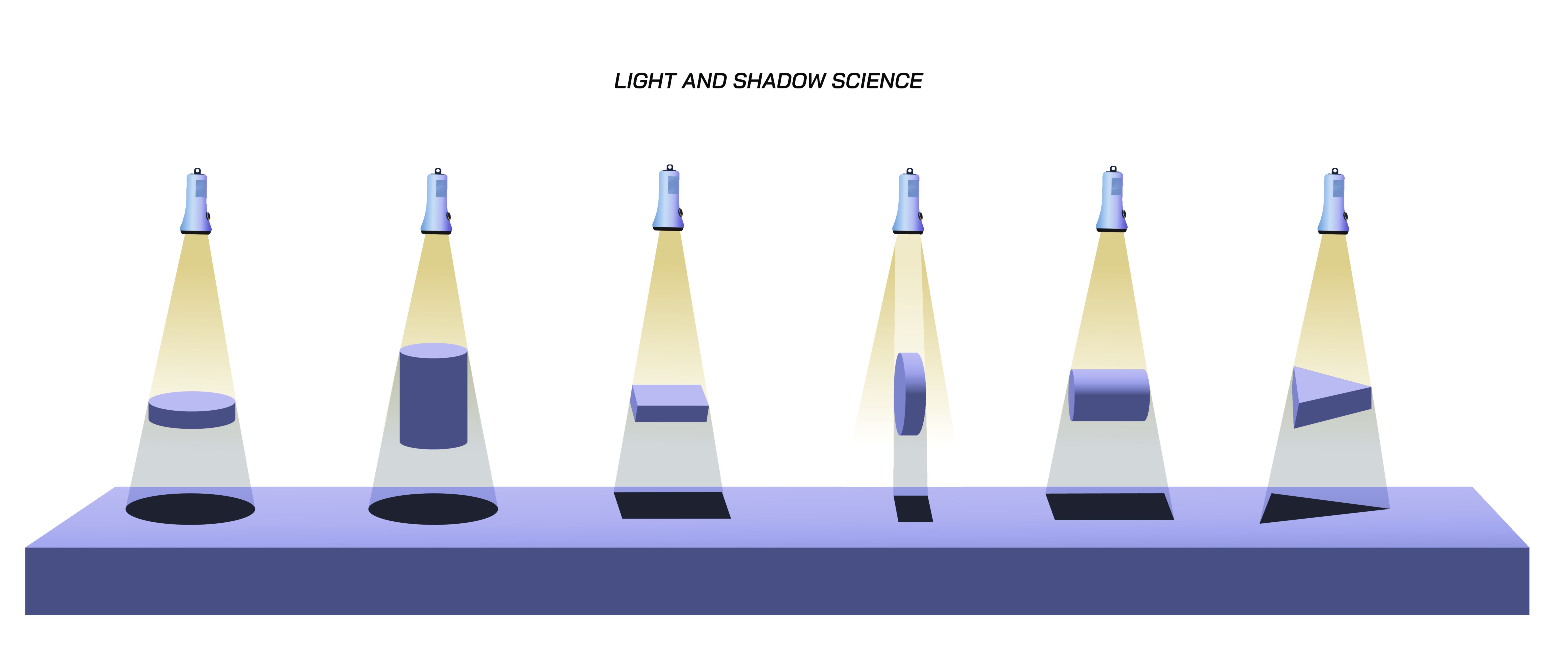
When a geometric shape is placed in front of a light source, its shadow represents a projection, meaning that the three-dimensional figure is mapped onto a two-dimensional plane. This projection flattens the depth dimension, causing some spatial relationships to be lost while others become emphasized. For example, a cube may cast a square shadow when its face is directly toward the light, but with a different orientation, the same cube casts a hexagonal shape containing angled edges. A sphere, on the other hand, remains consistent under all orientations, producing a circular shadow when struck by light of any direction. Cylinders offer a fascinating variation because the projected shape depends on the angle of the light; a cylinder can produce a circle when the light hits its circular base directly, or a rectangle when the light shines parallel to its axis, or even a stretched ellipse when positioned diagonally. The shadows of pyramids and cones provide sharp outlines filled with converging edges that reveal the underlying geometry, showing how the projected form changes dynamically as the light rotates. These examples illustrate that shadows are not random distortions, but predictable transformations governed by the alignment of light, shape, and projection surface.
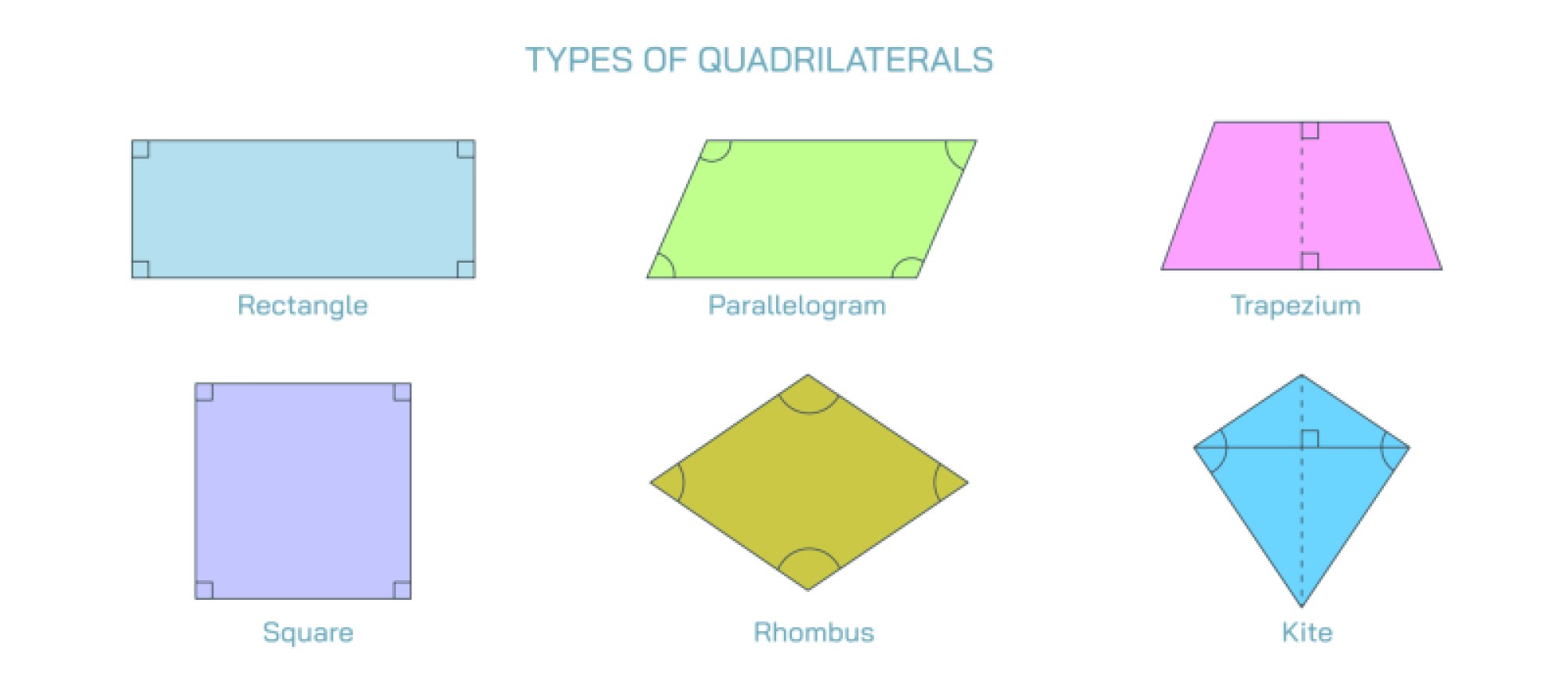
Shadow projection becomes especially intriguing when analyzing how complex shapes behave under different forms of illumination. A parallel beam of light, such as sunlight, projects shadows with parallel rays, preserving dimensional properties but scaling the image depending only on distance and angle. In contrast, a point light source, such as a torch or bulb, creates diverging rays that give shadows a perspective quality: shapes appear larger when close to the source and shrink rapidly as they move farther away. This difference explains why an object near a campfire produces a large, exaggerated shadow on the ground behind it. The type of projection also determines whether similarity or distortion occurs; with parallel light, a square remains a parallelogram or a scaled square depending on rotation, while under a point source it might distort to a trapezoidal or irregular outline. Such variations reveal why shadows play such an essential role not only in art and photography but also in fields such as computer graphics, medical imaging, and cinematography, where precise control of light projection is necessary.
Beyond their aesthetic appeal, shadows carry analytical meaning about geometry. They provide a gateway to explore dimensional relationships because every three-dimensional object can be studied through the simplified lens of its two-dimensional shadow. Ancient astronomers used shadows to measure the height of distant structures, the curvature of the Earth, and the angle of celestial movements long before modern tools existed. In architecture, shadows reveal hidden structural conditions by indicating whether surfaces are angular, flat, concave, or convex. Even in biology, the shadow pattern of organisms, such as the wings of a bird in flight or the branching of a tree, allows for the interpretation of motion and structural function. When engineers evaluate mechanical components, the projected shadow can expose eccentricities, misalignments, or warping that might remain unnoticed through direct observation. The recurring theme throughout these examples is that shadow projections translate space into simplified but meaningful information.
The concept becomes even more thought-provoking when extended to higher-dimensional thinking. In mathematics and theoretical physics, a shadow projection provides an analogy for how higher-dimensional objects might be perceived in lower-dimensional realities. Just as a three-dimensional cube casts a two-dimensional shadow that loses depth, a hypothetical four-dimensional hypercube would cast a three-dimensional projection that appears distorted to us because we cannot visualize the full dimensional form directly. In this analogy, the shadow becomes a bridge of understanding, allowing a lower-dimensional observer to gain partial but informative insight into structures beyond their direct perception. This theoretical usage of shadow projection highlights the power of the concept in unlocking imagination, abstract reasoning, and multidimensional mathematical exploration.
In the natural world, the motion of shadows over time is a constant reminder that shadow projections are not static but dynamic interactions between shape and environment. Throughout the day as the Sun moves across the sky, the shadow of a tree stretches, shrinks, rotates, and reorients. The change reveals temporal information about the Earth’s rotation and the relative geometry between the ground plane and the path of sunlight. Similar behavior occurs in artificial environments: a rotating sculpture under a spotlight creates a continuously shifting projection that exaggerates edges, curves, and hollow spaces, almost as if a new object is being created moment by moment. This shifting of shadows brings forward the idea that projection doesn’t just display a single interpretation but many possible interpretations depending on conditions.
Light itself profoundly affects shadow tone and clarity. A strong concentrated source produces sharp, high-contrast outlines, allowing every geometric edge to be observed precisely, whereas diffused light creates softer gradients with penumbra regions that blur boundary lines. These subtle variations carry multiple layers of spatial information. A crisp shadow suggests minimal scattering and strong structural definition, while soft shadows indicate layered surfaces and diffused illumination. In art, this interplay is used to convey depth, volume, and atmosphere; in industrial precision measurement systems, it is used to read micro-scale deviations in mechanical parts; in robotics and computer vision, it guides perception algorithms for object recognition.
Ultimately, geometry and shadow projection form a partnership that illustrates how understanding one illuminates understanding of the other. Shadow projections express the essence of an object without showing every detail, allowing essential patterns to emerge from simplified outlines. They are silent storytellers of shape, orientation, and dimension, revealing what lies inside form through what is cast outside of it. Whether one observes the changing silhouette of a building at sunset, the evolving shape of a child’s toy rotated against a flashlight, or the projected form of a complex sculpture under theatrical lighting, the experience is a reminder that shadows are both reflections and transformations of geometry. In this way, the study of shadow projections not only deepens understanding of mathematical shapes but also enriches appreciation of the natural and constructed world, demonstrating that even in their simplest appearance, shadows contain profound information about space, structure, and the unseen dimensions that define reality.