Sex Chromosomes: X and Y Chromosome Structure and Role in Human Gender Determination Explained
Sex chromosomes are the genetic structures that determine whether a developing human embryo will follow a predominantly male or female biological pathway. Unlike the 22 pairs of autosomes that carry genes shared by both sexes, the sex chromosomes — labeled X and Y — carry genes that influence reproductive anatomy, sexual development, and endocrine patterns. Although sex determination is far more complex than a single genetic switch, the presence or absence of particular chromosomes sets major developmental processes into motion. Every human cell contains 46 chromosomes arranged in 23 pairs, and one of those pairs consists of either XX or XY. Individuals with two X chromosomes typically develop along the female pathway, while individuals with one X and one Y generally develop along the male pathway. The difference between these two chromosome types triggers divergent pathways during early embryonic development, shaping reproductive organs, hormone patterns, and secondary sexual characteristics.
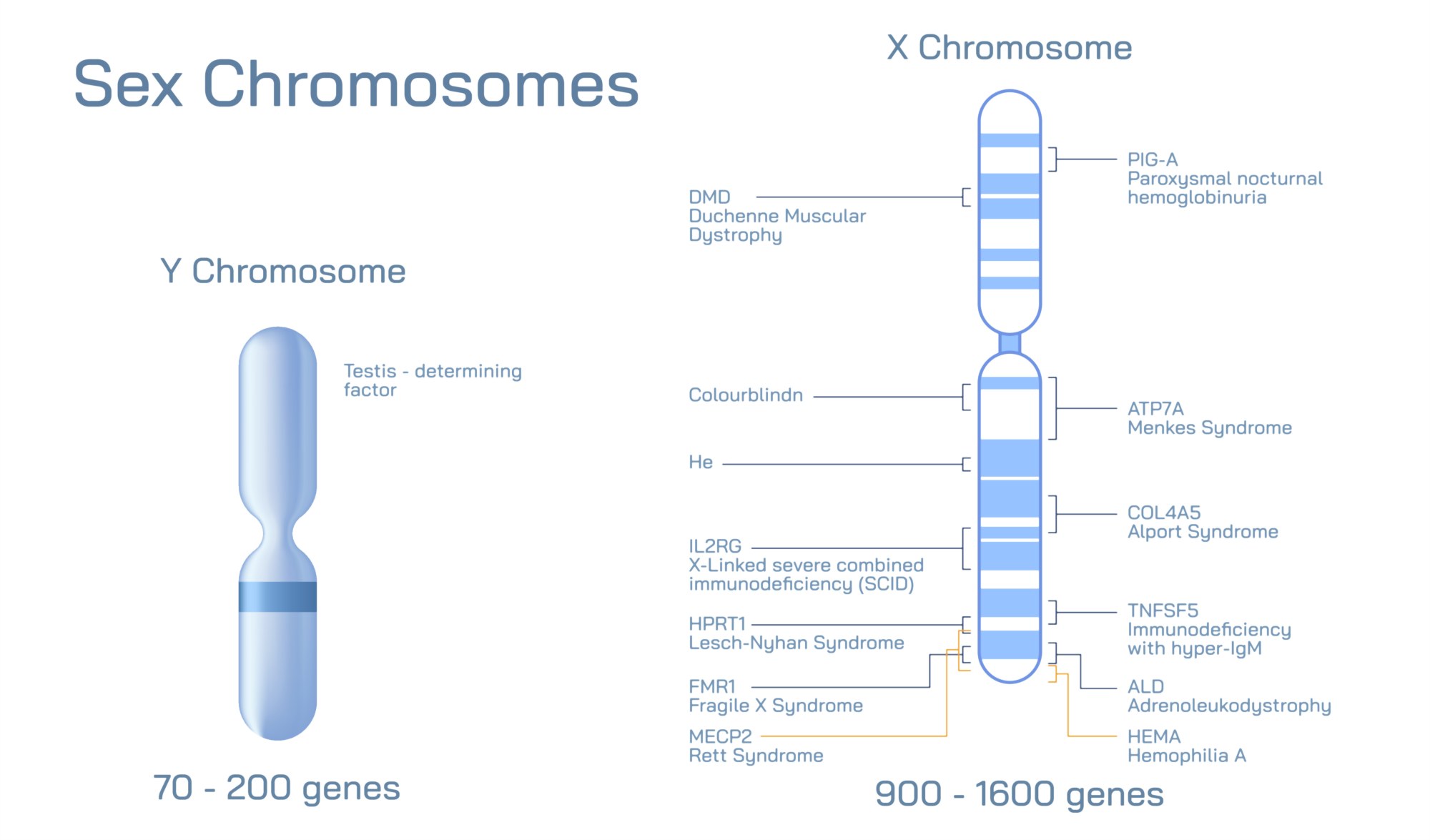
The X chromosome is one of the largest chromosomes in the human genome and contains more than a thousand genes responsible for a wide variety of biological functions — many unrelated to sex. These genes influence brain development, immune function, skeletal structure, and metabolic pathways. Because females carry two X chromosomes while males carry only one, nature has evolved a process known as X-chromosome inactivation to keep gene expression balanced between the sexes. Early in embryonic life, one of the two X chromosomes in each female cell becomes largely inactive, forming a dense structure called a Barr body. This process ensures that both males and females produce similar amounts of X-linked gene products, preventing excessive expression in XX individuals. The random pattern of X inactivation — some cells inactivating the maternal X and others the paternal X — contributes to biological diversity, and in some cases produces mosaic traits such as variable skin pigmentation or mild expression of X-linked disorders.
The Y chromosome, in contrast, is one of the smallest chromosomes and contains far fewer genes — fewer than 100 in total — but the genes it carries have extraordinarily powerful effects. The defining gene on the Y chromosome is SRY (Sex-determining Region on the Y). This gene functions as the primary molecular switch for male development. Around the sixth week of embryogenesis, if SRY is present and active, it triggers a cascade of genetic signals that causes undifferentiated gonadal tissue to develop into testes rather than ovaries. The developing testes then secrete two critical hormones: testosterone and anti-Müllerian hormone. Testosterone promotes the formation of male internal and external reproductive structures, while anti-Müllerian hormone prevents the development of female internal ducts. If SRY is absent — as in embryos with XX chromosomes — the gonads develop into ovaries, and hormones produced later in gestation promote the development of the female reproductive system. Thus, the presence or absence of the Y chromosome — and specifically the SRY gene — directs the earliest division in sexual development.
Although the X and Y chromosomes function together as a pair, they do not match in size or gene content. However, there are small regions known as pseudoautosomal regions located at the tips of both chromosomes where homologous gene sequences allow X and Y to pair and exchange DNA during sperm production. This recombination ensures proper chromosome segregation. Outside these shared regions, the Y chromosome contains highly specialized genes important for spermatogenesis — the production and maturation of sperm. Because these genes do not recombine with a homolog for most of the chromosome, the Y chromosome has reduced capacity to repair mutations. This is one reason why Y-linked genes demonstrate strong inheritance through paternal lines and why the Y chromosome is often used in studies of ancestry and human migration.
The role of sex chromosomes extends beyond primary sexual development. They influence puberty timing, hormone regulation, fertility, and certain disease susceptibilities. Genetic variations, duplications, deletions, or rearrangements on the X or Y chromosome can result in differences in sexual development and reproductive function. For instance, Turner syndrome arises when an individual possesses a single X chromosome (45,X), leading to ovarian insufficiency and particular body characteristics due to the absence of genes normally contributed by the second X. Klinefelter syndrome (47,XXY) occurs when an individual has an extra X chromosome while also having a Y, leading to testicular underdevelopment and variations in fertility and secondary sexual traits. Androgen insensitivity syndrome and other intersex conditions further highlight that biological sex is shaped not only by chromosome complement but also by gene expression, hormone function, and receptor sensitivity.
Although the genetics of sex determination begins with chromosomes, hormones play an essential role in shaping sexual characteristics across the lifespan. After birth and into puberty, surges in sex hormones guide the development of secondary traits — such as body hair patterns, voice changes, breast development, muscle distribution, and reproductive capability. The X and Y chromosomes indirectly regulate many of these changes by establishing the gonadal tissue that produces the hormones responsible for these traits. Even in adulthood, the sex chromosomes influence health beyond reproduction. Certain immune diseases, neurological conditions, and metabolic differences show patterns that trace back to X-linked genes and hormonal influences derived from early chromosomal signals. Thus, sex chromosomes exert lifelong effects on physiology.
It is also important to recognize that biological sex is not determined solely by the presence of X and Y chromosomes. While the XX and XY patterns represent the most common outcomes, natural variations in chromosomal number, gene placement, and hormonal signaling produce a spectrum of developmental pathways. These variations reflect the complexity of chromosomal biology rather than any deviation from a “standard” model. In genetics and developmental biology, sex determination is understood as a multilayered system with chromosomes acting as the foundational signal upon which downstream hormones and cellular receptors depend.
Ultimately, the X and Y chromosomes illustrate how small genetic differences can initiate vast biological divergence. The X chromosome carries a rich library of essential genes used by every human, while the Y chromosome carries the specific trigger that directs early development toward male differentiation. Together, they form the basis of human sexual development, influencing not only reproductive organs but also hormonal physiology and molecular pathways across the body. The story of sex chromosomes is a reminder that genetics is both precise and dynamic: one additional gene on one chromosome can reshape anatomy, physiology, and biological identity, while the shared genes across chromosomes ensure that development remains stable and coordinated across generations.