Human Hair Structure — Layers, Follicles, and Biological Composition Explained
Human hair is far more complex than it appears on the surface, and although it is often thought of simply as a threadlike fiber growing from the scalp, its internal architecture reveals a sophisticated biological system designed for protection, sensation, thermal regulation, identity, and communication. Each strand of hair is not a lifeless filament but the product of a living miniature organ embedded deep in the skin called the hair follicle, where coordinated cellular and biochemical processes construct and maintain the fiber throughout the hair growth cycle. When examined closely, hair becomes a striking intersection of anatomy, physiology, genetics, and biochemistry. From the microscopic layering of the hair shaft to the dynamic stem cell activity inside the follicle, the structure of hair demonstrates an intricate design that ensures strength, flexibility, resilience, and continued renewal throughout a person’s life. Understanding these layers and components provides insight not only into how hair grows but also into how it responds to styling, environmental conditions, aging, health changes, and nutritional variations.
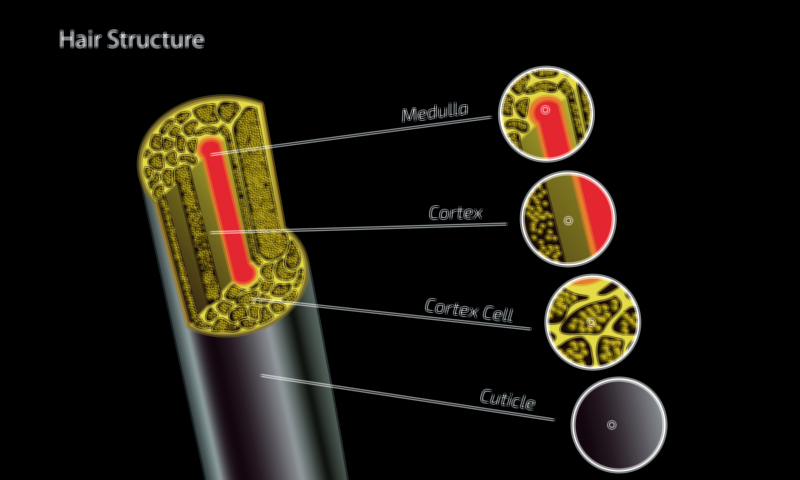
The part of hair that is visible outside the skin is known as the hair shaft, and although it appears solid and uniform to the naked eye, it is built from three specialized layers. The outermost layer is the cuticle, a protective sheath composed of overlapping scale-like cells arranged like roofing shingles. These scales lie flat in healthy hair, providing smoothness, shine, and resistance against chemical or mechanical damage. When the cuticle is damaged by heat, friction, or chemical exposure, the scales lift or chip away, making hair rough, dull, and susceptible to breakage. Beneath the cuticle lies the cortex, the thickest and most important structural layer responsible for the hair’s strength, elasticity, and color. The cortex is composed of long keratin protein chains twisted together into bundles, forming a resilient intermediate filament network that gives hair its ability to bend without snapping and to stretch and return to its original length. Embedded within the cortex are melanin pigments, which determine natural hair color and protect hair from ultraviolet radiation. At the center of some hairs lies the medulla, a spongelike core made of loosely packed soft keratin, although not all hair types contain a medulla and its function may vary depending on genetics, hair thickness, and species. These three layers together create a composite structure engineered to withstand stress while maintaining flexibility and integrity.
Although the hair shaft is composed of dead keratinized cells, the true biological activity occurs inside the hair follicle, a tunnel-like pocket of living tissue that anchors hair into the skin. At the base of the follicle sits the hair bulb, home to rapidly dividing matrix cells that form the physical substance of the hair. These cells receive nourishment through the dermal papilla, a vascular-rich projection supplying oxygen, amino acids, minerals, and growth signals that determine hair length, thickness, and growth rate. The papilla releases chemical messengers, including growth factors and hormones, that instruct the matrix cells when to produce keratin and how quickly the hair should elongate. The bulb is also home to melanocytes, pigment-producing cells that inject melanin into the developing keratin structure, resulting in natural hair color. When melanocyte activity slows or ceases, pigmentation decreases, leading to graying or white hair. The follicle operates like a microscopic factory, where new cells are continuously generated, pushed upward, and transformed into the hardened, protein-rich filaments that emerge from the surface.
Surrounding the follicle is a multilayered support system that ensures the hair remains functional and responsive. The inner and outer root sheaths encase the developing hair shaft, guiding its formation and anchoring it securely. Sebaceous glands connected to the follicle secrete sebum, an oily substance that coats the hair and scalp to provide lubrication, moisture retention, and defense against microbes. The arrector pili muscle, a tiny smooth muscle attached to each follicle, contracts in response to cold or emotional stimuli, making the hair stand upright and creating the phenomenon known as “goosebumps.” The follicle also contains free nerve endings that help transmit sensory information, making hair an early-warning detector for contact, movement, and temperature changes around the skin surface. This explains why even a gentle brush against a single hair can be felt distinctly — each follicle is biologically wired to the nervous system.
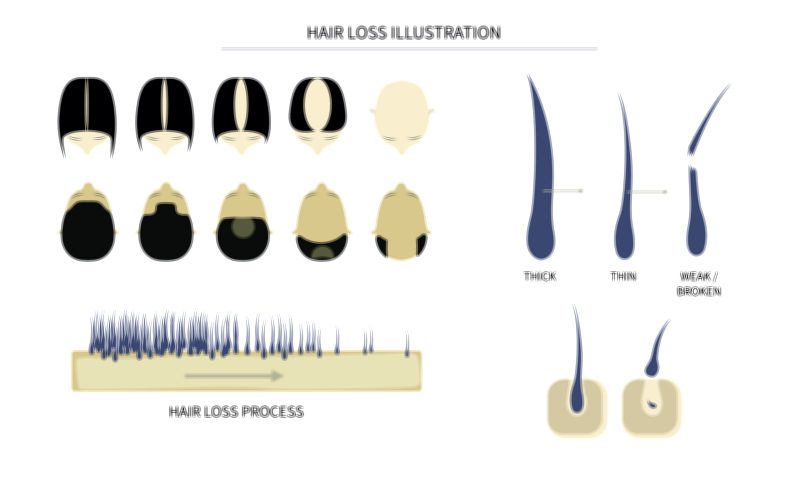
Hair does not grow continuously at a fixed rate but instead follows a cyclical pattern, consisting of the anagen (growth), catagen (transition), and telogen (resting) phases. In the anagen phase, matrix cells multiply rapidly, and the hair lengthens at a steady pace. This phase can last several years on the scalp, enabling long hair growth, whereas hair on eyebrows and arms remains in anagen only briefly, explaining the shorter length of body hair. The catagen phase marks a period of controlled regression where cell division stops and the follicle shrinks slightly as the connection to the dermal papilla reorganizes. Finally, the telogen phase allows the follicle to rest; the existing hair remains anchored until it sheds naturally or is pushed out by the emergence of a new hair beginning its own anagen phase. The synchronization of millions of follicles determines density and fullness, and disruptions — whether hormonal, genetic, stress-induced, or disease-related — can lead to thinning or shedding.
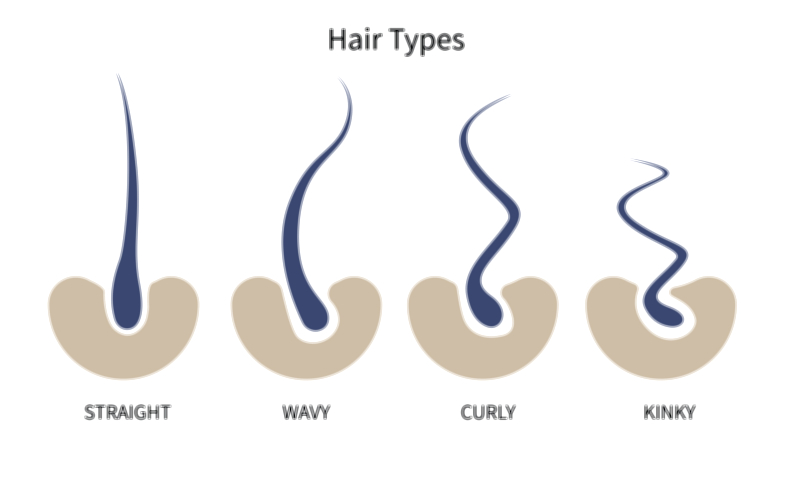
At the biochemical level, hair is built primarily from keratin, a tough fibrous protein rich in sulfur-containing amino acids such as cysteine. These amino acids form disulfide bonds, which act as molecular cross-links that determine hair’s stiffness, curl pattern, and resilience. The more disulfide linkages present, the curlier and stronger the hair tends to be. Heat styling, chemical straightening, perming, and coloring treatments modify or temporarily break these bonds, altering the shape or texture of the hair. Moisture also plays a major role in hair behavior; hydrogen bonds within keratin respond to humidity, causing hair to swell, curl, or frizz depending on environmental conditions. This sensitivity is not a flaw but a natural consequence of hair’s protein composition, which interacts dynamically with atmospheric water.
Hair health reflects a combination of internal and external factors. Nutrition provides the raw materials — amino acids, vitamins, minerals, and lipids — needed for follicle metabolism and keratin construction. Hormones regulate growth cycles, influencing thickness and shedding patterns throughout life, from puberty to aging. Genetics determine inherent traits such as curl formation, color, density, and growth rate. Environmental influences, including sunlight, pollution, chemical exposure, and mechanical wear, act primarily on the cuticle, affecting smoothness and break resistance. Although hair cannot heal itself once outside the follicle, proper care can preserve the cuticle, minimize damage, and maintain the cortex for maximum strength and durability. This interplay between biology and care explains why hair maintenance involves protecting the dead shaft while nourishing the living follicle beneath the scalp.
Beyond biological function, human hair carries cultural, social, and psychological significance unmatched by most other body structures. It contributes to identity, self-expression, and beauty across societies and eras. Styling practices, rituals, and symbolism reveal that hair operates not only as a physical structure but also as a medium of communication. Yet its ability to fulfill these expressive roles depends entirely on the microscopic architecture that gives it strength, texture, elasticity, and response to shaping techniques. When hair is dyed, straightened, curled, braided, or cut, every transformation arises from interacting with the structural layers — altering the cuticle, reshaping the cortex, shifting moisture content, or rearranging chemical bonds. Styling practices succeed because the structure of hair is both durable enough to handle manipulation and flexible enough to accommodate change.
Seeing hair through this structural and biological lens reveals a coherent scientific narrative. The hair follicle serves as the living engine of growth, the hair bulb produces the materials that assemble into the visible strand, and the hair shaft layers protect, support, and express the physical qualities that humans associate with appearance. What looks to the eye like a simple thread is, in reality, the product of cellular coordination, protein engineering, pigmentation chemistry, and biomechanical design. The durability of keratin, the elegance of cortex fiber alignment, the shielding power of the cuticle, and the dynamic growth cycle regulated by the follicle together form a composite biological system optimized for longevity, sensitivity, and adaptability.
Ultimately, human hair shows how form and function intertwine at every scale of biology. It emerges from a living organ, solidifies into a durable protein fiber, acquires color from pigment cells, responds to forces through mechanical elasticity, and interacts continually with its environment and with cultural practices. The structural layering ensures protection and strength, the follicular machinery ensures growth and renewal, and the biochemical composition ensures flexibility, individuality, and resilience. Through this deeply interconnected system, hair stands as a powerful example of how the human body builds complex materials for survival and expression — a synthesis of biology, evolution, structure, and meaning woven into every strand.