Human Hair Structure — Anatomy, Layers, and Follicle Composition Explained
Human hair is much more than a thin fiber growing from the surface of the skin; it is the product of a highly organized biological structure that works beneath and above the scalp to create one of the most resilient and expressive tissues in the human body. While the part of the hair that we can see and touch appears simple, its formation involves intricate cellular coordination, biochemical synthesis, tissue specialization, and continuous cyclic renewal driven by a miniature living organ called the hair follicle. To understand hair scientifically, it is necessary to look not only at the visible strand, known as the hair shaft, but also at the deeper follicular architecture where hair originates, develops, and acquires its mechanical and visual properties. This layered arrangement allows hair to act as a protective barrier, a sensory tool, a regulator of thermal insulation, and a medium for cultural identity and self-expression, all through systems that operate with remarkable efficiency and precision.
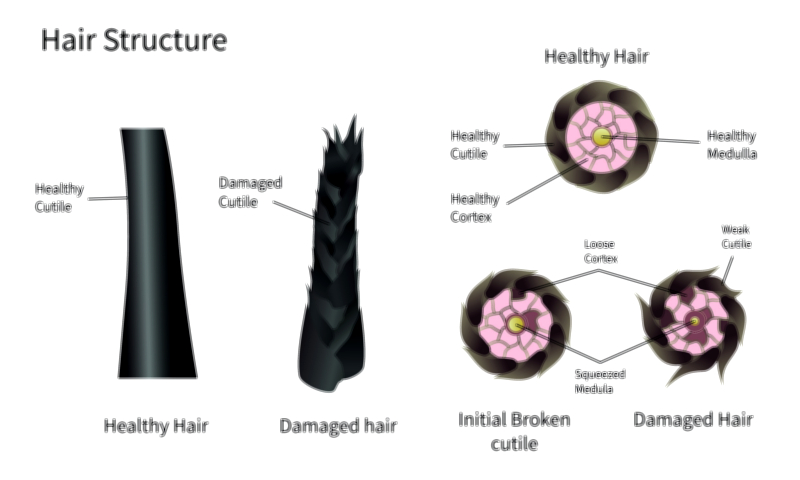
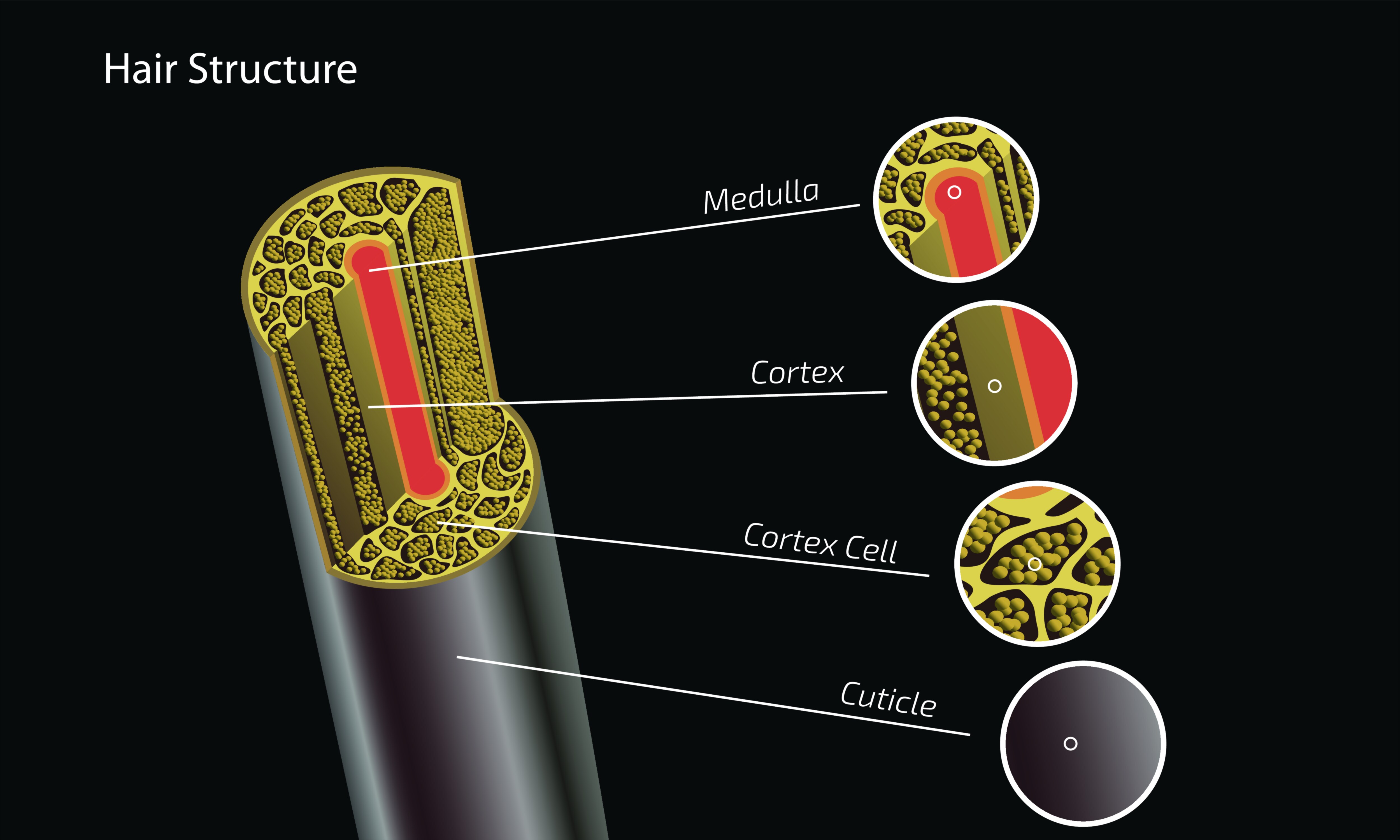
The visible portion of hair, called the hair shaft, is engineered from highly organized dead keratinized cells, and although it contains no living tissue, it embodies the complex biological work that happened within the follicle before emerging at the surface. The shaft is composed of three concentric layers arranged to provide a balance of protection, strength, elasticity, and flexibility. The outermost layer, the cuticle, acts as a shield made of overlapping transparent scale-like cells that align tightly to protect the inner fiber from mechanical and environmental damage. These scales determine surface shine, smoothness, friction, moisture retention, and overall tactile quality. Under ideal conditions, they lie flat and tightly sealed, reflecting light and minimizing tangling; but under harsh conditions such as heat styling, chemical exposure, friction, hard water, and UV radiation, the cuticle can lift or chip away, exposing the inner structure and increasing vulnerability to breakage.
Beneath the cuticle lies the cortex, the thick central region responsible for most of hair’s mechanical and aesthetic characteristics. The cortex is built from elongated keratin bundles twisted into rope-like formations, forming a highly resilient protein architecture capable of withstanding tension while retaining flexibility. This fibrous protein arrangement explains why hair can bend, stretch, or coil without snapping—up to a point—because the cortex is designed to absorb and redistribute force before returning to its original configuration. Within this structure also reside melanin pigments, the molecules that give hair its natural color and protect it from ultraviolet radiation. Variations in type, density, and distribution of melanin create the spectrum of natural hair colors across the world. The innermost layer of the shaft, the medulla, is a core composed of loosely connected soft keratin, though not all hair types contain a visible medulla. Thick or coarse hair often has a continuous medulla, while fine or naturally light hair may have a fragmented or absent medulla. Although scientists continue to study its precise function, the medulla is believed to influence thermal insulation and possibly contribute to the structural rigidity of very thick fibers.
While the shaft is the part that can be groomed, cut, straightened, or colored, every visible change originates within the hair follicle, a living organ located deep in the dermis of the skin. The follicle is a tubular structure that anchors the hair firmly into the scalp while supplying nourishment and regulating growth. At its base lies the hair bulb, a rounded enlargement containing the matrix, a cluster of rapidly dividing stem-derived cells that create the hair fiber through continuous replication and keratinization. Just beneath these matrix cells is the dermal papilla, a vital structure containing blood vessels that deliver oxygen, nutrients, hormones, and growth signals. The papilla determines the growth speed, thickness, and longevity of the hair by communicating with the matrix cells through biochemical messengers. When the papilla is active, hair continues to grow; when its activity slows or ceases, the hair shaft stops elongating and eventually sheds in preparation for renewal.
Surrounding the bulb and matrix cells are melanocytes, specialized pigment-producing cells that inject melanin into the developing keratin structure, providing the hair with its natural color before the shaft emerges from the follicle. The gradual decline of melanocyte function with age results in gray or white hair, demonstrating how pigmentation is not a surface feature but an intrinsic characteristic determined before the fiber exits the skin. Encasing the developing shaft are the inner and outer root sheaths, layered structures that stabilize the hair, guide its outward movement, preserve fiber alignment, and contribute to its shape and thickness. The follicle is also integrated into dermatological systems through the sebaceous gland, which secretes sebum—an oily substance that coats the hair and scalp to provide lubrication, protection against dryness, and defense against microbes. Attached to each follicle is a smooth muscle known as the arrector pili, which contracts in response to cold or emotional stimuli, causing the hair to stand upright and creating the phenomenon of goosebumps.
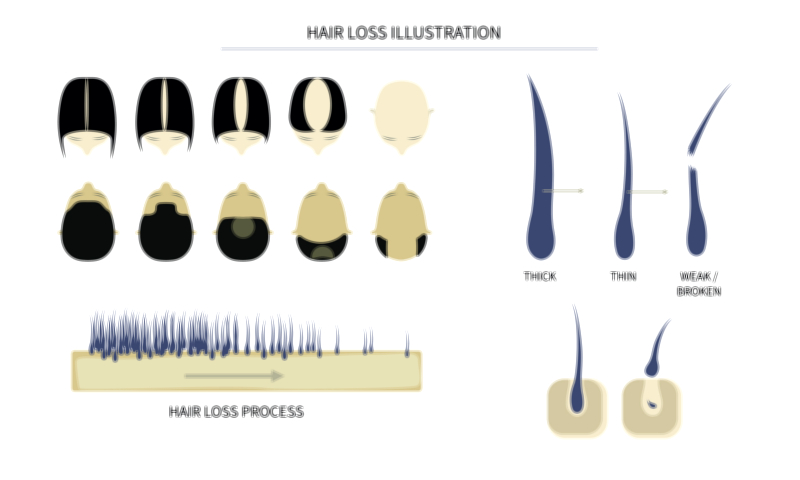
Human hair undergoes continuous biological renewal through a cyclic growth pattern consisting of three distinct phases. The anagen phase, or active growth phase, can last several years on the scalp and determines hair length potential. During this phase, the follicular machinery works at high metabolic speed, producing keratin and elongating the shaft. When the follicle transitions into the catagen phase, growth stops and the follicle begins to shrink slightly as the connection between the bulb and dermal papilla reorganizes. This is a short, controlled regression period that prepares the follicle for its period of inactivity. The telogen phase is the resting stage, during which the fully formed hair remains anchored in place while follicular activity pauses. Eventually, the hair fiber is shed naturally or during grooming as the follicle restarts the cycle, pushing out the old strand when a new one begins its own anagen growth. A healthy scalp contains follicles in all phases simultaneously, creating a balanced appearance of density and fullness.
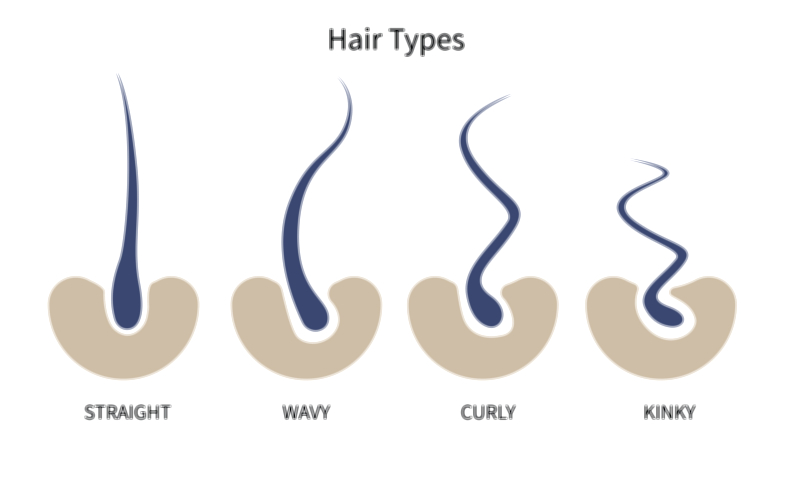
The biochemical composition of hair is dominated by keratin, a highly durable and compact protein structure built for long-term resilience. Keratin’s strength is heavily influenced by sulfur-rich amino acids, particularly cysteine, which form disulfide bonds that act as molecular cross-links inside the cortex. These cross-links create internal reinforcement, influencing both the stiffness and curl pattern of the hair. Straight hair contains evenly distributed cross-links, whereas curly and coily hair forms more nonuniform bonding patterns, generating natural bends, spirals, or tight coils. Styling treatments such as permanent waves, chemical relaxers, and thermal straightening alter these structural bonds temporarily or permanently to reshape the cortex. In addition to disulfide bonds, hair also contains hydrogen bonds and salt bonds, which are weaker and can be broken easily by water or heat—explaining why humidity can cause frizz and why wet hair can be temporarily molded into different shapes.
Although the hair shaft is biologically inactive once above the skin, its condition is governed by the integrity of its cuticle and the preservation of proteins and moisture within the cortex. Healthy hair depends on the follicle to produce strong keratin structure and on external care to minimize environmental and mechanical damage. Nutrition influences keratin synthesis by supplying the amino acids and micronutrients that matrix cells require. Hormones affect the growth cycle and follicle activity, contributing to patterns such as postpartum shedding, puberty thickening, or age-related thinning. Genetics determine natural thickness, curl pattern, color, density, sebum production, and growth rate. External influences—including ultraviolet exposure, chemical treatments, rough handling, heat tools, pollution, and mineral buildup—primarily affect the cuticle, which acts as the first line of defense for the cortex.
The structural and anatomical design of hair connects microscopic cellular behavior with its visible appearance and mechanical performance. Each strand is a layered mechanical fiber built inside a living mini-organ that evolves continuously over time. The follicle orchestrates growth, the bulb supplies the raw materials, the papilla regulates energy and nutrient delivery, melanocytes provide pigmentation, and the shaft layers carry out the physical roles of protection, flexibility, durability, and insulation. What appears externally as a simple thread of keratin is, in reality, the final output of coordinated cellular construction that mirrors complexity found in much larger organ systems.
Understanding human hair as a layered anatomical structure rather than a surface covering reveals its biological sophistication and resilience. The visible fiber embodies the combination of protein engineering, pigment chemistry, follicular architecture, and evolutionary adaptation. The subsurface follicular system acts as a self-renewing engine, while the shaft reflects the cumulative result of growth environment, genetics, hormonal influence, and care practices. Through its layered structure and organized composition, human hair provides a powerful example of how living tissues create highly specialized materials for structural, functional, and expressive purposes — a synthesis of biology and identity carried by every single strand.