Structure of Human Hair — Layers, Follicle Anatomy, and Hair Composition Explained
Human hair may appear to be a simple threadlike strand on the surface of the skin, yet beneath its smooth exterior lies an extraordinary biological system that combines layered architecture, follicular machinery, biochemical engineering, and continuous renewal. The visible fiber that people style, wash, cut, and color is not alive, but it is produced inside a living mini-organ beneath the skin that builds hair with precision layer by layer. To understand hair scientifically is to recognize that every strand is the final product of cellular multiplication, protein synthesis, pigment distribution, and structural arrangement orchestrated inside the follicle. Once the fiber emerges from the surface of the skin, it retains the imprint of that internal formation permanently. Every quality we associate with hair — strength, thickness, smoothness, softness, elasticity, curl pattern, shine, dryness, frizzing, or breakage — is determined by the layered structure of the strand and the biological behavior of the follicle that created it. Thus, the story of hair begins not with the part we can touch, but with the deeper anatomy that shapes it before it appears.
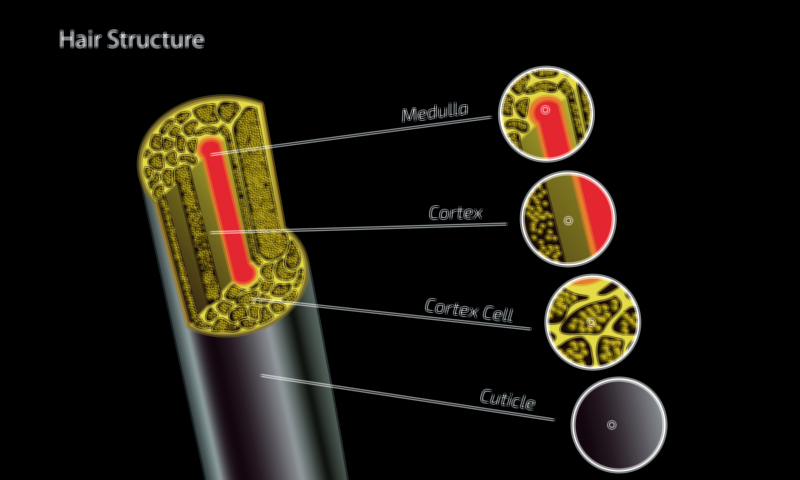
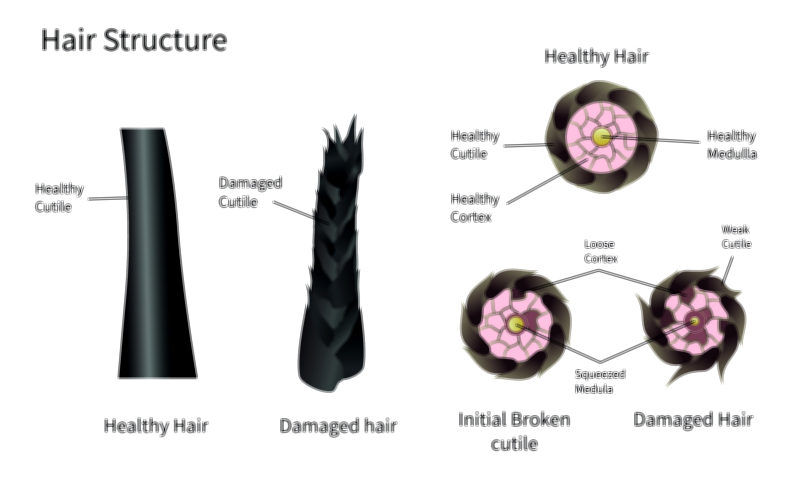
The hair shaft, the portion of hair that is visible outside the scalp, consists of three major layers arranged concentrically: the cuticle, cortex, and medulla. The outermost layer, the cuticle, forms a protective shell composed of overlapping scale-like cells similar to tiles on a roof. These translucent cells lie flat in healthy hair, giving the fiber its smoothness, enhancing light reflection, locking in internal moisture, and acting as a barrier against mechanical and chemical stress. When the cuticle is intact, hair feels soft and manageable because friction is low and moisture remains within the fiber. However, environmental wear such as brushing, heating, UV radiation, pollution, coloring, bleaching, perming, and poor water quality can cause the cuticle to lift, crack, or erode. Once damaged, the cuticle loses its ability to protect the deeper layers, allowing moisture to escape and leaving the cortex vulnerable to breakage. The condition of the cuticle is therefore the most important factor in preserving the appearance and survival of the visible strand.
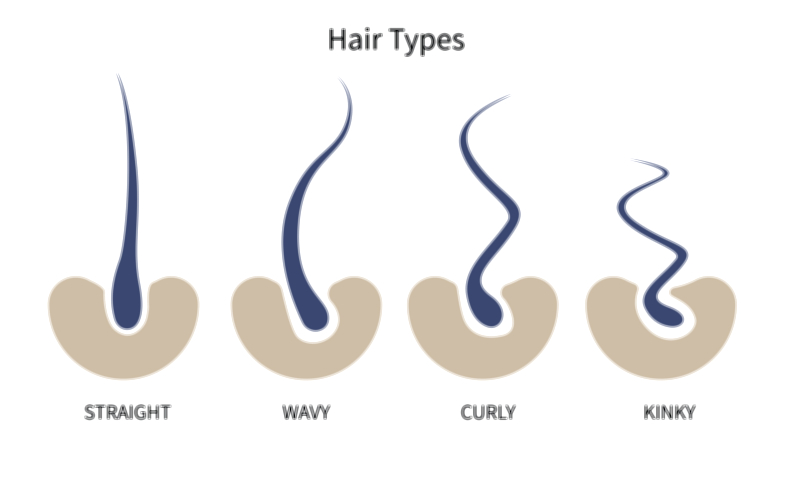
Beneath the cuticle lies the cortex — the thickest and most structurally significant part of the shaft. The cortex is made of long chains of keratin proteins bundled together like ropes, forming an internal scaffold that gives hair most of its mechanical strength, elasticity, and resistance to stretching. The cortex also contains the pigments responsible for hair color. Melanin granules within the cortex create shades ranging from black and brown to blonde, red, and everything in between. As we age, or when melanocyte activity declines, these pigments decrease, and hair grows out gray or white, demonstrating that color originates internally rather than on the surface. The arrangement of keratin proteins and cross-linking bonds within the cortex determines whether hair is straight, wavy, curly, or coily. Hair texture is therefore not created externally by styling but internally by the structure of the cortex shaped by the follicle. Chemical straightening and perming work by altering the bonds inside the cortex, proving that texture is a structural characteristic of the fiber’s core.
At the very center of some hair fibers is the medulla, the innermost layer. It consists of loosely organized cells and air-filled spaces that create a soft spongy core. In some individuals the medulla is continuous, in others it is fragmented, and in many fine hair types it may be absent entirely. Although its exact biological purpose is still studied, the medulla is believed to influence insulation, volume, and structural variation particularly in thicker strands. While the medulla plays a smaller role in cosmetic appearance than the outer layers, its presence or absence is significant in fields like forensic science, where medullary patterns help differentiate between individuals and species.
The visible three-layered hair shaft is produced entirely inside the hair follicle, a dynamic living structure embedded in the skin that governs growth, shape, and regeneration. The follicle houses the hair bulb at its base, where matrix cells divide rapidly to generate keratinocytes — the cells that eventually become the hardened hair fiber. The bulb surrounds the dermal papilla, a nutrient-rich cluster of blood vessels and signaling cells that regulate hair length, growth rate, and cycling. Without the dermal papilla, hair cannot grow, making it the biological command center of the follicle. Pigment-producing melanocytes sit alongside matrix cells in the bulb, inserting melanin into the growing keratin framework, meaning that color becomes part of the hair’s internal structure even before it exits the scalp.
The follicle also includes multiple protective sheaths and glandular features that support both growth and scalp health. The inner and outer root sheaths stabilize the shaft and maintain alignment as it forms. The sebaceous gland releases sebum — a natural oil that lubricates both scalp and hair. Sebum distribution varies by texture; in straight hair it spreads easily along the lengths, in wavy hair more moderately, and in curly or coily hair with difficulty, explaining why curlier textures tend to be drier. Attached to each follicle is the arrector pili muscle, which contracts in response to cold or emotion, causing hair to stand upright and creating the effect known as goosebumps. Nerve endings connected to follicles make each individual hair a sensory antenna, alerting the body to movement or contact on the skin’s surface.
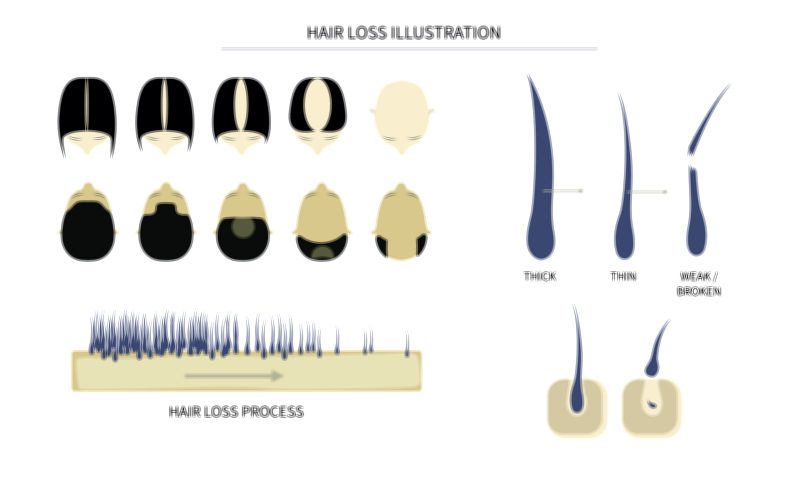
Hair grows in a cyclical pattern consisting of a growth phase (anagen), a regression phase (catagen), and a resting phase (telogen). During anagen, which can last years for scalp hair, the follicle is fully active and produces a continuous strand. During catagen, activity slows and the follicle begins to shrink. In telogen, the follicle rests and the fiber eventually sheds, making room for a new cycle to begin. At any moment millions of follicles on the scalp are in different phases, creating a gradual and natural shedding pattern rather than sudden loss. Disturbances in this cycle — whether due to genetics, hormones, inflammation, illness, nutritional deficiency, medications, stress, or age — can shorten anagen, delay regrowth, or reduce follicular size, resulting in thinning or hair loss. Thus, visible shedding is not merely a cosmetic event but a biological shift occurring deep inside the follicle.
From a biochemical perspective, hair’s durability stems from keratin, a specialized protein made of amino acids — especially cysteine — that form disulfide bonds giving hair its strength and resilience. Water content inside the cortex contributes to elasticity and flexibility, while lipids help retain softness and prevent brittleness. Because the shaft consists of dead keratinized cells once it exits the scalp, it cannot repair itself; all repair must come from preserving structure rather than stimulating biological healing. Products that strengthen hair work by coating the cuticle, reducing friction, or temporarily filling gaps in the cortex, but the best protection always occurs before damage begins.
Ultimately the structure of human hair represents a collaboration between living and nonliving systems. The follicle is alive, metabolically active, and genetically programmed to shape the fiber, while the shaft is a strong yet vulnerable material that reflects the biological quality of its formation. The cuticle armor protects, the cortex sustains strength and identity, and the medulla, where present, adds internal dimension. Every sensory quality we associate with hair — whether shine, volume, softness, or frizz — originates not from the surface but from this multilayered composition created inside the follicle before the hair ever reaches the world outside. Understanding hair through this structural and anatomical lens transforms it from a cosmetic feature into a finely engineered biological product, built with precision, evolving with age and health, and expressing individuality through every strand.