Red Blood Cell: Structure, Function, and Oxygen Transport in the Human Body Explained
Red blood cells are among the most specialized and abundant cells in the human body, and their design reflects a singular mission: to transport oxygen from the lungs to tissues and to carry carbon dioxide back to the lungs for removal. Although they circulate silently through blood vessels by the trillions, red blood cells are vital to every organ’s survival because aerobic metabolism — the process that produces usable energy — depends on a constant supply of oxygen. Their structure, shape, flexibility, and biochemical composition are all finely tuned for this function. A detailed understanding of red blood cells reveals how the body maintains oxygen delivery for movement, growth, healing, and cellular survival.
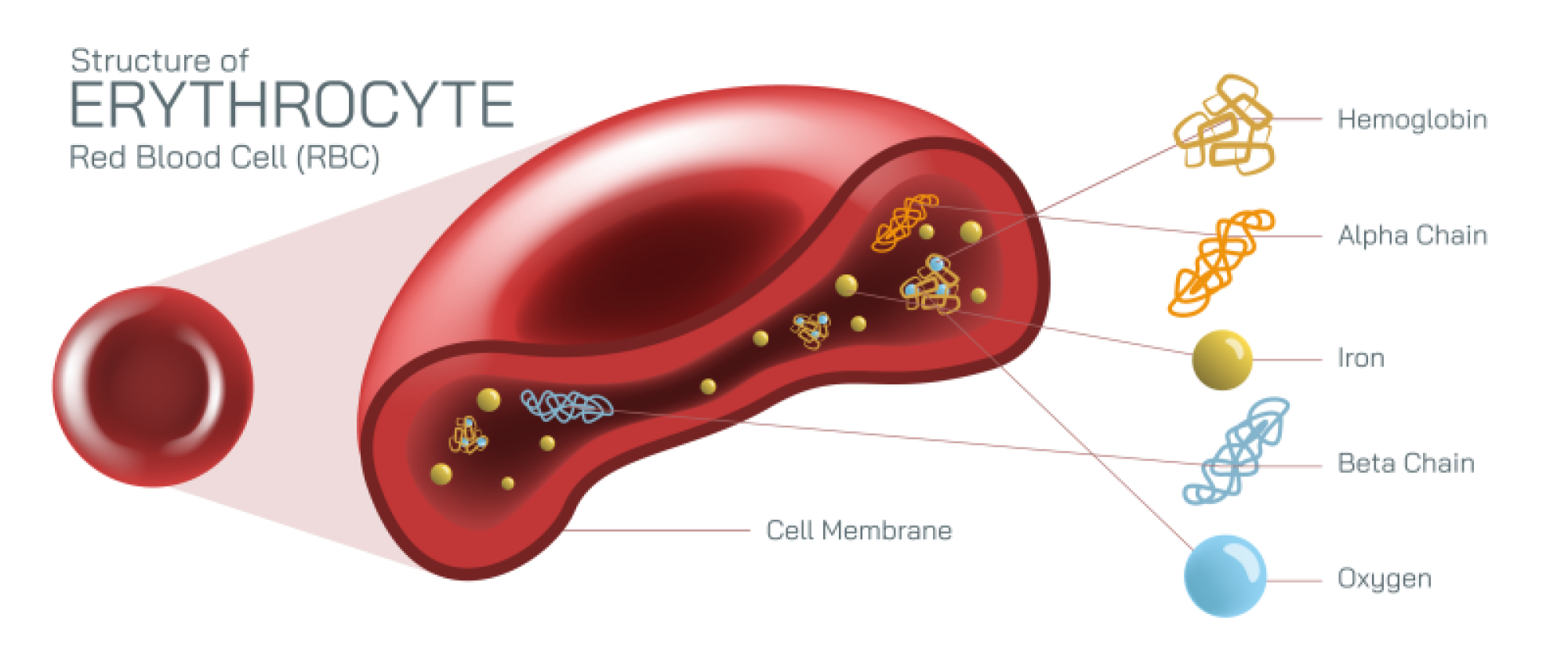
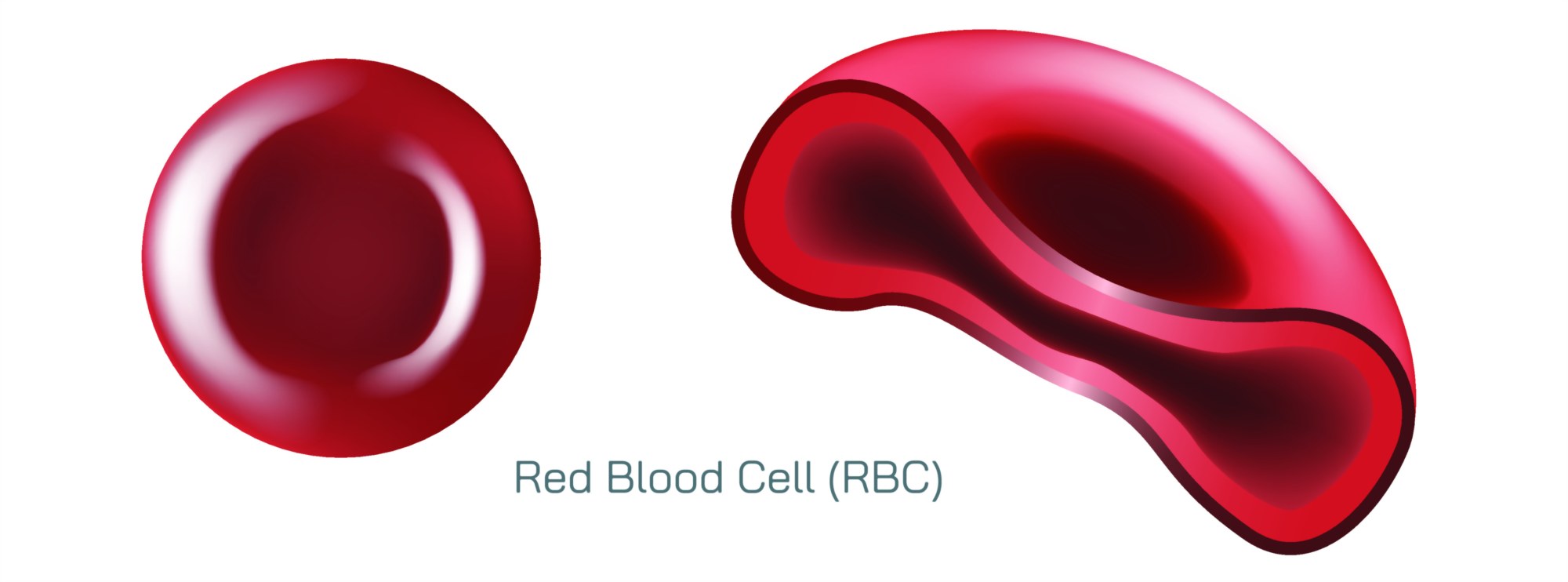
The most striking feature of a red blood cell is its biconcave disc shape. Instead of being spherical like many cells, red blood cells have a flattened center and a thicker outer rim, creating a shape that resembles a doughnut without a hole. This geometry dramatically increases the cell’s surface area relative to its volume, enabling more efficient gas exchange between the inside of the cell and surrounding tissues. The thin central region allows oxygen and carbon dioxide to diffuse quickly through the membrane. This shape is also mechanically advantageous: it provides flexibility that allows red blood cells to deform as they squeeze through the narrowest capillaries, passages sometimes smaller than the cell’s diameter. Once through, they quickly spring back to their original shape, ready to continue circulating. This remarkable elasticity is essential because oxygen delivery depends not only on speed through large vessels but also on the ability to access microscopic capillary networks deep within tissues.
Another defining characteristic of red blood cells is the absence of a nucleus and organelles in their mature form. During development in the bone marrow, precursor cells initially contain nuclei and organelles like typical human cells. However, as they mature into erythrocytes, they eject these internal structures to create more space for hemoglobin, the iron-containing protein that binds oxygen. Without internal organelles consuming oxygen or nutrients, red blood cells devote all available space and resources to the transport mission. The trade-off is that these cells cannot divide, repair themselves, or synthesize new proteins. Their lifespan therefore averages about 120 days, after which they become fragile and are removed by macrophages in the spleen and liver. The body compensates for this limitation by producing roughly 2 million new red blood cells every second in the bone marrow — a continuous cycle that maintains adequate oxygen-carrying capacity.
The centerpiece of red blood cell function is hemoglobin, a complex protein composed of four polypeptide chains, each containing an iron-bearing heme group that binds oxygen. When red blood cells pass through the capillaries of the lungs, oxygen molecules diffuse across the alveolar membrane and bind reversibly to hemoglobin. This oxygen-loaded form, oxyhemoglobin, gives arterial blood its bright red color. Hemoglobin does not merely bind oxygen mechanically — it releases oxygen in response to physiological needs. When a red blood cell enters tissues with lower oxygen concentration or higher carbon dioxide concentration, hemoglobin changes its shape and releases oxygen where it is required. This dynamic responsiveness ensures that hardworking organs like muscles during exercise receive more oxygen automatically, without conscious control. Hemoglobin also plays a role in carbon dioxide transport: although most carbon dioxide travels dissolved in plasma or converted to bicarbonate, a portion binds to hemoglobin, helping carry the gas back to the lungs for exhalation.
The membrane of the red blood cell contributes significantly to its functionality. It is composed of a lipid bilayer supported by a network of structural proteins that maintain the biconcave shape while allowing the membrane to bend without cracking. Specialized membrane proteins also determine blood type, enabling immune recognition that prevents harmful transfusion reactions. The stability of this membrane structure ensures that red blood cells can withstand constant shear forces while flowing through the circulatory system. When the membrane or proteins that support it are defective — such as in hereditary spherocytosis or sickle cell disease — the cells lose their resilience, become misshapen, and are prone to destruction, resulting in anemia and impaired oxygen transport.
Red blood cells are also crucial in maintaining acid–base balance and overall homeostasis. As cells throughout the body perform metabolism, they release carbon dioxide and hydrogen ions that could make body fluids too acidic. The buffering capacity of hemoglobin and the transport of carbon dioxide through red blood cells help regulate blood pH within the narrow range required for enzyme function and cellular survival. This means red blood cells are not only oxygen shuttles but also active participants in chemical equilibrium that keeps tissues functioning normally. Even small reductions in their number or hemoglobin content — as seen in anemia — lead to fatigue, weakness, shortness of breath, and impaired organ performance because the body cannot receive sufficient oxygen to meet energy demands.
The journey of red blood cells from formation to destruction reflects how efficiently the human body balances renewal and function. They originate in the red bone marrow through a multistep process called erythropoiesis, which is stimulated by the hormone erythropoietin, primarily produced by the kidneys. When the body senses reduced oxygen delivery — due to blood loss, high altitude, or illness — erythropoietin production increases, stimulating the bone marrow to boost red blood cell creation. After circulating for months, aging red blood cells become less flexible and are removed by the spleen. Iron from degraded hemoglobin is recycled to build new hemoglobin, showing how tightly regulated every aspect of red blood cell metabolism is.
Diseases affecting red blood cells illustrate how critical they are to human life. Conditions such as iron-deficiency anemia, hemolytic disorders, bone marrow failure, chronic kidney disease, and genetic abnormalities all disrupt red blood cell count or hemoglobin function. Even when blood pressures and organ function appear normal, a deficit in oxygen-carrying capacity can undermine every physiological system. Conversely, excessive red blood cell production, as seen in polycythemia, thickens blood and increases the risk of clots and stroke. These extremes demonstrate how the body must maintain an exact balance to optimize circulation and gas exchange.
Ultimately, the structure and function of red blood cells show how nature achieves remarkable specialization: removing a nucleus to maximize space, shaping the membrane to increase surface area, packing the cytoplasm with hemoglobin to bind oxygen efficiently, and maintaining elasticity to navigate microscopic capillaries. Every feature reflects evolutionary refinement for one primary purpose — to keep the trillions of cells in the body supplied with oxygen while removing metabolic waste. When red blood cells are performing their job seamlessly, we are unaware of their presence. But life depends on every beat of the heart delivering these specialized cells to every tissue, sustaining the energy that fuels thought, movement, immunity, and survival.