Structure of Human Hair — Cuticle, Cortex, and Medulla Layers Explained
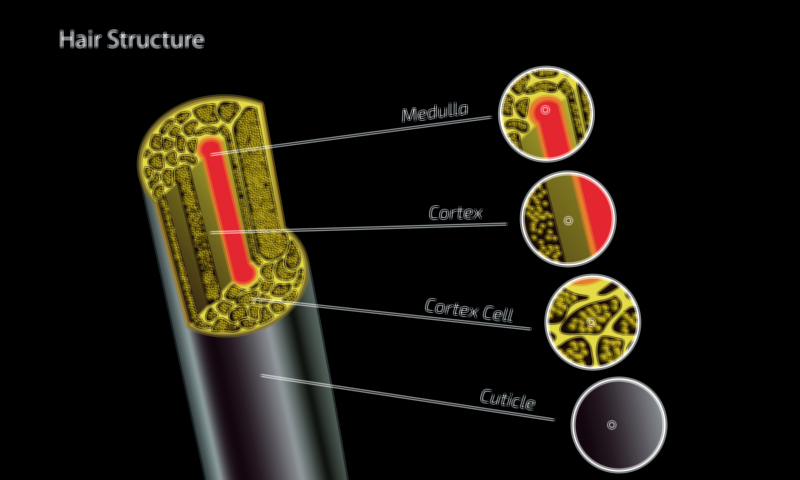
Human hair, although outwardly appearing to be a simple fiber emerging from the surface of the scalp, is in fact a highly engineered biological material composed of multiple microscopic layers that each contribute to the fiber’s strength, resilience, texture, and overall appearance. The visible strand of hair is not living tissue, yet it is the result of an intricate biological manufacturing process within the hair follicle that transforms living cells into a durable keratinized structure. Among its most important architectural features are the three primary layers of the hair shaft — the cuticle, the cortex, and the medulla — each with distinct biochemical and mechanical functions. Together, these layers build a composite protein structure capable of withstanding tension, friction, styling, environmental exposure, and years of physical wear. To understand the true nature of human hair, it is necessary to look below the surface and explore how these layers operate individually and together to produce texture, shine, thickness, elasticity, and longevity.
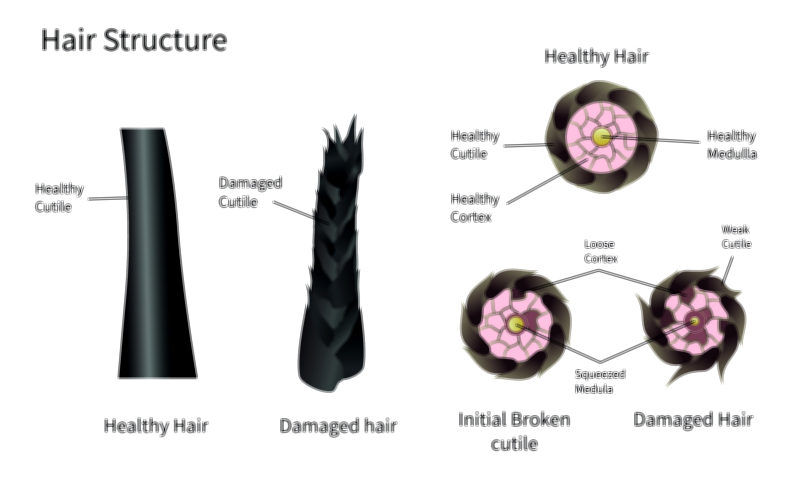
The outermost layer of the hair shaft, known as the cuticle, is responsible for the first line of protection that shields the deeper inner layers from external damage. The cuticle is composed of overlapping, transparent, scale-like cells arranged in a structure similar to roof shingles. These flattened plates are tightly bound and aligned in the direction of the hair’s natural growth, forming a smooth surface that reduces friction and helps retain internal moisture. When the cuticle is in good condition, the hair feels smooth, reflects light evenly, and resists tangling and breakage. The tightness of this protective shield plays a large role in the visual perception of hair — whether it appears glossy or dull, strong or fragile, silky or rough. External influences such as brushing, heat styling, ultraviolet radiation, chlorine, pollution, chemical treatments, and even harsh shampoos can cause the cuticle to lift, chip, or erode, exposing the delicate inner structures of the hair. Once cuticle damage becomes significant, the hair begins to lose moisture more rapidly, become harder to manage, and experience increased friction that heightens the risk of split ends and breakage. Maintaining the integrity of the cuticle, therefore, is essential for overall hair health and cosmetic appearance.
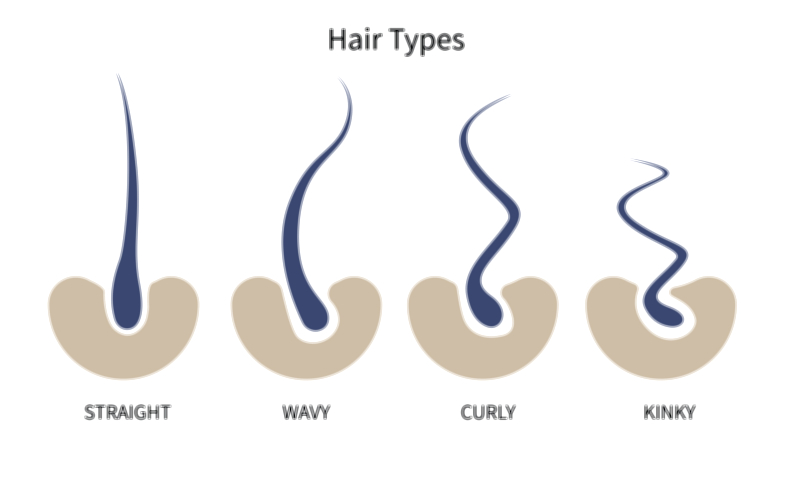
Beneath the cuticle lies the cortex, which is the thickest and most structurally important layer of the hair shaft. The cortex makes up the majority of the fiber’s mass and is responsible for its mechanical strength, elasticity, texture, and color. This layer is composed of long keratin protein chains bundled into parallel fibrils and twisted together like strands of a rope. The arrangement of these keratin fibers gives hair the ability to bend without snapping and stretch without losing its shape, although this elasticity has limits that vary depending on hydration, protein content, and structural integrity. The cortex also houses the hair’s melanin pigments — eumelanin and pheomelanin — which determine natural hair color and contribute to UV protection. The density and distribution of melanin granules in the cortex are responsible for the full spectrum of human hair colors, from deep black through browns and blondes to red and auburn shades. When aging or physiological changes reduce melanin production, the cortex becomes less pigmented and the hair grows out gray or white, demonstrating how color is an intrinsic property of the cortex rather than a superficial feature. The cortex also contains the internal bonds that shape the hair’s texture; disulfide bonds and hydrogen bonds between keratin chains influence whether the hair grows straight, wavy, curly, or coily. The structural configuration of this layer explains why chemical and thermal styling methods that break and reform protein bonds are capable of altering texture.
At the center of some hair fibers lies the medulla, the innermost layer of the shaft. The medulla is composed of loosely arranged soft keratin cells and air-filled spaces, giving it a porous and spongy character compared with the dense, highly organized cortex. Not all hair types contain a medulla; its presence varies depending on individual genetics, fiber thickness, and sometimes even location on the scalp. Coarse and thick hairs often contain a continuous and easily identifiable medulla, while fine hairs or light-colored strands may show only a fragmented or absent medulla. The precise biological function of the medulla is not yet fully understood, but it is believed to contribute to insulation, density variation, and potentially the rigidity of thicker hair fibers. Some researchers also suggest that it may play a role in how hair transmits heat and chemical signals during the follicular development of the strand. Although the medulla has a lesser role in the cosmetic perception of hair than the cuticle and cortex, its presence becomes significant in forensic science and microscopic hair analysis because medullary patterns can differ between individuals and species.
These three layers do not function independently; rather, they form an interdependent composite structure that supports the survival and longevity of the hair strand. The cuticle protects the cortex from moisture loss and physical abrasion; the cortex provides the core mechanical strength and pigmentation that define the character of the hair; and the medulla, where present, contributes internal volume that affects density and flexibility. Damage or disruption to any one of these layers influences the performance of the entire fiber. For example, when the cuticle becomes eroded, the cortex is exposed to mechanical wear, which can reduce tensile strength and ultimately lead to breakage. When the cortex loses protein integrity, the hair may become weak, brittle, and prone to snapping under strain, even if the cuticle appears intact. If the bonds within the cortex are altered by chemical treatments or excessive heat, curl patterns and elasticity may change permanently. The interconnectedness of the hair’s layered architecture explains why cosmetic and structural damage cannot be undone simply through surface treatment — the hair fiber cannot regenerate once formed, and its health depends on preserving the integrity of the cuticle and cortex throughout its lifespan.
Environmental exposure also interacts with the layered structure of hair. Humidity can penetrate the cuticle and disrupt hydrogen bonds in the cortex, causing swelling, frizz, or shape alteration, especially in naturally wavy, curly, or coily textures. Heat styling temporarily reshapes hydrogen bonds in the cortex, while chemical treatments alter disulfide bonds more permanently. Hair care products such as conditioners, oils, and serums primarily target the cuticle, smoothing its scales and reinforcing lubrication to protect the cortex underneath. Protein treatments are designed to temporarily reinforce the cortex by filling internal gaps, while moisture-focused treatments restore flexibility by helping the cortex retain water. These interactions illustrate that hair care routines make sense only when they correspond to the biological architecture of the hair shaft rather than surface-level assumptions.
The structure of human hair is therefore not a simplistic single-layer strand but a multilayered protein fiber in which surface protection, internal strength, and core density work together to produce a material that is both remarkably resilient and biologically expressive. The layered construction of cuticle, cortex, and medulla determines shine, texture, hydration balance, elasticity, tensile strength, softness, manageability, volume, and even the perception of beauty. Recognizing hair as a complex composite explains why its care and preservation depend on supporting its architecture, minimizing cuticle damage, maintaining protein balance in the cortex, and protecting the fiber from environmental and mechanical stress. When viewed through this biological perspective, the visible qualities of hair — whether smoothness, vitality, curl retention, or break resistance — are no longer mysteries but predictable outcomes of microscopic structure. Through this understanding, the cuticle, cortex, and medulla reveal themselves as the hidden sources of hair’s resilience, identity, and beauty woven into every strand.