Ear — Human Auditory Organ
The human ear stands as one of the most sophisticated sensory systems in the body, a structure that intertwines delicately engineered anatomy with remarkably precise neural processing. Although commonly described simply as the organ responsible for hearing, the ear fulfills two equally vital functions: detecting sound and maintaining balance. These roles are achieved through a coordinated network of external funnels, mechanical transformers, fluid-filled chambers, microscopic sensory receptors, and intricate neural pathways that work together to convert vibrations in the environment into meaningful experiences. Exploring the ear in rich descriptive detail reveals how its architecture developed to accommodate the complex tasks of perceiving sound, orienting the body, and connecting human beings to the auditory world around them. By examining its structure, function, biological refinement, and interconnected processes, the true depth of the ear’s role in human life comes vividly into focus.
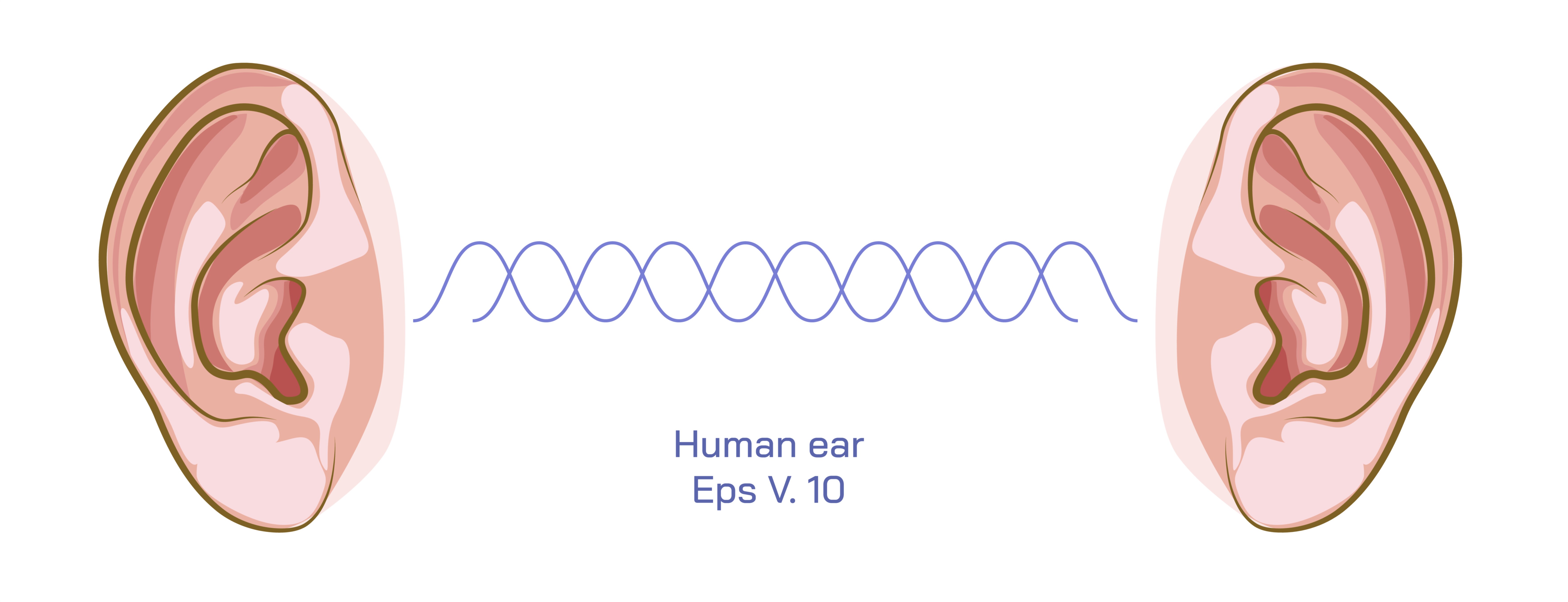
The external portion of the ear, known as the auricle or pinna, begins the hearing process. This visible structure protruding from the sides of the head may appear simple, but its design plays an essential role in capturing sound. The curves, ridges, and hollows of the pinna form a sort of acoustic funnel, directing waves toward the deeper parts of the ear. Its shape helps the brain determine the origin of sound in three-dimensional space by modifying the way certain frequencies are emphasized or softened depending on direction. This directional sensitivity is essential for spatial awareness. Without the pinna’s carefully shaped anatomy, humans would struggle to identify whether a sound originated above, below, in front, or behind. The ear canal, extending inward from the pinna, serves as a resonant tube that enhances specific sound frequencies, guiding vibrations efficiently toward the delicate structures that lie deeper within the ear.
At the end of the ear canal sits the eardrum, a thin but resilient membrane that marks the boundary between the outer and middle ear. Despite its fragile appearance, the eardrum performs a vital task: translating airborne vibrations into mechanical motion. When sound waves reach it, the membrane begins to vibrate with a pattern matching the rhythm and intensity of the original sound. Whether the sound is a soft whisper, a resonating musical chord, or a sudden sharp noise, the eardrum adjusts instantly, responding with remarkable precision. These vibrations serve as the starting point for the mechanical chain that continues into the middle ear, where the smallest bones in the human body await.
The middle ear contains three tiny bones collectively known as the ossicles: the malleus, incus, and stapes. These bones form a lever-like system that amplifies the vibrations received from the eardrum. Their purpose is to boost the mechanical energy efficiently enough to allow it to pass from the air-filled outer environment to the fluid-filled chambers of the inner ear, which require a different type of energy transfer. Without this amplification, much of the vibrational energy would simply dissipate or reflect at the boundary between air and fluid. The ossicles overcome this barrier by concentrating the eardrum’s broad movements into smaller but more forceful motions. This delicate mechanical link not only amplifies sound but also protects the inner ear through a reflex mechanism that reduces the movement of the ossicles in response to excessively loud noises.
Another essential structure within the middle ear is the Eustachian tube, a narrow passage connecting the ear to the throat. Its role is to equalize air pressure on both sides of the eardrum, preventing discomfort, maintaining proper vibration, and safeguarding the eardrum against damage. When pressure changes occur—such as during altitude shifts in airplanes or rapid environmental transitions—the Eustachian tube opens briefly to allow airflow, relieving tension. This function appears simple but is crucial for the eardrum’s ability to respond to sound accurately.
Beyond the middle ear lies the inner ear, a marvel of biological engineering. This region contains two main components: the cochlea, responsible for hearing, and the vestibular apparatus, responsible for balance. The cochlea resembles a tiny spiral shell filled with fluid and lined with microscopic sensory hair cells. When the stapes bone of the middle ear presses against the entrance of the cochlea, it creates waves within this fluid-filled structure. These waves travel along the length of the cochlear spiral, setting specific regions into motion depending on the wave’s characteristics. Hair cells in each region respond to particular frequency ranges, effectively organizing sound into a precise map of pitches. This spatial arrangement is essential for the auditory system’s ability to separate high tones from low ones, decipher speech patterns, recognize familiar voices, differentiate musical notes, and interpret environmental cues.
The hair cells themselves are among the most sensitive and delicate cells in the human body. Each hair cell contains tiny filaments that bend in response to the motion of the cochlear fluid. When these filaments move, they trigger electrical signals that travel along the auditory nerve toward the brain. The brain then interprets these signals as meaningful sound, reconstructing qualities such as loudness, pitch, direction, and texture. This conversion from mechanical movement to neural information is one of the most extraordinary transformations in human physiology. The cochlea’s ability to separate complex soundscapes into distinguishable elements is the foundation of language comprehension, music appreciation, environmental awareness, and countless subtle auditory experiences.
Adjacent to the cochlea lies the vestibular system, the structure responsible for balance and spatial orientation. This system includes semicircular canals, which detect rotational movements, and otolith organs, which detect linear acceleration and the orientation of the head relative to gravity. These fluid-filled components work in tandem with sensory hair cells similar to those found in the cochlea. When the head moves, the fluid inside the semicircular canals shifts, bending the hair cells and sending information to the brain about motion and position. The otolith organs contain tiny crystals that shift when the head tilts or when the body accelerates. These crystals enhance the sensitivity of the hair cells, ensuring that even slight movements are detected. Together, these components allow humans to maintain balance, coordinate movements, stand upright, navigate in darkness, and respond quickly when equilibrium is threatened.
The ear’s dual role as both a hearing and balance organ requires close coordination with the brain. The auditory and vestibular nerves connect directly to regions involved in sensory interpretation, spatial awareness, motor coordination, and reflex control. This connection explains how quickly the body can react when balance is disturbed, as well as how deeply sound influences emotion, memory, and experience. The rhythmic beat of music, the calming rush of ocean waves, or the startling crack of thunder all demonstrate how the brain integrates auditory information with internal sensations, past experiences, and emotional responses. The ear serves not only as a receptor of vibrations but also as a gateway to perception, meaning, and emotional resonance.
The ear’s intricate design also makes it vulnerable. Loud noises, infections, physical injury, and age-related changes can damage the delicate hair cells of the cochlea. Because these cells do not regenerate, hearing loss can become permanent. Middle ear infections can interfere with sound transmission, while structural damage to the eardrum or ossicles can reduce hearing clarity. Disorders of the vestibular system can cause dizziness, imbalance, or vertigo. The complexity of the ear therefore necessitates careful protection—from avoiding excessive noise to preventing infections and maintaining healthy habits that support overall sensory function.
Technological innovations have arisen to support those with hearing impairments. Hearing aids amplify sounds for individuals with reduced hearing sensitivity, compensating for weakened transmission. Cochlear implants provide an even more remarkable solution by electronically stimulating the auditory nerve in individuals whose hair cells are no longer functional. These devices bypass damaged structures to deliver sound perception directly to the brain, restoring the ability to hear speech and environmental sounds. Such advancements stand as a testament to the understanding of the ear’s structure and function and the ways modern science can replicate aspects of natural sensory processing.
Ultimately, the human ear is far more than a simple listening device. It is a complex and finely tuned organ that integrates physical vibrations, internal mechanics, fluid dynamics, neural processing, and sensory interpretation. Its structure supports both auditory perception and spatial orientation, ensuring that humans can communicate, connect with their environment, and move confidently through the world. The ear transforms the invisible patterns of air movement into rich sensory experiences, into understanding, into awareness, and into emotional depth. Through its remarkable design, it serves as one of the most vital channels through which humans perceive life, interpret surroundings, and engage with the countless sounds that shape their existence.