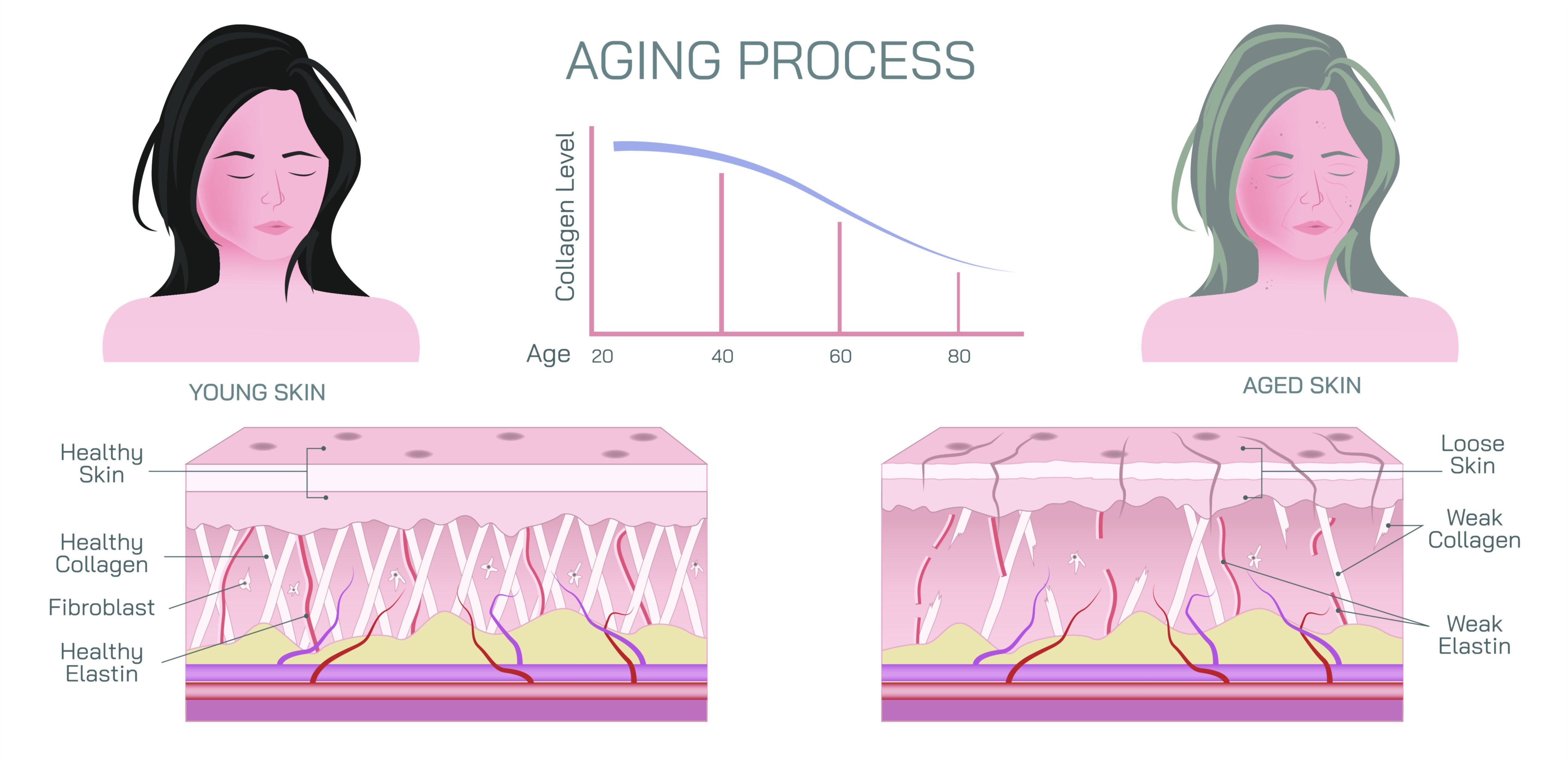
Skin Aging Process from Young to Old, Showing Collagen Loss, Wrinkles, and Elasticity Changes Over Time
The transformation of human skin from youth to older age is a complex biological journey shaped by continual interactions between genetic programming, cellular behavior, environmental exposure, hormonal shifts, and lifestyle influences. Although aging is often first noticed through external markers such as wrinkles, dryness, sagging, and uneven pigmentation, the true origins of these visible features lie deep within the skin’s core structural components—particularly collagen, elastin, and the extracellular matrix. When the aging process is followed across decades, it becomes evident that the surface of the skin is not aging alone; rather, every layer beneath it is undergoing gradual changes that accumulate and eventually become perceptible in outward appearance. A chronological view, moving from young skin to mature and elderly skin, shows why texture, firmness, volume, hydration, tone, and resilience evolve over time, and why these changes unfold at different speeds for different individuals.
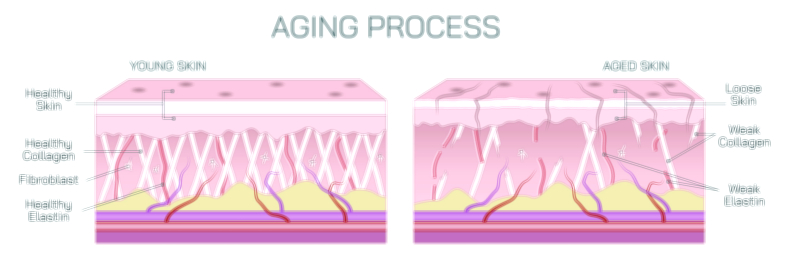
In youthful skin, collagen and elastin exist in abundant and highly organized networks throughout the dermis. Collagen fibers provide structural support, forming a dense, smooth scaffold that holds the skin taut and even. Elastin fibers weave through this collagen framework, giving the skin springlike flexibility that enables it to stretch and rebound quickly during facial expressions or mechanical stress. The extracellular matrix surrounding these fibers contains high concentrations of hyaluronic acid and other glycosaminoglycans, which attract and retain water to keep the skin plump and hydrated. The epidermis renews itself rapidly through continuous cell turnover, shedding dead skin cells and replacing them with fresh ones at a consistent pace. Facial expressions create temporary lines, but elastic recoil smooths them immediately. The overall result is skin that appears firm, bright, supple, and full of volume, with pore tightness and pigmentation distributed evenly.
As time progresses into early adulthood, the first subtle internal shifts begin, even before visible signs of aging appear. Collagen production slows gradually, and elastin becomes slightly less efficient at snapping the skin back after repeated movement. Skin cells still renew, but the cycle shaves off only a small degree of speed—not enough to be noticeable at this stage. External factors such as sun exposure, stress, alcohol consumption, and sleep patterns begin to accumulate cellular impact, even though the outer appearance may still appear youthful. Microscopic changes begin to form beneath the surface, setting the stage for more noticeable skin aging later in life. At this stage, dynamic expression lines such as laugh lines or frown lines may appear temporarily after facial movement, but they still disappear when the muscles relax.
By mid-adulthood, collagen loss and elastin degradation become more pronounced. The dermal matrix is no longer reinforced at the same rate at which it breaks down, resulting in thinning of the skin’s support system. Wrinkles that were once dynamic now begin to persist even at rest, especially around the eyes, forehead, and mouth, because the skin cannot fully return to a smooth baseline after repeated movement. Glycation—a biochemical reaction in which excess sugar molecules bind to collagen and elastin—further stiffens and weakens the fibers. The extracellular matrix loses moisture-holding capacity as hyaluronic acid production declines, leading to gradual dryness and less plumpness. Cell turnover in the epidermis slows significantly, allowing dead skin cells to accumulate and dull the surface while pigmentation becomes less uniform due to changes in melanocyte distribution. At this stage, the face may begin to show subtle contour changes such as slight cheek flattening or early jawline softening as the deeper fat pads shift and the skin’s anchoring weakens.
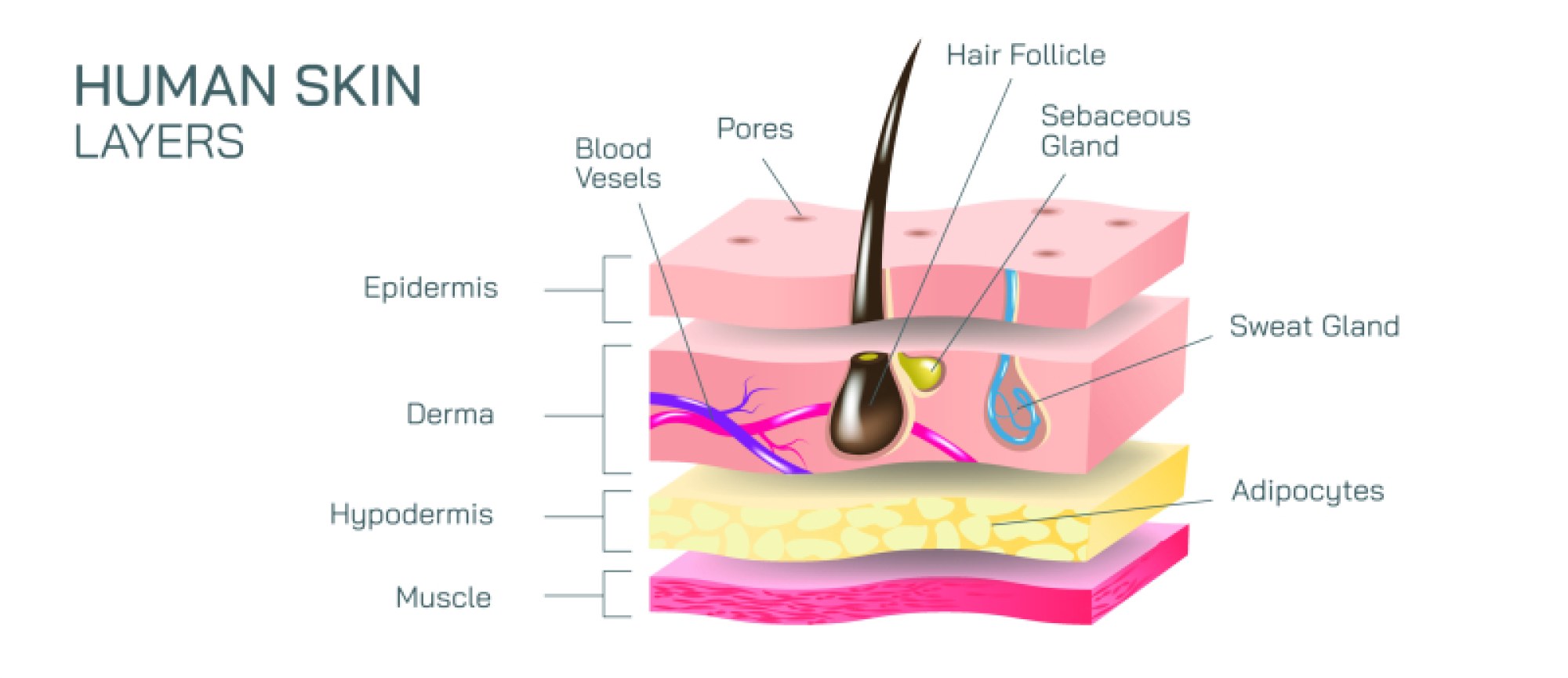
In late adulthood and senior years, the cumulative effect of collagen depletion, elastin breakdown, and reduced extracellular matrix integrity becomes clearly visible. The dermis becomes markedly thinner, allowing fine lines to deepen into distinct wrinkles and folds. The skin’s elasticity declines further, making it more susceptible to sagging under the influence of gravity. This is most noticeable in the cheeks, jawline, neck, and around the eyes, where the supporting structures have weakened most significantly. The hypodermis, the fatty layer beneath the dermis, also thins and redistributes, leading to hollows around the eyes and temples, as well as heavier appearance in the lower face. Sebaceous glands decrease oil production, causing dryness and rough texture that intensifies fine lines. Circulation efficiency diminishes, making the skin appear paler or less radiant. The immune response in the skin weakens as Langerhans cells decline, leaving older skin more vulnerable to damage, slower to heal, and prone to chronic low-level inflammation.
Throughout the aging timeline, environmental exposure—especially ultraviolet radiation—amplifies internal biological aging. Photoaging accelerates collagen damage, deepens wrinkles, increases pigmentation irregularities, causes rough patches, and contributes to laxity. Lifestyle choices also influence the rate of aging: smoking triggers oxidative stress that destroys collagen; chronic stress elevates cortisol, which weakens skin structure; poor sleep interferes with nighttime repair cycles; nutrient-poor diets reduce the availability of antioxidants and essential fatty acids needed for skin renewal; and dehydration diminishes the moisture reserves that preserve plumpness. Conversely, sun protection, a nutrient-rich diet, hydration, restorative sleep, and stress management help slow visible aging, even though no intervention stops the biological timeline completely.
Hormonal shifts—especially during menopause—produce another major milestone in the skin aging process. Estrogen plays a central role in maintaining collagen synthesis and moisture regulation; therefore, its decline leads to sudden acceleration of dryness, thinning, and elasticity loss. Fine lines deepen more quickly, the jawline softens, and wrinkles become more prominent. The combined effect of hormonal changes and long-term environmental exposure during this period is one of the most dramatic transformations in the skin’s lifetime.
Despite the inevitability of aging, the skin remains a dynamic living organ capable of adaptation. Even in later years, fibroblasts can be stimulated to increase collagen production under the right biochemical environment, and the epidermis can improve its renewal cycle when supported by proper care and internal health. What ultimately defines the journey of skin aging is the balance between natural biological decline and the accelerating or protective influences of lifestyle and environment.
When the process of aging is viewed chronologically—from youthful firmness and elasticity to mature skin marked by wrinkles, thinning, and reduced recoil—it becomes clear that visible aging is a layered biological story rather than a sudden change. Collagen loss weakens the structural framework, elastin degradation limits rebound, extracellular matrix decline reduces hydration, fat redistribution alters facial shape, cell turnover slows, pigmentation becomes uneven, and hormonal changes shift the pace of decline. Taken together, these changes produce the skin’s outward transformation from young to old. Skin aging therefore represents a continuum of internal change that gradually appears on the surface, revealing not just the passage of time, but the sum of experiences, exposures, and cellular adaptations that shape the body across a lifetime.