Skin Aging Process Showing Wrinkle Formation, Elasticity Loss, and Cellular Changes in Human Skin
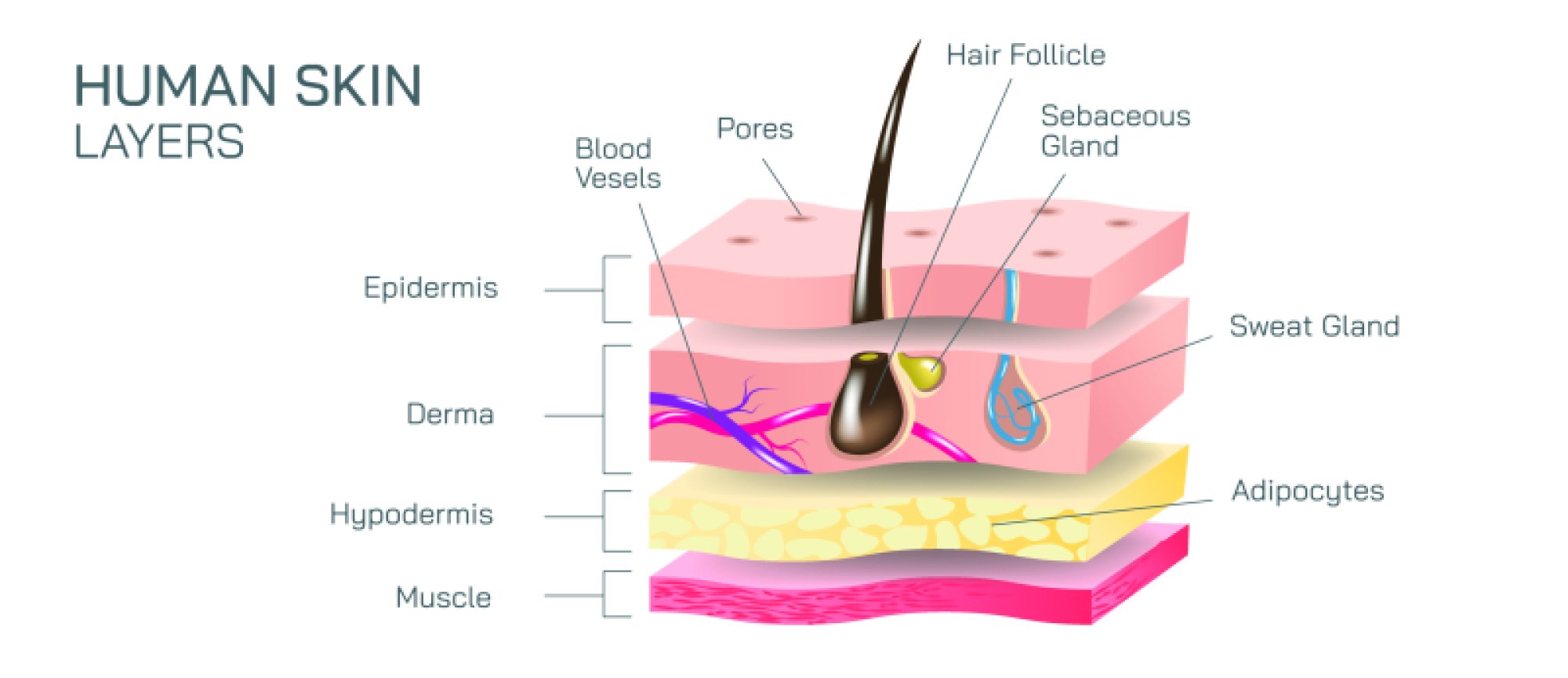
The aging of human skin is a gradual and multifaceted biological process driven by both internal physiological changes and external environmental influences, and understanding this progression requires appreciating how every layer of the skin—from the outer protective surface to the cellular matrix deep within—evolves over time. The epidermis, dermis, and hypodermis each undergo alterations that collectively reshape the appearance and mechanical properties of the skin. What eventually manifests on the surface as wrinkles, sagging, dryness, uneven tone, and thinning is not a simple cosmetic change but a reflection of complex cellular, hormonal, structural, and biochemical transitions occurring over many years. While genetics play an important role in determining how rapidly these changes develop, lifestyle and environmental factors accelerate or slow the rate at which the visible signs of skin aging appear. When the skin aging process is examined through biological mechanisms rather than surface symptoms alone, it becomes clear that the surface of the skin behaves as a visual record of metabolic history, cumulative stress exposure, and cellular resilience.
At the most visible level, wrinkle formation marks one of the primary signs of aging, and its development is closely linked to the loss of elasticity and firmness in the dermis. During youth, the skin relies on a dense, resilient network of collagen fibers and elastin that work together to support strength and stretch. Collagen provides structural scaffolding that keeps the surface smooth and even, while elastin allows the skin to return to its original shape after facial expression, movement, or mechanical stretching. Over time, production of both collagen and elastin declines, and simultaneously the existing fibers degrade due to biochemical processes and mechanical wear. The repeated contraction of facial muscles from expressions—such as smiling, frowning, blinking, and laughing—produces dynamic wrinkles in early adulthood, which at first disappear when the face relaxes but later become static wrinkles as collagen depletion prevents the skin from returning to a smooth resting state. The slow unraveling of these deep support structures creates folds and creases that deepen with age, particularly around the eyes, forehead, and mouth where movement is most frequent.
Loss of elasticity is another defining feature of the aging process, and it extends beyond wrinkles to include sagging, changes in facial contour, and reduced resistance to gravity. In younger skin, elastin fibers behave like fine springs that preserve firmness, but with increasing age their structure becomes fragmented, coarse, and sparse. This degradation is compounded by glycation—a biochemical reaction in which excess sugars bond with collagen and elastin, stiffening the fibers and making them less flexible. When elasticity declines, the skin can no longer tighten efficiently after stretching, and this lack of rebound produces the gradual descent of cheeks, jawline, and neck tissues. The hypodermis, the fatty cushion beneath the dermis, also thins over time and redistributes unevenly, contributing to hollowing under the eyes, flattening of facial fullness, and an overall loss of youthful contours. These changes cannot be understood from the surface alone; they reflect the interplay of time, mechanical stress, metabolic efficiency, and hormonal shifts that affect connective tissue renewal.
Cellular changes are central to the skin aging process, and they begin in the epidermis—the outermost layer responsible for protection and turnover of skin cells. In youth, keratinocytes in the basal layer divide continuously and move upward to replace older cells, maintaining a smooth, bright surface. As aging progresses, the rate of cell turnover slows dramatically; the journey of cells from formation to shedding becomes far longer, and the accumulation of old cells on the surface contributes to roughened texture, dullness, and uneven pigmentation. Melanocytes, the pigment-producing cells, also become less evenly distributed and may produce melanin irregularly, which can result in age spots or blotchy coloration. Meanwhile, Langerhans cells—immune sentinels in the epidermis—decline in number, leaving older skin more vulnerable to damage from pathogens and environmental stressors. These microscopic changes illustrate that visible aging is deeply tied to declining biological renewal—every reduction in cellular efficiency echoes outward into texture, tone, and resilience.
The dermis undergoes equally significant transformations, as fibroblasts—the cells responsible for collagen and elastin synthesis—slow their activity with age. Fibroblasts not only produce fewer structural proteins but also become less responsive to signaling molecules that normally prompt repair after injury or inflammation. The extracellular matrix, once dense with water-retaining glycosaminoglycans like hyaluronic acid, becomes drier and less voluminous as these molecules decline. Hyaluronic acid is responsible for holding moisture within tissue, giving young skin its plump, hydrated quality. As its levels drop, dehydration increases, and fine lines become more apparent. This chronic dryness is intensified when sebaceous glands reduce oil production, making mature skin more prone to roughness and irritation. These interconnected dermal changes underscore that the visible softening of the skin is not merely due to surface damage, but to deeper biological remodeling.
The hypodermis, composed mainly of fat and connective tissue, acts as a structural cushion beneath the skin and provides both shape and thermal insulation. With aging, adipose tissue redistributes unevenly as fat cells shrink in some regions and accumulate in others. Volume loss under the eyes, temples, and cheeks leads to hollows and shadows that create a tired appearance even without emotional expression, while increased storage in the lower face contributes to the formation of jowls. Reduced fat thickness also decreases the natural padding that protects blood vessels and muscles, making veins, bones, and tendons more visible in hands and facial areas. This shift in soft tissue distribution powerfully influences how aging is perceived visually and reinforces that skin appearance is shaped by changes far beneath the epidermal layer.
Environmental influences accelerate every stage of the natural aging process, with ultraviolet radiation being the most dominant external factor. Chronic sun exposure generates free radicals that fragment collagen and elastin, damage DNA, and impair fibroblast function. This phenomenon—known as photoaging—results in deeper wrinkles, coarse texture, thickened patches of skin, uneven pigmentation, and increased risk of skin malignancies. Pollution also contributes to aging by causing oxidative stress and inflammation that attack cell membranes and proteins. Lifestyle factors such as smoking, poor diet, inadequate hydration, chronic stress, and sleep deprivation amplify internal damage by disrupting circulation, increasing inflammation, reducing oxygen supply to tissues, and diminishing the body’s ability to repair itself. These elements highlight that aging skin is not only a product of time, but of cumulative life experiences and environmental exposure.
Hormonal changes are another crucial contributor, especially during menopause and aging in general. Estrogen supports skin hydration, collagen production, and wound healing, and its gradual decline significantly accelerates dermal thinning and dryness. Reduced levels of growth hormone and other metabolic regulators limit cellular renewal across all skin layers. The immune system also becomes less efficient, making older skin slower to recover from injuries and more likely to experience chronic low-level inflammation. Together, these hormonal adjustments reshape not just surface appearance but the entire regenerative capacity of skin.
Even though aging is inevitable, the skin is a dynamic tissue that responds continuously to internal and external conditions. The degree of wrinkle formation, elasticity loss, and cellular decline varies across individuals based on a blend of genetics, lifestyle, environment, and preventive care. A deep scientific understanding of skin aging reinforces that its visible signs are intimately tied to cellular biology, structural proteins, hydration systems, adipose distribution, and endocrine function. When the aging process is viewed through these interconnected mechanisms rather than merely as a cosmetic outcome, the skin becomes a mirror of whole-body physiology—reflecting resilience, metabolic balance, and cumulative experience over time.