Science of Light: Specular and Diffuse Reflection – Surface Interaction, Image Formation, Behavior of Light Rays, and Visual Perception in Physics
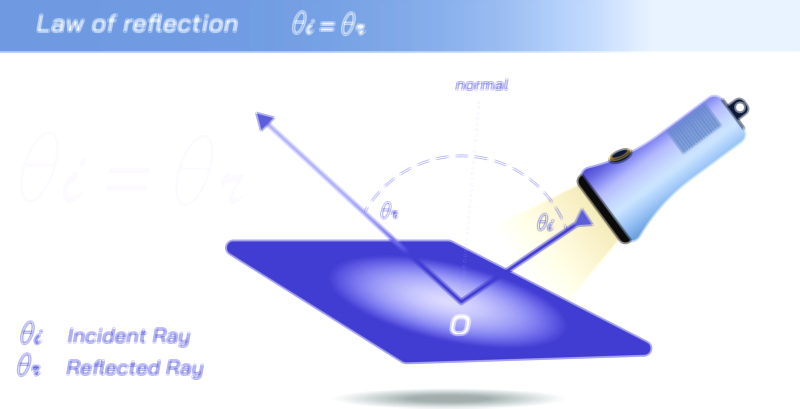
Light interacts with surfaces in different ways depending on the physical texture and smoothness of the material it strikes. Because of this, some surfaces produce clear mirror-like images while others scatter light in multiple directions, allowing objects to be visible but without forming images. These two fundamental behaviors are classified in physics as specular reflection and diffuse reflection. Together, they explain how humans see the world, how mirrors work, why objects appear bright or dull, how technology uses reflective surfaces, and why environmental illumination allows us to distinguish shapes, textures, and colors. While both types of reflection obey the Law of Reflection—that the angle of incidence equals the angle of reflection and that the rays and the normal remain in the same plane—the key difference lies in how surfaces respond to incoming light. Understanding these behaviors helps explain image formation, visual perception, and optical engineering.
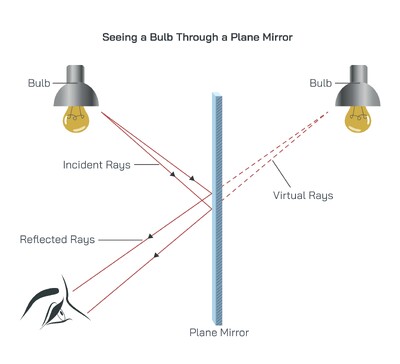
Specular reflection occurs when light strikes a smooth and polished surface, meaning the microscopic peaks and valleys of the material are extremely uniform. In such cases, each light ray that falls on the surface reflects with the same angular relationship relative to the normal, so the reflected rays remain parallel and coordinated. Because of this consistency, the reflected rays carry structured visual information back to the eye, allowing a clear image to form. Mirrors are the most familiar example of specular reflection, but many other smooth surfaces demonstrate the same phenomenon: still water, polished glass, metal surfaces, glossy ceramic tiles, and shiny plastic. When someone looks into a mirror and sees their face sharply reflected, or when a lake reflects tall trees with a near-perfect vertical inversion, the visual effect results from specular reflection. In this process, light does not scatter randomly; instead, it behaves predictably and retains its structure, making detailed optical reproduction possible.
Diffuse reflection, by contrast, takes place when light falls on a rough or uneven surface, where microscopic irregularities cause vastly different orientations of the surface at each point. Even though the Law of Reflection still applies at every microscopic segment—each incoming ray reflects with equal angular geometry—the rays bounce off in many different directions because each segment has a slightly different tilt. The result is scattered reflection, where light becomes distributed in all directions instead of leaving in a neat group. Diffuse reflection does not produce a sharp image, yet it is the reason humans can see most objects in the world. Surfaces such as paper, skin, fabric, wood, concrete, soil, walls, clothing, books, and plants scatter light diffusely. Because the scattered rays travel outward from the object rather than from a single direction, observers can see the object clearly regardless of where they stand. Diffuse reflection makes objects visible without mirror-like effects, allowing visual perception of texture, detail, and shape.
Specular and diffuse reflection play complementary roles in image formation and perception. If the world consisted only of specular surfaces, we would see mirror-like reflections everywhere rather than solid objects. If only diffuse surfaces existed, there would be no mirrors and no detailed reproduced images. The balance between the two determines the visual appearance of materials. A metal spoon, for example, appears shiny on the polished head due to specular reflection but appears dull on the brushed handle due to diffuse reflection. Human skin provides diffuse reflection but may appear glossy under sweat or moisturizer as moisture reduces surface imperfections. These differences help the brain perceive texture, gloss, surface quality, and material composition.
In technology and engineering, reflection behavior is critical. Specular reflection is exploited in optical devices that must direct or focus light precisely. Plane and curved mirrors in telescopes collect distant starlight and focus it into images. Laser scanners use highly polished reflective components to guide beams accurately. Solar cookers and parabolic reflectors concentrate sunlight at focal points for heat and energy. Automobile headlights and projector lamps use engineered reflective metal shells to control light distribution. Diffuse reflection, on the other hand, is the guiding principle behind visibility and ambient illumination. Matte paints, white walls, and ceilings scatter light to brighten rooms evenly. Diffuse reflective coatings inside lighting fixtures distribute illumination softly without sharp glare. Photographers use diffusion screens to scatter light and soften shadows, enhancing portrait quality.
Specular and diffuse reflection also contribute significantly to daily visual perception. Glossy surfaces highlight bright reflections of light sources because specular reflection dominates. Rough surfaces appear soft or matte because diffuse reflection spreads light evenly across the viewing field. The sparkles seen on ocean waves occur because moving ripples momentarily align as smooth reflective patches among otherwise rough surfaces. Polished floors produce bright streaks of light under spotlights due to specular reflection, whereas carpets scatter light diffusely and appear soft in texture. Glass buildings in sunlight display dramatic mirror-like reflections, while stone walls and bricks present diffuse visibility. These interactions define not only brightness but also the sense of shape, dimensionality, texture, and material that the brain interprets instinctively.
Despite their different visual outcomes, both types of reflection strictly obey the Law of Reflection. At every point where light meets a surface—smooth or rough—the angle of incidence equals the angle of reflection, and the rays interact within the same plane as the normal. The difference lies in surface uniformity: specular reflection produces coordinated rays that create images, while diffuse reflection produces scattered rays that provide visibility without image formation. This distinction illustrates how one set of physical rules can generate diverse optical experiences depending on microstructure.
In summary, the science of light reflection explains why some materials behave like mirrors and others appear matte and image-free. Specular reflection occurs on smooth surfaces where rays remain organized, forming clear images. Diffuse reflection occurs on rough surfaces where rays scatter, making objects visible from many directions without image reproduction. These two processes are key to optical design, visual observation, and everyday experience, shaping how humans interpret the world around them. Through the physics of reflection, light becomes not only a source of illumination but also a carrier of visual information — defining the appearance of objects, enabling perception, and supporting countless technologies that rely on controlled and predictable light behavior.