Reflection of Light – How Light Interacts with Smooth and Rough Surfaces, the Laws of Reflection, Image Formation, Surface Texture Effects, and Real-World Visual Experiences
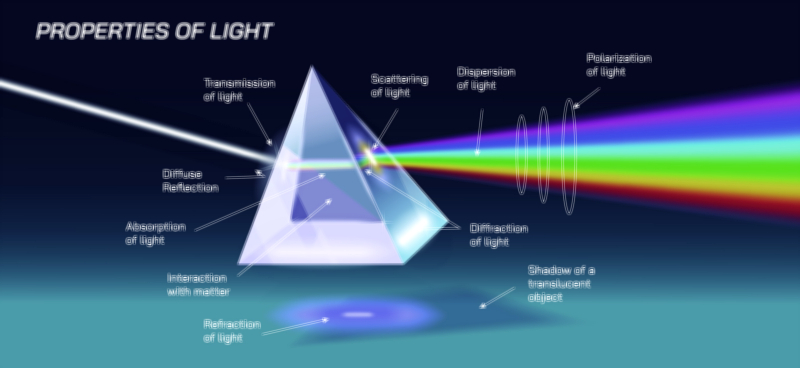
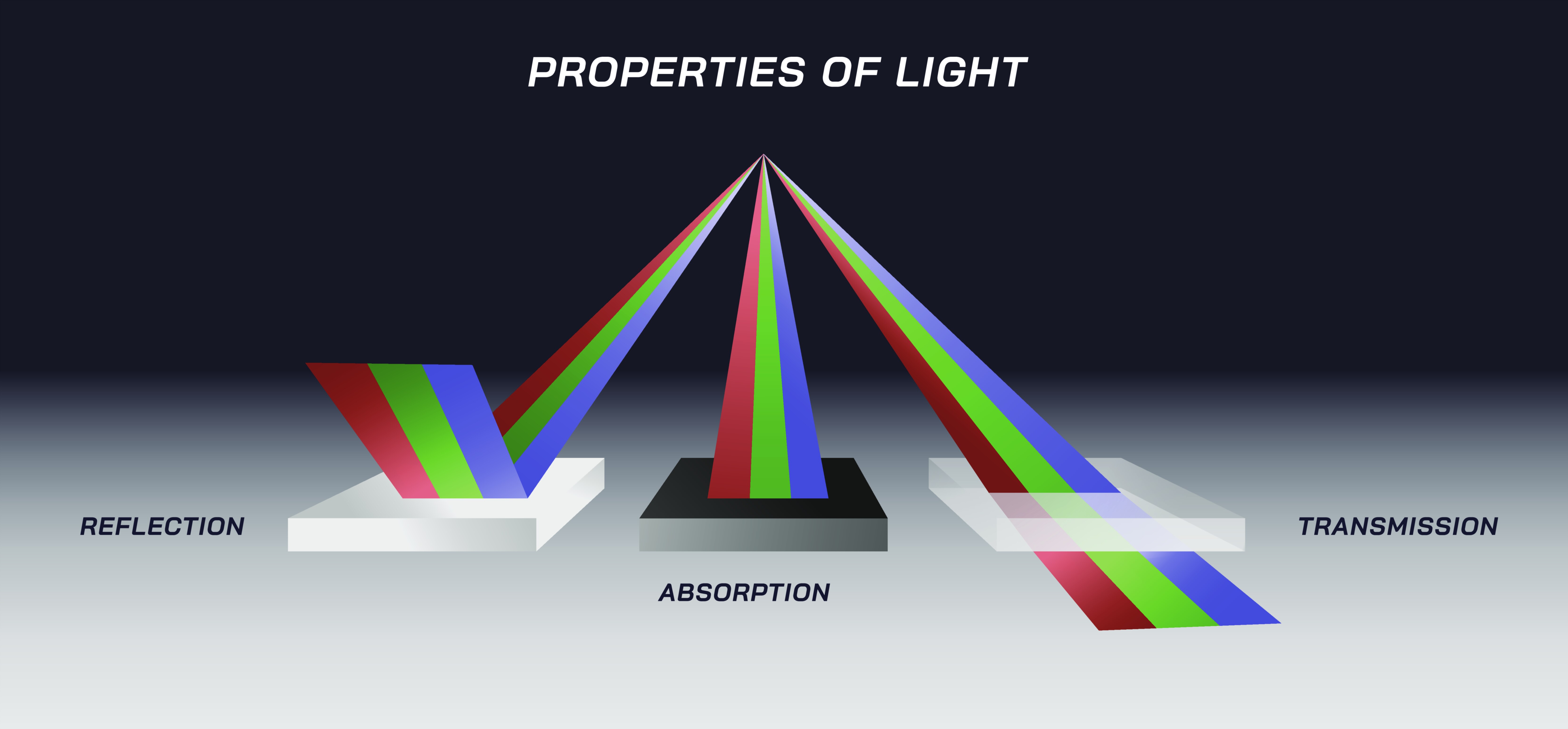
Reflection of light is one of the most familiar and visually observable behaviors of light, yet beneath this everyday phenomenon lies a consistent set of scientific principles that explain how and why light bounces off different surfaces. Whenever light meets a surface, part of the light may be absorbed, part may be transmitted, and part may be reflected. Reflection refers specifically to the return or “bouncing back” of light rays after striking a surface, and this process is governed by the laws of physics rather than randomness. Whether it is a clear reflection in a mirror, the shimmering brightness of sunlight bouncing off water, or the dull glow of light on a wall, the same fundamental rule applies: light reflects at the same angle at which it arrives, measured relative to a perpendicular (normal) line to the surface. This rule holds true for all surfaces — smooth, rough, curved, metallic, transparent, glossy, or matte — but the appearance of the reflected light changes drastically depending on the texture and shape of the reflecting material. These differences are responsible for mirror images, glints, shadows, glare, fuzziness, and everyday visual effects.
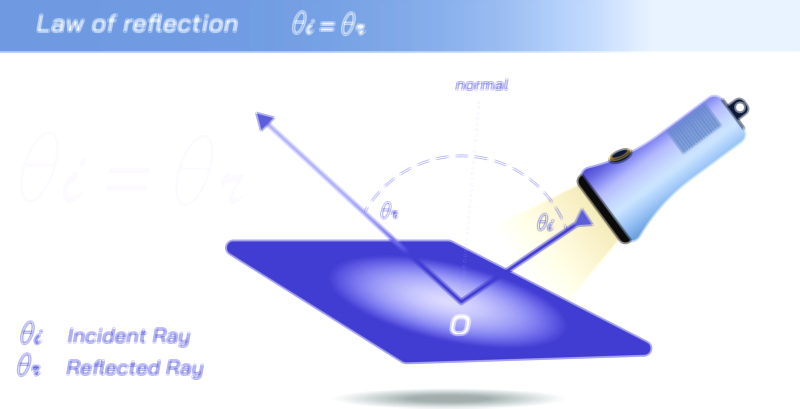
The behavior of reflection begins with two universal laws. The first states that the incident ray, the reflected ray, and the normal (an imaginary line at 90° to the surface) all lie in the same plane. The second states that the angle of incidence equals the angle of reflection. This equality may seem simple, but it forms the foundation of image formation and visual perception. When light strikes a surface at a steep angle, it reflects steeply; when it strikes head-on, it reflects straight back. These geometric principles are what allow mirrors to produce symmetrical images, telescopes to focus light precisely, and automobile headlights to redirect beams onto the road efficiently.
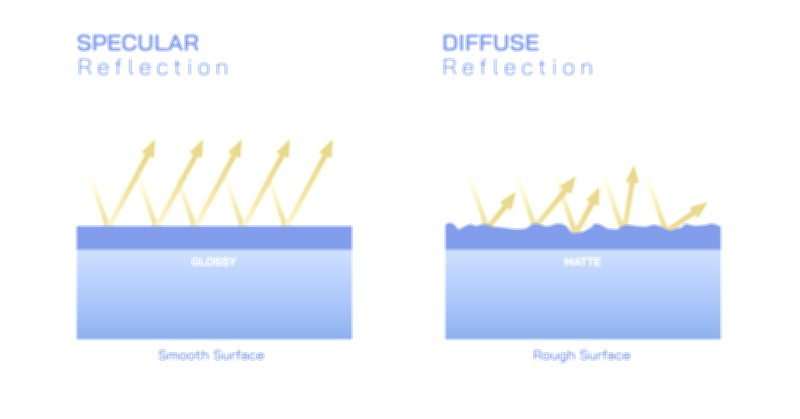
Although the laws of reflection never change, the nature of a surface determines how reflected light appears. On a smooth, polished surface — such as a mirror, still water, a metal plate, or a glossy table — all incoming light rays reflect at the same angle in a coordinated way. Because the surface has almost no irregularities, the reflected light remains organized, and this creates regular (specular) reflection. Regular reflection is responsible for the formation of sharp, clear images. In a mirror, for example, each point of an object sends rays that reflect uniformly, so the brain can reconstruct a crisp picture based on the incoming rays. This is why bathroom mirrors, camera lenses, and rearview mirrors use highly polished surfaces: the smoothness preserves clarity and direction.
In contrast, when light strikes a rough or uneven surface, the tiny bumps and ridges cause reflected rays to bounce off in many different directions. Even if the roughness is invisible to the naked eye, it disrupts the organized reflection pattern. The laws of reflection still apply to each microscopic point, but because the surface angles vary, the reflected rays scatter widely rather than traveling together. This process creates diffuse reflection, which does not form an image but instead illuminates the surface uniformly. Paper, walls, clothing, soil, and unpolished wood appear visible because they diffusely reflect light toward our eyes from all angles. Without diffuse reflection, we could not see most objects — only extremely polished surfaces would be visible. Thus, the roughness of everyday materials makes reflection softer and more useful for lighting and visibility.
Between these extremes lies a spectrum of specialized reflections. Glossy reflection occurs on surfaces that are mostly smooth but not perfectly polished, such as a shiny car hood, ceramic tiles, wet rocks, or polished wood. In such cases, part of the light reflects in a regular manner and part scatters diffusely, producing shiny highlights or sparkle while still allowing the underlying object to be seen clearly. Metallic reflection enhances brightness due to electrons within metals reacting strongly with electromagnetic waves; this is why metals appear lustrous and reflective even in low light. Retroreflection, seen in road signs, bike reflectors, and animal eyes at night, returns light almost directly back to its source rather than reflecting it outward. This occurs when the reflecting structure contains microprisms or spherical beads that bend and redirect incident rays toward the incoming path, improving visibility in darkness.
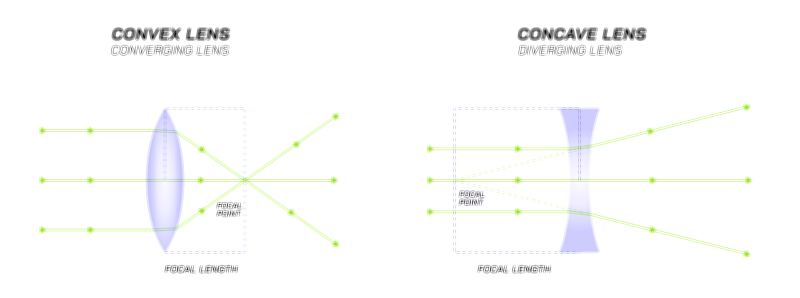
Reflection also behaves differently on curved surfaces. A concave surface (curving inward like a bowl or the inside of a spoon) can focus light. Rays parallel to the curved axis reflect inward toward a focal point. This property is used in telescopes, vehicle headlights, satellite dishes (for radio waves), cosmetic mirrors, and solar cookers to concentrate energy. A convex surface (curving outward like the back of a spoon) spreads light outward because reflected rays diverge. These surfaces provide wider fields of view and are used in security mirrors, vehicle side mirrors, and hallway surveillance because they enable a broader visual range while making images smaller and less detailed. Again, the laws of reflection remain unchanged — the differences arise from surface geometry.
Reflection interacts with color and brightness too. When white light strikes a colored surface, some wavelengths are absorbed and others are reflected. The reflected wavelengths determine the color we see. For example, a leaf appears green because it reflects green wavelengths while absorbing others. Highly polished colored surfaces — like a gloss-painted red car — reflect both color (due to selective absorption) and shine (due to smoothness). A matte red wall reflects color diffusely with almost no shine because the surface scatters light in all directions.
Real-world experience demonstrates reflection constantly. A lake at sunrise shows a near-perfect mirror image when the water is smooth, but once wind adds ripples, the reflection breaks into shimmering fragments because diffuse and directed reflections combine in complex patterns. Indoor lighting depends heavily on diffuse reflection to soften brightness and fill rooms evenly with illumination. Glare on glossy objects occurs when intense light is reflected specularly toward the eyes, while anti-glare and matte coatings deliberately roughen surfaces microscopically to diffuse reflections and protect comfort and visibility. Ray-tracing technologies in computer graphics simulate millions of individual reflections to generate lifelike scenes, showing how reflection principles govern realistic light behavior in digital worlds.
At the most advanced level, reflection even influences scientific research and technological innovation. Reflecting telescopes use concave mirrors to observe distant stars and galaxies. Lasers rely on precise internal reflections within optical cavities. Fiber-optic communication transmits data by reflecting light repeatedly inside glass fibers through total internal reflection — a specialized extreme case in which the light reflects without escaping. In medical tools such as endoscopes, reflection helps deliver illumination and visual feedback inside the human body. These examples underscore that understanding reflection is not merely an academic idea — it is a core mechanism behind modern science and engineering.
In essence, reflection of light reveals how surface texture, material composition, and geometry combine to shape visibility and optical effects. Smooth surfaces produce crisp mirror images through regular reflection, rough surfaces produce uniform illumination through diffuse reflection, and curved or specialized surfaces redirect light in controlled ways that serve engineering, visualization, safety, and communication systems. Through reflection, light becomes both a tool for seeing the world and a force that interacts with matter in predictable, deeply structured ways. By learning how light behaves across surfaces, we unlock the ability to design everything from everyday household objects to advanced optical systems, all grounded in the same simple principle: light always reflects according to predictable physical laws — but the surface determines what we see.