Convex and Concave Lenses — Light Refraction, Focal Behaviour, Image Formation, and Optical Applications
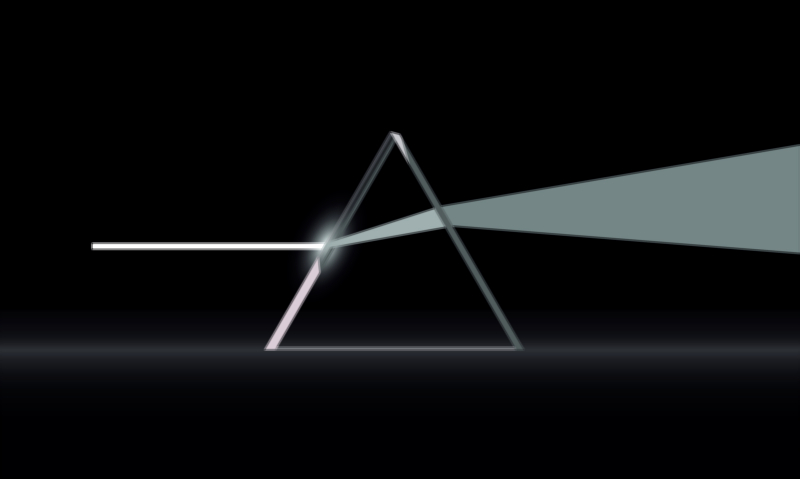
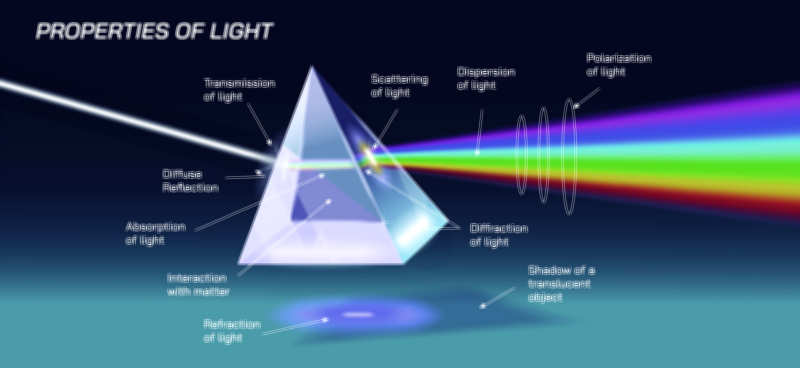
Convex and concave lenses represent two fundamental categories of optical elements that shape the behaviour of light through refraction, and their contrasting geometries create opposite focusing actions that allow them to be used for different scientific, technological, and everyday purposes. A lens is simply a transparent medium—often glass or a high-grade plastic—shaped so that light entering it changes speed and bends as it passes from air into the material and again as it exits. This bending of light, known as refraction, is governed by the curvature of the lens surfaces and the refractive index of the material. What makes convex and concave lenses so significant is that they direct light rays in completely different ways: a convex lens converges rays to a point, whereas a concave lens diverges rays outward. This difference in geometric behaviour forms the foundation of image formation in cameras, glasses, telescopes, microscopes, projectors, and countless optical systems that shape vision and magnify or correct the world we see.
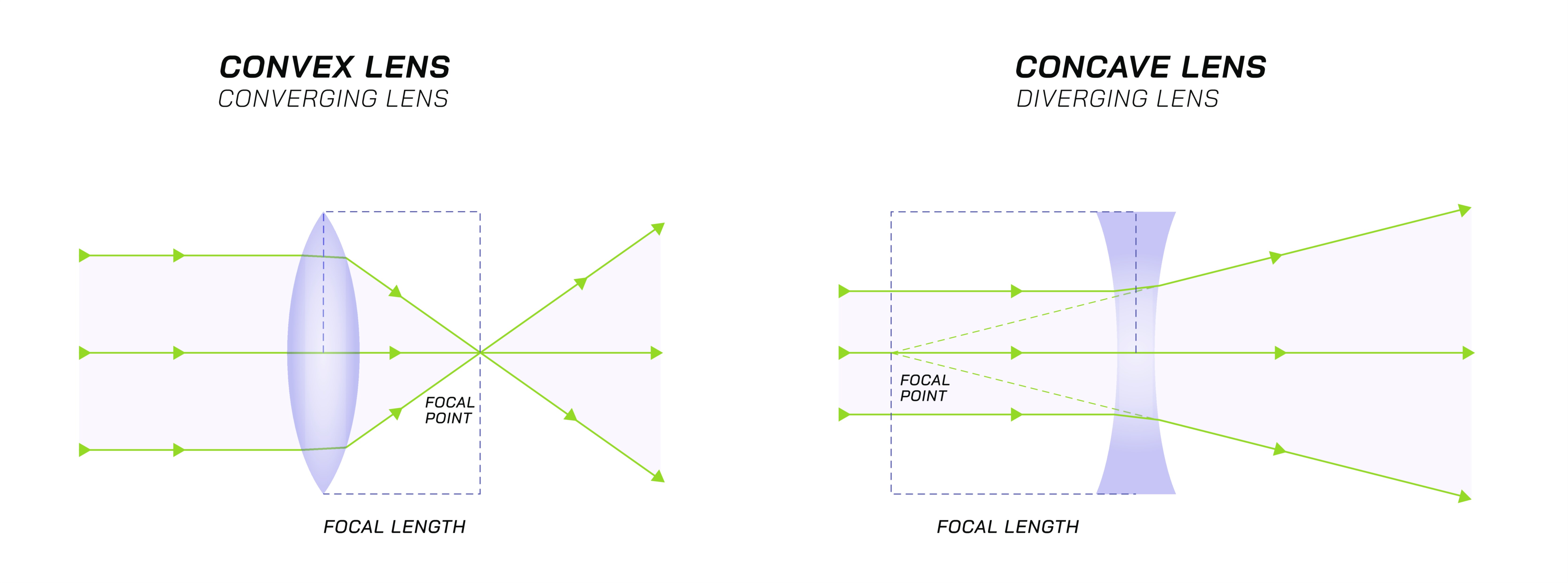
The convex lens, also called a converging lens, is thicker in the middle and thinner at the edges. Its curvature causes parallel incoming light rays to bend inward and meet at a single point known as the focal point. When light rays travel from air into the curved glass or acrylic medium, they slow down due to the greater optical density of the material. Because the convex surface is shaped outward, the rays refract toward the optical axis and cross after exiting the lens. The distance between the centre of the lens and this point of convergence is called the focal length, which is a defining parameter for lens power. A short focal length corresponds to strong convergence and high magnifying ability. A long focal length means weaker bending of rays and a less dramatic enlarging effect. This controlled convergence enables convex lenses to produce real or virtual images depending on where an object is placed relative to the focal point. When an object is farther than one focal length away, the convex lens generates an inverted real image that can be projected onto a surface, which is how cameras and projectors work. When the object lies within one focal length, the lens forms an upright magnified virtual image that appears to come from behind the lens, enabling magnifying glasses, reading lenses and microscope objectives to enlarge small details and bring close-up subjects into clearer focus.
In contrast, the concave lens—also known as a diverging lens—is thinner in the middle and thicker at the edges. Its definition revolves around the outward separation of incoming rays rather than converging them. When parallel rays enter the lens, refraction causes them to bend outward, away from the optical axis. The light appears to come from a point behind the lens rather than crossing in front of it. This point is called the virtual focal point because the rays do not physically meet there but only appear to originate from that location when traced backward. The virtual focal point lies on the same side of the lens as the incoming rays, which distinguishes concave lenses from their convex counterparts. The result is a smaller, upright, virtual image that looks closer to the lens than the actual object. Because the diverging effect reduces the angle of rays reaching the eye or imaging device, concave lenses make images look smaller and farther away instead of larger and closer. This controlled divergence is crucial in applications that correct the way parallel rays enter the eye or optical instruments.
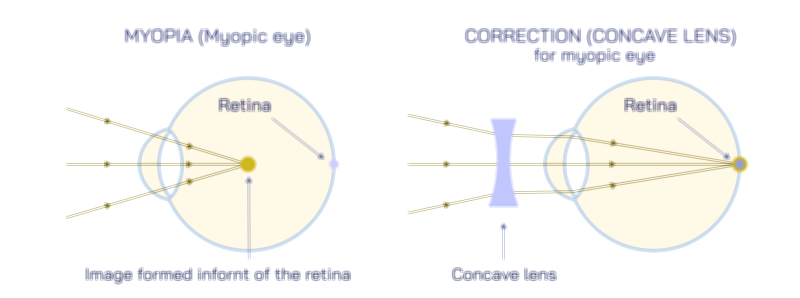
The contrasting focal behaviours of convex and concave lenses correspond directly to how they support human vision. A convex lens corrects farsightedness (hyperopia), a condition where the eye focuses light behind the retina rather than on it; the converging effect of the convex lens helps the eye focus correctly onto the retinal surface. A concave lens corrects nearsightedness (myopia), where the eye focuses light in front of the retina; the diverging effect of the concave lens spreads light rays slightly before entering the eye so that they properly converge on the retina. This simple optical principle allows millions of people to see clearly. It also demonstrates how the geometry of a lens—not its transparency alone—determines its usefulness.
The difference in image formation between convex and concave lenses is essential not only in vision but also in imaging systems. Convex lenses form real inverted images that can be captured on screens, paper, imaging sensors or digital CCD arrays, which is why they are the primary elements in cameras, projectors, telescopes, binoculars and microscopes. By gathering large bundles of rays and bringing them to a common focus, convex lenses enhance image brightness and detail. In telescopes, a large convex objective lens collects distant light and forms a real image that a secondary magnifying lens enlarges for observation. In microscopes, a small but strongly curved convex objective lens produces a magnified real image that is further amplified by the eyepiece, allowing microscopic organisms and minute structures to become visible. Concave lenses, on the other hand, are used not to form real images but to expand fields of view, control beam paths and correct optical distortions. They enable optical expansion and image reshaping in peepholes, virtual-reality headsets, laser-beam expanders, flashlight reflectors, and scientific optical systems that require divergence control.
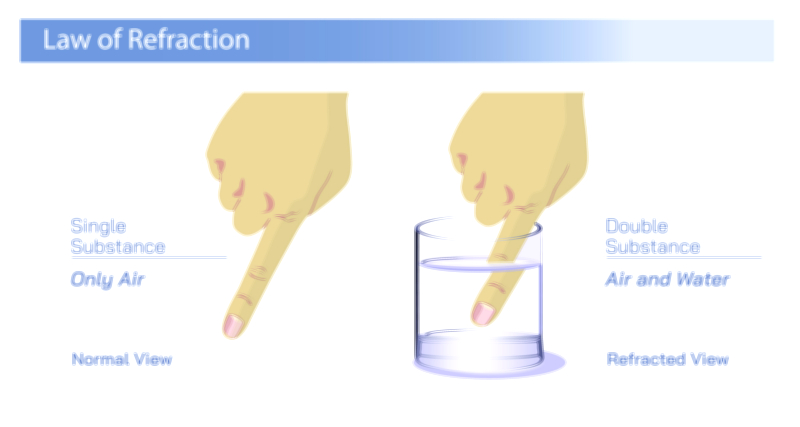
The physical intuition behind the differing behaviours of convex and concave lenses comes from the geometry of curvature and the speed change of light in various media. When light slows down as it enters glass, it refracts toward the normal line, and when it speeds up as it exits, it refracts away. In a convex lens, the surfaces are shaped so the rays tilt inward, creating convergence. In a concave lens, the surfaces orient in the opposite curvature, causing rays to bend outward. These behaviours reaffirm Snell’s law and demonstrate that the optical effect of any lens originates from a precise balance between shape and refractive index. Altering either one changes focal length, magnification and image size. Modern optical engineering takes this principle further through compound lenses composed of multiple convex and concave surfaces, which compensate for aberrations and enhance clarity across the full field of view.
Despite their contrasting behaviours, convex and concave lenses are deeply interdependent in optical technology. Many advanced systems use both types together in groups. In cameras and telescopes, diverging lenses correct chromatic aberration caused by the spread of different wavelengths while converging lenses control the primary focusing. In eyeglasses, bifocal and progressive lenses incorporate both geometries to support vision at multiple distances. In industrial lasers and scientific optical benches, beam expanders rely on a concave–convex pairing to enlarge or reduce beam diameter while maintaining coherence. This interplay of converging and diverging actions allows optical engineers to shape light in nearly limitless ways.
Thus, the comparison of convex and concave lenses is not merely a matter of one focusing light and the other spreading it. Their opposite behaviours provide the fundamental vocabulary of optical design. Convex lenses concentrate light to reveal fine detail, magnify small objects, correct farsightedness, and enable imaging and projection, while concave lenses spread light to correct nearsightedness, expand fields of view, stabilise optical pathways and manage beam direction. Together, they enable everything from eyesight correction and scientific discovery to digital imaging and entertainment. Their roles in shaping light define much of modern visual technology, demonstrating that simple geometric curvature applied to transparent materials has transformed how humanity observes the universe, captures images, studies microscopic life, and interacts with visual information across every aspect of daily life.