Pythagorean Theorem: Understanding the Relationship Between Sides of a Right Triangle Explained
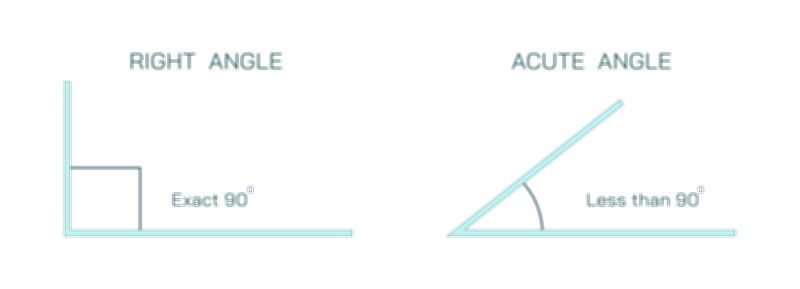
The Pythagorean Theorem is one of the most iconic ideas in mathematics, forming the foundation of geometry, trigonometry, measurement, and spatial reasoning. Although most people first encounter it as a simple rule taught in school, its meaning reaches far beyond textbook diagrams. At its core, the theorem explains how the lengths of the three sides of a right triangle are related to each other. A right triangle is a triangle in which one of the angles is a right angle, and the side opposite that angle is known as the hypotenuse, while the remaining two sides, which form the right angle, are called the legs. What the theorem conveys is that the hypotenuse represents the longest side and its length is determined not independently but through a fixed geometric relationship with the two legs. This relationship captures the essence of how distance works in two-dimensional space. From ancient times to modern engineering and computer graphics, the theorem has been relied upon because it provides a consistent way of determining distance across flat surfaces.
To understand the meaning of the theorem intuitively, imagine a right triangle drawn on a flat plane. Each of the two shorter sides forms the corner of the right angle, and the longest side stretches across that angle to connect the other two corners. The special geometric feature of the right triangle is that the shape of the triangle is fixed once the two legs are known. If both short sides grow or shrink, the hypotenuse adjusts automatically in precise proportion. The Pythagorean Theorem expresses this dependency in the form of a relationship between areas: if you imagine constructing a square outward from each side of the triangle, the surface area of the square based on the hypotenuse always equals the combined surface areas of the squares built on the two legs. Although the theorem is often presented using symbolic notation, the real insight lies in the geometry: the largest square can always be decomposed into shapes matching the two smaller squares because the spatial information encoded in the shorter sides determines the length of the longest side. It is a relationship that does not change with the size of the triangle; whether tiny or enormous, the proportions remain constant as long as the triangle contains a right angle.
Historically, the idea behind the theorem predates Pythagoras, even though his name is attached to it because of his school’s influential role in mathematically proving and systematizing geometric knowledge. Ancient Babylonians and Egyptians knew how to use numerical triples that satisfied the same geometric rule to lay out right angles in construction and surveying. Builders lifting stone and architects designing temples relied on this principle without describing it formally. What the Pythagoreans contributed was the framework that turned this practical insight into a universal mathematical truth. They understood that for any right triangle, regardless of scale or orientation, the same relation between the sides always holds. The theorem became a cornerstone of Euclidean geometry and has remained unchanged through centuries of mathematical discovery because it captures a deep and unbreakable structure of space.
The usefulness of the Pythagorean Theorem is best appreciated by looking at its wide range of real-world and scientific applications. In everyday tasks, the theorem allows carpenters and surveyors to guarantee perfectly square corners, helps navigation systems calculate the shortest distance between two points on flat land, and aids architects in determining structural lengths without direct measurement. In science and technology, it enables engineers to design ramps, bridges, and supports, while in physics it appears whenever two perpendicular effects combine, such as orthogonal force components or independent motion along two dimensions. Even in fields not obviously related to geometry, like computer science, video game development, and digital animation, the theorem silently supports calculations of distance on screens, object tracking, and virtual movement. When mapping a path on a grid or calculating speeds across two dimensions, the theorem provides a reliable way to compute the real magnitude of displacement from one location to another.
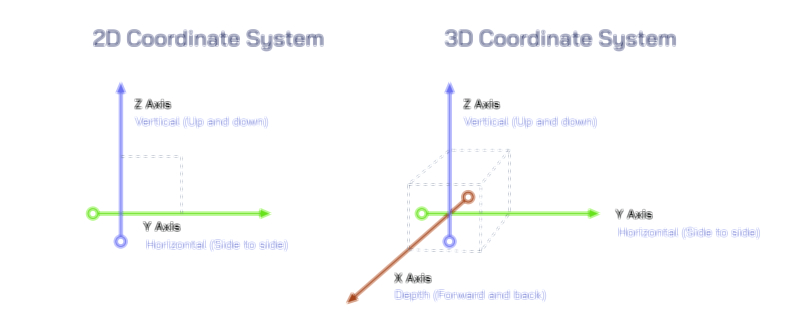
Beyond these practical uses, the Pythagorean Theorem also opens the door to deeper ideas in mathematics. It gives rise to the distance formula in coordinate geometry, which allows the length between points on a flat grid to be found using their horizontal and vertical separation. It leads directly to the idea of magnitude in vector mathematics, providing the measure of combined directional quantities. The concept even extends to dimensions beyond two. In three-dimensional space and higher, versions of the rule relate orthogonal components to total length, showing that the principle of combining perpendicular quantities to determine distance holds in any number of dimensions. This makes the Pythagorean Theorem not just an isolated geometric fact but a building block of mathematical reasoning across sciences, engineering, and computational design.
Another powerful insight from the theorem is how it serves as a test for identifying right triangles. If the lengths of the three sides of a triangle satisfy the relationship described by the theorem, the triangle must contain a right angle. This property makes the theorem both a measurement tool and a diagnostic tool. Builders throughout history have used simple integer combinations known as Pythagorean triples to create right angles with ropes, such as the classic combination of three, four, and five units for the sides. These triples are not limited to a single combination; many sets of integers or proportional numbers naturally form right triangles. They occur frequently enough that Pythagorean triples have fascinated mathematicians for centuries and illustrate that the theorem is grounded both in abstract geometry and practical measurement.
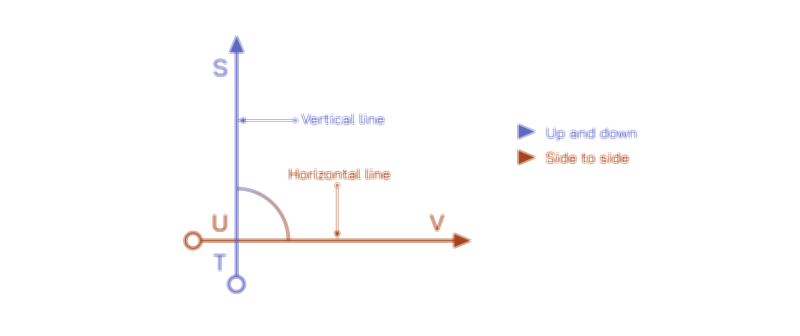
Conceptually, the theorem deepens our understanding of how space and shape behave. It shows that distance in a flat plane cannot be described by adding lengths directly because moving horizontally and vertically represents independent directions. Instead, distance must be synthesized from these perpendicular contributions. This idea becomes profoundly important when studying motion: if an object moves east and then north, the straight-line path from its starting point cannot be obtained by simple addition. The theorem provides the rule that links combined movements into a single displacement. This rule extends into countless areas of science. In physics, perpendicular influences combine to form overall magnitude, whether in force, velocity, or acceleration. In electrical engineering, perpendicular components of current and impedance combine similarly. In statistics, independent contributions to variance combine through a comparable conceptual structure. The recurring appearance of the Pythagorean pattern across unrelated disciplines demonstrates that the theorem is more than an isolated geometric statement; it is a recurring principle of how independent quantities combine to create total magnitude.
The geometric beauty of the Pythagorean Theorem is also connected to its more philosophical meaning. It reveals that the world is not arbitrary; patterns govern shape, motion, and dimension. Something as simple as a triangle becomes a window into the structure of space itself. The exactness of the relationship between the sides of a right triangle offers a glimpse of the precision that underlies the physical universe. Whether applied to the measurements of ancient architecture or the data visualizations of modern cosmology, the theorem asserts that certain truths remain stable no matter what changes around them. It becomes a reminder that mathematics is both a language for describing the world and a tool for navigating it.
Ultimately, the Pythagorean Theorem stands as a central example of how a simple geometric observation becomes a universal scientific principle. It explains how the legs and hypotenuse of a right triangle are bound through an unchanging relationship that allows distances to be computed, shapes to be analyzed, and physical systems to be described accurately. It supports everything from carpentry to quantum mechanics, from mapping land to programming computers. Its endurance across cultures and centuries reflects the power of mathematical structure to transcend time and context. To understand the Pythagorean Theorem is to understand a fundamental rule of spatial reality: when independent perpendicular contributions combine to produce a whole, their relationship follows a precise and predictable pattern. That insight sits at the heart of geometry and ripples outward into nearly every form of scientific thought.