Tyndall Effect – Understanding Light Scattering in Colloidal Systems, Visibility of Particles in Suspensions, Optical Phenomena Through Medium Interactions, and Its Educational Importance in Chemistry and Physics
The Tyndall effect is one of the most visually striking demonstrations of how light behaves when it encounters tiny particles suspended in a medium, and it offers an important conceptual bridge between chemistry and physics. When a beam of light passes through a colloid—a mixture containing microscopic particles that do not settle under gravity—it does not travel invisibly straight through the mixture. Instead, the beam becomes visible because the particles scatter the incoming light, redirecting it in many directions. This scattered light creates a glowing pathway that allows us to trace the movement of the beam through the medium with our eyes. In a pure solution, where solute particles are molecularly dissolved and too small to interfere with light, no such visibility occurs because the particles cannot scatter light. In a suspension containing larger particles, the mixture may look cloudy or opaque without the distinct shining path created in colloids. The Tyndall effect thus provides a clear and captivating criterion for identifying colloidal mixtures, helping learners understand how particle size determines the optical behavior of materials.
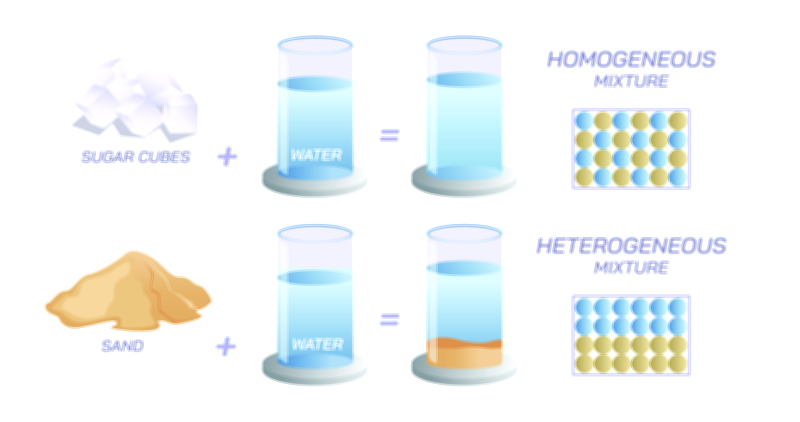
A colloid serves as the perfect medium for the Tyndall effect because the particles it contains are intermediate in size—large enough to scatter light but small enough to remain uniformly dispersed. Colloidal particle diameters typically range from 1 to 1000 nanometers. This size range is central to understanding why the Tyndall effect appears in colloids but not in true solutions. In a true solution such as saltwater or sugar water, the particles are at the molecular or ionic scale and do not interact significantly with light waves. The photons of visible light travel through such a solution without being interrupted, and the beam remains invisible except at the point of incidence. Colloidal particles, however, are large enough to interact with light waves, causing scattering that makes the path of the beam visible. Suspensions, which contain even larger particles, scatter light strongly but do not remain stable; their particles settle over time. The Tyndall effect sits specifically within this intermediate optical zone where particles remain uniformly dispersed while still interacting strongly with light.
Classical examples illustrate the Tyndall effect clearly and give learners intuitive understanding of the concept. When a flashlight is shone through a glass of milk diluted with water, the beam becomes visible inside the liquid because the proteins and fat droplets form a colloid that scatters the light. In contrast, shining the light through clear sugar water produces no visible beam because the solution has no particles large enough to scatter light. The effect can also be observed in everyday life beyond laboratory experiments. Sunlight passing through mist or fog shows streaming rays because tiny water droplets in the air scatter light. Dust particles illuminated by a projector beam in a dark room also reveal the same optical behavior. Even the blue appearance of the sky and the reddish hue of sunsets involve scattering phenomena closely related to the Tyndall effect, although these occur in gases rather than colloids. These examples show that the Tyndall effect is not an abstract scientific concept but a principle that shapes many of our visual experiences.
The scattering of light in the Tyndall effect is not random; wavelength plays an essential role. Short wavelengths of visible light, such as blue and violet, scatter more strongly than longer wavelengths such as red and orange. This selective scattering explains why many colloidal mixtures take on a bluish appearance when viewed sideways and appear reddish or yellowish when viewed directly through transmitted light. When particles scatter shorter wavelengths more effectively, the observer sees blue light radiating sideways from the beam, while the transmitted light contains relatively more longer wavelengths. This wavelength-dependent scattering teaches students how color perception and optical physics are integrated into the behavior of materials. Although the Tyndall effect is not the same as Rayleigh scattering—which involves much smaller particles and occurs in gases—the conceptual overlap helps learners make sense of why the sky appears blue and why smoke or fog changes color depending on viewing angle.
The Tyndall effect also carries significant scientific and industrial relevance, making it more than a curiosity of classroom demonstrations. In analytical chemistry, it can be used to detect whether a sample is colloidal or truly dissolved. It is employed in quality control procedures for pharmaceuticals, food products, paints, and polymer mixtures, where maintaining the correct dispersion of particles is essential for stability and performance. The effect is utilized in environmental monitoring to evaluate water turbidity and detect pollutants that appear as colloidal particulates. In biotechnology, the Tyndall effect aids in determining whether protein mixtures are aggregated or evenly dispersed, providing insight into the stability of drug formulations or biological samples. These applications illustrate how a fundamental principle in physical science extends into everyday technological and medical practices.
On a conceptual level, the Tyndall effect highlights an important educational theme: matter cannot be fully understood by chemical formulas alone. Two liquids may appear visually identical, yet their microscopic organization determines how they interact with energy. The Tyndall effect therefore reinforces ideas about mixtures, particle size, phase stability, and optical interaction in a way that textbooks alone cannot fully convey. It brings together principles of wave behavior, molecular dispersion, intermolecular forces, and light–matter interaction into one observable and memorable demonstration. It also allows students to classify mixtures correctly by understanding that colloids, although homogeneous in appearance, are not true solutions and that their intermediate particle size gives them unique behaviors.
The phenomenon illustrates the unity of science across disciplines: physics explains how light scatters, chemistry explains why particles stay dispersed, biology exploits colloidal behavior in living systems such as cellular fluids, and engineering uses the effect to evaluate material stability. The Tyndall effect reminds learners that visual observation is a profound scientific tool and that natural patterns often arise from physical interactions at the smallest scales. When light travels through a colloid and reveals its pathway, it exposes the hidden world of particles too small to see but large enough to shape the flow of energy. The glowing beam suspended inside a mixture therefore becomes a symbol of discovery, connecting curiosity to deeper scientific understanding.