Non-Newtonian Fluids: Types, Behaviour, and Viscosity Changes Explained
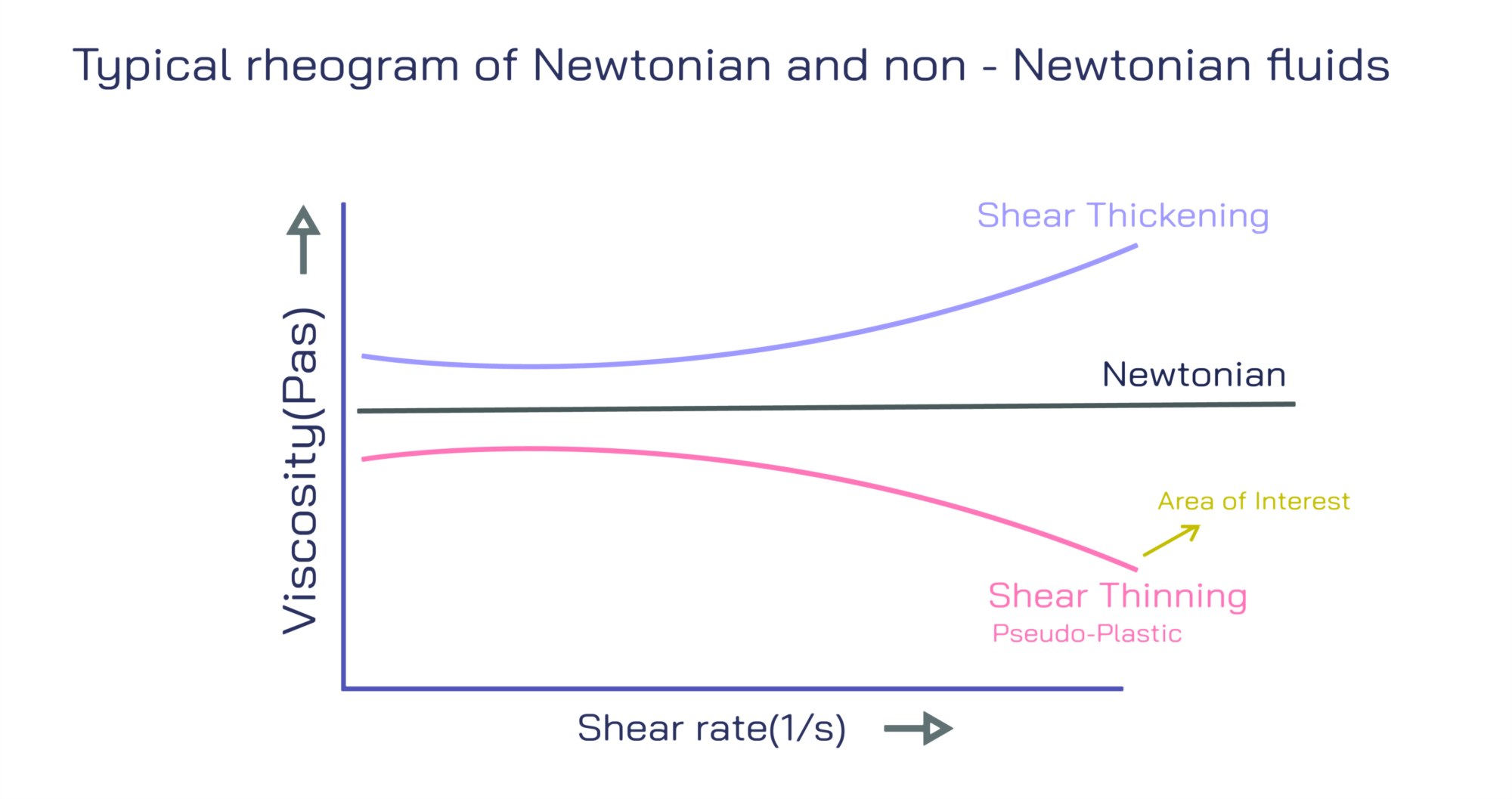
Non-Newtonian fluids represent one of the most intriguing categories of materials in fluid dynamics because their viscosity does not remain constant under changing forces; instead of flowing uniformly like water or oil, they shift behavior depending on stress, pressure, shear, or deformation. Understanding non-Newtonian fluids requires moving beyond the classical assumption that a fluid’s resistance to flow is fixed and predictable. In a Newtonian fluid, viscosity is independent of shear rate, meaning the fluid flows proportionally to the force applied. By contrast, non-Newtonian fluids respond non-linearly to stress, sometimes thickening dramatically under impact, sometimes thinning to near-liquid consistency when stirred, and sometimes behaving like solids until a sudden force triggers flow. These diverse behaviors stem from the complex internal structures of these fluids—networks of polymers, suspended particles, or microscopic interactions that shift orientation, spacing, or bonding when stress is applied. When examined closely, non-Newtonian fluids reveal how richly macroscopic behavior can emerge from microscopic molecular motion and particle organization.
One widely recognized category is the shear-thinning or pseudoplastic fluid. These fluids decrease in viscosity as the rate of shear increases, meaning they flow more easily when agitated, stirred, pumped, or shaken. Common examples include ketchup, paint, yogurt, blood, and polymer solutions. At low stress, such fluids can be thick and resistant to movement, but when force is applied, particles align and internal microstructures reorganize in a way that reduces friction between layers, allowing flow to accelerate. This explains why ketchup remains stubborn in a bottle until shaken or squeezed, why paint spreads smoothly when brushed, and why blood flows more efficiently in narrow vessels during exercise when shear rates increase. Shear-thinning behavior is fundamental in biological systems and industrial processes because it allows substances to remain stable at rest while flowing efficiently during motion.
At the opposite end of the spectrum are shear-thickening or dilatant fluids, which increase in viscosity when subjected to greater stress. These fluids flow easily under gentle motion but gain rigidity under sudden force or compression. The most iconic example is a suspension of cornstarch in water—often described as “oobleck”—which behaves as a liquid under slow movement but hardens instantly when struck. In these suspensions, particles normally move with enough freedom to flow; however, under sudden stress, particles jam together and form temporary, solid-like structures that resist movement. Shear-thickening behavior is exploited in modern protective materials, such as body armor and impact-resistant padding, which remain flexible during normal motion but stiffen on impact to absorb force. The phenomenon illustrates how apparently simple mixtures can exhibit complex mechanical responses.
Another major category in non-Newtonian behavior is thixotropic fluids, which gradually decrease in viscosity when a constant force or shear is applied over time and slowly regain thickness when the force is removed. Mud, clay slurries, gels, and certain cosmetic or pharmaceutical creams display this time-dependent thinning. Their internal structure consists of weakly bonded networks that break down progressively when shearing occurs, causing a slow transition from solid-like to liquid-like behavior. When the stress ends, the bonds gradually reform and the viscosity rises again. Thixotropy makes these materials easy to spread, pump, or inject and then stable and firm afterward, which is why it is widely used in medicine, construction, and manufacturing.
In contrast, rheopectic fluids exhibit the rare opposite response: they increase in viscosity over time under continuous stress and return to lower viscosity when the stress is removed. Gypsum pastes, certain lubricants, and some printing inks show this slow strengthening under constant shear. Whereas thixotropic fluids lose structure during motion and regain it at rest, rheopectic fluids build structure with sustained movement, forming firmer internal frameworks as shear continues. These materials demonstrate how time and shear interact to determine fluid behavior rather than simple force alone.
Alongside these categories are viscoelastic fluids, which blend the properties of both liquids and solids. They deform and flow like fluids under prolonged stress but behave elastically under short, rapid motion, storing some of the applied energy. Examples include slime, dough, cheese, molten polymers, biological mucus, and many body fluids rich in proteins or polysaccharides. At the microscopic scale, long chain-like molecules stretch and recoil, creating memory-like effects and allowing the material to resist sudden deformation while flowing slowly when stress persists. Viscoelasticity explains why a ball of dough stretches slowly when pulled steadily but snaps back when tugged sharply, and why saliva or mucus can be both stretchy and fluid. This dual behavior plays major roles in food texture, biological lubrication, manufacturing of plastics, and structural damping materials.
The scientific explanation of non-Newtonian behavior lies in the freedom or restriction of microscopic elements—particles, polymers, droplets, or molecular clusters—that govern how readily fluid layers slip past one another. In Newtonian fluids, molecules are small, uniform, and weakly interacting, so shear affects them minimally, keeping viscosity constant. In non-Newtonian fluids, however, structural rearrangements take place under stress; particles may cluster or separate, polymers may stretch or align, weak bonds may break or form, and suspended networks may collapse or strengthen. Because these microscopic changes occur dynamically as force varies, the fluid does not follow a simple proportional rule. This is why the same material may act nearly solid at one moment and flow freely at another.
The behavior of non-Newtonian fluids is not only scientifically fascinating but also indispensable across daily life, technology, industry, and biology. The thickness of sauces and cosmetics, the texture of foods, the print quality of inks and paints, the lubrication of machines, the pumping of slurries in mining and drilling, the cushioning in protective equipment, and even the efficient circulation of blood in living organisms all depend on these specialized viscosity responses. Engineers exploit shear-thinning behavior to reduce pumping energy and improve spray coatings, while medical science relies on the time-dependent viscosity of fluids to enable both protection and flow within tissues. Protective gear takes advantage of shear thickening, while 3D printing and polymer processing depend on viscoelastic resilience.
Ultimately, non-Newtonian fluids illustrate that viscosity is not a rigid property but a living interaction between structure and motion. They show that the response of a substance depends not simply on what it is made of, but on how it is treated at any moment. Some grow thinner when agitated, some stiffen when struck, some soften gradually with motion, some build strength over time, and some stretch like solids yet flow like liquids. These diverse behaviors prove that matter cannot be fully understood only under static conditions—its deepest traits reveal themselves under change. By examining how non-Newtonian fluids respond to stress, the complexity of material science becomes visible in everyday experience, showing that even a simple mixture of particles and liquid can blur the boundaries between liquid and solid and reshape our understanding of how the physical world behaves under motion.