𝐏𝐫𝐢𝐬𝐦 𝐚𝐧𝐝 𝐋𝐢𝐠𝐡𝐭 𝐄𝐱𝐩𝐞𝐫𝐢𝐦𝐞𝐧𝐭 — 𝐃𝐞𝐞𝐩 𝐄𝐱𝐩𝐥𝐚𝐧𝐚𝐭𝐨𝐫𝐲 𝐏𝐡𝐲𝐬𝐢𝐜𝐬 𝐂𝐨𝐧𝐜𝐞𝐩𝐭 𝐒𝐮𝐦𝐦𝐚𝐫𝐲.
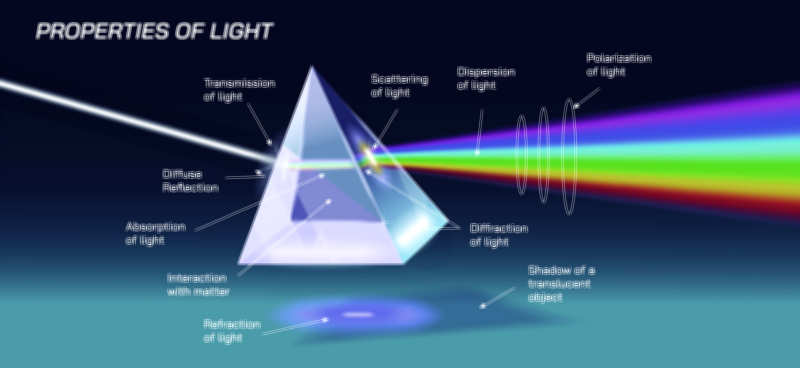
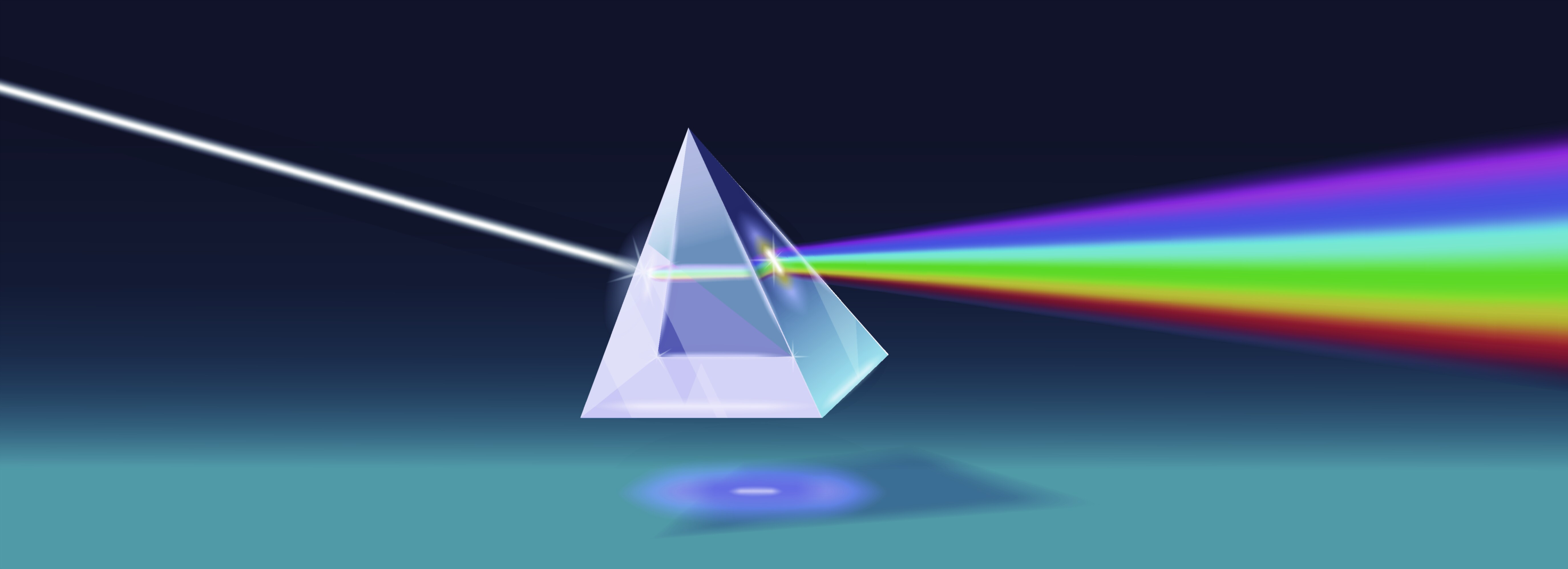
The prism and light experiment stands as one of the most iconic demonstrations in the history of physics because it reveals the hidden structure of visible light and shows that what appears to be a single beam of white light is actually a mixture of multiple colours. At the heart of this experiment is the interaction of light with a transparent triangular prism, usually made of glass or acrylic. When a beam of white light passes into the prism, it changes direction, spreads into a band of distinct colours and exits as a spectrum. This seemingly simple transformation embodies deep scientific principles about the nature of light, including refraction, dispersion, wavelength dependence and the relationship between energy and colour. Historically, Isaac Newton’s prism experiment reshaped human understanding by proving that colours are components of white light rather than products created by the prism. The prism simply separates what already exists within the light. The experiment opened the door to modern optics, spectroscopy, astronomy and even the later development of quantum physics. In classrooms, it continues to serve as a visual introduction to how light behaves, and in laboratories it remains a foundational method for analyzing electromagnetic radiation.
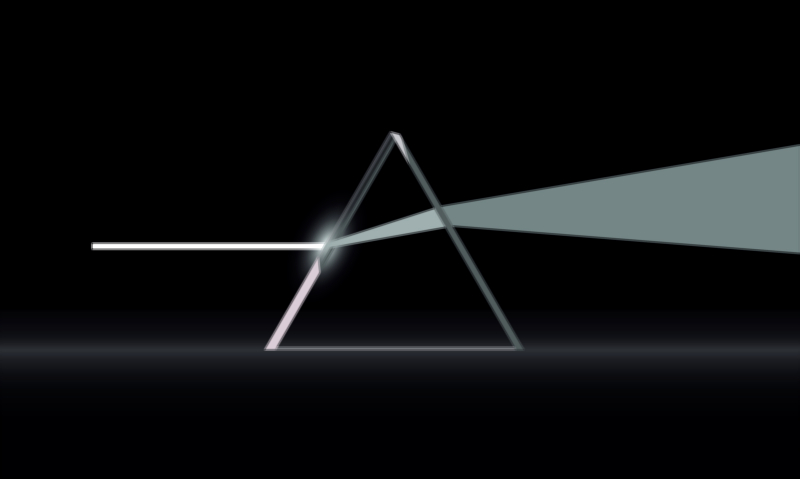
To understand the prism and light experiment, one must first explore the idea of refraction—the bending of light as it passes from one medium to another. When light travels through air and then enters glass, its speed decreases because glass is optically denser than air, meaning its atoms interact with and delay the passage of light. The direction change occurs because the speed reduction happens unevenly across the beam; the side of the beam that encounters the new medium first slows down faster than the rest, causing the entire ray to pivot. This is why a ray of light entering the prism bends toward the base upon entry and then bends again upon exit. If refraction were the only factor, all colours of light would bend uniformly and white light would emerge unchanged, only in a different direction. However, the prism experiment demonstrates something remarkable: white light splits into a range of colours—violet, indigo, blue, green, yellow, orange and red—because each colour refracts differently. The key lies in the wavelength of each colour. Violet light has the shortest wavelength in the visible spectrum and is slowed down the most inside the prism, causing it to bend the most sharply. Red light has the longest wavelength and bends the least. The other colours bend in degrees between these extremes. The result is a fan-like spread of colour called a spectrum. This separation is what makes the prism experiment so scientifically powerful: it makes visible the difference in how wavelengths of light interact with matter.
This behaviour is not a trick of the prism but a natural property of light called dispersion, which refers to the dependence of a medium’s refractive index on wavelength. In simpler terms, the prism does not add colour to the light; instead, it separates colours already present by bending shorter wavelengths more than longer ones. Dispersion illustrates that colour is an intrinsic property of light determined by wavelength. Before Newton’s investigations, many scientists believed that white light was pure and that glass or crystals somehow tinted it into colours. Newton demonstrated conclusively that the colours are not generated by the prism; they preexist within the white beam. He showed this by performing a second experiment in which he directed the separated spectrum through another prism positioned upside down. Instead of producing a rainbow again, the second prism recombined the separated colours back into white light. This reversed experiment proved that colour is embedded in white light and the prism’s only function is separation. The intellectual transformation was revolutionary because it revealed that colour arises from the structure of electromagnetic radiation, not from interaction with materials. Every colour already exists within the original beam; the prism simply unveils what the human eye cannot normally detect.
The prism and light experiment also establishes an intuitive understanding of energy differences in light. Although Newton did not know the quantum explanation behind colour, the modern view tells us that shorter wavelengths such as violet carry greater photon energy, while longer wavelengths such as red carry less. The spectrum produced by a prism therefore doubles as an energy gradient, demonstrating not only differences in wavelength but also differences in energy. In astronomy and spectroscopy, this principle allows scientists to analyze the light from stars and galaxies by passing it through a prism or diffraction grating and studying the resulting spectrum. The colours and intensity patterns reveal the elements present in distant celestial bodies, the temperature of stars, and the motion of galaxies through Doppler shifts. Chemical analysis in laboratories depends heavily on spectral techniques because elements emit or absorb light at specific wavelengths. What began as a simple classroom experiment has grown into one of the most indispensable tools for studying matter across the universe. The modern periodic table owes its success partly to prism-based spectral investigations that allowed scientists to identify elements before they could be isolated physically.
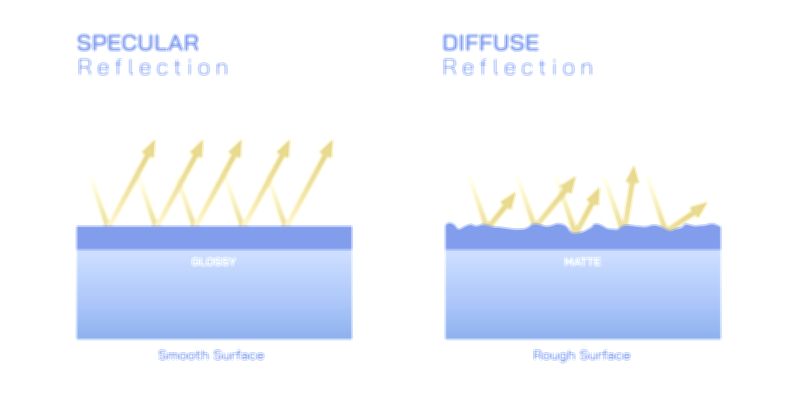
The prism experiment also connects deeply to the human experience of sight. The eye detects colour through light-sensitive cells in the retina, and the colour we see depends on the distribution of wavelengths reaching the eye. Sunlight appears white because it contains all visible wavelengths in balance. A red object appears red not because the light reflected off it becomes coloured, but because the object absorbs most wavelengths except red. The reflected red wavelength reaches our eyes while the others are lost. Without the foundational prism experiment, colour might still be interpreted as an attribute of objects rather than a property of light itself. The experiment teaches that colour exists not in surfaces but in light. Surfaces simply filter or reflect portions of the spectrum already supplied by a light source. This idea is so fundamental to modern vision science that cameras, display screens, printers and lighting technologies all owe their development to the insight that wavelengths define colour.
Another profound consequence of the prism and light experiment is the realization that visible light is only a small part of the electromagnetic spectrum. When Newton and later scientists observed spectral lines beyond the visible boundaries, they found that prisms could also separate infrared radiation, which lies just beyond red, and ultraviolet radiation, which lies beyond violet. Although these wavelengths do not trigger visual response, they are still light in the scientific sense. Their discovery opened the universe of electromagnetic radiation that includes radio waves, microwaves, infrared, visible light, ultraviolet, X-rays and gamma rays. All of them obey similar physical laws but differ in wavelength and energy. Thus, from a single glass prism experiment comes an understanding of radiation that powers Wi-Fi, mobile phones, satellite communication, medical imaging and astrophysical observation.
The experiment also plays a crucial role in illustrating how real-world optical devices work. Lenses in telescopes and microscopes rely on refraction principles similar to the prism experiment, controlling how light bends to form magnified images. Cameras and projectors use dispersion knowledge to prevent colour aberrations—optical flaws where different colours focus at different distances. Prism-based optical systems help stabilize binoculars and periscopes by controlling light paths. Even holograms and modern diffraction gratings trace their conceptual roots to rainbow splitting using prisms. The simple triangular prism has therefore influenced every technological field where light and vision play a role.
The educational value of the prism and light experiment lies not only in the captivating visual display it creates but in the depth of physical truth it demonstrates. It teaches that white light is a composition rather than a single entity. It teaches that light slows down and changes direction when moving between materials. It teaches that colour depends on wavelength and that the spectrum is a physical property of light, not a psychological illusion. It teaches that science uncovers structure beneath appearances, revealing complexity where the eye sees uniformity. A beam of white light may look plain and featureless, yet within it lies the entire palette of visible colour and beyond it the entire electromagnetic spectrum. Light that seems ordinary becomes spectacular when allowed to reveal its internal architecture through a prism.
The prism and light experiment therefore represents one of the most important conceptual milestones in physics. It is a gateway to optics, electromagnetism, spectroscopy, colour science, photonics and quantum theory. It bridges everyday experience and scientific precision, transforming a simple observation—a rainbow of colours—into a deep understanding of how light behaves, how matter interacts with radiation and how the universe communicates information visually. Every time we see a rainbow after rain, every time sunlight filters through glass and every time light bends through a lens, the same principles are at work that the prism experiment makes visible. It is a timeless demonstration that shows not only what light does, but what light truly is.