𝐏𝐨𝐥𝐚𝐫𝐢𝐳𝐞𝐝 𝐋𝐢𝐠𝐡𝐭 𝐂𝐨𝐧𝐜𝐞𝐩𝐭 𝐚𝐧𝐝 𝐖𝐚𝐯𝐞 𝐎𝐫𝐢𝐞𝐧𝐭𝐚𝐭𝐢𝐨𝐧 𝐏𝐡𝐲𝐬𝐢𝐜𝐬
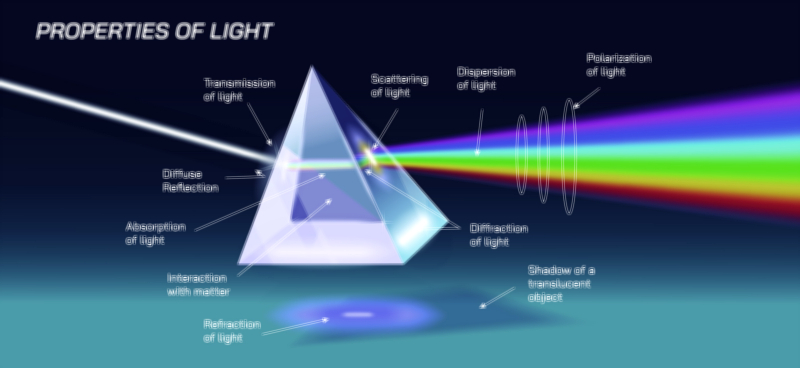
Polarized light refers to a special condition of light in which the waves oscillate in a preferred orientation rather than vibrating randomly in every direction. In ordinary life, we encounter natural light from the sun, lamps, fire, and screens, and this kind of light is made of electromagnetic waves that vibrate in multiple planes at the same time. If light could be seen as tiny ripples travelling forward, unpolarized light would look like countless ripples vibrating in all directions around the direction of travel. Polarization restricts these vibrations so that the waves oscillate in only one selected direction. This transformation does not change the speed or colour of light; instead, it redefines the organization of wave motion by eliminating unwanted orientations and forcing a structured pattern. The concept of polarized light plays a major role in understanding how waves interact with matter, lenses, surfaces, crystals, and filters. Although invisible to the naked eye, polarization becomes essential in optical technology, microscopy, photography, liquid-crystal displays, stress analysis, remote sensing, and even the behaviour of living organisms that use natural polarization cues for navigation.
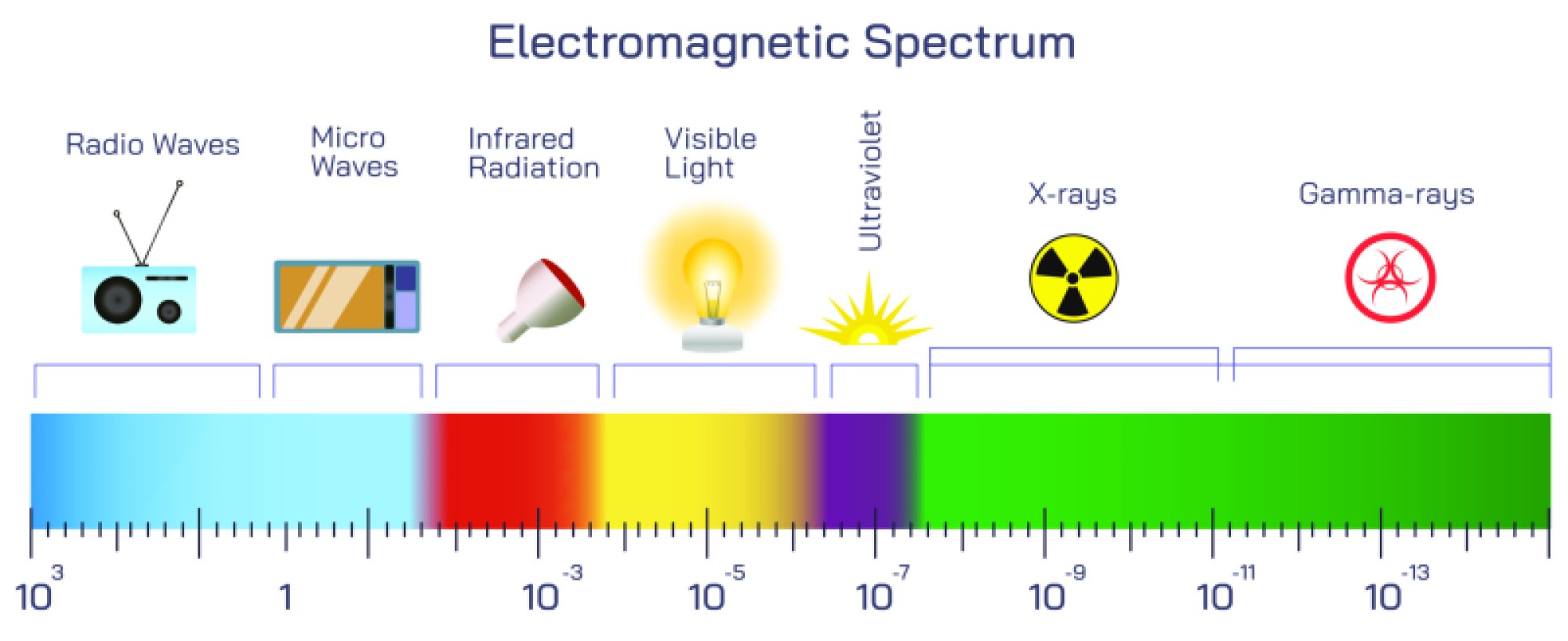
To truly appreciate polarization, it is helpful to imagine how a light wave travels. Light is an electromagnetic wave meaning it is produced by oscillations of electric and magnetic fields. These oscillations create a transverse wave, so the vibration occurs perpendicular to the direction of travel. In everyday unpolarized light, each wave’s vibrations appear randomly oriented, with no fixed alignment, giving the beam a heavily mixed structure. When light interacts with a structure that restricts or modifies certain vibration orientations, the resulting beam loses randomness and becomes polarized. The structure responsible for this transformation might be a polarization filter, a reflective surface, a crystal, or even molecular alignment inside materials. Once polarized, light waves behave more selectively when interacting with surfaces and optical systems, making polarization a powerful tool for enhancing clarity, reducing glare, and extracting hidden information about materials and environments.
One of the most well-known demonstrations of polarization occurs through reflection. When light hits a smooth non-metallic surface such as water, glass, or a polished road, certain orientations of vibrating waves are absorbed or reflected differently. This selective suppression causes a portion of reflected light to become polarized, which is why glare from water or wet roads appears strongly directional. These reflections contain mostly horizontally polarized light, producing intense glare that interferes with vision. Sunglasses using polarizing filters are engineered to remove this horizontal component and allow only vertically polarized light to pass, reducing glare dramatically and improving visual comfort. This everyday example shows how polarization affects human experience even without awareness of wave physics.
Another important route to polarization occurs through transmission filters. A polarizing filter contains long, aligned molecular chains that allow vibrations along one orientation to pass while blocking vibrations along other orientations. When unpolarized light enters such a filter, only the component vibrating parallel to the molecular alignment survives. If a second filter is placed behind the first with a different orientation, the brightness of transmitted light depends on how closely their alignments match. When their orientations are nearly the same, more light passes through; when the second filter is rotated to a perpendicular position, transmission becomes minimal. This principle is the basis of polarized lenses, optical laboratory instruments, and various technological devices that rely on controlled alignment of electromagnetic waves.
Polarization also appears in nature through scattering. As sunlight enters the atmosphere, it interacts with air molecules and small particles, selectively scattering certain vibration components. The scattered sky light becomes partially polarized depending on the angle from the sun. Many insects possess specialized visual structures capable of detecting polarization patterns in the sky, helping them navigate when the sun is hidden by clouds. This phenomenon demonstrates how polarization has biological importance in addition to physical and technological relevance. In another natural form, reflection off the exoskeletons of some beetles and crustaceans produces polarized patterns that play communication roles within their species. Thus, polarization exists not only as an optical measurement but also as a functional mechanism in the natural world.
The orientation of polarized waves plays a central role in their behaviour. When light is polarized linearly, the vibration occurs in a single fixed plane and its orientation remains constant as the wave travels. In this condition, the wave appears highly uniform and predictable. In other cases, the orientation of vibration changes continuously in a rotating manner, producing other forms of polarization such as circular and elliptical. These forms occur when two perpendicular vibration components combine at specific phase relationships, causing the oscillation plane to rotate as the wave travels. Even though no mathematical symbols are used here, the idea remains intuitive: when two waves that are perpendicular vibrate together in slightly shifted timing, the resulting combined oscillation forms a rotating pattern. This dynamic rotation produces circular or elliptical polarization, widely used in communication satellites, radar systems, and modern display technology due to their ability to maintain orientation after reflections and atmospheric disturbances.
Polarization also reveals important physical information about materials. Certain materials change the polarization direction of light when placed under mechanical stress. Because the internal structure of the material gets rearranged by force, the interacting light undergoes shifts in wave orientation, producing colourful stress patterns when viewed through crossed polarizing filters. Engineers use this property to study internal strain in bridges, machine parts, and transparent models, allowing them to predict weak points before failure occurs. Liquid-crystal displays, present in televisions, smartphones, monitors, and digital watches, depend entirely on polarization. Electric fields inside the liquid crystal layer precisely rotate the orientation of polarized light, selectively brightening or dimming pixel regions. Without polarization, the functioning of modern display technology would not be possible.
Polarization therefore stands at the centre of numerous scientific, engineering, biological, and technological fields. It not only deepens the understanding of electromagnetic wave behaviour but also provides a practical tool that improves daily life. From eliminating glare while driving to enabling highly detailed microscopic imaging, from determining stress inside materials to guiding insects across open skies, the influence of polarization extends across disciplines. Even though the oscillations responsible for polarization remain invisible to the naked eye, their effects are powerful and transformative. The study of polarized light offers a deeper appreciation of how organized wave motion interacts with both matter and technology, turning the abstract physics of wave orientation into real applications that shape modern optical science and everyday visual experience.