Wave and Particle — Dual Nature of Matter and Light
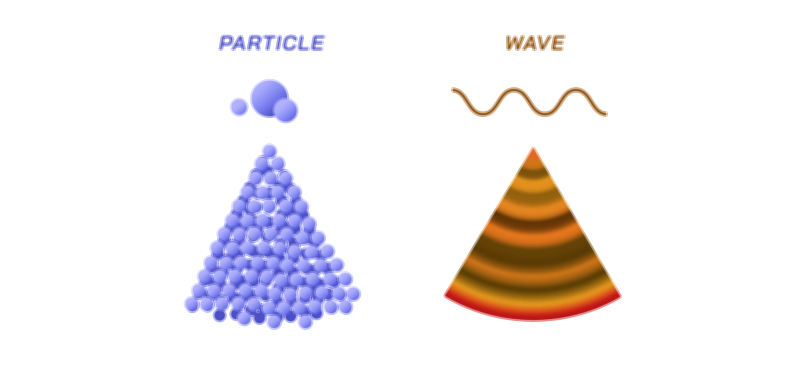
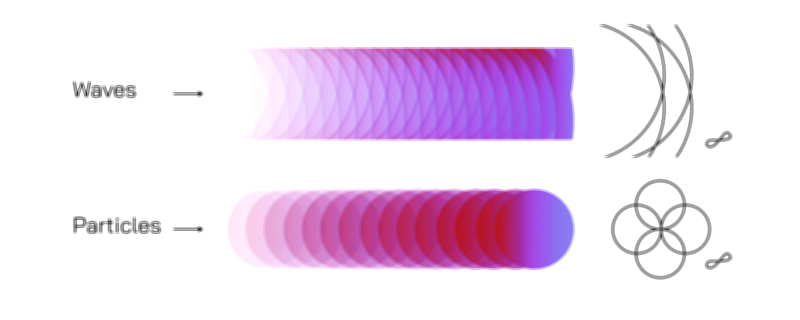
The dual nature of matter and light stands as one of the most profound and transformative ideas in modern physics, revealing that the fundamental components of the universe do not conform to simple, classical descriptions but instead occupy a realm where intuition must give way to deeper conceptual understanding. For centuries, scientists sought to categorize natural phenomena into either waves or particles, believing that these categories were mutually exclusive and sufficient to explain the behaviour of all physical systems. Waves were understood as continuous, extended disturbances spreading through space, while particles were viewed as discrete, localized entities following well-defined paths. Yet as investigations into the smallest scales of nature progressed, it became increasingly clear that neither picture alone could describe the full range of behaviours exhibited by matter and light. Instead, the universe reveals itself through a synthesis of both descriptions, where entities can display characteristics traditionally associated with waves and characteristics traditionally associated with particles, depending on the conditions of observation. This dual nature does not imply simple alternation but reflects an underlying unity that transcends classical categories and compels a reimagining of what it means to exist at the fundamental level.
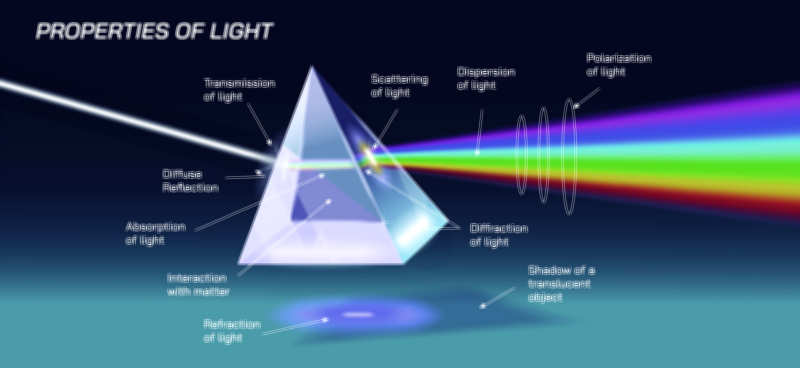
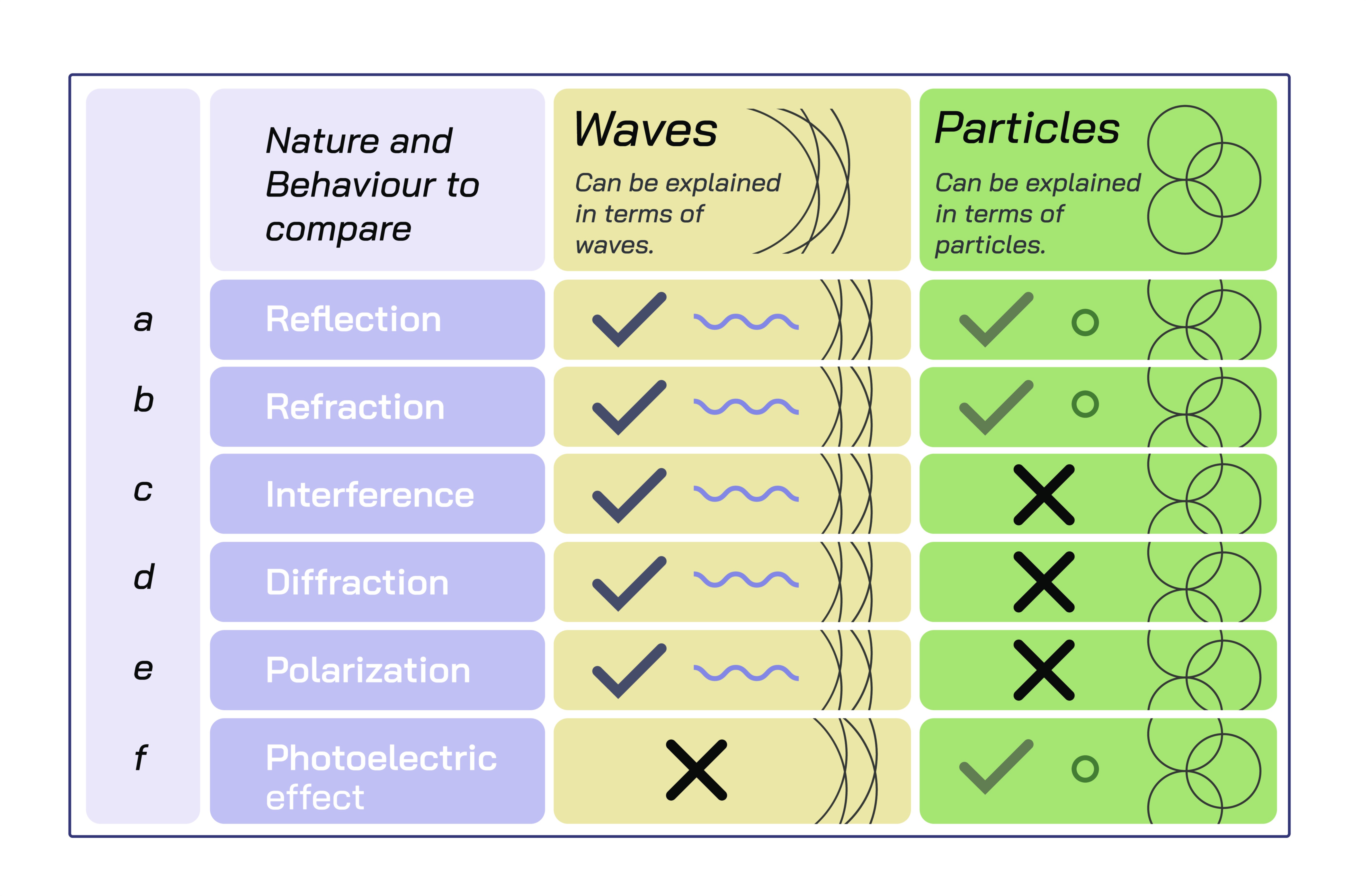
The journey toward understanding this duality began with observations of light. Historically, debates raged between those who claimed light behaved as a stream of particles and those who argued that it behaved as a wave. Early thinkers who believed in a particle-like nature found support in the ability of light to travel in straight lines, cast sharp shadows, and reflect in predictable ways. However, phenomena such as interference, diffraction, and the spreading of light through narrow openings suggested behaviours that aligned much more closely with waves. The success of wave-based explanations eventually led scientists to adopt the idea that light belonged firmly in the wave category. The picture seemed complete until experiments showed that light also carried a form of energy transfer that appeared quantized, behaving in ways that could not be explained using waves alone. The light striking certain materials released electrons in discrete bursts, acting as though it arrived in concentrated packets rather than continuous waves. This was the turning point that shattered the belief that the wave view alone was sufficient and opened the door to a deeper understanding of light’s nature.
As puzzling as this behaviour was, the surprise grew even greater when similar characteristics were discovered in matter, which until then had been assumed to consist purely of particles. Objects such as electrons exhibited the ability to interfere with themselves, creating patterns that could only arise if they possessed wave-like properties. Yet these same electrons also formed localized impacts when detected, reinforcing their identity as particles. This discovery revealed that duality was not a quirk isolated to light but a universal characteristic extending to everything with mass. Even large objects, though overwhelmingly dominated by behaviour that appears classical in everyday life, possess an underlying wave-like aspect that becomes relevant only at scales far smaller than human senses can perceive. This demonstrates that wave and particle descriptions are not separate categories but rather complementary perspectives on a deeper physical reality.
One of the most thought-provoking aspects of this duality is the way measurement influences the behaviour that matter and light exhibit. When a system is observed under conditions that highlight its wave-like tendencies, it behaves as a wave, producing patterns associated with spreading and interference. When the observation emphasizes particle-like outcomes, the same system behaves as a particle, appearing in localized points rather than extended patterns. This dependence of behaviour on the mode of observation underscores the idea that wave and particle classifications are not inherent labels attached to physical objects but tools that describe how they manifest under different conditions. The system itself is neither exclusively wave nor exclusively particle; instead, it contains the potential to exhibit either depending on the interaction that takes place.
This dual nature influences how scientists conceptualize the microscopic world. Rather than envisioning electrons, photons, or atoms as rigid, miniature objects following predetermined paths, modern descriptions portray them as entities with both extended spread and localized presence. Their wave-like aspect encompasses probabilities, tendencies, and possibilities, while their particle-like aspect involves specific, measurable outcomes. These images are not contradictory but complementary, offering two lenses through which to understand the same underlying phenomenon. The duality also suggests that classical boundaries between objects and waves dissolve at small scales, reflecting a universe that does not conform to the everyday intuitions shaped by macroscopic experience.
The dual nature of matter and light has implications far beyond philosophical rethinking; it forms the foundation of technologies and scientific applications that shape modern life. Devices such as lasers, electron microscopes, and semiconductor components rely on the wave-like behaviour of particles, using interference and controlled patterns to produce images, signals, and processes with extraordinary precision. At the same time, technologies such as solar cells, sensors, and detectors rely on the particle-like transfer of energy, using discrete interactions to trigger responses that can be measured and utilized. Even communication systems, imaging technologies, and quantum computing concepts draw upon this dual nature to achieve capabilities that classical systems could not offer.
In chemistry, the wave-like nature of electrons determines how atoms bond, how molecules form, and how reactions proceed. The spatial patterns and distributions associated with the wave aspects of electrons create regions where interactions are favourable or unfavourable, shaping the behaviour of matter at every level. The stability of molecules, the arrangement of crystalline solids, the behaviour of metals, and the structure of biological compounds all arise from a nuanced interplay of wave-like distributions and the localized interactions that define particle-like behaviour. This duality gives structure to both the simplest and most complex forms of matter, influencing everything from the properties of everyday materials to the intricate organization of living systems.
In astrophysics and cosmology, understanding the dual nature of light allows scientists to decode information carried across vast distances. Light from stars and galaxies spreads in wave-like patterns that reveal their composition, motion, and conditions. At the same time, its particle-like interactions allow precise measurements that uncover details about the earliest moments of the universe. Even the notion of spacetime behaviour at the smallest scales depends on this duality, suggesting a universe built on principles that resist simplification into classical categories.
Even though the dual nature of matter and light may appear paradoxical through the lens of ordinary experience, it does not represent contradiction but rather reveals the richness of physical reality. Wave-like behaviour teaches us that entities can spread, overlap, and combine possibilities. Particle-like behaviour teaches us that they can appear, interact, and leave measurable traces. Together, these behaviours capture the full character of the microscopic world, forming a framework that enables both deeper understanding and technological mastery.
Ultimately, the dual nature of matter and light serves as a reminder that the universe often defies simple description. The categories constructed through human experience, shaped by phenomena at familiar scales, cannot fully encapsulate the intricacies of the world at its most fundamental level. Instead, the world reveals itself as a tapestry of behaviours that blend fluidity with localization, continuity with discreteness, and possibility with certainty. This duality invites a shift in perspective, encouraging a more expansive understanding of what it means for something to exist, to move, to interact, or to be observed. It marks a profound departure from classical thinking and stands as one of the central pillars of modern physics, connecting the behaviour of light, the structure of matter, and the nature of reality itself in a unified and deeply compelling narrative.