Tin Oxide – Molecular Structure, Bonding Characteristics, Electronic Properties, Oxidation States, Crystallography, and the Chemical and Industrial Importance of SnO and SnO₂
Tin oxide is a fascinating and widely studied inorganic compound because it exists in more than one oxidation state, each with its own distinct molecular structure, bonding features, and technological applications. The term “tin oxide” commonly refers to two major forms: tin(II) oxide (SnO) and tin(IV) oxide (SnO₂). Their chemical compositions may seem similar at first glance, but the difference in oxidation state between +2 and +4 profoundly alters their electronic configuration, crystal geometry, color, stability, and reactivity. Understanding these compounds allows students to explore the connection between oxidation state and molecular structure, while also revealing how small changes at the atomic level translate into large differences in industrial behavior. Tin(II) oxide represents a lower oxidation state of tin, featuring an uneven electron distribution and strong metallic–nonmetal interaction, whereas tin(IV) oxide represents the maximum oxidation state, producing a much more stable and highly covalent structure. Together, the two forms of tin oxide demonstrate how the bonding patterns of metal oxides evolve with electron count, electronegativity, lattice arrangement, and oxidation environment.
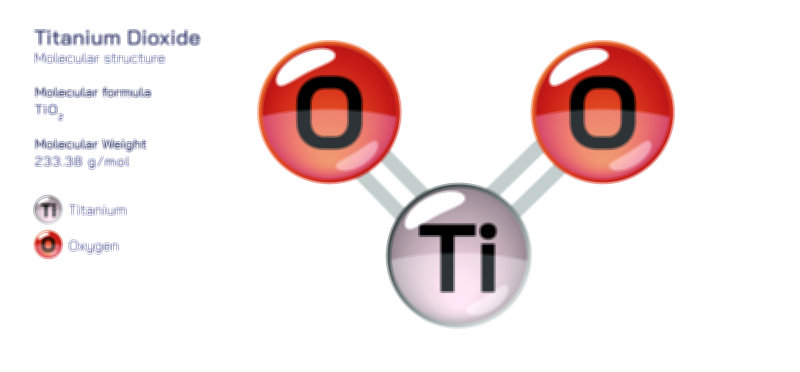
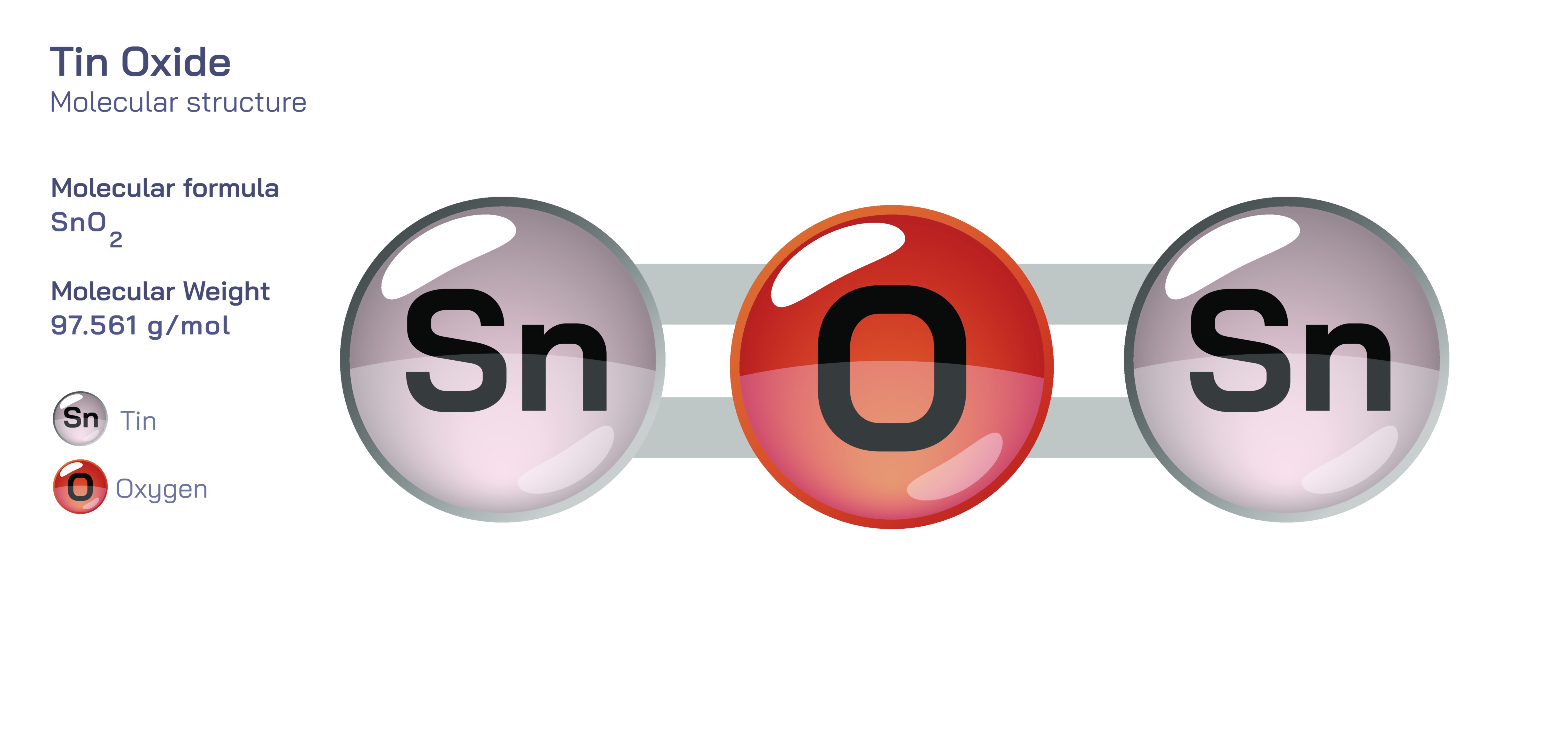
Tin(IV) oxide (SnO₂), also known as stannic oxide, is the most stable and widely encountered form of tin oxide. Its molecular structure is based on a three-dimensional network of tin atoms bonded to oxygen atoms in a crystalline framework. SnO₂ adopts the rutile lattice structure, a rigid tetragonal arrangement also seen in titanium dioxide, where each tin atom is surrounded by six oxygen atoms in an octahedral coordination, and each oxygen is bonded to three tin atoms. This symmetrical and densely packed architecture gives the compound high thermal stability, chemical durability, and strong resistance to further oxidation or reduction under normal atmospheric conditions. The octahedral coordination and extended bonding network also play a major role in the electronic properties of SnO₂: the crystal lattice contributes to semiconducting behavior, enabling electrons to move between energy bands when activated by heat or doping with other metals. In its purest form, SnO₂ is white or colorless, but when oxygen defects form or impurities are incorporated into the crystal, conductive pathways appear, allowing the material to function in gas sensors, transparent conductive films, and electronic components.
4. This sensitivity reflects how oxidation state determines long-term structural and chemical behavior.
The molecular structures of both SnO and SnO₂ reveal deeper truths about bonding in metal oxides. In SnO₂, the tin–oxygen bond has a strong covalent character because the metal exists in its highest oxidation state with no available lone-pair electrons influencing geometry. The fully saturated electronic shell promotes compactness and directional bonding, which produces hardness and stability. In SnO, however, the existence of a nonbonding electron pair leads to an uneven charge distribution, polarization, and weaker, more reactive bonds. This affects not only crystal formation but also reactivity in the presence of acids, bases, and reducing agents. SnO readily dissolves in strong acids to form Sn²⁺ salts and reacts with bases to form stannite ions, while SnO₂ is far less soluble and usually requires aggressive chemical conditions to dissolve. These contrasts teach students how oxidation state governs acid–base and redox behavior and why structural analysis is essential when predicting a compound’s chemistry.
Technologically, the differences in structure and electron arrangement translate into significant industrial value. SnO₂ is indispensable in ceramic glazes, gas sensors, lithium-ion batteries, catalysis, transparent conducting coatings for touchscreens, and anti-corrosion layers. The oxygen vacancies in its crystal lattice enable it to selectively detect gases such as carbon monoxide and hydrogen, which is why SnO₂-based sensors form the backbone of modern environmental monitoring and industrial hazard detection. In the battery industry, the semiconductor nature of SnO₂ and its ability to reversibly store lithium ions make it a candidate for next-generation anodes designed to improve energy density. Meanwhile, its transparency and conductivity balance allow it to replace indium tin oxide in certain electronic display applications when doped to increase charge mobility.
Tin(II) oxide, although less stable, plays its own essential roles. SnO is actively used as a starting material in producing glass, ceramic pigments, and organic tin compounds. In chemical synthesis, SnO serves as both a reducing agent and a precursor for Sn²⁺ complexes used in catalysis and polymer stabilization. Its layered structure and lone-pair electron effects give it catalytic behavior that is absent in SnO₂, supporting selective transformations in organic and industrial processes. The tendency of SnO to disproportionate also provides educational insight into thermodynamic stability and phase chemistry, revealing how different oxidation states of the same metal coexist under equilibrium.
The study of tin oxide illustrates a fundamental lesson in chemistry: one formula name does not capture the full complexity of a compound, and the oxidation state of a metal can completely redefine its structure, bonding, color, reactivity, and industrial relevance. SnO and SnO₂ serve as ideal examples for exploring solid-state chemistry, band structure, coordination geometry, metal–oxygen bonding, redox stability, disproportionation, and defect chemistry. Their differences highlight how electrons determine the identity and function of materials, shaping the microscopic arrangement of atoms and the macroscopic properties of solids. Through the lens of tin oxides, students gain a deeper appreciation for the intricate relationships that define chemistry—where atomic-scale geometry becomes the foundation of technological innovation and where structure becomes the gateway to understanding function across chemical science and materials engineering.