Tin(II) Chloride – Molecular Structure, Bonding Behavior, Electron Configuration, Chemical Reactivity, Industrial Uses, and its Educational Significance in Coordination and Redox Chemistry
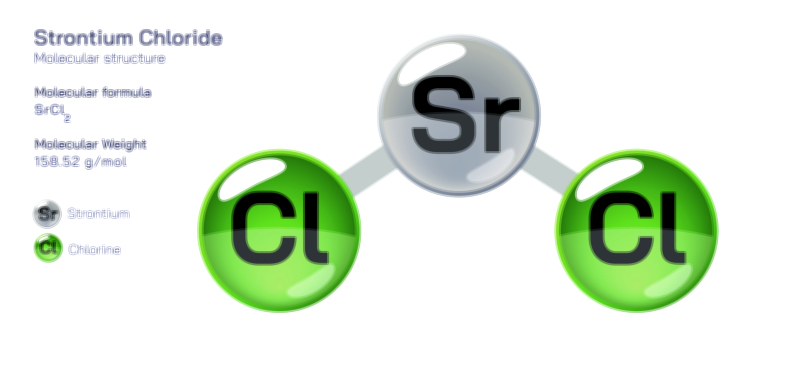
Tin(II) chloride, commonly written as SnCl₂, is an important inorganic compound that plays a key role in understanding how metal ions form bonds, participate in redox reactions, and behave in solution. Also known as stannous chloride, it contains tin in the +2 oxidation state and represents one of the most fundamental examples of a metal halide with electron-pair geometry that influences its shape and chemical behavior. The molecular structure of tin(II) chloride consists of a central tin atom covalently bonded to two chloride atoms, but the geometry is not linear as one might expect from a simple formula. Instead, SnCl₂ adopts a bent or “V-shaped” molecular configuration because the tin atom carries a lone pair of electrons that repels the bonded chlorides and alters the bond angles. Tin contributes its valence electrons in such a way that two electrons participate in bonding and two electrons remain as a nonbonding lone pair, leading to a trigonal pyramidal electron-pair arrangement with a bent molecular shape. This arrangement makes SnCl₂ a rich model for studying the VSEPR theory of molecular geometry and the effect of nonbonding electron pairs on structure and reactivity.
On an electronic level, the behavior of tin in SnCl₂ is defined by its relativistic electron configuration, where the 5s² pair of electrons plays an important role. Although tin can exist in both +2 and +4 oxidation states, the +2 state in SnCl₂ reflects the presence of the so-called “inert pair,” which describes the reluctance of the 5s electron pair to participate in bonding under moderate conditions. This lone pair creates asymmetry in the molecule, increases polarization of bonds, and enhances the Lewis acidity of the tin center. As a result, SnCl₂ not only forms covalent bonds in the gas phase but also interacts strongly as a Lewis acid in solution, readily accepting electron pairs from donor species. This property makes Tin(II) chloride an excellent example of how oxidation state and electron configuration influence the ability of a compound to participate in coordination chemistry.
When dissolved in water or other polar solvents, tin(II) chloride behaves as a complex-forming compound, meaning that it does not simply dissociate into ions but instead generates coordination complexes where chloride ions and water molecules bind around the tin atom. Its aqueous chemistry demonstrates hydration, disproportionation, and ligand exchange reactions that depend on pH and chloride concentration. In concentrated chloride environments, such as in hydrochloric acid, SnCl₂ forms stable complexes like [SnCl₃]⁻ because chloride acts as a ligand. In more dilute conditions, hydrolysis becomes significant, and the compound can form tin hydroxides or oxychlorides as water gradually replaces chloride in the coordination sphere. These transformations provide valuable insights into the sensitivity of metal ions to ligand concentration and how competition between water and halides modifies stability, solubility, and reactivity. Students of inorganic chemistry use SnCl₂ as a model compound to understand how metal complexes rearrange in response to changes in solution chemistry.
One of the most well-known characteristics of tin(II) chloride is its strong reducing ability. Because the tin center in SnCl₂ is susceptible to oxidation from +2 to +4, the compound readily donates electrons to other species and serves as a reducing agent in numerous analytical and industrial processes. This redox behavior is easy to observe experimentally because SnCl₂ reduces metal ions such as gold(III), mercury(II), iron(III), and silver(I) to their elemental forms. In classical analytical chemistry, SnCl₂ plays a role in detecting the presence of gold and mercury by producing visible metal deposits upon reduction. In electroplating and materials science, it promotes metal deposition by converting metal cations into solid metal coatings. These redox processes highlight the ability of transition and post-transition metals to undergo oxidation state changes and the role that electron-pair availability plays in determining reactivity.
The industrial importance of tin(II) chloride extends across manufacturing, dyeing, and electronics. In textile processing, it acts as a mordant, helping dyes adhere to fabric by forming coordination links between dye molecules and fibers. In mirror production, SnCl₂ coats glass with an oxide-free metallic tin layer to promote uniform silver deposition. Its affinity for electrons also makes it valuable in corrosion inhibition, polymer stabilization, and synthesis of organotin compounds. Every application highlights a specific aspect of the compound’s molecular behavior—whether its Lewis acidity, reducing potential, ligand coordination tendencies, or electron-pair activity—and reinforces that molecular structure determines function in practical settings as well as in theory.
Educationally, tin(II) chloride offers a window into many major concepts of inorganic chemistry. It shows how the geometry around a central atom arises not only from bonded atoms but also from nonbonding electron pairs, making it a straightforward example of VSEPR geometry. It demonstrates how oxidation states and inert electron pairs influence the chemical personality of main-group metals. It illustrates ligand coordination and solution-phase complexation, revealing how molecules behave differently in concentrated and dilute environments. Finally, it teaches the fundamentals of redox chemistry by showing how electron transfer enables one substance to be reduced while another is oxidized. Because SnCl₂ exhibits characteristics of structure, bonding, redox activity, and complex formation simultaneously, it gives chemistry learners a unified example of how microscopic electron behavior ultimately dictates macroscopic chemical properties.
In summary, tin(II) chloride is far more than a simple metal halide; it is a compound whose molecular shape, electron distribution, and dynamic solution behavior make it an educational cornerstone for understanding inorganic reactivity. Its bent geometry arises from an active lone pair on tin, its Lewis acidity and reducing strength come directly from its electron configuration and oxidation state, and its coordination chemistry reveals the interplay between solvent, ligands, and metal centers. Through these interconnected properties, SnCl₂ shows how structural and electronic features build the foundation for chemical reactivity, demonstrating the elegance and depth of modern molecular chemistry.