Sulfuric Acid — Molecular Structure, Chemical Behavior, Laboratory Importance, and Educational Insights for Scientific Learning
Sulfuric acid is one of the most influential and widely studied substances in chemistry, earning a central place in scientific education because it connects molecular structure directly to large-scale chemical behavior, industrial applications, and laboratory techniques. Known by the formula H₂SO₄, it is a dense, oily, colorless liquid that possesses exceptional acidity, strong dehydrating ability, and powerful oxidizing tendencies under suitable conditions. In every scientific context, sulfuric acid demonstrates how the arrangement of atoms within a molecule dictates reactivity, safety requirements, and technological usefulness. Students who learn about sulfuric acid are not only learning about an individual compound but also absorbing core concepts of molecular bonding, charge distribution, acid strength, structural geometry, and reactivity pathways that recur throughout the study of chemistry. A vector illustration designed for educational purposes often highlights the tetrahedral arrangement surrounding the sulfur atom, the placement of oxygen atoms, the positions of hydrogen atoms involved in acidic dissociation, and the way electron distribution shapes acidic and reactive behavior. Understanding sulfuric acid visually and conceptually makes it easier for learners to explore the relationship between microscopic structure and macroscopic results in laboratory science.
The molecular structure of sulfuric acid consists of a central sulfur atom surrounded by four oxygen atoms arranged symmetrically, with two of those oxygen atoms bonded to hydrogen atoms. The oxygen atoms are not all equivalent in their roles: two serve as bridges between sulfur and hydrogen atoms, while the remaining two oxygen atoms are strongly double-bonded to sulfur, forming the backbone of the molecule. The sulfur atom is fully surrounded by electron-rich oxygen atoms, and the hydrogen atoms are connected in a way that makes them readily detached when the acid dissolves in water. When students observe this arrangement in a classroom illustration, they see crucial structural features that determine behavior. The hydrogen atoms represent acidic sites that release positively charged particles when the molecule interacts with water, and the remaining sulfate portion carries a large spread of negative charge that stabilizes the dissociated ions. The dissociation is not mild or partial; sulfuric acid behaves as a strong acid because both hydrogen atoms detach easily in aqueous solution, delivering an extremely high concentration of free hydrogen ions. This helps explain why sulfuric acid dramatically reduces the pH of solutions even when used in small amounts. A structural diagram makes it clear that acidity arises not through arbitrary naming or classification, but through a direct relationship between molecular bonds and proton release.
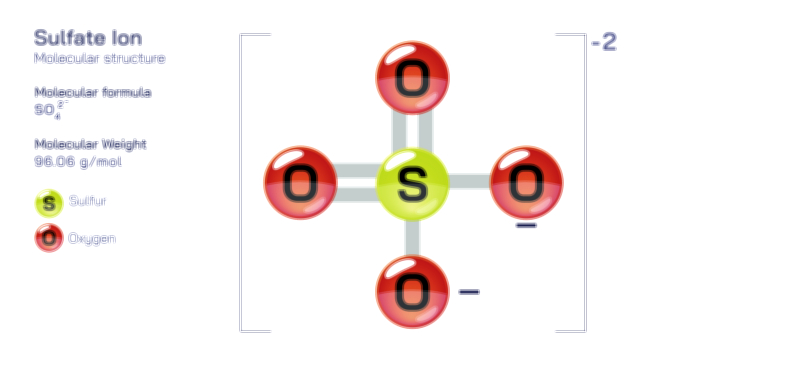
Another fundamental educational idea demonstrated by sulfuric acid is the concept of polyprotic acidity, meaning that the molecule can donate more than one proton. In sulfuric acid, two acidic hydrogens are present, but the first dissociation step occurs more readily than the second. Although both hydrogen atoms contribute to acidity, the first separates almost instantaneously in water, while the second dissociates in a controlled, equilibrium-dependent manner. This difference introduces chemistry students to ideas of reaction completeness, equilibrium, and strength variation even within one compound. The sulfate ion that remains once both hydrogens dissociate is a stable structure because the negative charge is spread over several oxygen atoms, reducing internal repulsion and increasing energetic stability. Lessons about sulfuric acid routinely refer to this charge distribution because it explains why sulfate salts are so common in nature and technology — once formed, the sulfate ion is energetically satisfied and does not spontaneously revert to the original acid structure.
Another hallmark of sulfuric acid is its powerful dehydrating nature, meaning that it strongly absorbs and removes water from substances it contacts. This phenomenon arises because sulfuric acid interacts energetically with water molecules through strong hydrogen bonding and proton transfer, leading to the formation of hydrated ionic species. When sulfuric acid encounters materials rich in water, such as carbohydrates or plant tissue, the acid strips away water content aggressively, leaving behind dark carbonaceous material. This dramatic demonstration is often shown in classrooms to highlight chemical dehydration, but its true instructional value lies in helping students understand that strong attraction for water is rooted in molecular interactions rather than dramatic visuals alone. The tendency of sulfuric acid to seek hydration also explains why dilution must always be approached carefully in laboratory environments. Adding water to concentrated sulfuric acid can produce sudden boiling and splattering because the acid releases heat rapidly as it hydrates. The correct technique is to add acid gradually into water, allowing controlled distribution of heat and preventing explosive reactions. This turns a safety rule into a matter of molecular reasoning — structure and hydration energy dictate procedure, not arbitrary convention.
Sulfuric acid is a compound that unites theoretical chemistry with global industrial impact. It has earned the distinction of being the most produced industrial chemical in the world when measured by weight, and its production levels are often considered indicators of national industrial growth. It supports the manufacture of fertilizers, particularly ammonium sulfate and superphosphate fertilizers, which sustain agricultural systems worldwide. It participates in the refining of petroleum by removing impurities inside fuel streams, helping achieve the purity and performance standards expected of transportation fuels. It plays a role in the preparation of dyes, detergents, and synthetic fibers, connecting molecular chemistry to everyday materials such as textiles and cleaning products. In metallurgy, sulfuric acid contributes to processes such as ore extraction, metal cleaning, and electrolyte functioning in lead-acid batteries. This latter use has been especially important in energy storage systems, demonstrating how a microscopic understanding of ion movement translates into large-scale technology that powers engines, emergency systems, and electric applications.
Even outside heavy industry, sulfuric acid has significance in laboratory learning. It appears in pH adjustment protocols, analytical titration procedures, and chemical synthesis experiments. The acid is used to catalyze organic reactions that rely on proton transfer and activated electrophilic conditions. It supports nitration reactions involved in polymer science and pharmaceutical development. It provides controlled dehydration in esterification reactions and influences pathways where molecular water removal drives product formation. These uses reinforce the idea that sulfuric acid does not simply behave as a proton donor but as a multifunctional reagent whose structural features shape reaction conditions. For students, seeing sulfuric acid applied across laboratory disciplines helps unify separate concepts into a single chemical narrative: structure determines acidity, acidity determines reactivity, and reactivity determines usefulness.
Because sulfuric acid is powerful, safe handling becomes an integral part of educational instruction. Chemical structure alone explains why it must be approached with respect: the ability to donate protons rapidly can damage biological tissues, and the dehydration ability can strip water from living cells. Proper protective equipment, secure handling containers, fume hood ventilation, and slow mixing procedures are not optional but essential. In classroom settings, sulfuric acid provides one of the clearest demonstrations that safety rules are a direct extension of chemical understanding — students learn that every molecule has a predictable danger profile that emerges from its atomic arrangement, not from fear or mystery.
The importance of sulfuric acid in education lies in the way it links every branch of chemistry into a coherent idea. It shows how bonding determines acidity, how acidity determines reactions, how reactions support industry, and how all of this influences laboratory and safety practices. It becomes a thread that connects high-level chemical theory to real experiences — working with reagents in controlled environments, identifying reaction pathways, learning laboratory discipline, and recognizing the role chemistry plays across the technological world.
A vector illustration of sulfuric acid designed for scientific learning captures these concepts visually. It depicts the tetrahedral geometry around sulfur, highlights the bonds between sulfur and oxygen, identifies the proton-donating hydrogen atoms, and may also show dissociation into hydrogen ions and sulfate ions in water. Such diagrams help transform abstract chemical information into an intuitive, memorable picture. Students begin to recognize that when they see a molecular drawing, they are not just observing shapes — they are interpreting charge distribution, geometry-based stability, potential reaction pathways, and the energetic rules of chemical change.
For these reasons, sulfuric acid is far more than a familiar laboratory chemical — it is a foundational learning tool. It embodies the power and responsibility of chemistry by demonstrating how a molecule’s structure influences its use, its risks, and its enormous contributions to science and society. Through studying sulfuric acid, students gain not only factual knowledge but a deeper scientific mindset: every chemical behavior arises from structure, every structure has consequences, and chemistry becomes meaningful when the microscopic world is connected to the real world with clarity and care.