Perchloric Acid – Molecular Structure, Bonding Characteristics, Oxidizing Behavior, Acidic Strength, Industrial and Laboratory Applications, Biological and Safety Considerations, and Its Broader Educational Significance in Chemistry
Perchloric acid, represented chemically as HClO₄, stands among the most powerful and fascinating inorganic acids known in chemistry, and its molecular structure explains nearly every aspect of its exceptional reactivity, stability in aqueous form, and industrial importance. It belongs to the family of oxoacids of chlorine, which includes hypochlorous acid, chlorous acid, and chloric acid, and it represents the fully oxidized member of this series, where chlorine reaches its highest oxidation state and forms a highly stable yet strongly electron-withdrawing central atom. At the molecular level, perchloric acid consists of a chlorine atom centrally bonded to four oxygen atoms arranged in a tetrahedral geometry, and one of these oxygen atoms carries a hydrogen atom associated with the acidic proton of the molecule. Although often drawn using simplified bonding patterns, the real structure demonstrates deep electron delocalization throughout the molecule, which dramatically increases its stability relative to other oxychlorine compounds. The chlorine atom, being in its highest possible oxidation state within this acid family, holds a strong electron-deficient character that pulls electron density from the surrounding oxygen atoms, generating a structure that is both strongly polarized and capable of releasing a proton with remarkable ease. This structural polarity and electron distribution explain why perchloric acid is considered a superacid in concentrated form, capable of protonating even weak bases and driving reactions that lesser acids cannot accomplish.
What makes perchloric acid especially unique among mineral acids is the extreme difference between its behavior in dilute aqueous solutions and in highly concentrated or anhydrous form. In dilute solutions, particularly below roughly 70 percent concentration, perchloric acid is relatively stable and acts as a strong, predictable acid that dissociates completely in water to release hydrogen ions. Its dissociation leads to chloride species in the form of the perchlorate ion, which is extraordinarily stable due to highly effective resonance delocalization across all four oxygen atoms. This electron-sharing arrangement gives perchlorate a symmetrical structure that resists further oxidation or reduction under normal conditions, making it one of the least reactive polyatomic ions from a redox standpoint. Students studying acid strength often compare the perchlorate ion with other conjugate bases and quickly see that its stability drives the extraordinary acidity of HClO₄: the more stable the conjugate base, the more strongly the acid tends to donate its proton. This is a key educational insight because it connects the concept of structural resonance to acid strength rather than relying only on memorization of strong acids.
In concentrated or anhydrous form, however, perchloric acid behaves very differently. Without water to stabilize the system, the oxidizing power of the chlorine centre becomes dramatically more active, and the molecule can participate in violent oxidation reactions with organic substances, reactive metals, and combustible materials. This change in chemical behavior teaches another important lesson in molecular science: the physical environment directly influences chemical reactivity. While dilute perchloric acid is generally manageable in laboratories for analytical chemistry and sample digestion, concentrated perchloric acid must be handled under strictly controlled conditions due to its capability to ignite or detonate when exposed to reducing agents, solvents, fine dust, or even poorly ventilated laboratory equipment that has accumulated reactive vapors. The transition from stability to instability depending on concentration reinforces the idea that molecules are not static contributors to chemical behavior; instead, their reactivity is shaped by context, solvation states, and surroundings.
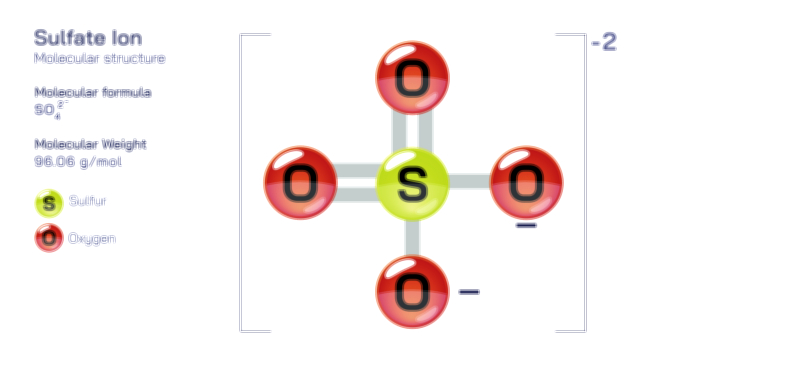
The perchlorate ion formed after dissociation of perchloric acid has its own deep educational value because its structural symmetry, resonance behavior, and low tendency for further reaction make it ideal for studying ionic bonding, electron distribution, and chemical stability. Unlike nitrate or sulfate ions, perchlorate displays extraordinary resistance to decomposition under heat or exposure to strong acid, making it exceptionally useful in analytical chemistry where it does not interfere with a wide range of reactions. However, this same stability makes perchlorate environmentally persistent once released into water and soil. Industrial activities such as explosives production, rocket propellant manufacturing, and pyrotechnics have historically used perchlorates extensively due to their strong oxidizing strength in solid form, and this has resulted in contamination of groundwater in some regions. While the perchlorate ion is relatively inert chemically, it has biological implications because it can interfere with iodine uptake by the thyroid gland, potentially affecting hormone production in exposed individuals. This observation reinforces the principle that chemical stability does not necessarily mean biological harmlessness and that environmental chemistry must account for biological interactions as much as molecular transformations.
One of the most interesting and practical educational aspects of perchloric acid relates to laboratory applications. Analytical chemists use it to digest samples—meaning it helps break down organic material into simpler components that can be analyzed using spectroscopy or other testing methods. Its ability to oxidize organic matter thoroughly allows researchers to extract inorganic content or trace elements from samples such as biological tissue, soil, food, minerals, or industrial materials. In these controlled environments, perchloric acid becomes an enabling tool rather than a hazard, highlighting how safe chemical practice depends on understanding molecular properties rather than avoiding reactive substances altogether. Its controlled reactivity opens pathways for quantitative and qualitative analysis that would otherwise be difficult or impossible. Students of chemistry learn from perchloric acid that laboratory technique is a marriage of chemical insight and safety awareness, not something based on fear or avoidance of strong chemicals.
Industrial chemistry also relies on understanding the structural characteristics of perchloric acid and perchlorate salts. They are used in applications ranging from chemical synthesis and surface treatment of metals to propellant formulations and electrochemistry. In particular, perchlorates are valued for the clean, oxygen-rich combustion they support, making them useful in propellants and fireworks technologies. However, modern environmental and occupational safety frameworks have increased the monitoring and regulation of perchlorate use to minimize contamination and ensure responsible disposal. This intersection of chemistry, technology, regulation, and sustainability demonstrates to learners that the professional handling of chemicals is not simply about knowing how they react, but also about understanding their full impact on people and ecosystems.
Perchloric acid also serves as a model compound for teaching deeper chemical principles. It illustrates how formal oxidation state and real electron distribution contribute differently to molecular reactivity. It shows that resonance—a concept sometimes introduced abstractly in textbooks—has direct, observable consequences on acidity and stability. It demonstrates that even acids of similar formula patterns behave differently because of structural and orbital differences rather than simple composition alone. It reinforces the idea that chemical species can change behavior dramatically under different concentrations or physical states. It introduces the concept of risk management in chemical practice, where understanding structure allows proper handling, storage, and safety guidelines.
From a broader scientific perspective, perchloric acid highlights how chemical knowledge expands powerfully when molecular structure is connected with chemical behavior, practical application, safety, and environmental responsibility. It is not simply a strong acid; it is a molecule whose behavior reflects a sophisticated balance between electron withdrawal, resonance stabilization, solvation effects, and oxidative potential. When interpreted through this lens, perchloric acid becomes a gateway for learners to appreciate the intricacy of inorganic chemistry, the way molecular design shapes macroscopic outcomes, and the responsibility that accompanies chemical understanding. By studying perchloric acid, students are reminded that every molecular structure is a blueprint for reactivity and that mastering the relationships between structure and function is the foundation for chemical science, laboratory practice, industrial innovation, and environmental stewardship.