𝐏𝐨𝐥𝐲𝐮𝐫𝐞𝐭𝐡𝐚𝐧𝐞 𝐅𝐨𝐚𝐦 𝐒𝐭𝐫𝐮𝐜𝐭𝐮𝐫𝐞 𝐚𝐧𝐝 𝐈𝐧𝐝𝐮𝐬𝐭𝐫𝐢𝐚𝐥 𝐀𝐩𝐩𝐥𝐢𝐜𝐚𝐭𝐢𝐨𝐧𝐬
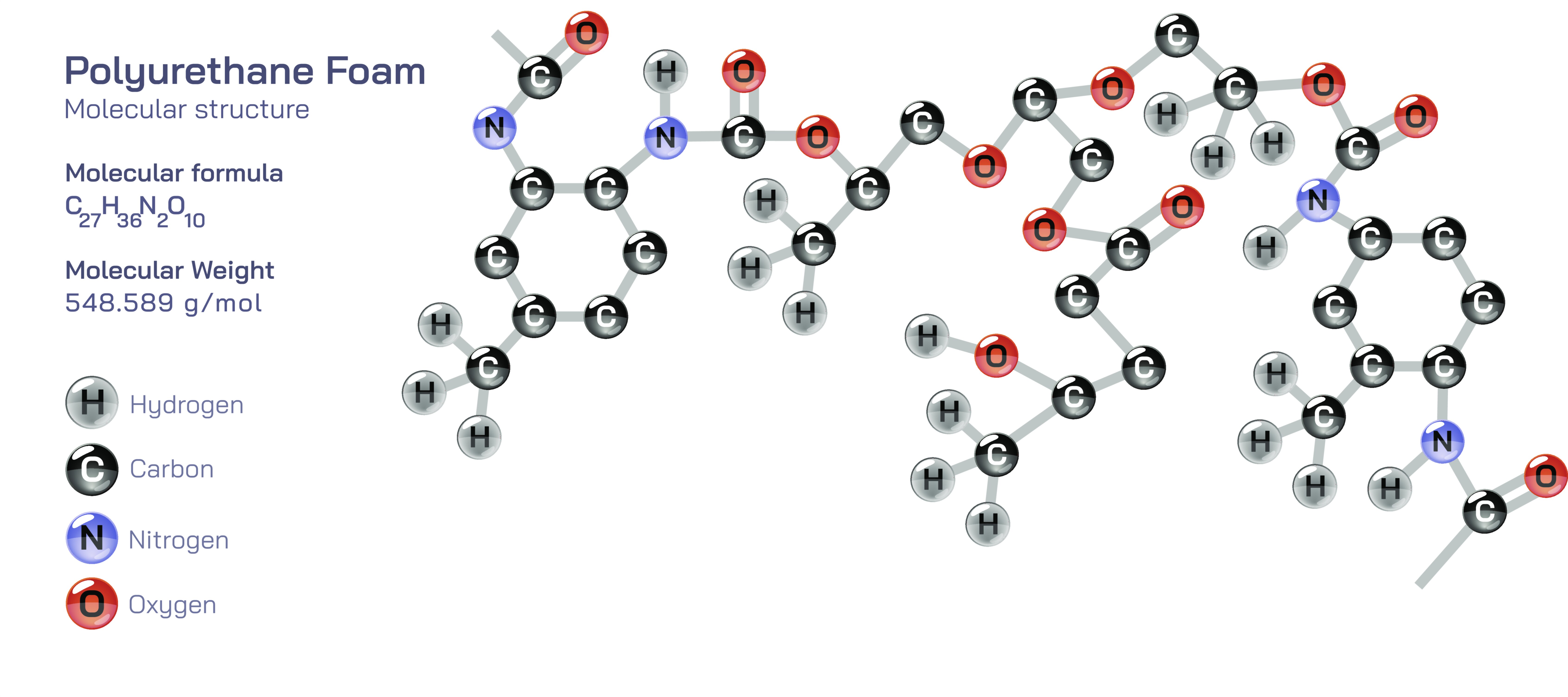
Polyurethane foam is one of the most versatile and widely engineered polymeric materials used in modern industry, known for its adaptability, cushioning capability, insulation characteristics, and lightweight cellular structure. Unlike single-form plastics, polyurethane foams do not exist as a single material but rather form a broad family of materials that can range from extremely soft and flexible to very rigid and structurally strong. Its defining behaviour comes from the chemical reaction between polyols and isocyanates, two organic compounds that link together to form long chains known as urethane bonds. During production, blowing agents introduce gas bubbles into the liquid polyurethane mixture, and as polymerization occurs, these bubbles become permanently trapped, creating a foam filled with countless microscopic cells. The size, shape, and density of these cells can be carefully controlled, allowing polyurethane materials to be tuned for countless performance requirements. Whether cushioning delicate electronics or supporting the weight of a building structure, polyurethane foam demonstrates how polymer chemistry can translate into diverse engineering functions.
The internal structure of polyurethane foam varies depending on whether it is produced as an open-cell or closed-cell foam. Open-cell polyurethane foam contains interconnected pores that allow air and moisture to pass freely, giving it a soft, compressible, and breathable texture. This structure makes open-cell foam ideal for applications requiring comfort, sound absorption, and air circulation. It behaves like a sponge in its flexibility and compressibility, returning to its original shape after pressure is removed due to its elastic polymer network. Closed-cell polyurethane foam, in contrast, contains sealed air pockets encased by rigid cell walls. These pockets trap gas and prevent air exchange, resulting in higher density, greater strength, and superior resistance to water absorption. Closed-cell foam acts like a firm structural barrier and insulator, providing mechanical support, impact resistance, and outstanding thermal stability. The ability to manipulate cell density, polymer hardness, additives, and curing chemistry has made polyurethane foam one of the most customizable materials in industrial engineering.
The industrial applications of polyurethane foam are immensely diverse because the material can be engineered to perform completely different roles depending on formulation. In the furniture and bedding sector, flexible open-cell polyurethane foam is the backbone of comfort products—mattresses, pillows, cushions, sofas, office chairs, automotive seats, and wheelchair pads all depend on its ability to distribute pressure evenly and relieve physical strain. Medical grade foams are used in hospital beds, prosthetic padding, orthopaedic supports, and patient-handling devices where long-term comfort and hygiene are important. The sound-absorbing characteristics of open-cell foams are highly valued in acoustic panels, music studios, auditoriums, and machinery enclosures where reducing noise pollution protects both performance and human well-being.
In contrast, rigid closed-cell polyurethane foam plays a crucial role in insulation and structural engineering. Its extremely low thermal conductivity makes it one of the most energy-efficient insulating materials available today. It is widely used in building walls, roofing panels, refrigeration rooms, freezer units, HVAC systems, and cold-supply logistics, helping maintain temperature and reduce electricity consumption. Spray polyurethane foam has revolutionized thermal insulation in modern construction by expanding into cracks and forming continuous air-sealed barriers that prevent heat loss, moisture infiltration, and mould development. Rigid polyurethane foam is also integral to household and commercial appliances—refrigerators, water heaters, coolers, and iceboxes rely on it to retain cold or heat with minimal energy waste. In transportation, closed-cell polyurethane foam appears in ship hulls, railway infrastructure, automobile body reinforcement, aircraft interiors, and flotation devices because of its strength-to-weight advantage and water resistance.
Polyurethane foam also plays an important role in packaging, industrial protection, and product safety. Moulded foam inserts safeguard sensitive electronics, laboratory equipment, medical devices, and precision instruments during shipping by absorbing shock and vibrations. Foam-in-place packaging systems generate polyurethane on demand, filling cavities around irregular-shaped goods and forming a custom-fitted protective cushion. Beyond packaging, integral-skin polyurethane foams combine a durable outer skin with a softer interior core to make steering wheels, armrests, handles, and sports equipment grips more ergonomic and long-lasting. In automotive manufacturing, sound-damping panels, interior trims, gaskets, seals, and seat cushions highlight the multiple roles polyurethane plays within a single system—from acoustic comfort to structural safety.
The resilience and reliability of polyurethane foam have also led to its adoption in specialized industrial sectors. In construction and mining, high-density foam stabilizes soils, fills voids, and repairs underground cavities without heavy excavation. In offshore, marine, and aquaculture applications, polyurethane foam is used to create buoyancy blocks, floats, and pontoons because it does not absorb water and can withstand harsh environments. In renewable energy, polyurethane helps manufacture turbine blade cores, composite structures, and windmill components that must combine lightweight form with mechanical durability. Athletic facilities and playgrounds make use of shock-absorbing floor mats and safety pads built from polyurethane foams to reduce injury risks and increase comfort. Scientific laboratories use polyurethane for sample holders, microfluidic support structures, and prototype tooling due to its dimensional stability and machinability.
What makes polyurethane foam uniquely valuable is not merely its chemistry but the extent to which its properties can be engineered. The softness of a pillow, the bounce of a running-track surface, the insulation inside a refrigerator wall, and the crash-absorbing material inside a vehicle all originate from the same family of urethane-based polymers. Additives can give polyurethane fire resistance, antimicrobial performance, UV stability, electrical insulation, or anti-static behaviour, enabling specialized use across diverse industries. While environmental considerations have encouraged the development of recycling technologies and bio-based polyols to reduce ecological impact, polyurethane continues to evolve through innovations that focus on sustainability without compromising performance.
The story of polyurethane foam demonstrates how chemistry becomes deeply intertwined with daily life and industrial progress. The transformation of simple liquid reactants into an elastic or rigid cellular structure leads to a material that improves comfort, saves energy, enhances safety, protects equipment, supports transportation, and sustains construction. Whether resting on a mattress, traveling in a car seat, walking on a cushioned surface, or opening a refrigerator door, people interact with polyurethane foam every day without realizing it. Its presence remains subtle but indispensable, reflecting the success of engineered polymer science in shaping modern comfort, efficiency, and technology.