How Radar Signal Works: Transmission, Reflection, and Detection Explained with Diagram
Radar technology operates as one of the most influential scientific achievements of the modern age, blending physics, electromagnetic waves, timing calculations, and signal processing to detect objects at a distance without physical contact. The word “RADAR” originates from “Radio Detection and Ranging,” describing the system’s ability to recognize the presence of an object and determine its distance, speed, and sometimes shape and material composition. Commonly known for applications in aviation, maritime navigation, meteorology, defense, and automotive safety, radar works by transmitting electromagnetic radio signals, allowing them to travel across space, bounce off an object, and return to a receiving antenna where the signal is analyzed. Although the operation unfolds at speeds approaching that of light, the internal process is elegantly sequential, governed by predictable physical laws that allow a system to extract meaningful information from echoes of energy. Every radar system—whether mounted on an aircraft, inside a weather station, on the open seas, or embedded in a modern vehicle—promotes safety and awareness by granting visibility beyond human eyesight and beyond environmental limitations such as darkness, fog, storm, and distance.
Transmission phase: launching an electromagnetic pulse into the surrounding environment
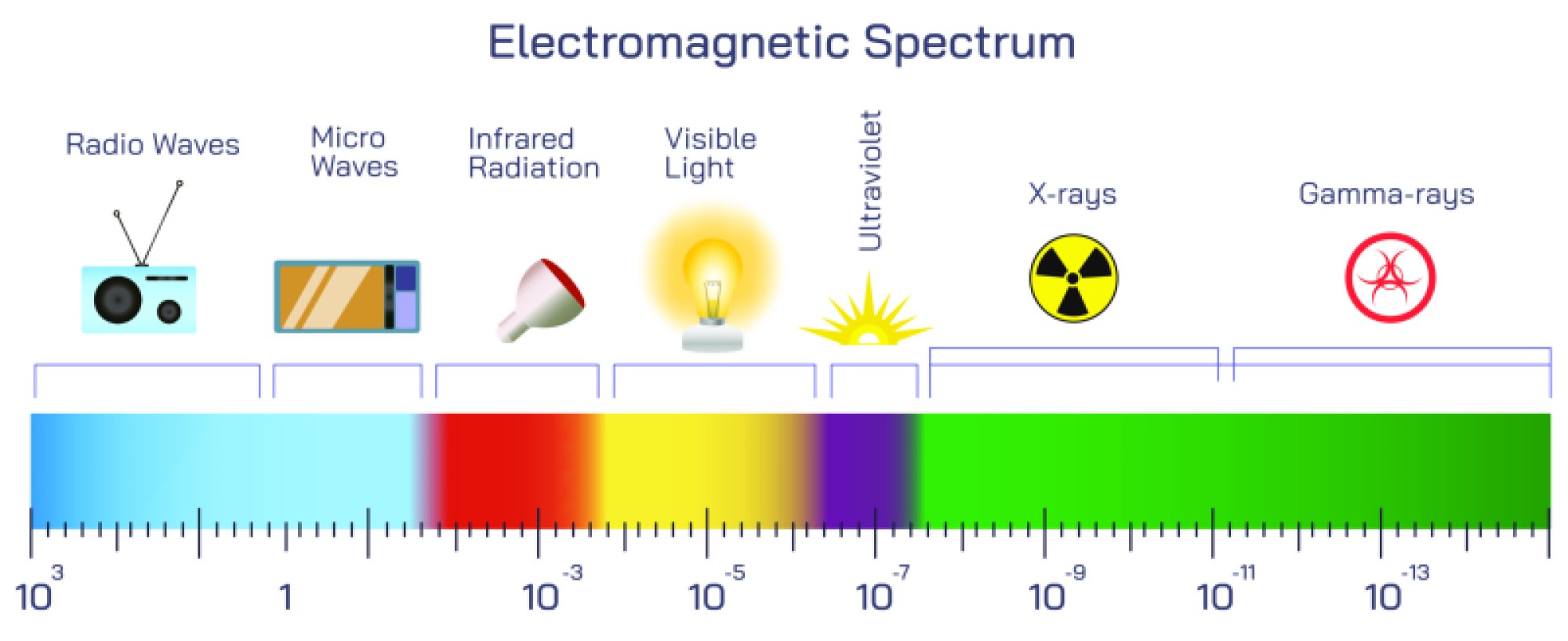
A radar system begins its work through the generation and transmission of an electromagnetic wave. This wave is created inside the radar transmitter, shaped into a short burst or pulse containing a specific frequency and power level, and directed outward through a high-gain antenna. The antenna does not simply radiate energy in all directions; instead, it focuses the electromagnetic wave into a narrow and well-defined beam that sweeps across space. The transmission stage is crucial because every property of the outgoing pulse—frequency, wavelength, direction, and duration—determines what kind of objects can be detected and how precisely their positions and movements can be measured. For example, longer wavelengths can detect distant or large objects effectively, while shorter wavelengths allow radar systems to identify smaller or more detailed features. Once the radar beam leaves the antenna, it travels through the air, atmosphere, or even space at the speed of light, covering large distances effortlessly. This pulse behaves invisibly, unaffected by darkness and capable of penetrating fog, rain, and clouds, making radar a powerful scanning tool in harsh environmental conditions.
Reflection phase: interaction between the radar pulse and a target object
When the transmitted radar pulse encounters an object—such as an aircraft, mountain, ship, vehicle, raindrop cluster, or even a speeding ball in sports analysis—a portion of the electromagnetic energy interacts with its surface. Some of the wave energy is absorbed by the object, but another portion is reflected back toward the direction it came from. This returning signal, known as the echo, carries valuable information about the object. The strength of the reflection depends on the size, shape, surface material, and orientation of the object. Highly reflective surfaces, such as metal aircraft bodies or ships, return strong echoes. Rough or soft surfaces scatter the wave more diffusely, producing weaker reflections. Weather radar operates on the same principle, detecting rainfall intensity by interpreting how strongly raindrop clusters reflect electromagnetic energy. In all cases, the returning signals behave like messages written in electromagnetic form—each carrying clues about distance, speed, and even structural characteristics of the object that created it. While the outgoing signal moves outward uninterrupted, every reflection marks the presence of something interacting with the wave, providing radar with situational awareness beyond visual limits.
Detection phase: receiving the reflected pulse and extracting information
Once the echo travels back across space, it is captured by the radar antenna, which now functions as a receiver rather than a transmitter. The radar system measures the time difference between when the signal was sent and when it was received. Because radar pulses travel at the speed of light, this timing difference can be converted into distance using time-of-flight principles. Shorter time means the object is closer, while longer time indicates greater distance. In addition to distance, the radar unit detects changes in the frequency of the returning wave using the Doppler shift effect, allowing speed and direction of motion to be determined. A wave reflecting off an object moving toward the radar returns at a slightly higher frequency, while a wave reflecting from an object moving away returns at a slightly lower frequency. These calculations allow radar not only to locate an object but also to determine whether it is approaching or receding and how fast it is moving. Advanced signal processing refines this information, reduces noise, distinguishes between multiple targets, and converts radar echoes into visual representations on screens or digital control systems, helping operators read and interpret the environment.
The radar operational cycle illustrated in a simplified conceptual “diagram through words”
Although a physical diagram cannot be shown here, the structure of the radar process can be visualized in clear sequence:
• A radar antenna emits a directed electromagnetic pulse outward into space.
• The pulse travels until it encounters an object and reflects off its surface.
• Part of the reflected signal returns to the radar antenna as an echo.
• The radar system measures how long the pulse took to return and evaluates frequency changes.
• The information is processed to determine the object’s distance, speed, and sometimes its shape or material, and results are displayed to the user.
Imagining the radar beam as an expanding cone and the echo as a narrowing return path captures the geometry of this process, showing how outbound signals explore the surroundings while inbound echoes communicate environmental truth.
Applications that highlight radar’s value across diverse industries and environments
Radar continues to evolve and influence countless aspects of modern life. Aviation relies on it to track aircraft positions with high accuracy and ensure safe navigation through crowded airspaces. Marine radar shields ships against collision hazards and helps captains navigate through thick fog and coastal complexities. Meteorological radar reveals rainfall, storm structures, wind intensity, and tornado signatures, saving lives by forecasting severe weather. In national defense and aerospace, radar systems detect long-range threats, guide missile systems, and track satellites. In everyday civilian technology, automotive radar helps power adaptive cruise control, automatic braking systems, collision avoidance, and blind-spot detection. Sporting events use radar to measure ball speed, while industrial automation uses radar to detect motion in safety-critical machinery. Each of these applications depends on the same fundamental cycle of transmission, reflection, and detection, unified by the physics of electromagnetic wave behavior.
Radar technology, although rooted in scientific simplicity, represents a remarkable bridge between the invisible world of electromagnetic waves and the tangible realities of safety, prediction, and navigation. It empowers human perception far beyond the limitations of sight and weather, transforming simple echoes into structured information about moving and distant objects. Understanding how radar works exposes the elegance of its design: a human-engineered ability to illuminate space with energy, listen to its return, and decode meaning from silence. From global aviation networks to personal vehicles—and from storm tracking to deep-space exploration—the principles of radar form one of the most dependable and far-reaching tools for interpreting the world, proving that the universe can be understood not only by what is seen but by what is reflected back from the waves we send into it.