Types of Waves — Mechanical and Electromagnetic Motion
Waves are among the most elegant and universal phenomena in nature, appearing in countless forms that span the vast scales of the physical world. Whether they ripple across the ocean, vibrate within the strings of musical instruments, propagate through the air as sound, or travel through space as light, waves embody the transfer of energy without the permanent movement of matter. They represent rhythmic patterns of motion that reveal how energy distributes itself across environments, how particles interact with each other, and how forces shape the behavior of physical systems. When examining the major types of waves—mechanical and electromagnetic—we uncover two profoundly different but equally essential modes of energy transport, each governed by its own principles and each vital to our understanding of natural processes, technological innovation, and scientific discovery. The study of mechanical and electromagnetic waves connects physics with engineering, communication, medicine, astronomy, and every aspect of the human experience in which energy, motion, and interaction play fundamental roles.
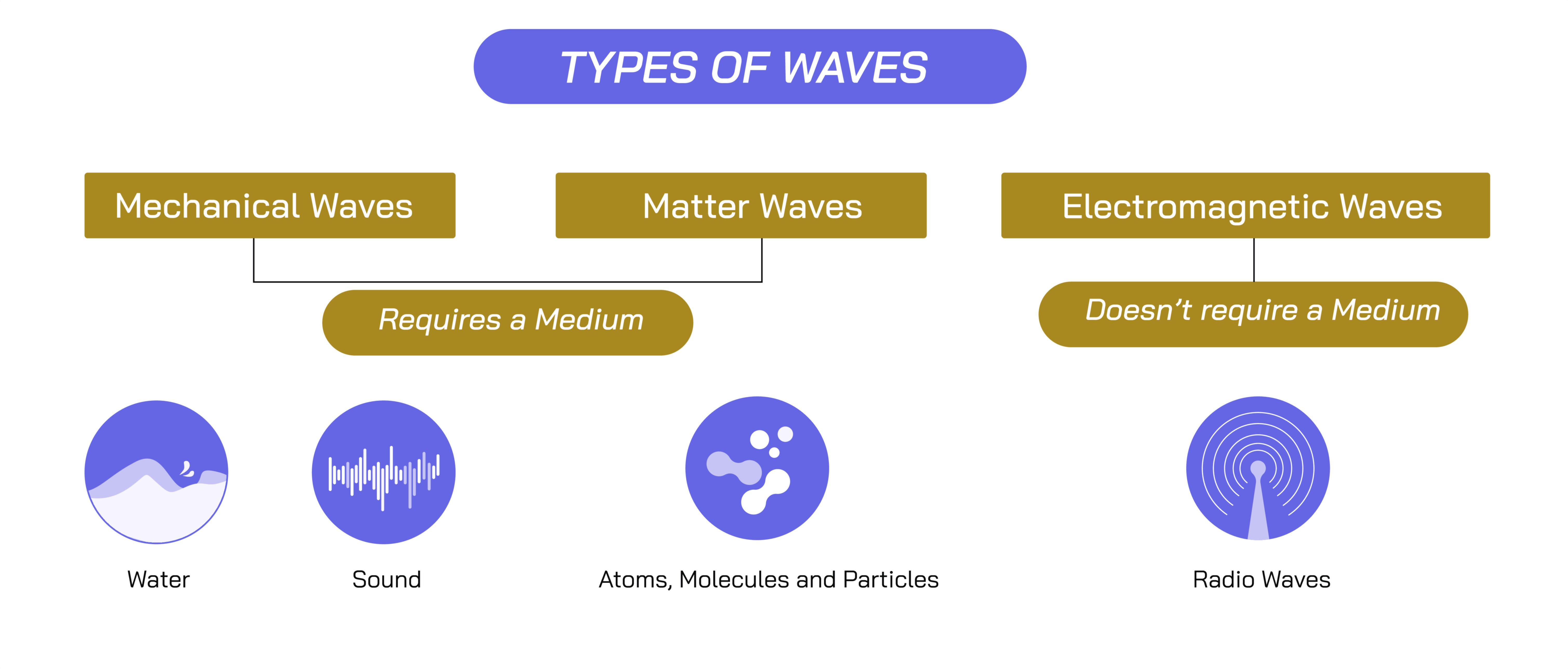
Mechanical waves require a material medium—solid, liquid, or gas—to propagate. Within this medium, particles oscillate around fixed equilibrium positions, passing along energy from one particle to the next. The medium itself does not travel with the wave; instead, it allows disturbances to ripple through it in rhythmic patterns. These waves arise from forces that cause particles to displace and interact through elasticity, inertia, and restoring forces. Mechanical waves can take the form of transverse waves, where particles move perpendicular to the direction of wave travel, or longitudinal waves, where particles oscillate parallel to the energy flow. The ocean wave visualized rising and falling is a familiar example of a transverse mechanical wave, while sound waves that compress and expand air particles as they move are classic examples of longitudinal waves. Each type demonstrates a central property: mechanical waves cannot exist without matter, because the particles of the medium themselves are the carriers of vibrational energy.
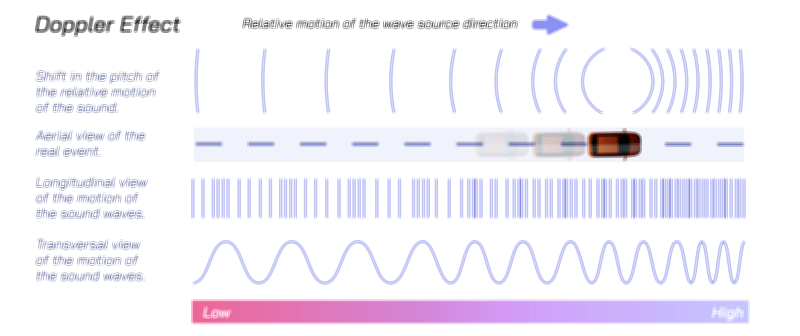
Sound waves exemplify the power and complexity of mechanical wave motion. When a vibration occurs—whether from vocal cords, a musical instrument, a vibrating membrane, or a machine—it disturbs the surrounding air molecules, creating alternating regions of compression and rarefaction. These patterns spread outward through the medium, carrying energy that the ear interprets as sound. Sound waves can travel through solids and liquids as well, often more efficiently because particles are more tightly packed than in air. This is why underwater environments transmit sound over long distances, enabling marine animals like whales to communicate across vast ocean expanses. The speed of sound varies based on temperature, density, and the state of matter, showing how mechanical wave behavior depends intimately on the medium’s physical properties. Sound also demonstrates essential wave characteristics such as reflection, refraction, diffraction, and interference, all of which arise from the interactions between wavefronts and the structures they encounter. Echoes, reverberation, acoustic resonance, and musical harmony all emerge from these mechanical wave behaviors and shape environments ranging from concert halls to underwater landscapes.
Water waves provide another powerful illustration of mechanical energy transport. Although they often appear purely transverse, water waves contain complex particle motions that blend both transverse and longitudinal characteristics. As a wave passes, water molecules trace circular or elliptical paths, rising and falling with the wave crest while also moving slightly forward and backward. In deep water, these motions are nearly circular, while in shallow water, friction with the sea floor compresses the motion into flattened ellipses. The way the wave transforms as it approaches shore explains why waves increase in height and eventually break. Water wave dynamics influence coastal ecosystems, erosion patterns, weather systems, and global ocean circulation. The same principles extend to waves in lakes, ponds, and even the ripples produced by small disturbances. Mechanical waves, in this sense, serve as mirrors of environmental energy, responding to wind, seismic activity, gravitational influences, and other forces acting on the surface.
Seismic waves represent mechanical waves on a dramatically different scale. Generated by sudden movements of Earth’s crust, such as earthquakes or volcanic activity, seismic waves propagate through the planet’s interior and across its surface. Primary waves, or P-waves, are longitudinal and travel quickly through solids and liquids, while secondary waves, or S-waves, are transverse and travel only through solids. Surface waves move along Earth’s crust and are often responsible for the most destructive earthquake effects. By studying seismic waves, scientists learn about the internal structure of the planet, detect geological activity, and better understand the forces that shape Earth’s evolving crust. The behavior of these waves underscores how mechanical wave motion depends on material properties, revealing insights that bodies of water, layers of rock, atmospheric gases, and biological tissues all exhibit distinct wave dynamics.
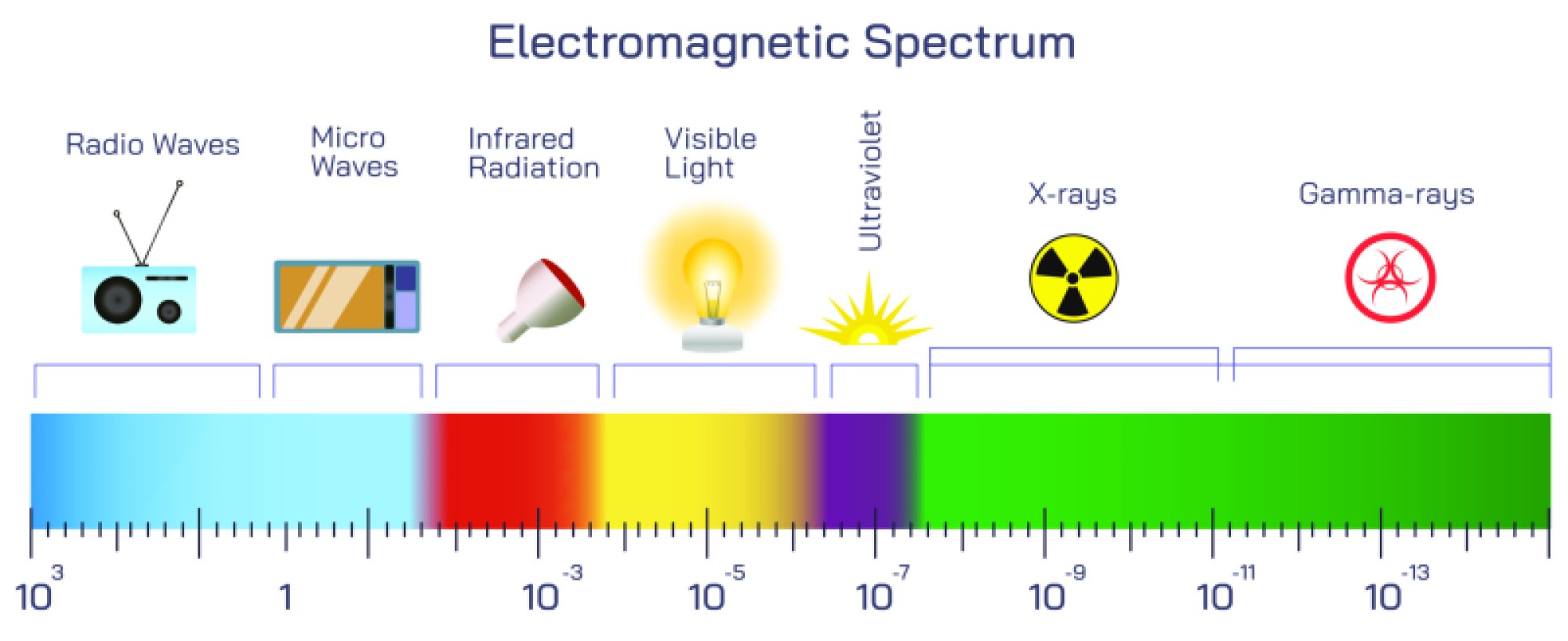
In contrast to mechanical waves, electromagnetic waves do not require a medium to travel. They propagate through empty space, traveling at the speed of light in a vacuum, and arise from the interplay of oscillating electric and magnetic fields. These fields perpetually generate each other as they move through space, allowing electromagnetic waves to travel independently of matter. Their extraordinary ability to move through both matter and the vacuum of space enables light from distant stars to reach Earth across millions of years, carries radio signals across the planet, powers wireless communication, and allows medical technologies to penetrate tissues for imaging and treatment. The electromagnetic spectrum encompasses an enormous range of wavelengths and frequencies, from very long radio waves stretching hundreds of kilometers to extremely short gamma rays with wavelengths smaller than atomic nuclei. Despite this range, all electromagnetic waves share the same nature—they are self-propagating fields transporting energy across space.
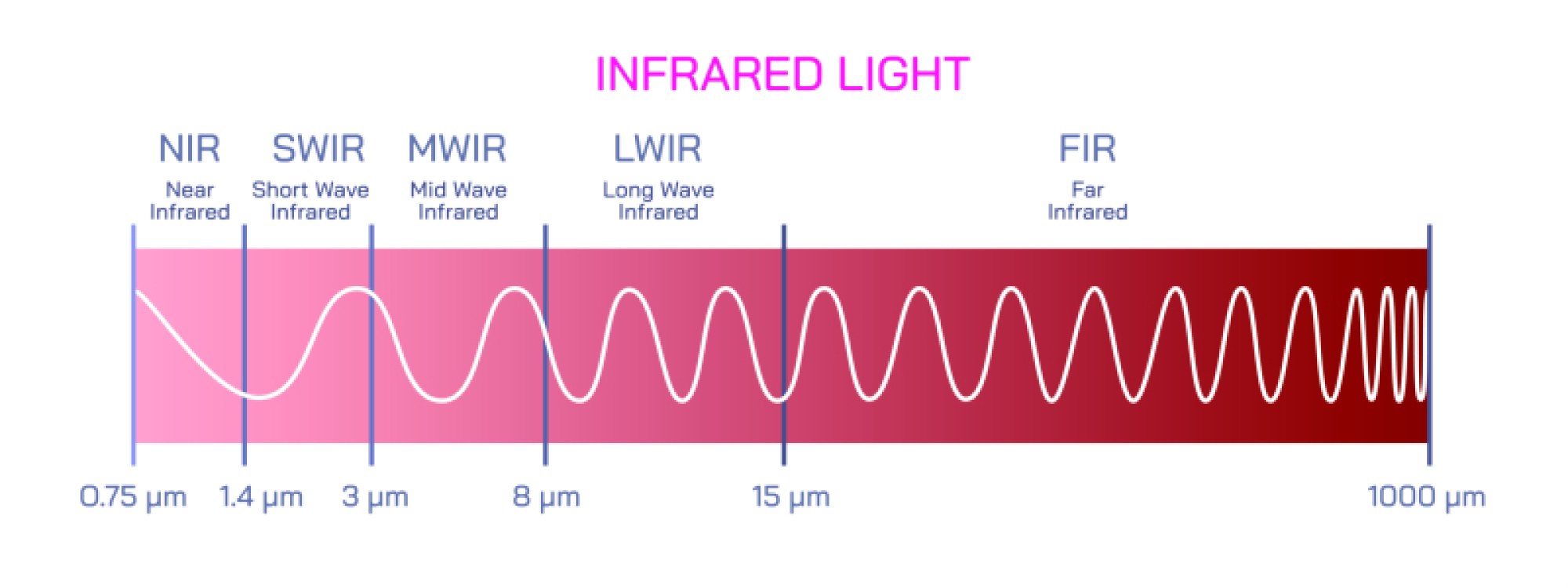
Visible light is one of the most familiar forms of electromagnetic radiation, distinguished only by its interaction with the human eye, not by any structural difference from other types of electromagnetic waves. Light allows humans and other organisms to perceive their surroundings, recognize motion, interpret color, and navigate their environment. Its interactions with matter—through reflection, refraction, scattering, and absorption—form the basis of vision, photography, fiber optics, astronomy, and countless optical technologies. The colors of the visible spectrum represent different wavelengths of light, each interacting with surfaces and biological receptors in subtly unique ways. Beyond visible light lie ultraviolet rays, which carry higher frequencies and energies capable of causing chemical changes in biological molecules, explaining their role in producing sunburn and sterilization. Infrared radiation, positioned just below visible light, represents heat waves that objects emit based on their temperature, enabling technologies such as thermal imaging, remote controls, and infrared communication systems.
Microwaves and radio waves occupy the lower-frequency end of the electromagnetic spectrum and play central roles in modern communication. Radio waves enable broadcasting, wireless networks, satellite connections, and GPS systems. Microwaves support radar, mobile phones, and microwave oven heating, where electromagnetic energy agitates water molecules to produce heat. These waves illustrate the power of electromagnetic radiation to carry information across great distances with minimal loss, making global communication possible.
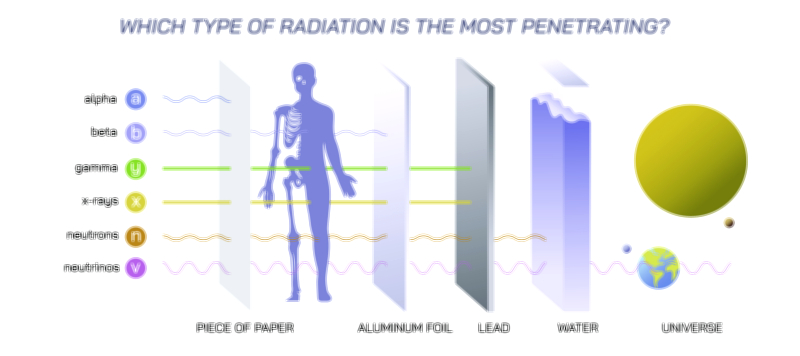
At the highest frequencies of the spectrum lie X-rays and gamma rays, which possess energies capable of penetrating dense materials and altering atomic structures. Although high-energy electromagnetic waves can ionize atoms, their behaviors remain governed by the same wave principles as their low-energy counterparts. X-rays provide medical imaging that reveals internal structures without invasive procedures, while gamma rays arise from nuclear reactions, cosmic events, and radioactive decay. Astrophysics relies on detecting gamma rays to study star explosions, black hole activity, and the energetic dynamics of the universe.
The contrast between mechanical and electromagnetic waves highlights profound differences in how energy travels and interacts with matter. Mechanical waves depend on particle-to-particle interactions; they cannot propagate in a vacuum. Their motion reflects the medium’s elasticity, density, and structure. Electromagnetic waves, by contrast, require no medium and propagate due to oscillations in electric and magnetic fields. Mechanical waves often involve physical displacement of matter, while electromagnetic waves embody pure field dynamics. Yet both types share essential characteristics such as wavelength, frequency, amplitude, reflection, interference, diffraction, and refraction. These shared features reveal that waves, regardless of type, obey universal principles describing how energy spreads across space and interacts with obstacles or boundaries.
When mechanical and electromagnetic waves interact with matter, they produce a rich diversity of effects. Mechanical waves can cause vibration, sound, pressure changes, and physical displacements. Electromagnetic waves can heat materials, induce currents, stimulate vision, transfer information, or cause molecular changes. The choice between mechanical and electromagnetic waves for technological applications depends on their specific properties: mechanical waves excel in acoustics, seismology, and material analysis, while electromagnetic waves dominate telecommunications, imaging, sensing, and astronomy.
The significance of waves extends far beyond isolated examples. Waves underpin modern physics by introducing concepts such as superposition, coherence, resonance, wave–particle duality, and the energy–frequency relationship. The study of waves forms the foundation of acoustics, optics, electromagnetism, quantum mechanics, seismology, and materials science. Every sound heard, every color seen, every wireless signal transmitted, every medical image produced, and every cosmic ray detected connects back to the essential idea of waves moving energy through space and matter.
Ultimately, the distinction between mechanical and electromagnetic waves reflects two complementary ways that the universe carries energy. Mechanical waves rely on matter and reveal the dynamic nature of physical media. Electromagnetic waves transcend matter, revealing how energy can propagate through empty space. Together, they show that wave motion is not a mere subset of physics but a fundamental language through which the natural world communicates energy across every scale of existence.