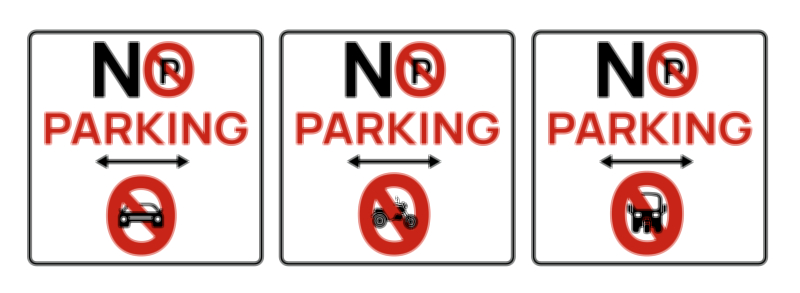
Two Wheeler Parking Lot — Motorcycle and Scooter Parking Zone Sign
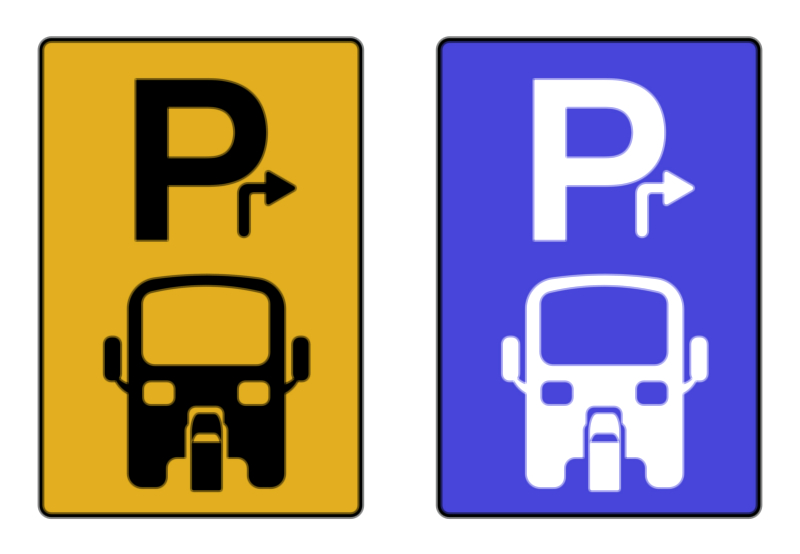
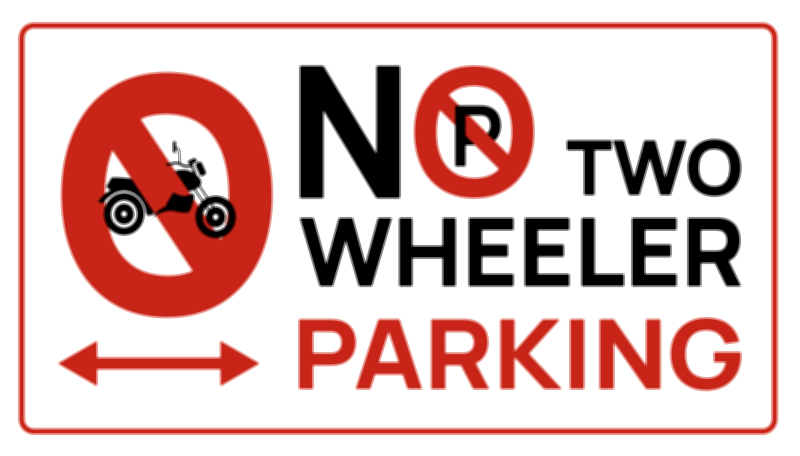
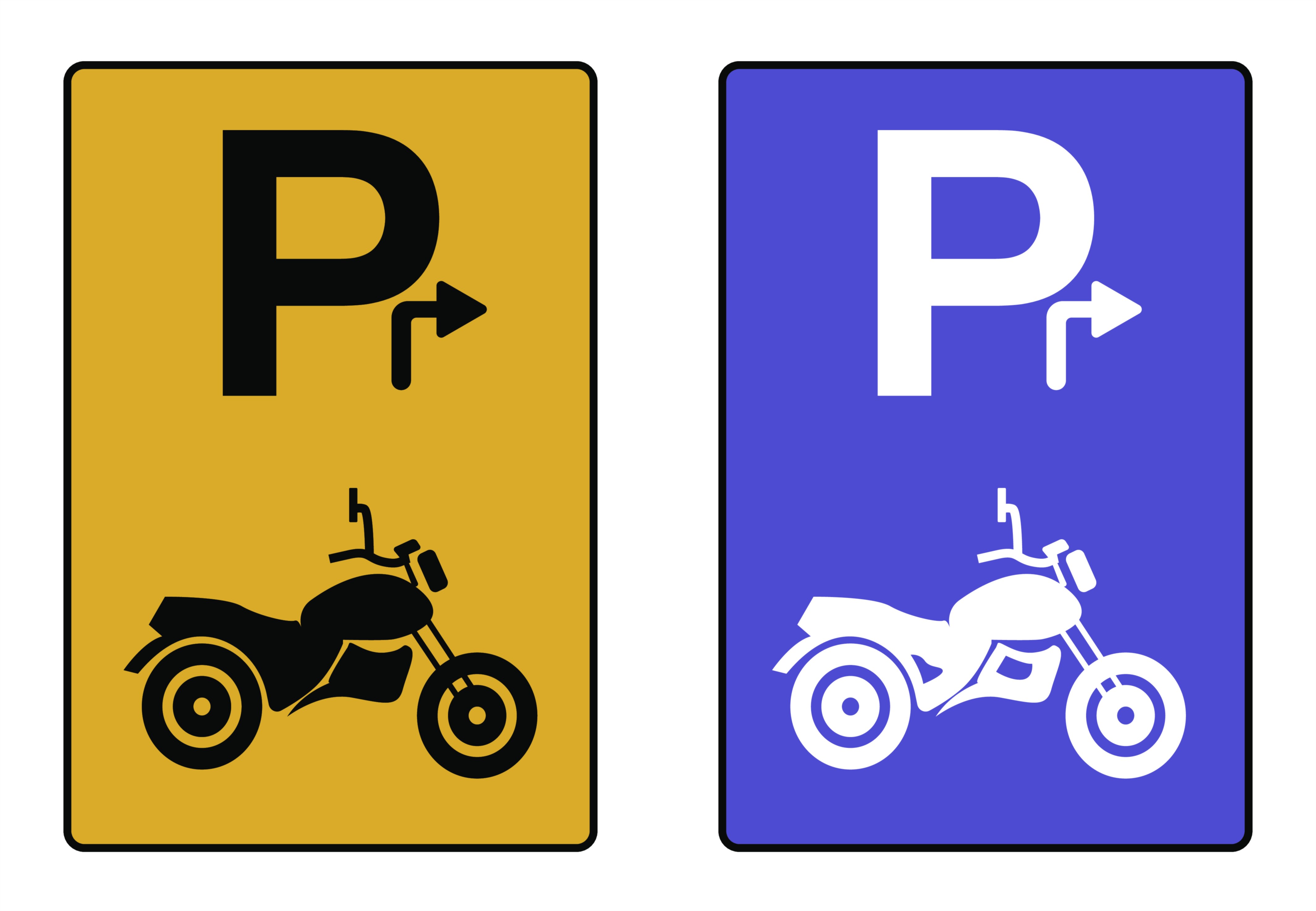
A Two Wheeler Parking Lot sign represents much more than a place where motorcycles, scooters, and mopeds are permitted to stop; it is a carefully designed element of traffic organization, pedestrian protection, space management, and urban convenience. In a vector illustration, the sign typically features a bold and easily recognizable silhouette of a motorbike or scooter integrated with a “P” or a boxed parking symbol to signal that the space is specifically allocated for two-wheelers. Although the artwork appears minimal, every visual element—from the balanced proportions to the strong icon hierarchy—has been engineered to communicate a clear message to riders and passersby: this area has been intentionally reserved to accommodate two-wheel vehicles in a way that enhances safety, mobility, and order within the surrounding environment. In cities where motorcycles and scooters form a large percentage of the transport fleet, the sign becomes essential to managing how two-wheelers interact with roadways, commercial zones, building entrances, pedestrian corridors, and public spaces.
The significance of this sign becomes even more apparent when one considers the effects of two-wheeler parking in unregulated environments. Because motorcycles and scooters are compact, riders often feel that they can stop anywhere without causing major disruption. This leads to improvised parking near storefronts, bus stops, school entrances, hospital gates, railway stations, market exits, and on sidewalks—locations that were designed for movement, not storage. Even though a two-wheeler takes up less space than a car, its unplanned presence in these critical areas forces pedestrians into unsafe detours, hides vulnerable individuals from the view of approaching traffic, congests narrow pathways, and disrupts accessibility features such as ramps and tactile guidance surfaces. A child stepping out from behind a parked scooter is nearly invisible to oncoming drivers until dangerously close to the roadway. Elderly pedestrians, wheelchair users, and parents with strollers struggle to move around obstructing bikes. A Two Wheeler Parking Lot sign prevents this cascade of problems by directing two-wheelers into a space that is chosen not only for their convenience but also for the well-being of everyone who shares the public space around them.
The placement of this parking lot sign is rooted in practical observation rather than arbitrary instruction. Urban planners designate two-wheeler parking zones at locations where riders naturally seek to pause—near shopping areas, educational institutions, transit hubs, offices, neighborhoods, and recreational districts—but with enough spacing and structural support to maintain safe pedestrian and vehicle circulation. Instead of allowing clusters of randomly parked scooters to accumulate at shop fronts or building entrances, a dedicated two-wheeler parking area absorbs that demand. When riders follow the sign, storefronts remain visible, sidewalks remain walkable, and entrances remain accessible. Shoppers, commuters, and residents encounter a smooth transition between walking and riding zones rather than negotiating hazards created by obstructive parking. The sign therefore supports not just transportation clarity but also commercial fluidity and urban hospitality.
The sign also contributes heavily to organized mobility at transportation centers. Railway stations, metro stops, bus terminals, and shared mobility hubs frequently receive high volumes of commuters arriving on motorcycles. Without clear markings and dedicated zones, the front approach to these facilities becomes crowded with idling two-wheelers, reducing visibility for pedestrians and complicating the boarding or disembarking process for public transit passengers. A Two Wheeler Parking Lot sign establishes a predictable and intuitive location where riders can leave their vehicles, creating safe buffer zones that let passengers transition between transit modes without encountering a wall of bikes. The result is a more pleasant user experience and a far safer travel environment, especially during peak hours.
In commercial ecosystems, the sign supports both businesses and consumers. Markets and shopping areas thrive on foot traffic and visibility, yet many commercial entrances are vulnerable to congestion caused by riders who park directly outside shop doors. A properly placed Two Wheeler Parking Lot sign preserves dual priorities: it keeps entrances clean and attractive for customers while still providing riders with proximate parking that respects their convenience. When customers are not forced to navigate around stored vehicles to enter a business, they are more likely to browse comfortably and return regularly. When delivery workers and shop employees know exactly where they can park safely and quickly, everyday commerce becomes more efficient. Thus, a simple sign indirectly contributes to the financial stability of the commercial ecosystem surrounding it.
Accessibility provides another essential dimension to the meaning of the sign. Modern city planning emphasizes universal access—ensuring that people with disabilities can use buildings and public spaces independently and confidently. Ramps, braille trails, curb cuts, wide footpaths, and powered entrances exist for that purpose. However, if scooters or motorcycles are parked across these spaces, accessibility becomes impossible rather than compromised. People in wheelchairs cannot navigate around a blocked ramp. Visually impaired individuals cannot rely on tactile ground surfaces when they are obstructed. Senior citizens and individuals recovering from injury are forced into uncomfortable—and potentially dangerous—paths that should never be expected of them. The Two Wheeler Parking Lot sign protects architectural and civic commitments to inclusion by providing two-wheeler riders with a legal and safe option that does not infringe upon the rights and independence of others.
The sign also plays a key role in emergency readiness. Entrances to hospitals, ambulances, hydrants, evacuation paths, fire lanes, and building rescue access points must remain open under every condition. Two-wheelers parked in these areas may not appear as obstructive as cars, but they can still block stretcher access, hinder fire equipment deployment, slow evacuation sequences, and require emergency responders to clear obstacles before reaching those in danger. A clear Two Wheeler Parking Lot guides riders toward spaces where parking will not conflict with life-safety functions. Emergency action plans rely on unblocked approach zones, and this sign becomes part of a preventive safety network that ensures responders gain unhindered access when every second matters.
From a traffic management perspective, the sign supports predictability—a foundational principle of safe transportation networks. Riders looking for improvised parking engage in sudden braking, abrupt turning, and spur-of-the-moment lane switching, all of which increase crash risk for nearby vehicles. When riders know exactly where parking is permitted, they no longer need to hunt for uncertain space. This keeps roadway behavior smooth and consistent, reduces fuel waste due to circling, decreases noise pollution from honking and sudden acceleration, and lowers frustration for everyone using the road. The sign thus stabilizes movement rather than merely marking a resting point for vehicles.
In the era of smart mobility, the meaning of the sign extends into the digital world. Navigation apps, ride-sharing platforms, delivery-routing systems, and parking-management software integrate two-wheeler parking lot data into route planning. Riders receive guidance to the designated location before reaching their destination, reducing last-minute roadside stopping and dangerous hesitation. Companies managing electric scooter fleets or shared mobility services also depend on these zones for safe distribution and charging operations. The vector format of the icon ensures that it can be recognized by both humans and machine-vision systems that track urban parking patterns, regulate violations, and support autonomous vehicle development in the future.
On a cultural and social level, the Two Wheeler Parking Lot sign acts as a silent symbol of civic respect. When riders choose to park in assigned zones rather than blocking entrances, pavements, ramps, or shop fronts, they express consideration for others. Every parked bike that follows the sign protects a pedestrian’s clear path, preserves a business’s entrance visibility, keeps a disabled person’s mobility intact, reduces congestion near buildings, and helps emergency responders reach their destination unimpeded. In this way, the sign becomes more than a traffic tool—it becomes a mediator of shared space and a reminder that personal convenience cannot override collective safety and comfort.
Ultimately, while the vector illustration of the Two Wheeler Parking Lot sign contains only a motorbike symbol and a parking graphic, the meaning embodied in that simple shape is comprehensive. It supports the safety of children walking to school, the comfort of customers entering shops, the dignity of disabled individuals navigating access points, the efficiency of businesses relying on logistics, the calmness of residential neighborhoods, and the preparedness of emergency services. It transforms environments that could become chaotic into places that feel organized, dependable, and welcoming. Beneath the clean graphic lies a complete philosophy of functional, accessible, and respectful urban life.