No Four Wheeler Parking — Vehicle Restriction and Traffic Control Sign
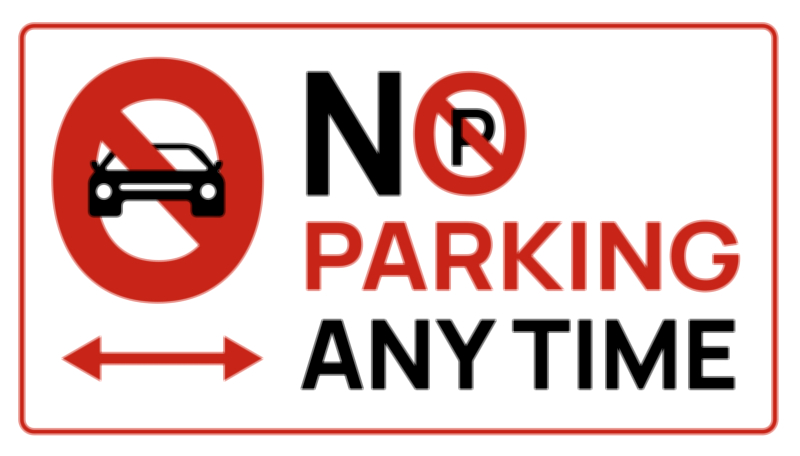
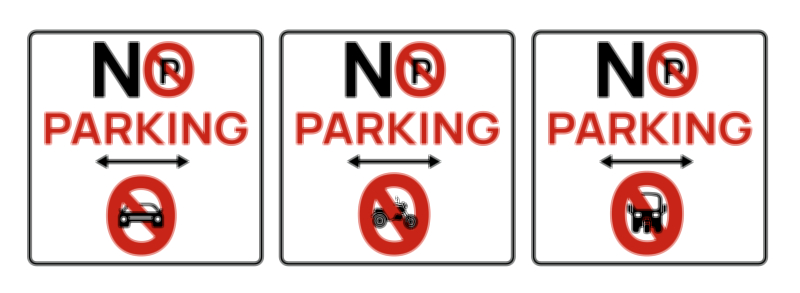
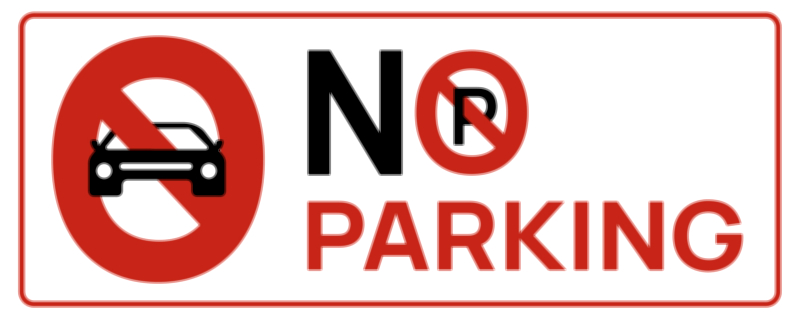
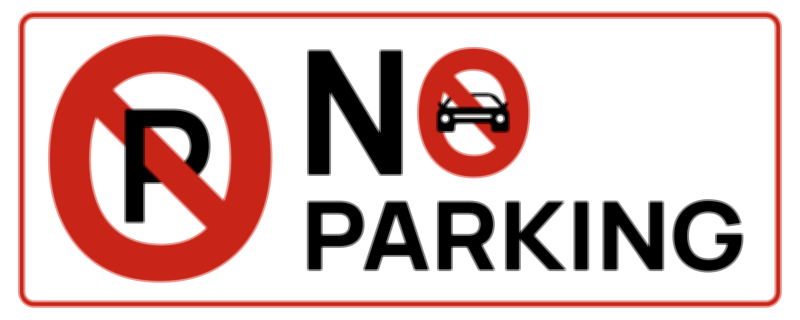
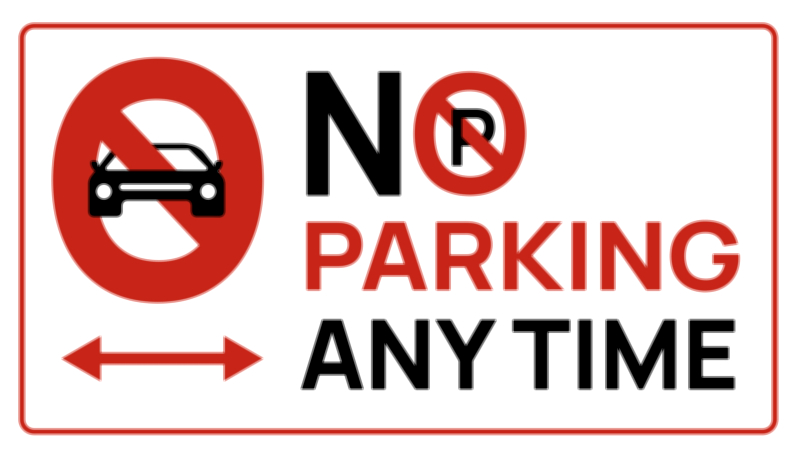
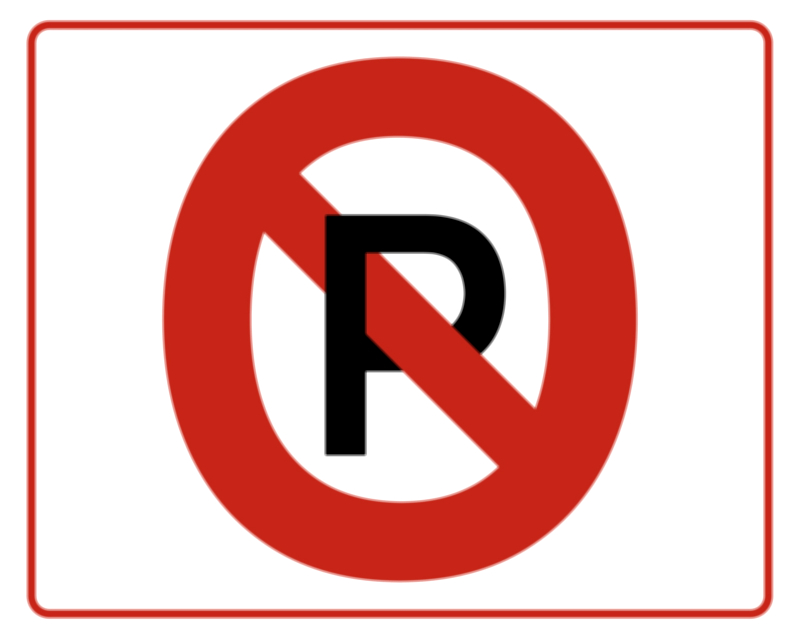
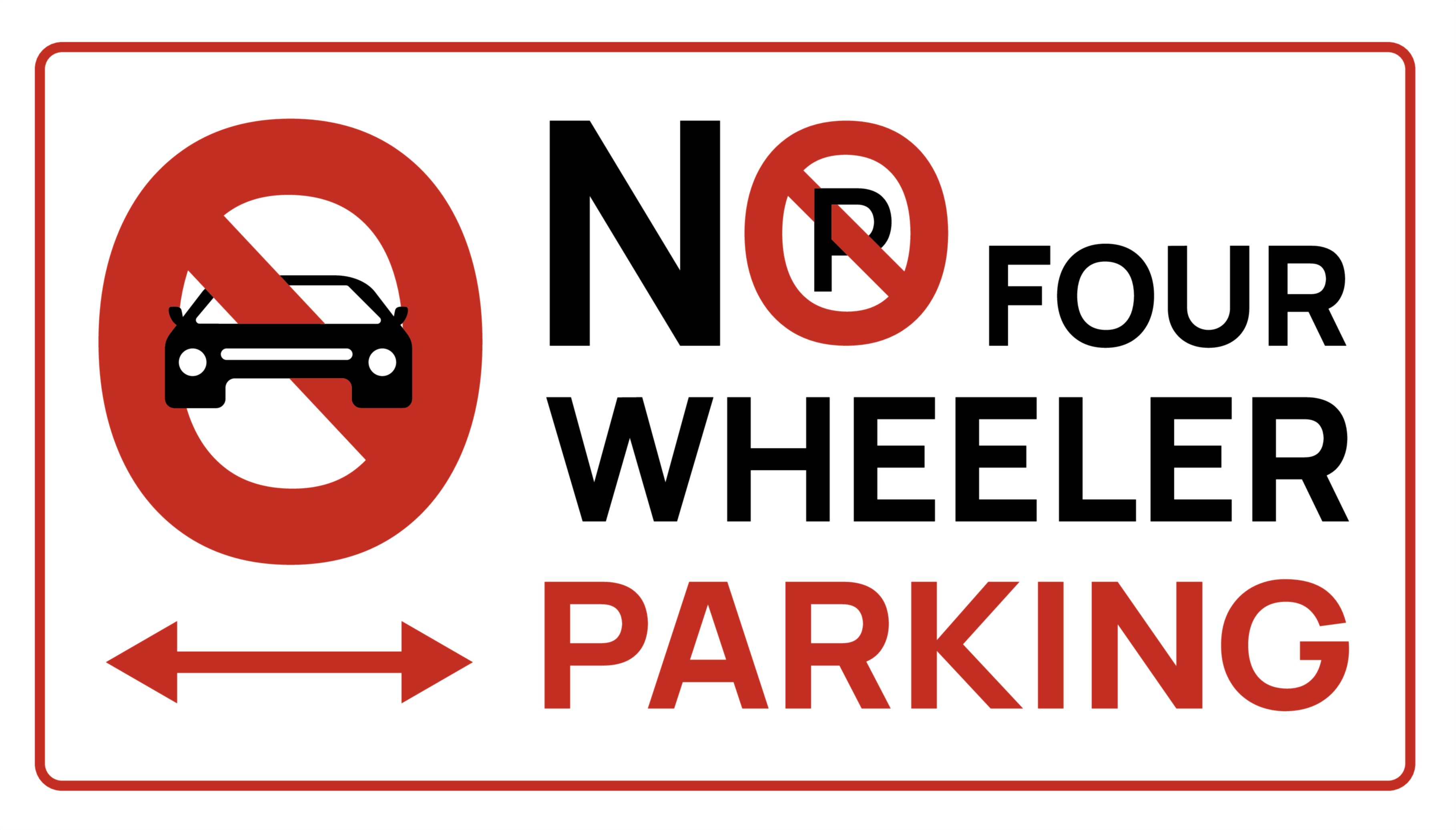
A No Four Wheeler Parking sign is a traffic control symbol created to prevent cars, jeeps, vans, and other four-wheeled motor vehicles from being left stationary in areas where their presence would block access, reduce safety, or disrupt the flow of movement. In a vector illustration, this sign is often represented with a bold red circular border paired with a diagonal slash across the silhouette of a car, or a blocked-out “P” accompanied by an automobile icon, and although the artwork appears minimalistic and purely visual, every part of the design communicates a firm instruction: four-wheelers are not permitted to park in this particular zone under any circumstance. The red border instantly signals prohibition, the diagonal line expresses rejection of an action, and the car icon removes ambiguity about which type of vehicle is restricted. Because the image replaces words, it transcends language, literacy, and regional differences, ensuring that drivers understand the rule even while moving at speed. In the context of digital signage, navigation apps, and smart parking platforms, the clarity of a vector illustration allows the icon to be displayed crisply at any size without loss of meaning, making the sign equally effective on physical roads as inside interactive mobility systems.
The necessity of this sign emerges from the dangers and disruptions caused when four-wheeled vehicles are parked in spaces not designed for them. Four-wheelers occupy significantly more width than two-wheelers, and when they are left unattended in restricted zones, the road instantly contracts, creating bottlenecks and forcing moving traffic into unpredictable detours that increase the risk of collision. In narrow lanes, marketplaces, school surroundings, hospital entrances, and residential streets, one illegally parked car can compress the roadway so much that buses, ambulances, trucks, and even motorcycles are compelled to navigate risky blind curves or shift into the opposite lane. Pedestrians suffer the consequences even more sharply because a parked car reduces visibility on both sides of the road, creating dangerous blind spots. Children stepping out from behind a vehicle cannot be seen until they are already in traffic, elderly individuals are forced to walk along the edge of moving vehicles, and people using strollers or mobility aids lose the safe pathway they rely upon. The No Four Wheeler Parking sign prevents these situations by ensuring that the protected area remains unobstructed, transforming a single clear space into a chain of safety benefits for everyone who walks, drives, cycles, or rides through it.
The sign becomes even more critical when emergency access is considered, because entrances, gates, and fire lanes must remain open around the clock. When a four-wheeler is parked in front of these spaces, the obstruction delays rescue operations, medical response, or fire control measures that depend on clear access to the affected building or street. An ambulance transporting a patient cannot afford even a moment of delay because a private car occupies the exact area where stretchers must be unloaded. Firefighters cannot run hoses or position equipment properly when their approach is blocked by a vehicle that was left with the intention of only staying for “a few minutes.” Security and evacuation procedures depend on uninterrupted entrance access; a single obstruction slows an entire flow of people who may be trying to leave a building under urgent circumstances. The No Four Wheeler Parking sign is therefore not merely a formality—it protects a life safety corridor that must remain available every minute of the day for situations no one anticipates but everyone depends on when the moment arrives.
Logistical and commercial activity also rely heavily on zones safeguarded by this sign. Delivery vehicles, maintenance teams, waste collection trucks, school transportation vans, and loading operations require predictable access to specific areas to keep daily functions running smoothly. When a four-wheeler parks in a spot reserved for movement rather than storage, workers are forced to carry heavy goods across long or dangerous routes, trucks block moving lanes to unload, service personnel lose scheduled work time, and businesses experience cascading operational delays. In settings like shopping districts, event venues, hotels, and large office complexes, this disruption quickly translates into traffic jams, customer frustration, and reduced economic efficiency. By keeping the designated area clear, the No Four Wheeler Parking sign ensures that services arrive and depart without interfering with public movement, enabling the invisible machinery of city life to operate seamlessly.
Accessibility and inclusive mobility add another crucial dimension to the meaning of this sign. Many entrance approaches and pathways are designed around the needs of users who require additional physical safety—wheelchair ramps, tactile paving for visually impaired individuals, extra-wide corridors for mobility devices, and lift-access curb zones for people unable to climb stairs. When a four-wheeler blocks these entry points, accessibility features instantly become unusable. A person in a wheelchair cannot maneuver around a car that occupies the ramp intended for them, and a visually impaired person who follows tactile guiding surfaces may be deflected toward unsafe traffic. Parents with strollers or individuals with reduced leg strength may find themselves unable to continue their path without struggling through dangerous conditions. The No Four Wheeler Parking sign therefore protects not only the flow of traffic but the dignity and independence of vulnerable pedestrians who rely on uninterrupted access to buildings and public spaces.
Urban traffic science further supports the necessity of this sign because road systems function properly only when each user respects the space allocated to them. Parking discipline has a measurable effect on traffic congestion, fuel efficiency, and accident probability. In busy areas, one car parked illegally can cause shockwave slowdowns—a phenomenon where a brief interruption sends ripples of delay backward through the traffic stream, amplifying congestion far beyond the original point of obstruction. By preventing cars from using spaces not intended for them, the sign contributes directly to smoother road movement, faster travel times, and reduced pollution from idling engines. It plays a silent but vital role in maintaining not just road safety but also quality of life within dense residential and commercial environments.
Modern transportation technology has given this sign even more influence. Navigation apps now display No Four Wheeler Parking icons on digital maps, offering drivers real-time awareness of restrictions before they stop. Smart city networks employ cameras and automated violation-detection systems to enforce these rules without depending solely on physical patrols. Logistics and fleet-management software compute routes that account for zones protected by this sign, preventing delivery trucks from stopping in dangerous or illegal areas. Even autonomous vehicles rely on the visual identity of the symbol to determine where dropping off or waiting is prohibited. The clarity of vector artwork is therefore not just an aesthetic detail but a technical requirement for machine interpretation in next-generation mobility ecosystems.
At the deepest level, however, the No Four Wheeler Parking sign represents a shared social agreement about responsibility in public space. Parking a car where it is prohibited may feel convenient for the driver, but that convenience transfers risk, frustration, delay, and danger to strangers who must navigate the resulting obstruction. Respecting the sign means acknowledging the equal right of others to move safely and comfortably through the same environment. It protects children walking home from school, elders crossing the road, workers unloading goods, emergency responders rushing to help, and neighbors relying on entrance access for their everyday routines. While the sign may contain nothing more than a red circle, a slash, and the silhouette of a car, those shapes communicate one of the fundamental principles of urban coexistence: a public space remains safe and functional only when each person considers how their actions affect everyone else.
Through its constant clarity, the No Four Wheeler Parking sign cooperates silently with the daily rhythms of crowded streets, busy markets, residential gates, community entrances, commercial corridors, and emergency lanes. It prevents obstacles before they arise, protects access before it is threatened, and preserves safety before anyone is harmed. A simple vector icon manages a complex ecosystem of movement, proving that thoughtful signage is not merely instruction—it is an essential part of how people, vehicles, and cities live together with order, safety, and respect.