No Parking in Front of the Gate — Entry Access and Vehicle Restriction Sign
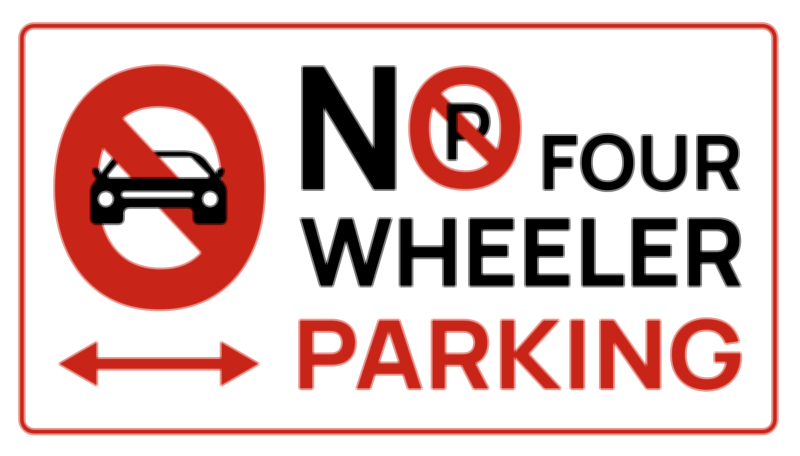
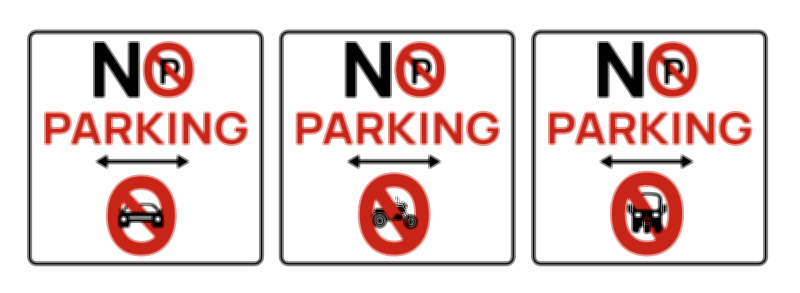
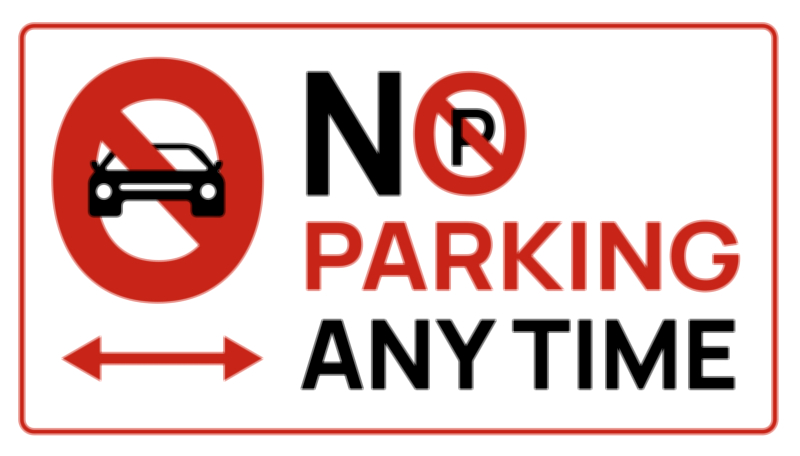
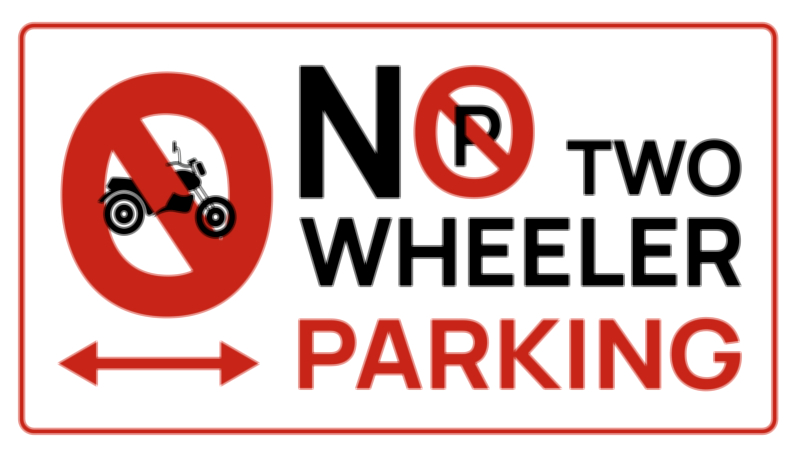
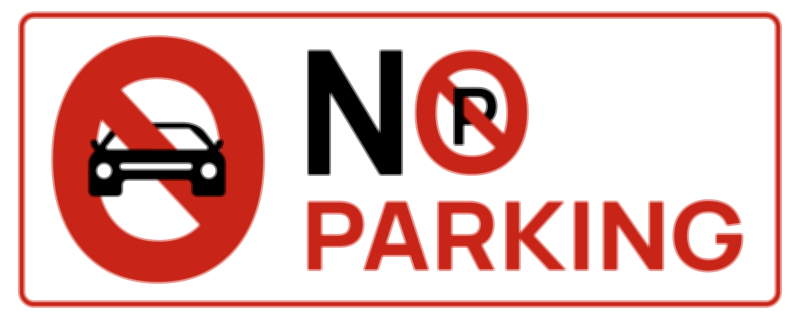
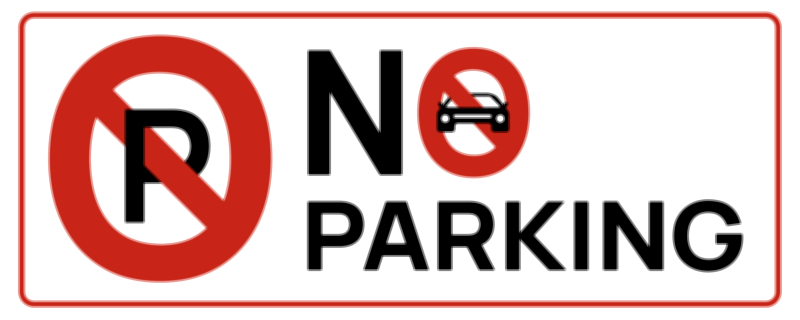
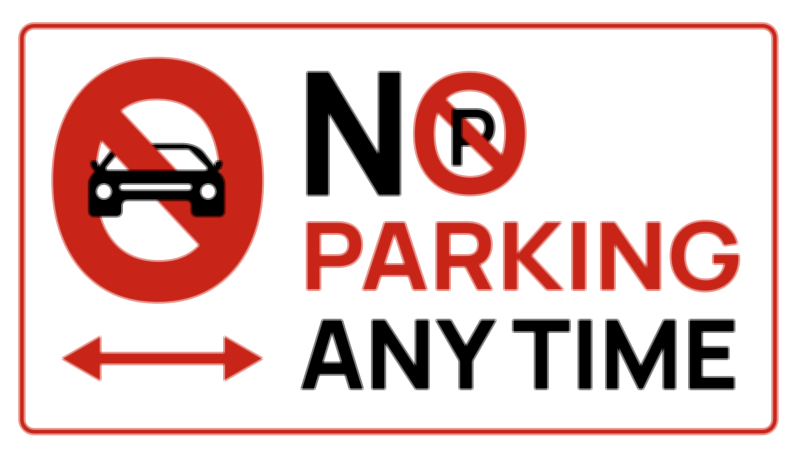
A No Parking in Front of the Gate sign may look like a simple visual rule aimed at preventing drivers from leaving their vehicles near a gate, yet the power of this symbol extends far beyond the words or graphic that appear on it. In a vector illustration, the sign is often represented with a familiar red circular or rectangular prohibition frame over the silhouette of a car positioned at a gate icon, sometimes supported by a bold diagonal slash to reinforce that this particular access point must not be obstructed. The design is standard because traffic communication requires speed, clarity, and zero ambiguity, especially in shared spaces where different road users interact constantly. The gate icon within the symbol functions as a direct signal that the restriction applies not to the whole street but specifically to the entrance area, communicating visually that while stopping elsewhere on the road may or may not be allowed, the gate zone is strictly protected. The geometric precision of the vector format — clean outlines, uniform stroke weight, sharp contrast between red prohibition marks and neutral background colors — ensures the message remains fully recognizable whether printed on a physical metal sign, displayed outside a residence or business, integrated into urban mapping systems, printed on architectural drawings, or rendered in digital parking and navigation interfaces. Behind this design lies a powerful safety principle: any structure’s entrance is a movement corridor that absolutely must remain free of obstruction.
Every gate is a threshold between an interior and an exterior pathway, and much of the importance of this sign becomes clear when one considers movement through that threshold. When a driver parks a vehicle directly in front of a gate, the problem created is not merely a parking violation but a disruption of the ability of people and vehicles to enter or exit safely. In residential homes, apartment complexes, offices, warehouses, schools, hospitals, community centers, and commercial buildings, the gate area is where children leave in the morning, where residents carry groceries and luggage, where workers transport equipment, where delivery personnel drop off goods, and where guests enter the premises. Even a short obstruction in this space can instantly force people into the roadway rather than the intended path of movement, exposing them to danger. Children exiting a building may suddenly appear from behind a parked car directly in the blind spot of oncoming drivers. Elderly individuals may lose confidence and mobility when forced to bypass a large vehicle blocking the gate. A person with disabilities may be physically unable to navigate around the obstruction at all. The No Parking in Front of the Gate sign therefore protects much more than convenience; it preserves safe spatial access for everyone using the entrance without requiring them to take unsafe detours or negotiate with drivers who have parked in prohibited zones.
In terms of traffic engineering, a gate is considered a dynamic access node, meaning it must be available for movement anytime, not only during peak hours. When a vehicle blocks the gate area, it stops that movement and creates unpredictable traffic patterns that may endanger pedestrians and moving vehicles. If the gate leads to a house, a car parked in front can trap its owners inside or prevent them from bringing their vehicles in or out, creating stress and conflict among neighbors and escalating frustrations in otherwise peaceful areas. In commercial zones or gated communities, obstructing the gate disrupts planned flows of traffic and interrupts both personal and logistic movements. Truck drivers cannot enter to deliver goods, school buses cannot pick up children from designated loading points, and security or maintenance vehicles cannot move into the premises when required. From a planning perspective, the gate is not just an architectural feature; it is an access port that supports mobility and order, and the sign is the visual element that protects it from being compromised by casual or careless parking behavior.
The sign becomes even more vital when emergency response is taken into account. Fire engines, ambulances, rescue vehicles, and security patrols often depend on gate access to reach individuals or areas where assistance is required. A single four-wheeler or commercial vehicle parked in front of a gate during an emergency can cause life-threatening delays. If someone suffers a medical crisis inside the residence or building, paramedics must be able to bring a stretcher in immediately, without being forced to reroute or abandon their equipment to get around a blocked entrance. Firefighters must be able to run hoses directly to the building or courtyard and position equipment quickly. During evacuations, a blocked gate can trap people inside a compound or force crowds to escape through less safe passages. Disasters demand speed and precision, and blocked access can erode both. The No Parking in Front of the Gate sign therefore functions as a preventive safety tool that ensures that emergency movement remains unobstructed even on days when no one imagines such situations could occur.
Beyond emergency use, economic and operational productivity also relies heavily on gate accessibility. Businesses, warehouses, service centers, commercial complexes, and agricultural properties depend on gates for the daily movement of goods, machinery, workers, and service providers. When a private vehicle is left directly in front of a loading or access gate, operations are disrupted — warehouses cannot unload cargo, technicians cannot transport tools to service areas, and delivery teams are forced to stop dangerously in active traffic lanes. Even a small delay can trigger economic ripple effects as schedules slip and productivity decreases. In storefronts and local markets, a blocked gate may prevent customers from entering the premises comfortably, affecting business revenue. The No Parking in Front of the Gate sign silently protects these economic lifelines by preserving a consistently clear path for workflows that depend on uninterrupted access.
Accessibility requirements make the sign even more essential in today’s urban spaces. Many building entrances incorporate accessibility ramps, tactile flooring, widened pathways for wheelchairs, and structures designed for safe entrance by people with limited mobility. A vehicle blocking a gate makes these features unreachable, undermining their very purpose and depriving disabled individuals of independent access to buildings and homes. This is not merely an inconvenience; it is a violation of inclusivity and dignity. For families with strollers and senior citizens with mobility limitations, an unobstructed entrance is a necessity, not a luxury. The sign ensures that accessibility design remains functional in practice, not just in theory, by defending the physical space required for its use.
Traffic discipline and neighborhood harmony are also reinforced by this signage. In dense residential areas, disputes often arise when individuals park in front of gates, restricting access to driveways and private property. The sign reduces conflict by clearly marking the boundary between what is permissible and what is not. It eliminates ambiguity and allows property owners and community managers to enforce rules fairly and consistently. Without such indicators, misunderstandings escalate quickly, and parking disagreements damage community relations. The sign therefore preserves a sense of order and fairness in areas where shared space must serve many needs.
In modern digital transportation ecosystems, this symbol extends beyond traditional signage. Navigation apps, ride-hailing services, parcel delivery systems, and autonomous vehicles now use location-based restrictions to guide drivers before they arrive. A vector illustration of No Parking in Front of the Gate becomes a data point used to inform algorithms that allocate space for vehicle movement and deliveries, preventing the very obstruction the sign warns against. Smart surveillance and parking enforcement systems also use digital mapping and sign recognition to identify violations automatically, supporting safer and more organized neighborhoods.
At its heart, the No Parking in Front of the Gate sign can be understood as a symbol of shared responsibility. It communicates that although parking may offer convenience to one individual, blocking a gate denies access, freedom of movement, and safety to many others. Respecting the sign means acknowledging that public and private spaces function best when everyone behaves in a way that protects the needs of others. Violating the sign transfers the burden of that convenience onto strangers — someone delayed, someone endangered, or someone unable to reach or exit their own building because a gate has been obstructed.
Thus, the simplicity of the sign belies the critical role it plays. It safeguards emergency access, protects pedestrians, preserves accessibility for vulnerable individuals, enables smooth logistics and business operations, prevents traffic disruption, reduces conflict, and ensures that gates continue to function as the safe transition points they were designed to be. A vector illustration containing only a door icon, a red prohibition ring, and a car silhouette is therefore not merely a graphic — it is a visual embodiment of safety, respect, mobility, and shared community responsibility.