Two Wheeler No Parking — Bike Parking Restriction and Traffic Safety Sign
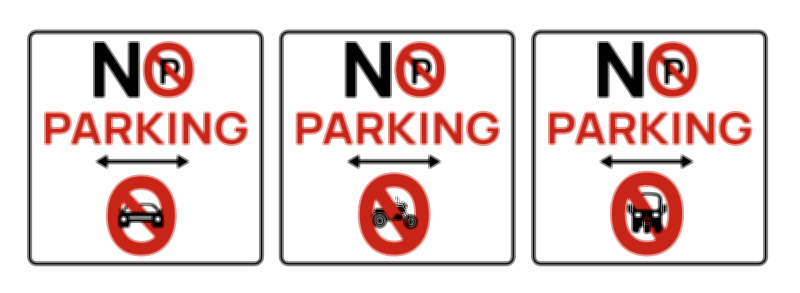
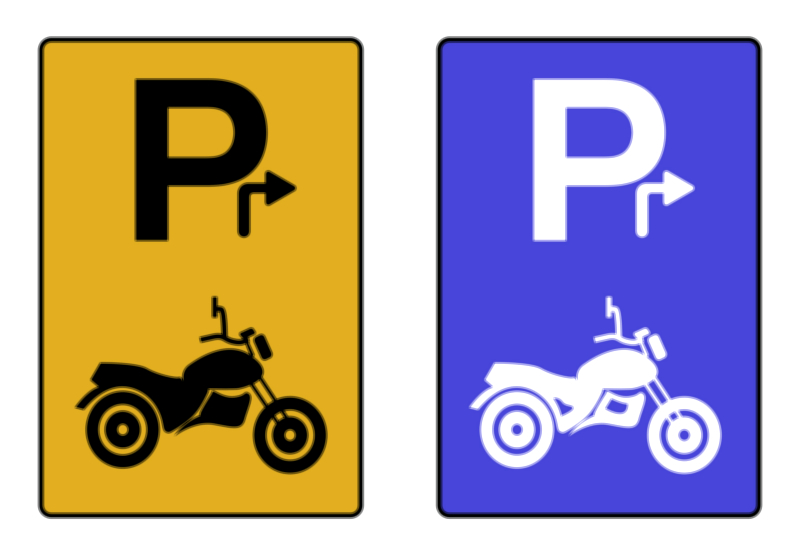
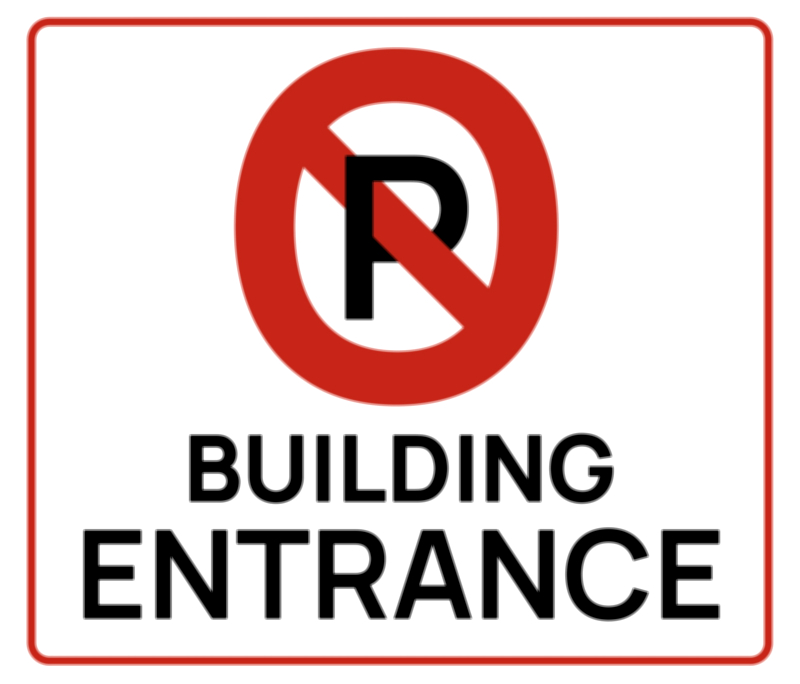
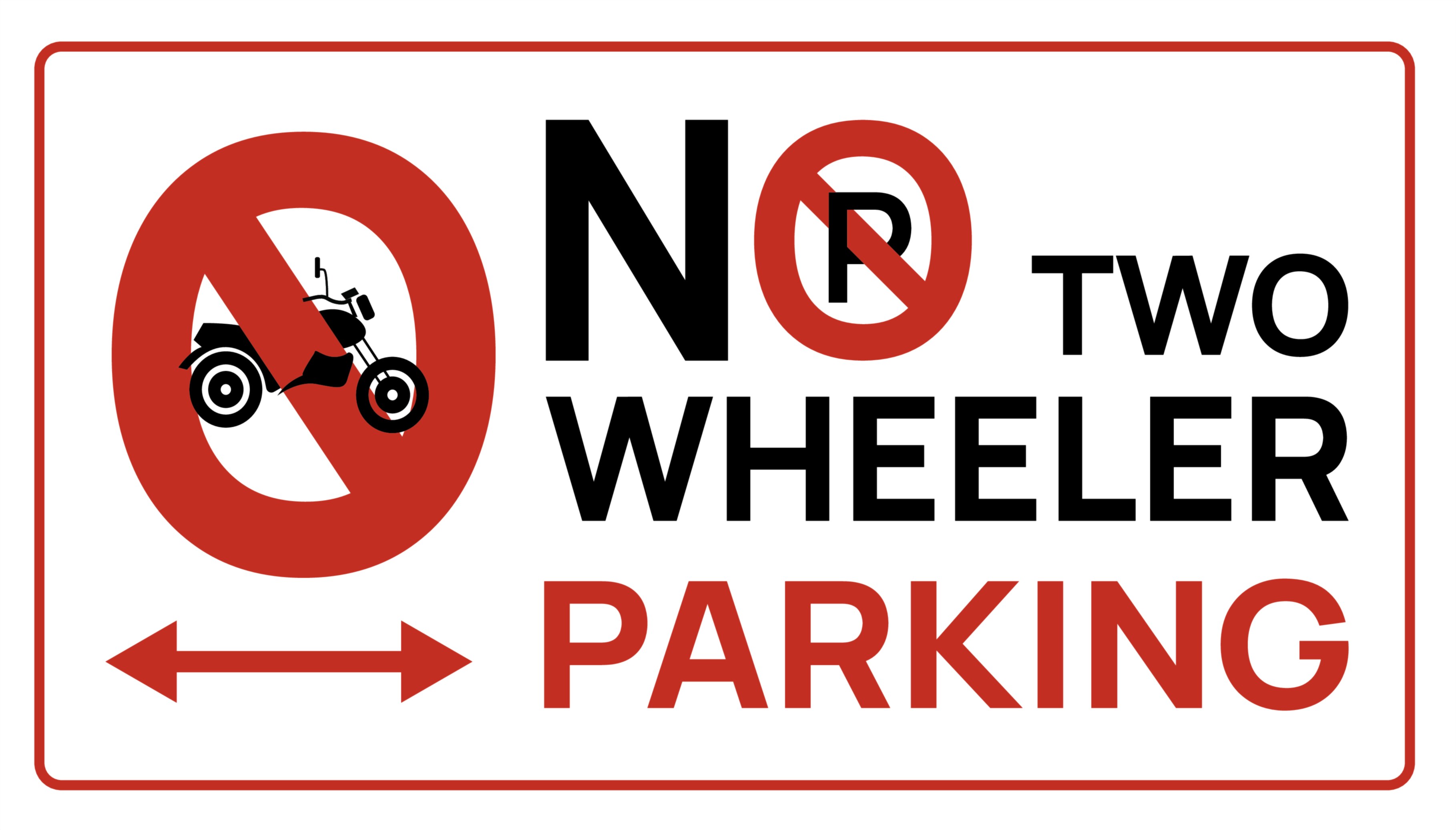
A Two Wheeler No Parking sign is a traffic safety symbol designed to prevent motorcycles, scooters, and mopeds from being left stationary in locations where their presence would obstruct safe movement, compromise visibility, reduce accessibility, interfere with emergency access, or disrupt the flow of pedestrians and vehicles. Although the vector illustration of the sign may simply feature a clean silhouette of a motorbike crossed by a diagonal red prohibition line or the letter “P” with a bike icon struck through, the deeper message carried by this symbol extends into the core functioning of organized public space. The red circle surrounding the icon reinforces that the viewer is encountering an authoritative restriction, the diagonal slash visually eliminates the permitted action, and the focused image of a two-wheeler clearly specifies the kind of vehicle being restricted. In its digital form, the vector version of the sign is crafted to maintain sharp lines, balanced proportions, and high-contrast shapes so that the symbol remains instantly legible across physical signboards, curbside warnings, mobile navigation systems, digital maps, and parking management interfaces. The image is not merely decorative; it is engineered to signal a rule that protects public safety and shared civility by ensuring that two-wheelers do not occupy spaces where even short-term parking could create a chain reaction of conflict, inconvenience, or danger.
The necessity of this sign becomes clear when one considers how a parked two-wheeler can impact the behavior of other road users. While motorcycles and scooters are compact, their reduced size often encourages riders to park in areas that appear open but are not meant for vehicle storage. Entrances to buildings, sidewalks, pedestrian pathways, bus stops, school gates, shop fronts, narrow lanes, and emergency access corridors are frequent targets for improper two-wheeler parking precisely because they feel convenient to the rider. However, the presence of even a small two-wheeler in these spaces can force pedestrians, children, senior citizens, and disabled individuals to step onto active road surfaces rather than staying within their designated safe areas. This sudden shift in pedestrian positioning increases the likelihood of contact with moving vehicles, and near schools or busy commercial zones, the risk grows exponentially. Bicycle users may lose the protected cycling corridor they depend on, strollers may encounter blocked pathways, and delivery workers may be forced to maneuver around obstacles in unpredictable ways. Although the two-wheeler is not as physically large as a car, the improper placement of a bike can have disproportionate consequences because the obstruction appears in places that are not expected by passing traffic. The sign prevents such unsafe rearrangements of movement by ensuring that bike parking does not intrude into environments where visibility, pedestrian freedom, and planned circulation patterns are essential.
The role of the sign becomes even more significant near entrances and gateways, where the transition between interior and exterior movement is highly concentrated. Two-wheelers parked in front of gates block the entry and exit of both residents and service vehicles, which can lead to arguments, traffic jams, and disruption of routine access. A resident returning home on a rainy evening should not need to ask strangers to move their vehicles simply to enter their own property. Similarly, schools and hospitals must keep their frontage clear for buses, ambulances, and emergency drop-offs, and when riders park two-wheelers in these spots, they compromise not only convenience but safety and dignity. The Two Wheeler No Parking sign acts as a safeguard that keeps these spaces permanently available for their intended use, preventing friction among neighbors and ensuring that entrances function without conflict across all hours of the day.
Emergency response elevates the sign’s importance from convenience to potential life-or-death relevance. Firefighting equipment, medical teams, and police responders often require immediate access to loading bays, hydrants, stairway approaches, and access gates. A two-wheeler parked in the wrong place may force responders to delay bringing stretchers or hoses directly into buildings, even if only by a few seconds, and those few seconds can determine survival outcomes. A fire truck cannot afford to stop short because a bike blocks a hydrant. A medical emergency cannot wait for someone to find the owner of a scooter to clear a hospital ramp. Unlike private convenience, public emergencies cannot be paused. The Two Wheeler No Parking sign therefore serves as an always-present guarantee that the entrance pathways and response routes that the public depends on remain usable every minute of the day, without exception and without negotiation.
Commercial and urban efficiency are also heavily supported by this sign because uncontrolled two-wheeler parking disrupts business and logistical rhythms. In busy marketplaces or office corridors, a row of improperly parked bikes crowds storefront visibility, blocks signage, restricts customer access, and interferes with delivery and pickup activities. A business that relies on smooth customer flow may find its entrance delayed simply because a bike was left in the wrong place. Delivery agents carrying large loads often struggle to navigate around two-wheelers left near loading or unloading zones, slowing productivity and increasing the risk of falls or injuries. In warehouse districts and industrial areas, two-wheelers parked near service entrances interfere with pallet transfer and machine access. The Two Wheeler No Parking sign protects these professional environments by differentiating between spaces meant for movement and spaces meant for storage and by ensuring that the functions of commerce remain unblocked by improvisational parking.
Accessibility considerations add an essential human dimension to the purpose of the sign. Ramps, tactile walkways, wheelchair entrances, widened curbs, and support rails are all designed with the intention of providing safe and independent access to individuals with disabilities, mobility impairments, or age-related limitations. When a motorcycle or scooter is parked across these pathways, the barrier created is total rather than partial. A wheelchair user cannot simply edge around a parked bike; the obstruction can mean turning back, seeking help, or risking unsafe terrain. Elderly pedestrians may find themselves exposed to moving traffic because the ramp designed for them is blocked. Parents with strollers, individuals recovering from medical procedures, and people carrying heavy items are forced to adapt to a situation that should not exist. The Two Wheeler No Parking sign protects accessibility not by controlling the movements of disabled individuals, but by controlling the behaviors that might eliminate their independence or comfort.
Road safety engineering also demonstrates why the sign is crucial in traffic control zones. Many intersections and turning points depend on clear sightlines for drivers to make safe decisions. A two-wheeler parked near a curve or crosswalk narrows visibility and forces drivers to make guesses rather than decisions based on full information. Unlike large cars that block a wide field of view, two-wheelers create compact but unpredictable blind spots because they sit closer to the pedestrian plane. A child stepping off a sidewalk behind a motorbike, or a cyclist emerging unseen from behind a parked scooter, becomes invisible until the moment of danger. By prohibiting two-wheeler parking in areas where visibility is necessary for accident prevention, the sign becomes a proactive measure that protects both drivers and pedestrians from high-risk interactions that would otherwise go unnoticed until too late.
Modern smart mobility systems extend the influence of this sign even further. Digital maps and navigation apps increasingly display no-parking zones for motorcycles alongside driving routes. Logistics software guides couriers to legal stopping and parking points while avoiding restricted spaces marked with this symbol. Parking-enforcement cameras, video analytics systems, and automated municipal monitoring networks incorporate this sign into their recognition logic to distinguish legal behavior from violations. The crisp clarity of a vector version allows the symbol to be read not only by the human eye but by the computer vision algorithms that govern autonomous vehicles and surveillance tools. As cities transition into smarter transportation networks, the Two Wheeler No Parking sign retains its classical visual identity while becoming part of a technologically connected environment that protects the same values through digital means.
At its deepest level, the Two Wheeler No Parking sign represents an unwritten social agreement that individual convenience cannot override collective safety. Parking a scooter in an unauthorized location may save one rider a few steps, yet it transfers risk, discomfort, and delay onto people who did not choose that inconvenience. It shifts effort from the rider to the pedestrian who must navigate around the obstruction. It transfers time pressure from the owner of the bike to the emergency worker who must reroute equipment. It reallocates accessibility from someone who depends on a mobility feature to someone who does not. Respecting the sign, therefore, is not only about obeying a traffic regulation but about understanding that shared space requires shared responsibility. Every time a rider chooses not to park in a restricted area, they protect children walking home, elders crossing the street, patients arriving at medical facilities, workers performing essential tasks, and strangers who simply wish to move safely and comfortably through their environment.
Thus, the Two Wheeler No Parking sign, though represented in a simple vector illustration of a prohibition symbol and a bike silhouette, sums up an entire philosophy of order, protection, accessibility, and mutual respect. It ensures that streets remain functional, that entrances remain open, that pathways remain safe, that emergencies are not hindered, and that public space supports everyone equally. The visual clarity of the sign is only the surface layer; beneath it lies an infrastructure of understanding that cities depend on every day, often without acknowledging how essential and quietly impactful such a symbol truly is.