No Three Wheeler Parking — Traffic Restriction and Vehicle Control Sign
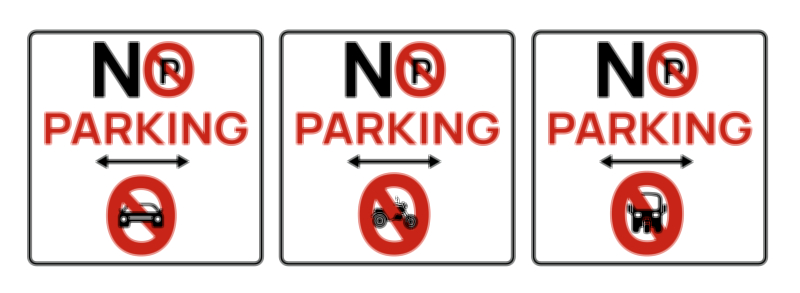
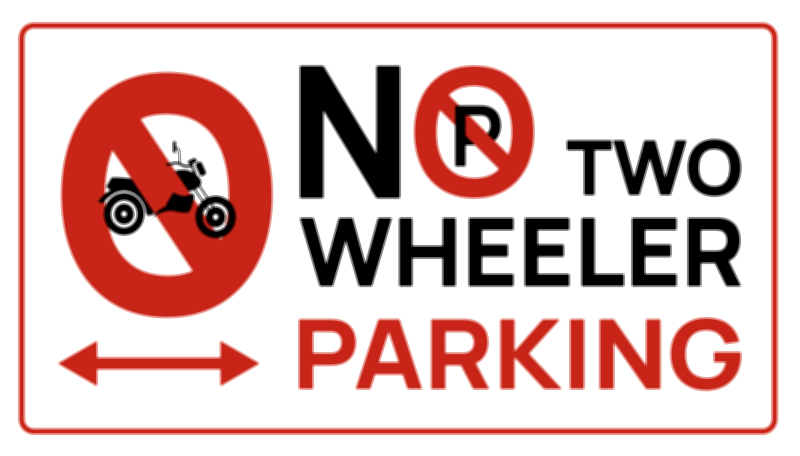
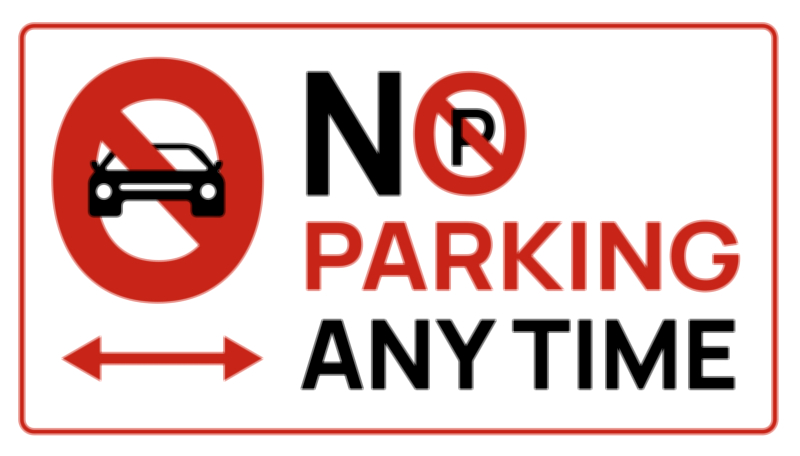
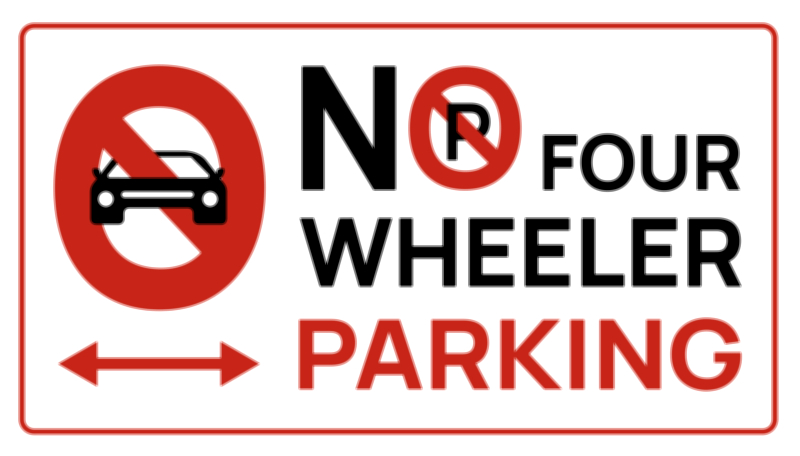
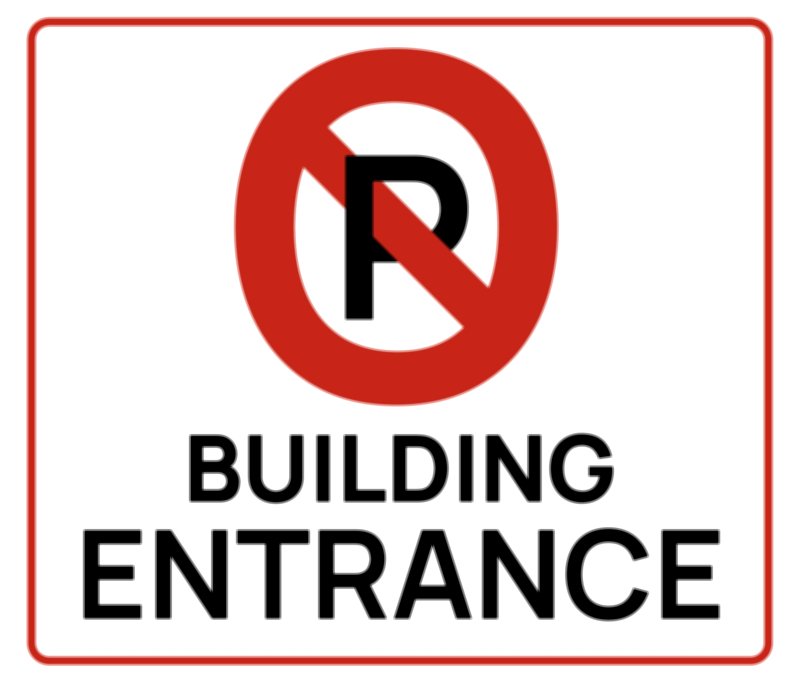
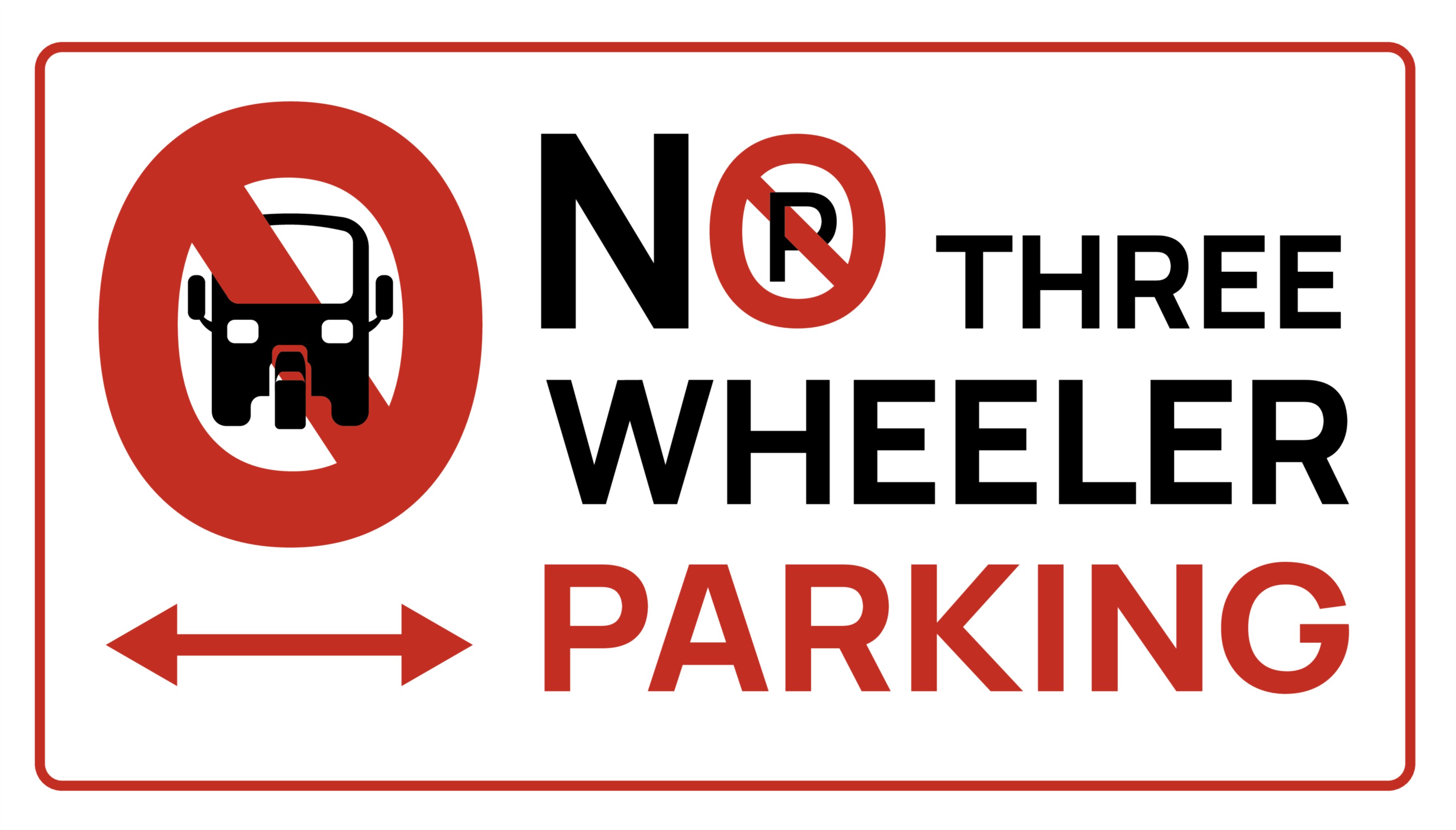
A No Three Wheeler Parking sign may appear at first to be a simple roadside instruction preventing auto-rickshaws, tuk-tuks, cargo trikes, and other three-wheeled vehicles from stopping in a particular spot, yet the meaning and impact of this symbol extend far deeper into the functioning of everyday transportation systems, pedestrian safety, accessibility, business logistics, and emergency readiness. In a vector illustration, this sign is typically represented through a bold red circular prohibition frame placed over the silhouette of a three-wheeler, or sometimes over a stylized “P” combined with an auto-rickshaw graphic and crossed by the unmistakable diagonal slash of restriction. The red ring signals prohibition in the universal language of traffic control, the diagonal slash visually prevents the depicted action, and the three-wheeler silhouette identifies the exact vehicle category to which the rule applies. The precision of the vector form, with sharp geometry, high contrast, and a balanced visual hierarchy, ensures that the symbol remains instantly recognizable whether printed on metal signage outdoors, displayed on digital parking maps, used in navigation applications, or positioned on architectural blueprints to guide building access planning. Although the artwork is minimal, the sign’s purpose is layered, because it protects spaces that cannot afford the obstruction that a three-wheeler—despite its compact form—would introduce.
To understand why this sign is placed where it is, one must look closely at how three-wheelers behave in dense transportation environments and how roadside space must be preserved for safe and predictable circulation. Three-wheelers are often used for short-distance transportation, passenger pickups, door-to-door service, commercial freight delivery, and informal taxi operations. These functions encourage quick stopping and waiting in locations that feel convenient to the driver, such as near school gates, bus stops, railway stations, market exits, hospitals, building entrances, religious spaces, and small commercial clusters. Yet these locations are exactly where movement is most concentrated and where a single parked vehicle can trigger a chain reaction of disruption. When a three-wheeler occupies a space not meant for parking, it narrows the available roadway and forces moving vehicles into abrupt lane shifts. Because three-wheelers are wider than two-wheelers and shorter than four-wheelers, they create a unique obstruction profile that can be difficult for incoming drivers to anticipate. Their parked position often hides the sightlines of pedestrians standing on curbs or attempting to cross the street, and because three-wheelers tend to cluster when parking behavior is not regulated, one violation frequently becomes many, turning a dynamic movement zone into an improvised stand that endangers both passengers and pedestrians. The No Three Wheeler Parking sign exists to prevent this domino effect and to protect locations in which flow is more important than convenience for any single driver.
The sign takes on even greater significance in connection with pedestrian safety. Children, elderly people, and individuals with limited mobility often walk or wait in precisely the environments where three-wheelers are tempted to park illegally. A group of parked autos near a school entrance can hide small children from approaching drivers until they step onto the roadway, reducing the time drivers have to perceive and brake. When three-wheelers occupy sidewalks or building entry ramps, pedestrians are forced to navigate around the obstruction by stepping into moving lanes, significantly increasing the danger they face. People using walkers, wheelchairs, mobility scooters, crutches, or strollers cannot pass through the blocked zone at all, which is particularly harmful because entrance and sidewalk safety exist to give priority protection to those whose movement is already challenged. A No Three Wheeler Parking sign therefore functions not only as a rule for vehicle drivers but as a shield that maintains safety margins for pedestrians who need certainty, clear space, and uninterrupted access. The presence of the sign ensures that the most physically vulnerable road users do not lose their protection simply because a convenient parking space was wrongly chosen.
When considering emergency access, the importance of this sign becomes more urgent than many drivers realize. Fire hydrants, ambulance bays, emergency ramps, building entry lanes, rescue gates, and evacuation corridors must remain clear every second of the day. In many cities, three-wheelers are small and maneuverable, which may tempt drivers to leave them in places where larger cars would never attempt to park. Yet a three-wheeler obstructing the landing point of an ambulance or blocking a fire lane is equally catastrophic. Emergency workers cannot waste precious time calling for a driver responsible for the obstruction. Firefighters cannot extend hoses or advance equipment through a space where a parked vehicle has forced them into detours. In a medical emergency, the difference between reaching the patient in seconds and being delayed—simply because a three-wheeler has been parked across a critical opening—can be the difference between recovery and tragedy. The No Three Wheeler Parking sign is therefore a silent guardian of emergency readiness, ensuring that the spaces where help must arrive without delay stay continuously open and usable.
Commercial activity and urban economics are also protected by this sign. Three-wheelers are frequently used for small-scale delivery and passenger transport, meaning their operators are constantly picking up goods or customers at retail entrances, warehouses, food markets, and service hubs. However, entrance and curb space at these locations must remain clear for loading and unloading vehicles, freight carts, forklifts, mobility vans, and other service operations. A three-wheeler parked improperly can prevent stock from reaching shops, slow down supply movement, and create additional costs for businesses. In busy commercial stretches, customers rely on unobstructed building entrances and storefront access; when clusters of three-wheelers block these areas, pedestrian pathways are squeezed, shop visibility is reduced, and businesses lose patronage because customers feel unwelcome or unsafe entering the premises. The sign ensures that commercial areas maintain the orderly rhythm of moving goods and customers rather than devolving into traffic bottlenecks, crowding, and avoidable economic loss due to access obstruction.
Just as important is the accessibility dimension of this sign. Modern architecture incorporates design elements—ramps, tactile walkways, wide entrance clearances, sheltered drop-off zones, and barrier-free doorway approaches—to support the independence and dignity of people with disabilities. When these structures are blocked by a parked three-wheeler, the obstruction disproportionately affects those who already face challenges in mobility. A person using a wheelchair cannot squeeze around a parked auto-rickshaw left across a ramp. A visually impaired individual cannot navigate safely when tactile guiding surfaces are blocked. A senior citizen with mobility limitations cannot walk around a cluster of three-wheelers without stepping into vehicle lanes. Parents carrying infants or pushing strollers face risk and discomfort when the protected entrance space is blocked. The No Three Wheeler Parking sign therefore becomes an advocate for accessibility, defending the infrastructure designed to ensure equal participation in public life.
Traffic engineering adds another layer to understanding why these signs matter deeply. A lane or curb space where parking is forbidden has not been selected randomly; rather, it has been chosen because the interruption of movement in that spot would weaken the traffic system as a whole. Three-wheeler stopping patterns near intersections increase collision risk because they obstruct turning angles and force drivers to make decisions without full visibility. On one-way streets, they can narrow the last remaining safe distance for passing vehicles. On narrow roads, they can convert two-way traffic into a single-lane bottleneck, amplifying congestion backward for long distances. Many such situations escalate because a parked three-wheeler invites others to imitate the same parking behavior; where one auto stands illegally, three or four often follow. The No Three Wheeler Parking sign stops that chain reaction before it begins, preserving the orderly structure that keeps thousands of simultaneous road movements functioning at once.
In the context of evolving smart mobility, this sign has a digital life as well as a physical one. Modern navigation apps warn auto-rickshaw drivers of no-parking zones to prevent unintended violations. Delivery-routing software prevents three-wheel cargo trikes from stopping near protected access points. Municipal camera systems and traffic enforcement sensors use computer vision to detect violations and prevent recurring obstruction patterns. Autonomous and assisted driving vehicles incorporate the visual identity of the sign into recognition datasets to determine where automated stopping and waiting are prohibited. The vector format of the sign supports machine readability by maintaining simple, high-contrast patterns that map reliably into algorithmic interpretation, extending the rule from the visible streetscape into the digital logic of transportation systems.
Beyond its functional role in mobility and safety, the No Three Wheeler Parking sign also reflects a deeper cultural and civic principle: shared space must remain shared, not claimed by individual convenience. Parking in a prohibited area may appear quick and harmless to the driver, yet the consequences of that action—risk, delay, displacement, inconvenience, conflict, and possible danger—are transferred to other people who never chose that burden. Respecting the sign means acknowledging that public space only works when everyone behaves with awareness of others’ needs, not only their own. When a three-wheeler rider chooses to honor the rule and move to a designated parking area instead, they protect children walking to school, emergency responders attending to calls, businesses dependent on access, vulnerable pedestrians depending on safety, and anyone who must pass the spot where the vehicle might otherwise have been left.
Ultimately, the No Three Wheeler Parking sign represents not only a traffic rule but an essential mechanism of urban harmony. Its visual simplicity hides the thousands of moments of friction, danger, and frustration it prevents every day. A single icon of a three-wheeler crossed by a slash in bold red outlines the boundary between traffic chaos and traffic cooperation. It keeps entrances accessible, walkways safe, emergency paths open, storefronts functional, logistics predictable, and communities at peace. Whether printed on a metal post, rendered in a navigation app, displayed on a building wall, or integrated into mobility technology, the sign continuously protects the principle that public space must remain safe and usable for all.