Building Entrance Space No Parking — Access Safety and Vehicle Restriction Sign
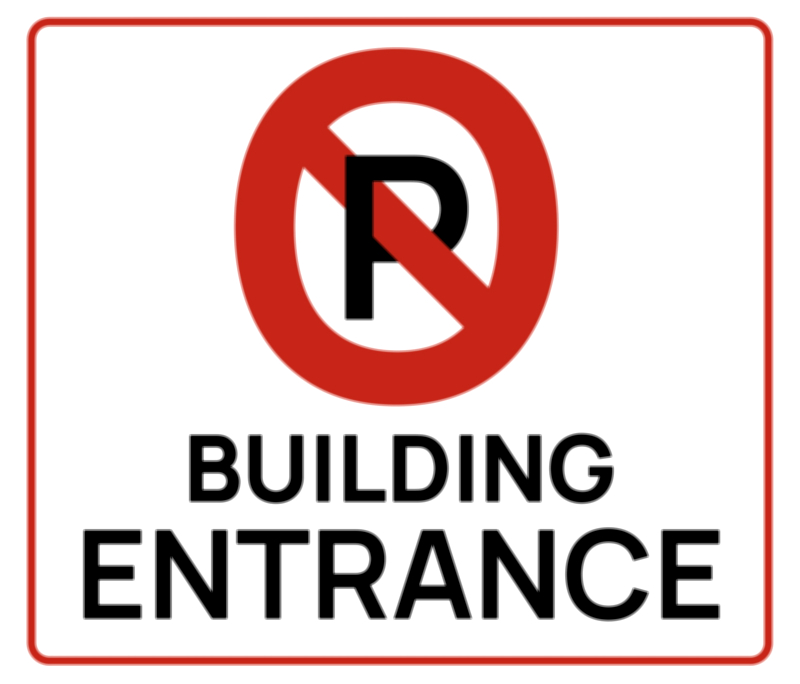
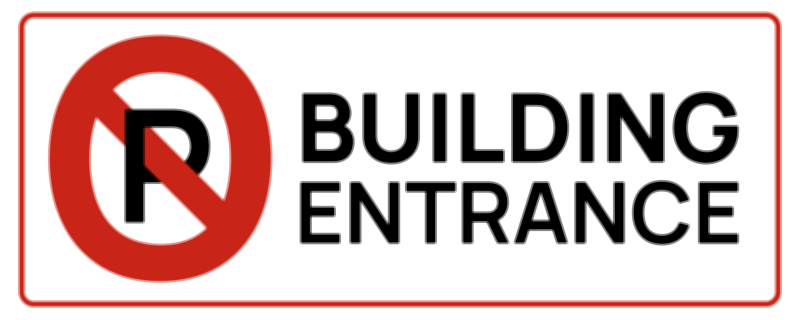
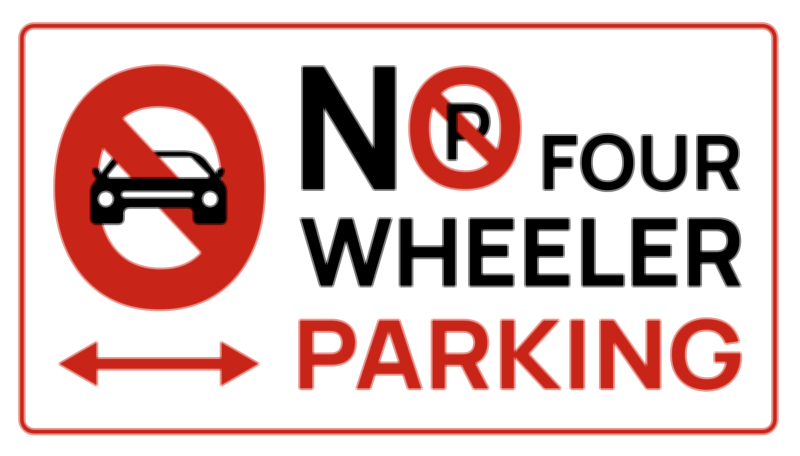
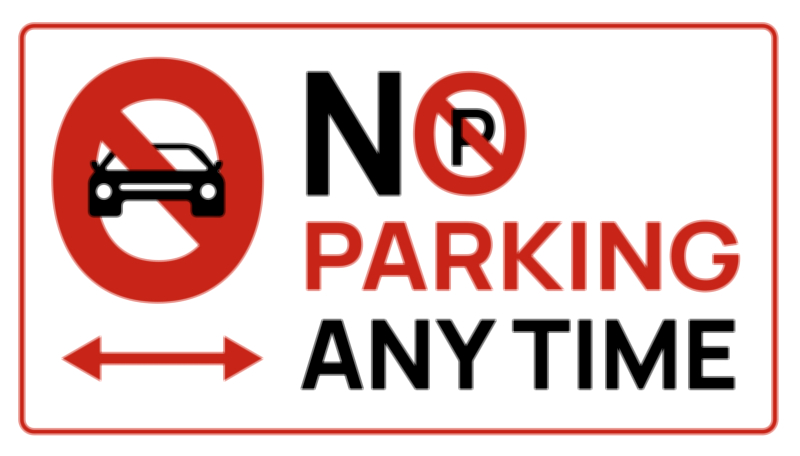
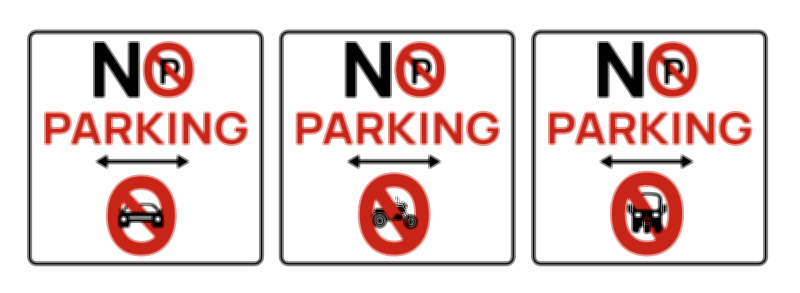
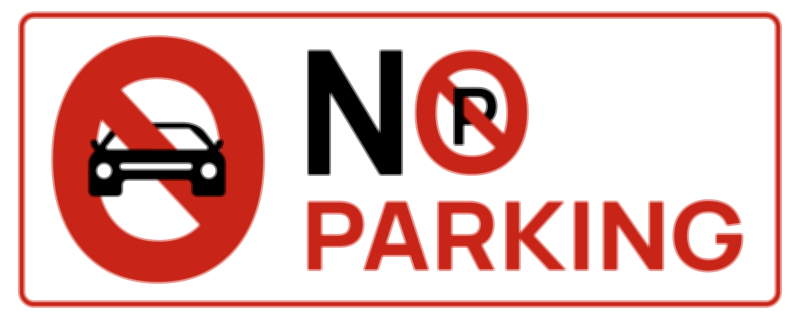
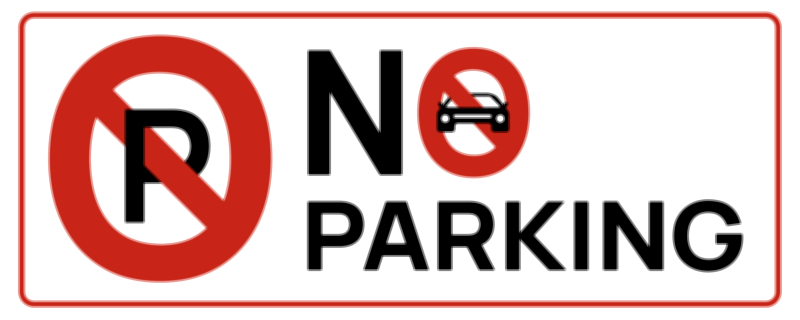
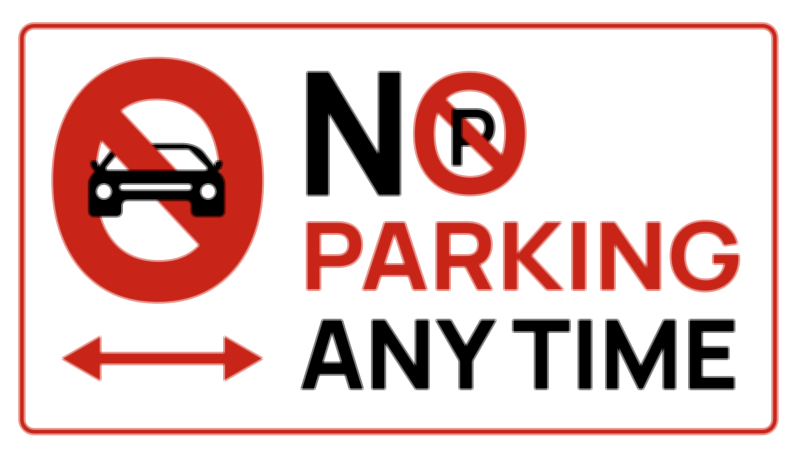
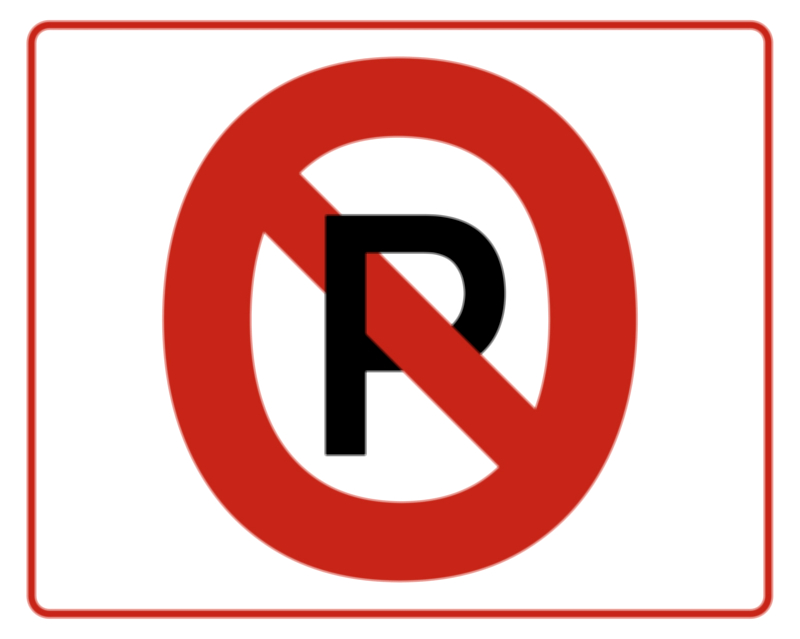
A Building Entrance Space No Parking sign represents one of the most critical traffic control symbols used in both public and private environments to keep building access points open, safe, and fully functional at all times. In a vector illustration, the sign typically appears with a strongly defined red circular border or prohibition symbol layered over a car icon, doorway outline, or simplified building façade, and the diagonal slash serves as the universal visual language that forbids four-wheelers from stopping or parking in that particular protected zone. Unlike a general No Parking sign, this version explicitly applies to the specific space directly in front of an entrance, highlighting that the restriction is not about convenience but about preserving an uninterrupted access corridor. The vector format keeps the design crisp, balanced, and highly visible for placement on signboards, building walls, curbside posts, parking barriers, doorways, digital maps, and traffic management systems. The intention behind every visual element is clarity: drivers must instantly understand they cannot leave a vehicle there under any circumstance because the entrance space is not just a doorway but a critical area that serves pedestrians, emergency teams, deliveries, accessibility users, and essential building functions.
The true purpose of this signage becomes clearer when one considers how much risk emerges when a vehicle occupies the space in front of a building entrance. A parked car may appear harmless to the person who leaves it there, but it immediately alters the safety and movement environment for everyone else. Pedestrians arriving or departing through the entrance must navigate around the vehicle, often forcing them into a roadway where cars are moving. Children, who are shorter and harder to see, can suddenly emerge from behind a parked car into the path of a driver approaching the entrance, which creates a dangerous blind spot that increases collision risk drastically. Elderly people or individuals with mobility limitations may struggle to maneuver around large vehicles, losing the smooth passage that entrance pathways are designed to provide. Even people carrying groceries, luggage, heavy items, or holding children by the hand are put in a precarious situation when they are redirected from a safe walkway into active traffic simply because a driver stops in a restricted zone. The space in front of a building’s entrance is intended to be a stable and predictable transition zone between the building and the roadway, and the No Parking sign protects this space by preventing it from becoming an unpredictable and unsafe bottleneck.
The importance of this sign becomes even more striking during emergencies, when every second has life-saving potential. Fire trucks must get close to a building to deploy hoses or ladders. Ambulances need direct space to unload stretchers and move patients through entrance doors without delay. Emergency evacuation procedures depend on keeping the primary exit area clear so that occupants can gather and move to safety in an organized way. A single parked four-wheeler obstructing the entrance can delay a paramedic trying to carry a critical patient, or prevent firefighters from opening rescue equipment where it is needed most. During building emergencies involving fire, structural failure, medical distress, or electrical faults, the obstruction of a building entrance can be the deciding factor between a smooth response and a tragedy. For this reason, building codes and safety standards mandate that entrance spaces remain permanently unobstructed, and the Building Entrance Space No Parking sign becomes the visible enforcement mechanic of that mandate. It is not placed to inconvenience drivers but to defend the integrity of the emergency access chain that buildings are designed around.
The sign also protects the routine logistical operations that buildings depend on every day, not only during crises. Deliveries, maintenance services, waste management pickups, courier visits, and goods transportation require service personnel to bring equipment or items directly to the entrance. When cars occupy this protected space illegally, delivery teams must stop far away, moving heavy loads through cluttered paths or active road lanes. This increases accident risks for workers and drastically slows business operations. In hotels, event venues, and educational institutions, blocked entrances disrupt organized passenger pickup and drop-off flows, causing crowd friction and unnecessary delays. In commercial buildings, unauthorized parking near the entrance interrupts the constant movement of suppliers, technicians, and clients. When residents or customers need to reach a building smoothly, the clarity of access matters, and the sign silently ensures that the entrance remains a functional gateway rather than a chokepoint. Over time, the sign becomes the guardian of smooth daily activity, keeping the entrance space aligned with the purpose it was designed for rather than letting it become an improvised parking spot for the convenience of a single driver.
Accessibility considerations elevate the importance of the Building Entrance Space No Parking sign even further. Modern architecture integrates ramps for wheelchair users, tactile paving for visually impaired pedestrians, wide curbs for strollers, and automated sliding doors that rely on users being able to approach directly. If a four-wheeler occupies the entrance space, these accessibility features instantly become unusable. A wheelchair user cannot squeeze between a parked car and a wall. A stroller cannot pass through a gap intended only for walking. A visually impaired person whose route depends on tactile ground indicators may be forced to walk in unsafe directions. A person with limited leg strength cannot navigate around vehicle obstructions without discomfort or risk. The sign therefore represents not just road regulation but dignity, independence, and equality. It ensures that the entrance keeps its intended form — a space where all individuals can enter safely, comfortably, and without obstacles. For many, a clear entrance is not an efficiency but a necessity, and the sign preserves that necessity with a simple yet powerful visual instruction.
Traffic management science also depends on strict protection of building entrances. Roads, pathways, and curb spaces are shared infrastructures, and a single car parked in a wrong place can disrupt the delicate balance of movement that keeps cities functional. Near busy commercial buildings, cars stopping in front of entrances force buses, taxis, and ride-sharing vehicles to halt unpredictably in busy lanes, creating backups that ripple outward into intersections and side streets. In residential neighborhoods, unauthorized parking near entrances creates disputes, frustration, and overcrowding on otherwise peaceful streets. The Building Entrance Space No Parking sign operates as a stabilizer: it ensures that while drivers can circulate freely, the entrance remains a friction-free node where road traffic does not interfere with people transitioning in and out of a building. Each time the sign prevents a vehicle from blocking the entrance, it prevents a situation where inconvenience multiplies into frustration, congestion, or danger.
In today’s smart mobility context, the significance of the sign extends beyond physical space into digital navigation and enforcement. Parking management platforms and GPS navigation systems rely on digital renderings of signage to warn drivers before they enter restricted entrance zones. Delivery platforms use mapped access doors to coordinate drop-off points and avoid stoppages that inconvenience building residents. Autonomous and semi-autonomous vehicles depend on symbol recognition to determine where stopping is allowed and where it is unsafe. High-resolution vector illustrations of this sign support these digital ecosystems by preserving icon legibility across screens and environments. Even the latest automated surveillance systems and parking violation detection cameras operate based on encoded definitions of No Parking zones around building entrances, ensuring that a space meant for access remains accessible at all times, day and night.
Viewed from a social perspective rather than a logistical one, the Building Entrance Space No Parking sign symbolizes mutual respect. It protects not one person’s preference but the needs of everyone who depends on the building. When a driver chooses to obey the sign, they contribute quietly to community safety, operational efficiency, and accessibility for strangers they may never meet. When someone violates the sign, even momentarily, they convert public inconvenience into personal convenience, forcing a cost onto others in the form of risk, disruption, or delay. A society functions best when shared spaces are treated with a sense of responsibility rather than entitlement, and this sign makes that collective responsibility visible and enforceable. It is, in essence, a marker of empathy disguised as regulation, reminding people that their small decisions influence the safety, dignity, and efficiency of others.
Through this lens, the Building Entrance Space No Parking sign becomes much more than a prohibition icon. It is a protector of life, a facilitator of daily movement, a defender of accessibility, an enabler of business continuity, a guardrail against preventable collisions, and a symbol of civic cooperation. Its vector illustration may include only a circle, a slash, and the outline of a vehicle or doorway, yet that simple geometry conveys one of the most important messages in road and building safety — that entrances must remain free, open, and safe for anyone arriving, leaving, responding, delivering, supporting, or seeking help. The sign stands silently on walls and curbs, but its presence shapes environments that are safer, more organized, and more humane for all who share them.