No Two Wheeler, Three or Four Wheeler Parking — Complete Vehicle Restriction and Safety Sign
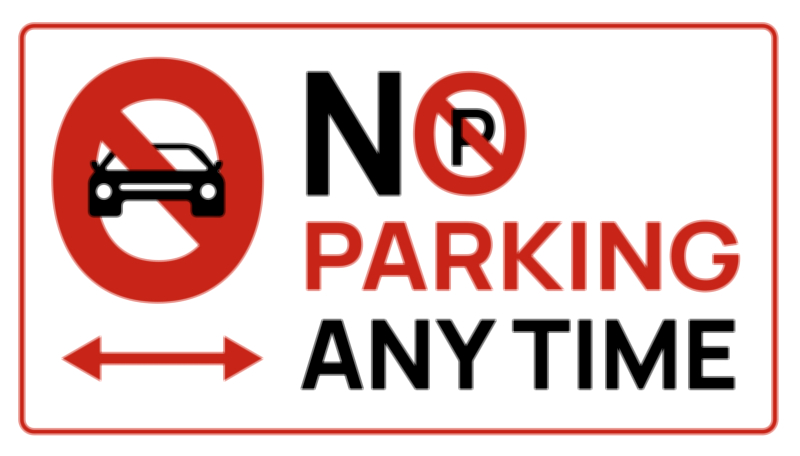
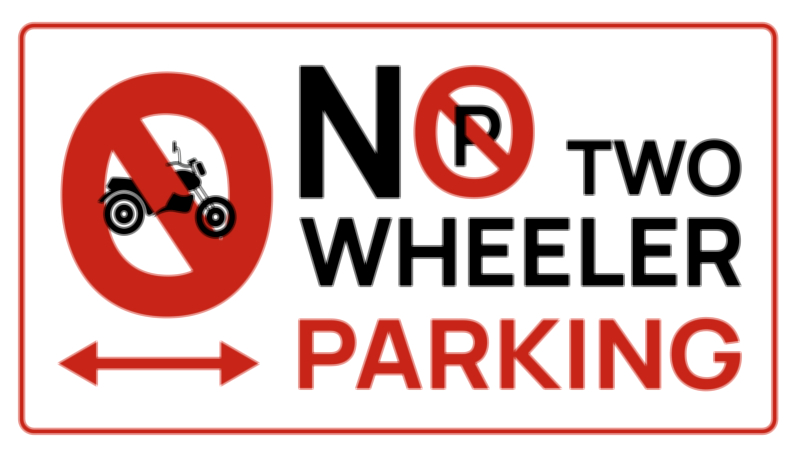
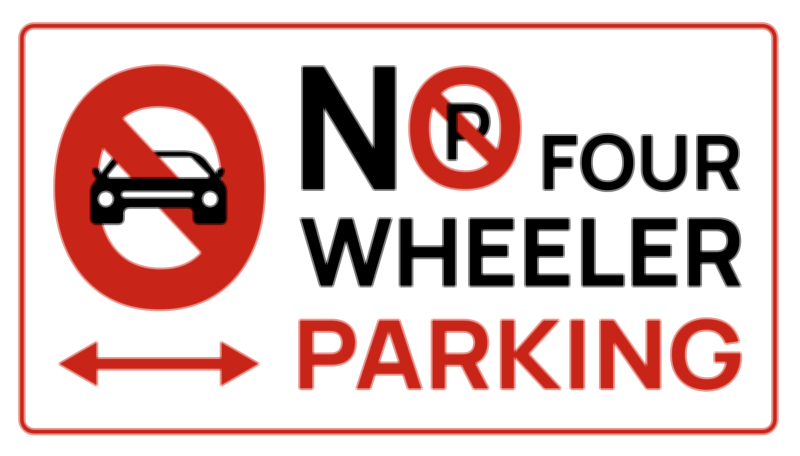
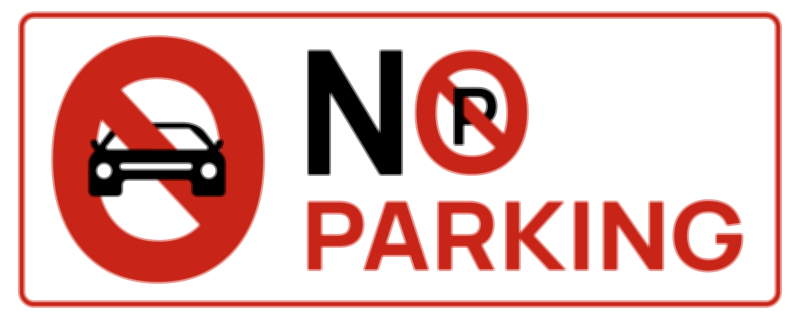
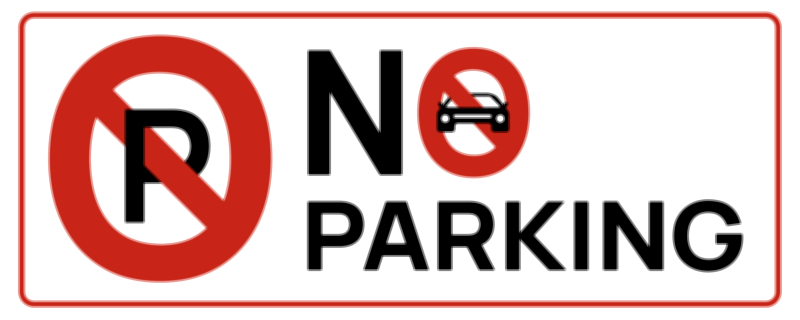
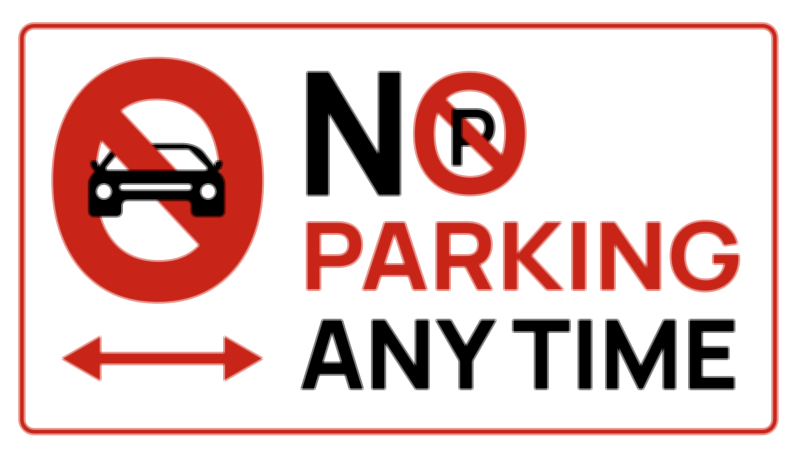
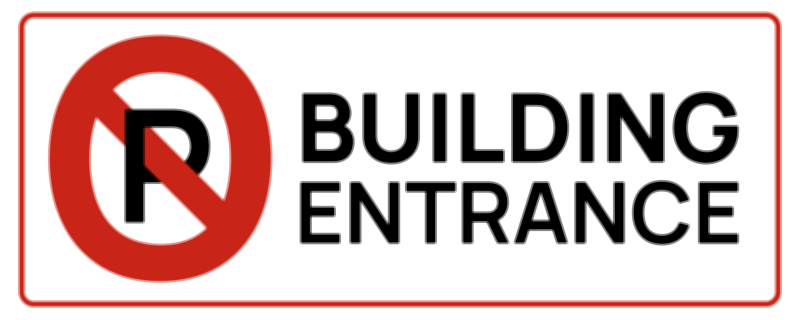
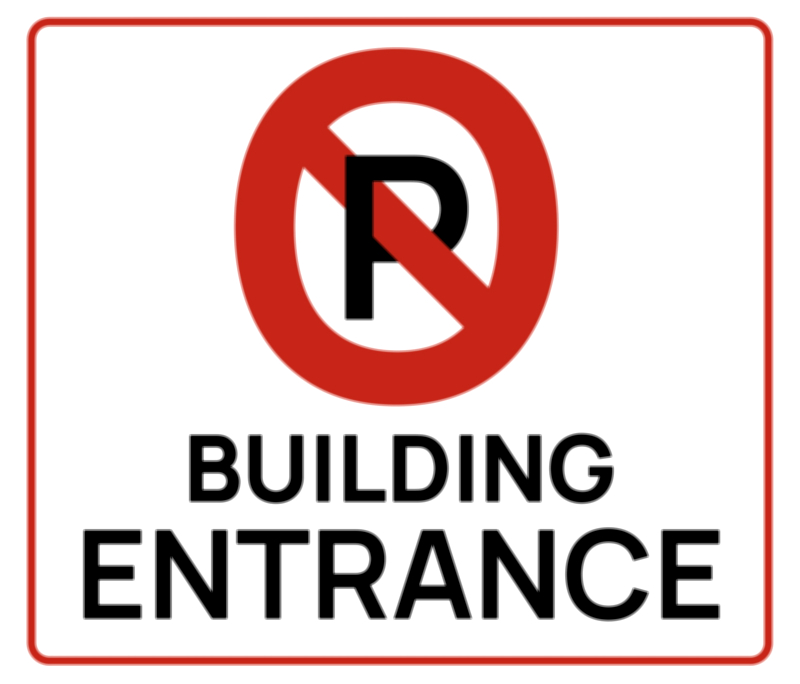
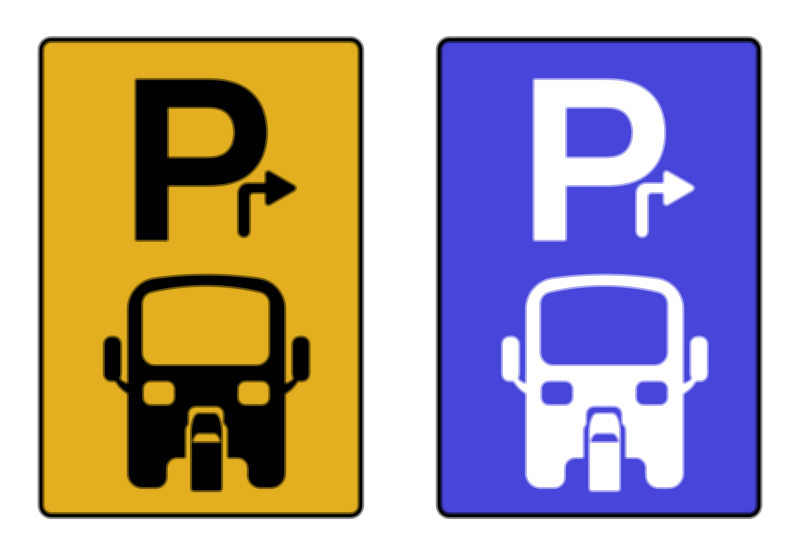
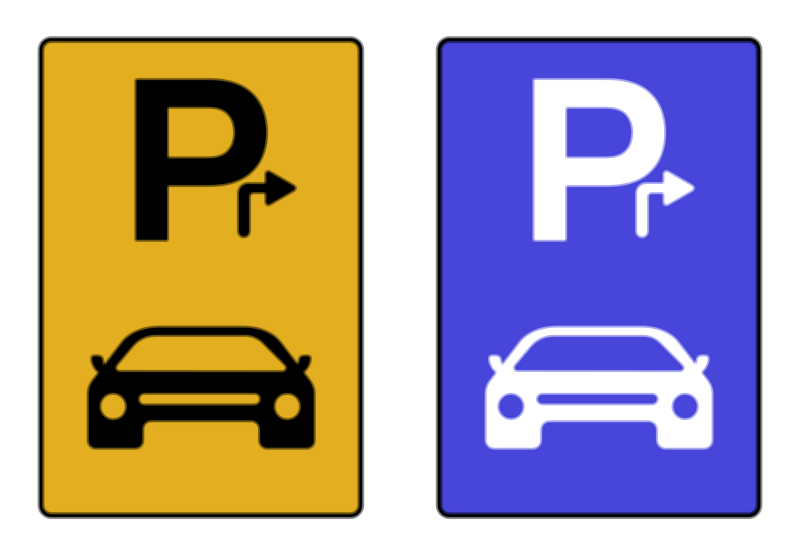
A No Two Wheeler, Three or Four Wheeler Parking sign is one of the most comprehensive traffic restriction symbols used to protect spaces that cannot tolerate blockage from any category of motorized vehicle. In a vector illustration, this sign typically brings together a unified prohibition icon that applies to motorcycles, scooters, mopeds, auto-rickshaws, tuk-tuks, compact cargo trikes, cars, jeeps, vans, and SUVs, and while the artwork may appear simple, the depth of meaning behind it represents an entire philosophy of organized public movement and protected access. The symbol is engineered to communicate that under no circumstances may any wheeled motor vehicle be parked in the protected zone. Visually, the design often features a red circular prohibition border combined with silhouettes of multiple vehicle types or a single diagonal slash striking across a grouped vehicle icon. Some renderings use a boldened “P” crossed out with small icons of a bike, three-wheeler, and car placed around it to remove every possibility of ambiguity. The red border represents universal restriction in traffic language, the diagonal slash expresses the rejection of the action being illustrated, and the clustered icons of different vehicle types make clear that the rule applies to all common motor vehicles and not to a single category. The clean precision of a vector illustration allows this message to remain instantly recognizable whether displayed on a roadside board, printed on building facades, projected in smart parking systems, used in architectural mapping, or integrated into navigation apps. Beneath the simplicity of the design lies the expectation that this protected space must remain vacant for safety, emergency access, pedestrian comfort, building usability, and citywide mobility.
The placement of such a complete restriction sign is not random; it emerges from situations where any vehicle—whether small or large—poses a disruptive or dangerous obstruction. Two-wheelers can sneak into narrow areas, three-wheelers can pause at pickup points to wait for passengers, and four-wheelers can take up significant curb width, yet all three share the same potential to disturb a safety-critical access corridor when parked improperly. Therefore, a location assigned this sign is one where movement is strictly more valuable than storage. These zones include entrances to buildings, hospital emergency points, ambulance driveways, school pickup gates, narrow residential lanes, public transportation nodes, commercial loading docks, fire lanes, basement parking access points, stairway approaches, wheelchair ramps, evacuation corridors, and driveway exits. In such environments, even a single motor vehicle left “just for a few minutes” can trigger a chain of hazardous consequences. Pedestrian flow becomes unpredictable as people are forced around the obstruction. Children stepping out from behind a parked vehicle lose visibility to approaching drivers. Cyclists are pushed into moving traffic. Walking lanes turn into improvised detours. Drivers approaching the restricted area must make sudden decisions rather than smooth adjustments because the road no longer behaves as expected. The sign therefore preserves the continuity of human and vehicular movement, treating the protected space not as optional convenience but as essential infrastructure.
The sign holds enormous importance in emergency access planning. In crises, every second matters, and the entrance to a building or facility must be available without negotiation or delay. Firefighters cannot deploy hoses if a vehicle is blocking the exact point where equipment must be laid out. Paramedics cannot unload stretchers if ambulances are forced to stop away from the emergency entrance because a two-wheeler or three-wheeler is parked under the canopy where patients should be transferred. Police officers attempting to respond quickly to a threat, accident, or security call cannot be delayed by vehicles converging around the spot that should remain clear. Evacuation procedures depend on protected access points where residents can leave a building safely and where emergency teams can enter at the same moment. A sign that prohibits three specific classes of road vehicle does not provide the level of strictness required for high-risk contexts because drivers of vehicles in unmentioned categories may still feel justified in parking there. A complete parking restriction sign exists because the zone is crucial not only for smooth daily movement but also for life-safety response.
The sign also protects the daily biomechanics of pedestrian movement. An entrance or curb area directly in front of a building is not merely an ornamental part of architecture; it is the location where people of all ages, conditions, and physical abilities perform high-concentration navigation tasks. They arrive carrying heavy bags, guiding children, pushing strollers, holding umbrellas, supporting elderly family members, or walking while visually impaired. When the entrance remains clear, it acts as a moment of spatial relief and predictable guidance. When motorcycles, auto-rickshaws, and cars are parked in this area, even briefly, people must weave around them, often stepping between moving traffic and building entrance zones in a way that removes the safe separation urban design normally provides. For the physically vulnerable, this is more than inconvenience—it transforms a predictable passage into a hazard. The sign therefore serves as a guardian of pedestrian dignity and physical comfort, preserving the fluidity and safety of walking routes that often go unrecognized until they are obstructed.
Accessibility expands the sign’s importance beyond general safety. Many modern buildings incorporate ramps, tactile floor guidance, sliding doors, expanded curbs, wheelchair gradients, and protected boarding spaces that enable equal access for individuals with disabilities. When motorcycles, cargo trikes, or cars are parked across such features, the resulting obstruction is total; no amount of skill or determination can compensate for the blocked passage. A person using a wheelchair cannot squeeze past a compact motorcycle parked on a ramp. A visually impaired person cannot rely on tactile guidance lines when they are cut off by a parked auto-rickshaw. A person with limited leg strength cannot make difficult detours around cars obstructing the main access point. The No Two Wheeler, Three or Four Wheeler Parking sign therefore upholds the reality of accessibility rather than the ideal. It ensures that inclusive design continues functioning in daily life by defending the pathways created for those who rely on them most.
From the standpoint of urban logistics and economic life, this sign protects the flow of commercial operations. In dense business zones, markets, industrial hubs, and delivery corridors, parking of any motorized vehicle in the wrong location triggers disruptions that ripple outward. A courier may be unable to reach a store entrance. A goods van may be forced to unload from unsafe distances. A supply chain may fall behind schedule because the loading dock is obstructed by bikes or auto-rickshaws. A customer hesitating to enter a shop due to blocked visibility or crowded footpaths may choose to go elsewhere. Event venues, hotels, and office towers suffer large-scale passenger movement issues when entrances are obstructed by different types of motor vehicles stopping or idling in a space that should remain clear. By ensuring that the protected area remains completely free of stationary vehicles, the sign sustains economic fluidity and workplace efficiency, reinforcing that safe access is also a foundation of commercial success.
Traffic management science further validates the placement of this sign by demonstrating that the reliability of road systems depends heavily on predictability. If drivers occasionally block a zone meant for movement, others begin to imitate the behavior. A location that once held only a single illegally parked motorbike may rapidly turn into a cluster of bikes, auto-rickshaws, and cars attempting to claim space. A sidewalk disappears, a curb vanishes behind a wall of vehicles, and an entrance morphs into an improvised parking lot. At that moment, enforcement becomes conflict-driven rather than proactive. The complete parking prohibition sign eliminates ambiguity before this escalation begins by stating that no category of common vehicle is permitted to park here at any time. It does not depend on subjective interpretation. It communicates consistency that strengthens order rather than allowing disorder to grow in the cracks of uncertainty.
In today’s digital mobility era, the sign extends beyond roadside metal boards into smart parking software, navigation applications, delivery-routing systems, and autonomous mobility frameworks. Ride-sharing and goods-delivery systems incorporate no-parking zones into their logic to prevent drivers from stopping illegally near restricted points. Computer vision tools in municipal surveillance systems identify the symbol to determine restricted parking areas for automated enforcement. Autonomous vehicles detect the symbol and update their behavior, ensuring that they do not wait, idle, or drop passengers in the safety-protected zone. The clarity of vector artwork ensures that the sign retains its identity no matter how it is displayed—physically or digitally—creating a consistent visual pattern for both humans and machines.
At the deepest level, the No Two Wheeler, Three or Four Wheeler Parking sign conveys a moral and social meaning disguised as a traffic instruction. Parking in a prohibited space may feel convenient to the driver, but the cost of that convenience is transferred to strangers—children placed at risk, emergency workers delayed, businesses disrupted, disabled individuals blocked from access, residents forced into conflict, and pedestrians displaced into traffic. Choosing not to park in such spaces protects people who will never know that their safety depended on that decision. The sign is therefore not simply a rule of traffic; it is a representation of shared responsibility and recognition that public spaces remain safe only when individuals consider the needs of others alongside their own convenience.
Thus, although the vector artwork of the sign contains only red borders, slashes, and grouped vehicle silhouettes, the meaning behind it reaches into the heart of how human movement, safety, architecture, emergency response, commerce, and social cooperation coexist. It ensures that entrances stay open, sidewalks stay walkable, accessibility remains intact, emergency action remains unhindered, and the built environment remains predictable and humane for all its users. It is a silent but powerful instrument that transforms what could become a point of friction into a space of protection and shared order every single day.