No Parking for Four Wheeler — Traffic Safety and Vehicle Restriction Sign
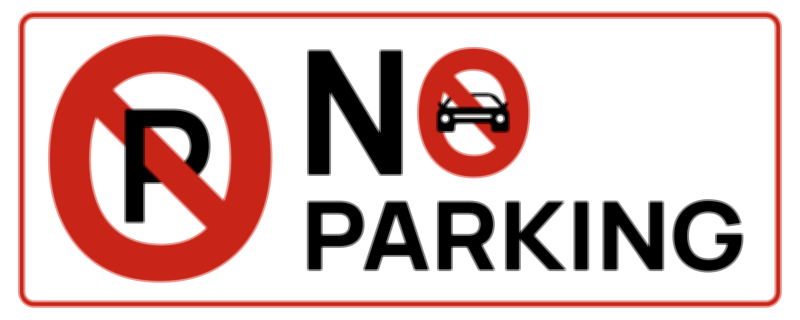
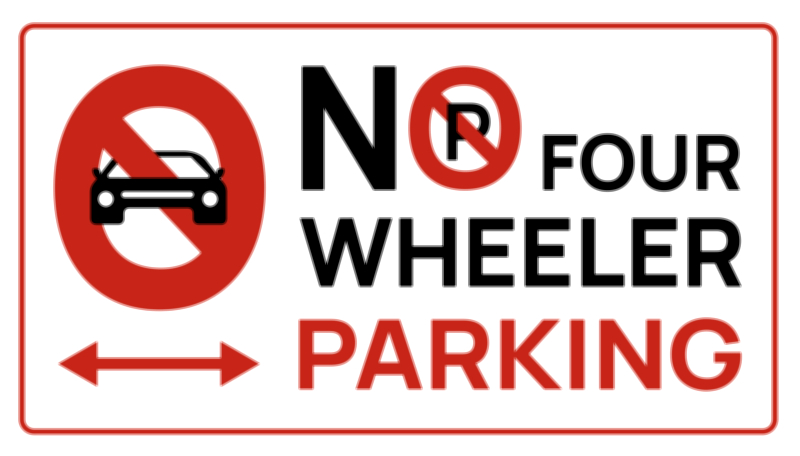
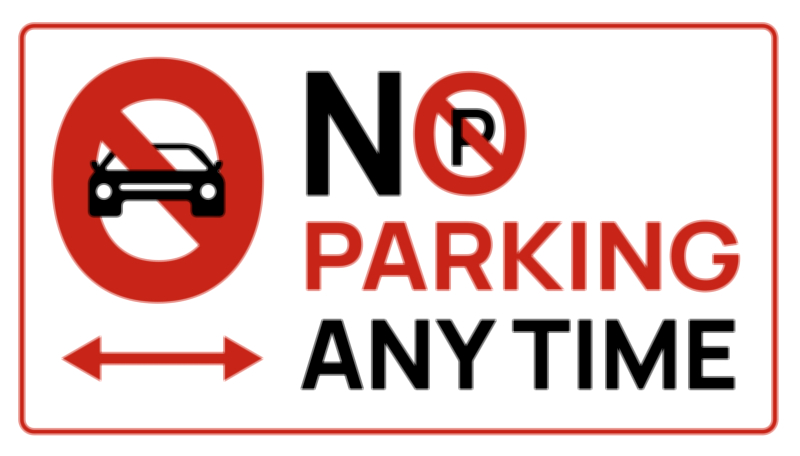
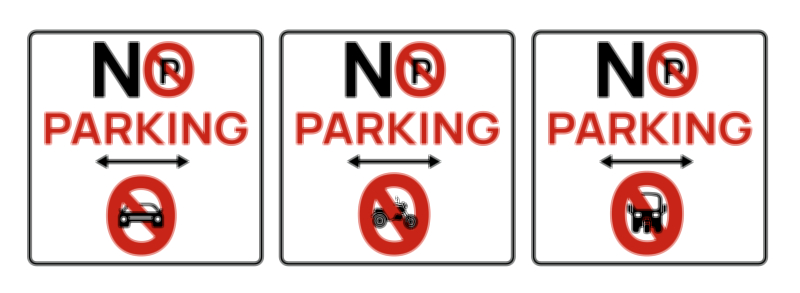
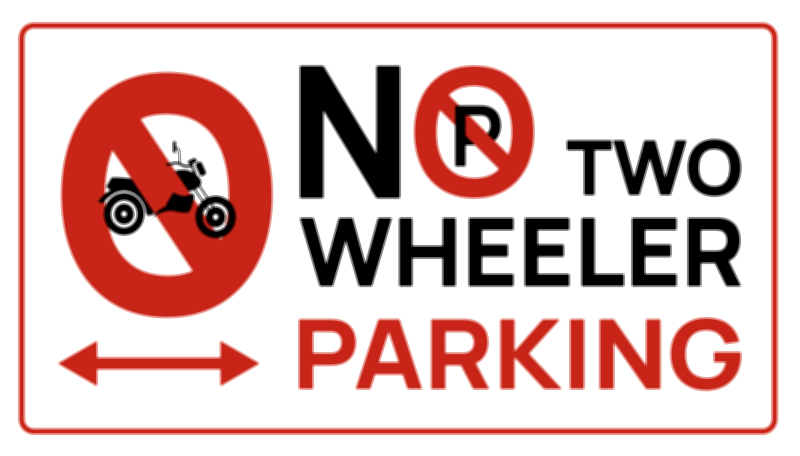
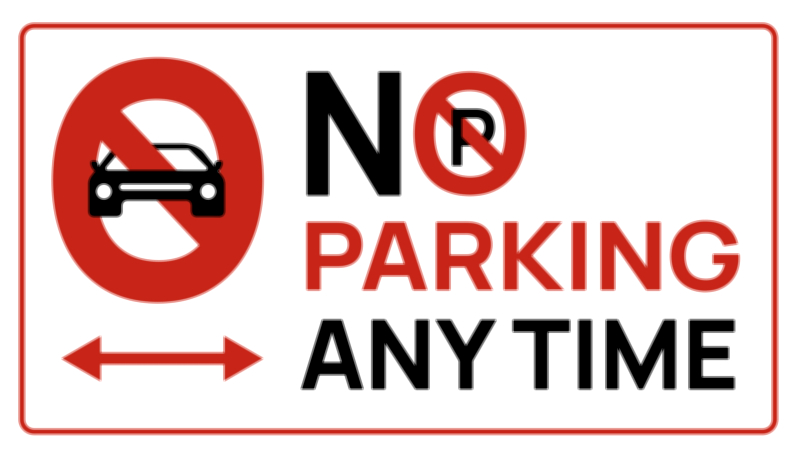
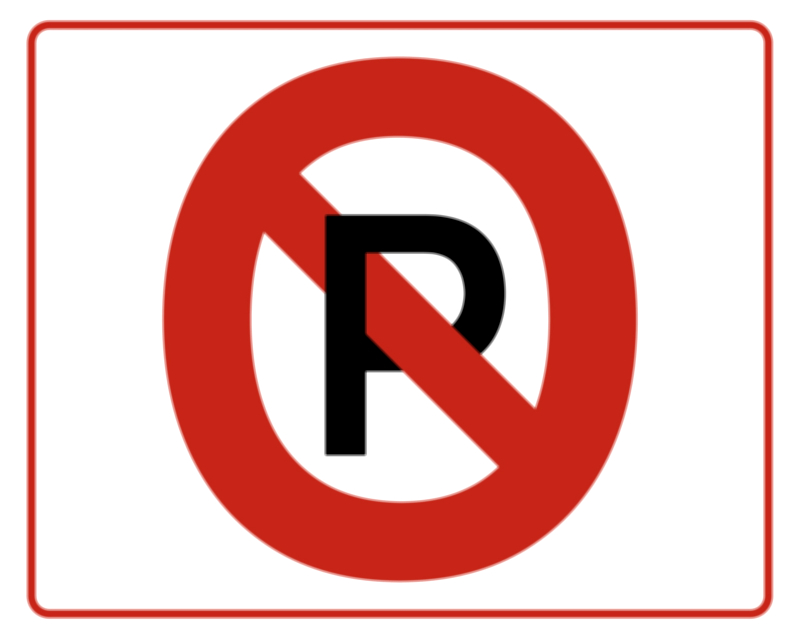
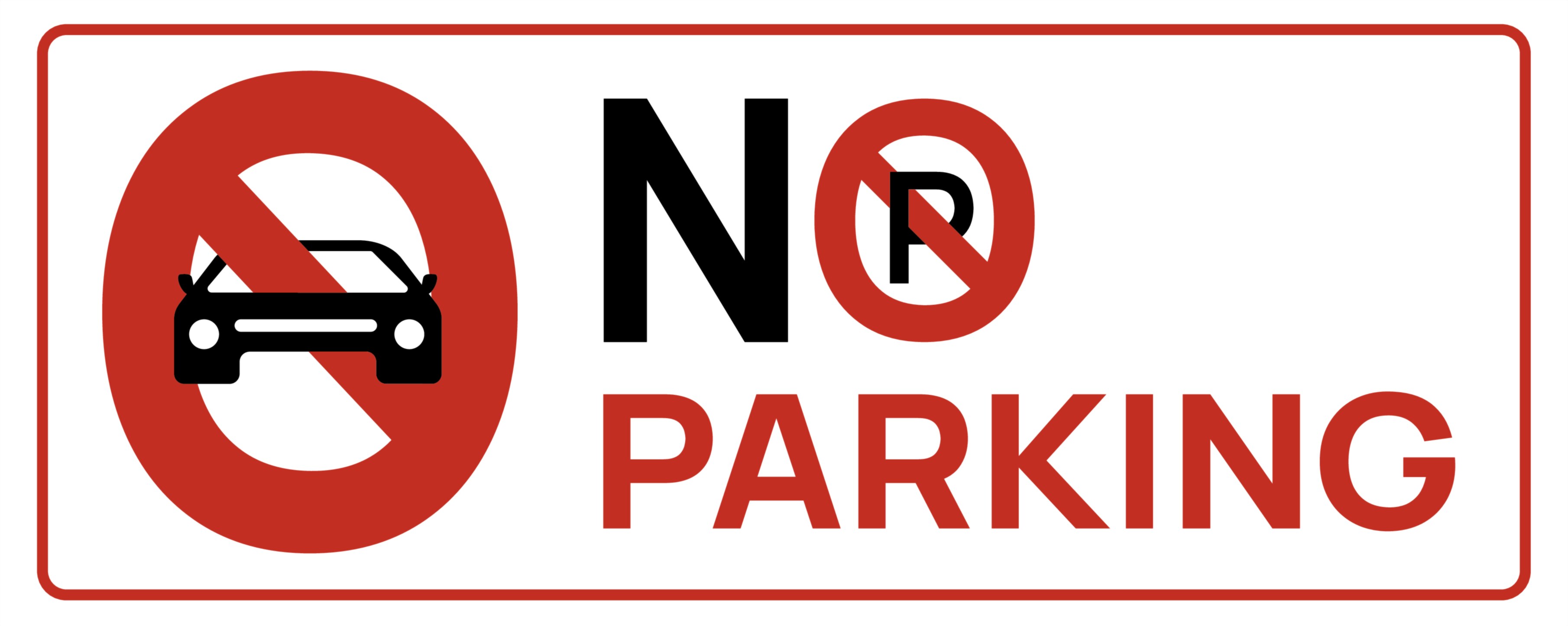
A No Parking for Four Wheeler sign is far more than a roadside graphic that warns drivers against stopping their cars in a particular zone; it is a critical component of organized traffic regulation, pedestrian protection, accessibility planning, and emergency safety infrastructure within modern transportation systems. In a vector illustration, the sign usually appears as a red circular prohibition symbol placed over the silhouette of a car or as a bold diagonal red slash cutting across the outline of a four-wheeler, and the precision with which these shapes and colors are rendered is not merely aesthetic but the result of studied visual engineering intended to ensure immediate comprehension by any driver long before they have time to slow down, observe text, or ask someone for clarification. The red color signals universal prohibition, the circle represents authority in road regulatory language, and the diagonal bar translates unmistakably to “this specific activity is forbidden.” What distinguishes this symbol from a general No Parking sign is the inclusion of the car silhouette, which ensures that the restriction applies specifically to four-wheelers such as cars, jeeps, vans, and SUVs, especially in regions where two-wheelers or bicycles may still be allowed to stop for brief periods. This clarity is crucial in countries where mixed-vehicle traffic dominates city streets, and where thousands of drivers must be guided by symbols rather than text to prevent confusion, mistakes, and collisions. In its vector form, the No Parking for Four Wheeler sign becomes an essential visual language of road safety capable of being printed on billboards, signboards, architectural plans, mobile navigation apps, and digital parking management platforms while preserving its meaning with absolute consistency across all sizes and screens.
The placement of the No Parking for Four Wheeler sign is determined not by convenience but by a thorough understanding of traffic density, lane width, pedestrian flow, accident records, and emergency access needs. A four-wheeler parked in a restricted area, even for a matter of minutes, has the potential to disrupt the carefully balanced movement patterns that allow roads to function safely and efficiently. Cars occupy considerable width compared to two-wheelers, and when left roadside in narrow streets, market lanes, school zones, hospital entrances, apartment complexes, and near intersections, they drastically reduce the active width of the motorable road. This forces moving traffic into sudden lane shifts, increases the risk of sideswipe accidents, creates blind corners, and compels pedestrians—especially children and elderly people—to step off sidewalks into active traffic lanes in order to navigate around the obstruction. A single four-wheeler improperly parked near a turning point can hide an entire pedestrian crossing from the line of sight of an approaching driver, transforming a normally safe crossing into a high-risk zone. In urban environments where road space is already scarce and demand for mobility is high, the presence of a parked four-wheeler at a prohibited location becomes not just an inconvenience but a serious threat to public safety, visibility, and continuity of traffic flow. The No Parking for Four Wheeler sign prevents these cascading hazards by marking specific areas where four-wheeler parking has been proven through analysis and experience to be too dangerous to permit.
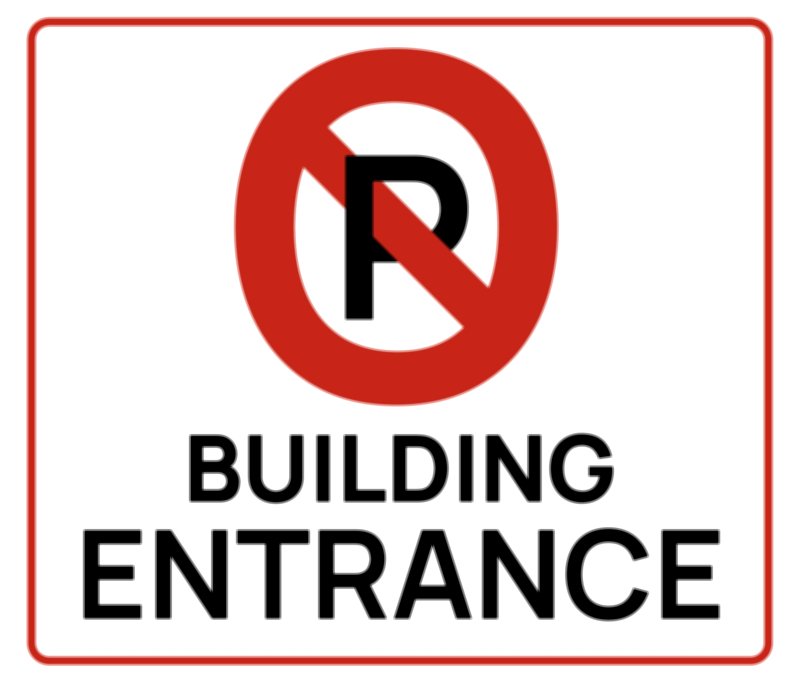
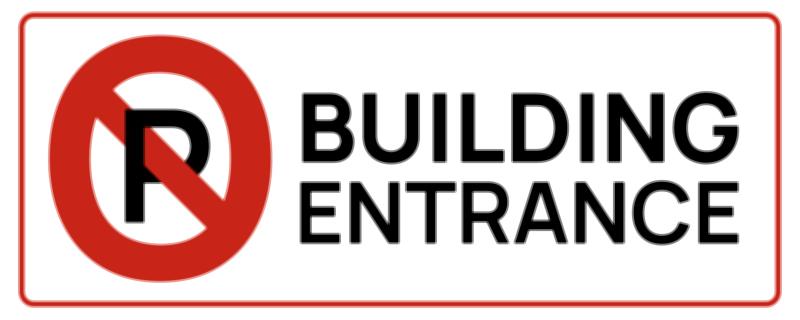
The sign also plays a vital role in ensuring fast and unhindered emergency access. Hospitals, clinics, fire stations, ambulatory entrances, disaster-response zones, and high-density residential complexes rely on the guarantee that designated points remain permanently open for emergency vehicles to approach, halt, and operate without delay. A car parked directly in front of an emergency gate, hydrant, or drop-off zone can prevent paramedics from reaching a patient in time, delay firefighters attempting to deploy equipment, or force evacuation procedures to be rerouted at a moment when every second counts. For this reason, No Parking for Four Wheeler signs are often installed alongside tow-away warnings or painted curbs, reinforcing the priority of emergency access over private convenience. Even in settings that do not regularly experience emergencies, such as office complexes, malls, industrial units, and community centers, the space near entrances must remain unobstructed for evacuation drills, security checks, wheelchair movement, and public safety management. The symbol subtly but decisively strengthens the invisible safety network we rely on every day, doing so without drawing attention to itself until the necessity of its presence becomes undeniable.
Commercial and logistical activities also depend heavily on the zones protected by this signage. Delivery trucks, courier personnel, maintenance workers, loading and unloading vehicles, and service providers rely on designated accessways to complete their tasks efficiently and safely. When a four-wheeler disregards the sign and occupies a protected space, operational productivity suffers across multiple layers: delivery schedules fall behind, trucks double-park on main roads, loading teams carry heavy cargo across unsafe distances, and businesses lose time and revenue due to preventable delays. In high-traffic commercial districts, a blocked loading zone can back up an entire supply chain for dozens of nearby stores and service points. Similarly, in residential complexes and educational institutions, a four-wheeler parked in the wrong place forces school buses, vans, and service vehicles to stop far from the designated area, creating hazardous road congestions where children and residents must walk between moving vehicles. The No Parking for Four Wheeler sign becomes the silent mediator of this daily choreography, protecting curb space where movement—not storage—is the priority.
Accessibility and inclusive mobility are equally strengthened by this sign. Modern building design includes wheelchair ramps, tactile paving, stroller-friendly slopes, widened curb spaces, pedestrian waiting areas, and accessible vehicle boarding points. A single car blocking such features can erase the independence of a mobility-impaired person, forcing them into unsafe and undignified detours that undermine their right to navigate public spaces safely and freely. The sign therefore becomes an expression of social respect toward people who depend on supportive design features. It maintains the usability of accessibility pathways for disabled individuals, senior citizens, parents with toddlers, and anyone who requires a safe and uninterrupted transition between pedestrian zones and building entrances. The presence and enforcement of the No Parking for Four Wheeler symbol help convert the principle of accessibility into a lived reality.
Digital mobility systems have expanded the scope of this signage from physical signboards into algorithm-based traffic support. Parking management apps, GPS navigation tools, smart-garage systems, and even autonomous vehicles now rely on digital libraries of parking and stopping restrictions. A vector illustration of the No Parking for Four Wheeler sign becomes data that informs route planning, drop-off selection, parking suggestions, and violation-prevention notifications. Drivers receive alerts not only when they reach a restricted zone but sometimes before they even decide where to stop, preventing unintentional rule-breaking. Smart cities integrate camera-based and sensor-based enforcement to monitor No Parking zones automatically and trigger interventions to preserve safety and access. Once again, the symbol remains simple and recognizable, yet its modern influence stretches into the increasingly automated architecture of transportation.
At its deepest level, the No Parking for Four Wheeler sign represents a compact of social responsibility. Obeying the sign signals respect for shared public space, recognition of the safety of pedestrians, acknowledgment of the needs of emergency responders, and consideration for the comfort and mobility of others who use the road. Violating the sign may offer private convenience for a moment, but the cost of that convenience is transferred to strangers—someone delayed, someone endangered, someone forced into an unsafe path, or someone denied direct access to medical help. When people collectively obey the sign, traffic systems feel smooth and supportive; when they ignore it, disorder creeps in, and the weakest road users suffer most. Thus, a No Parking for Four Wheeler sign is not simply a graphic that says “do not park here”; it is a visual guardian of safety, efficiency, accessibility, fairness, emergency readiness, and communal respect. Its vector illustration may consist only of a circular outline, a slash, and the simple shape of a car, but these elements together communicate expectations that enable cities to function, buildings to remain accessible, pedestrians to stay protected, emergency responders to operate freely, and society to share space with predictability and harmony.