Four Wheeler Parking Lot — Car Parking Zone and Vehicle Management Sign
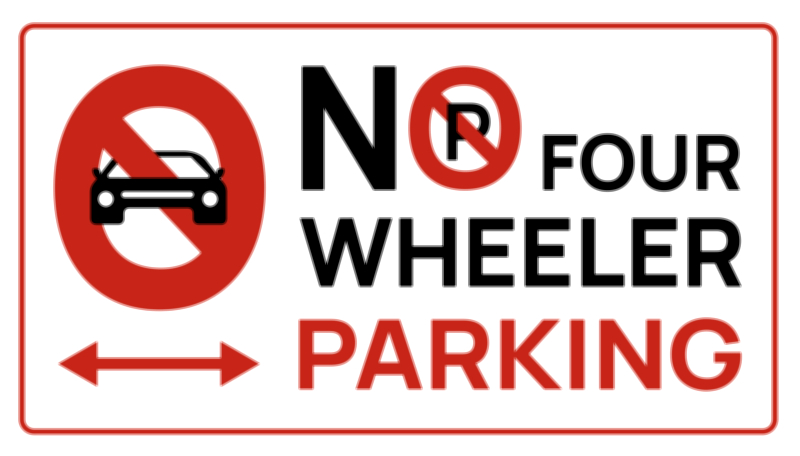
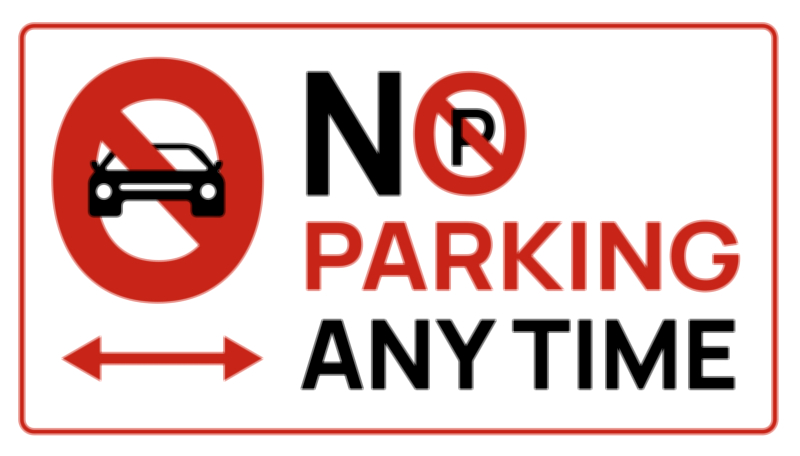
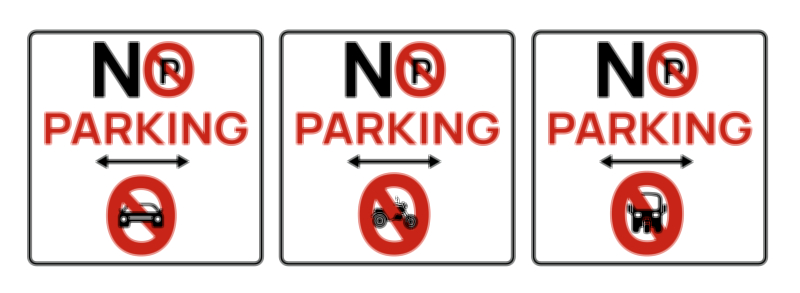
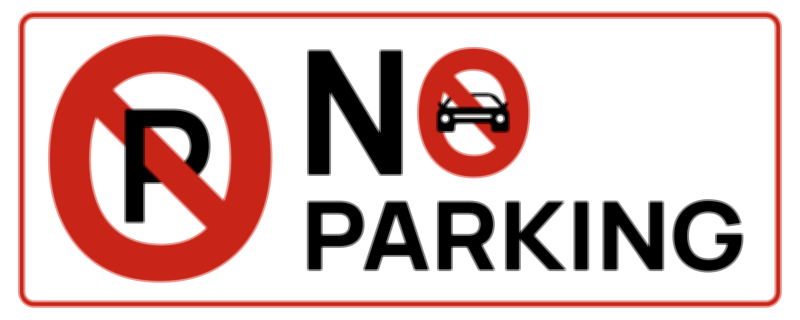
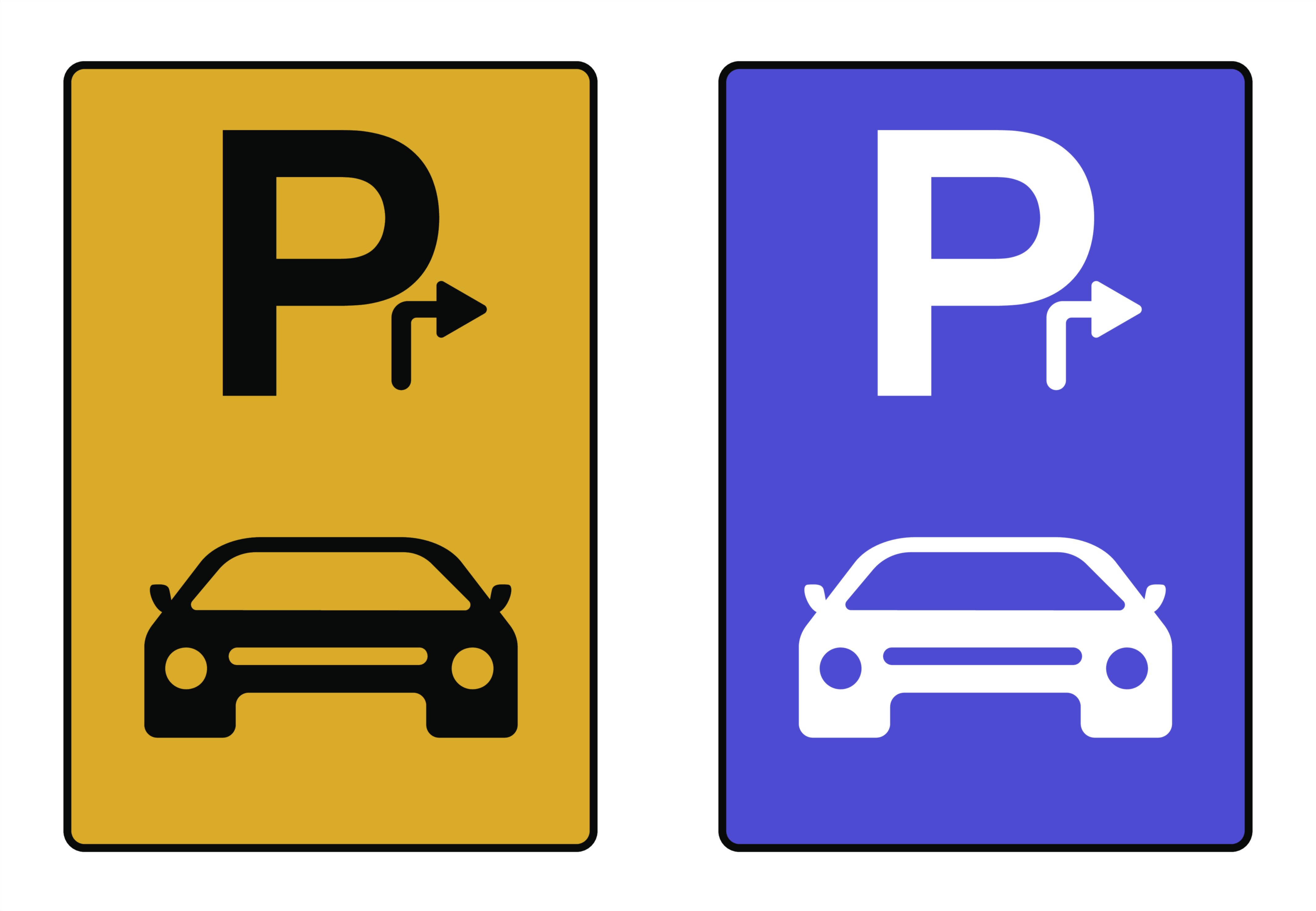
A Four Wheeler Parking Lot sign might seem, at first glance, like a simple visual cue that directs drivers of cars, jeeps, vans, and SUVs toward a place where they may legally and safely leave their vehicles, yet in reality the sign holds far greater architectural, logistical, and urban-planning significance than its minimalist vector illustration suggests. In its visual form, the sign is normally presented with a clean silhouette of a car placed inside a stylized “P” symbol or a designated boundary graphic that communicates permission rather than prohibition, and the vector format is designed with geometric precision, balanced line weights, and strong visual clarity to ensure that drivers recognize instantly that this area has been intentionally reserved for four-wheeled motor vehicles. The purpose behind this graphic simplicity is not merely aesthetic; it is a system of communication engineered to remove hesitation for the driver, eliminate ambiguity about whether a space can be used, and support safe and organized movement of cars in environments that depend on orderly parking behavior. The Four Wheeler Parking Lot sign is most often placed in specific locations not because parking is simply allowed there but because that zone has been evaluated and engineered to accommodate the physical footprint, turning radius, and loading characteristics of large private and commercial automobiles without harming the smooth functioning of surrounding pedestrian, commercial, emergency, and transportation systems.
The full meaning of the sign becomes clearer when examining what happens in city spaces that lack designated zones for parked cars. Cars that are left randomly on curbsides, in front of storefronts, near school gates, at hospital entrances, or on narrow streets with mixed traffic convert pathways designed for flow into pathways choked by obstruction. Without designated parking signage, drivers search instinctively for space in areas of personal convenience rather than collective safety, leading to improvised parking that shrinks available road width, forces buses and other cars into sudden lane shifts, hides pedestrians attempting to cross the street, interferes with cyclists’ protected paths, and creates bottlenecks that ripple backward into traffic congestion. Even a single incorrectly parked car can pressure others into imitation, transforming a sidewalk or building entrance into an unintended cluster of vehicles. The Four Wheeler Parking Lot sign prevents these outcomes not by punishing vehicle owners but by providing a clearly marked and strategically chosen place where parking will not interfere with public safety, movement visibility, doorway accessibility, or emergency response. For the driver, the sign offers reassurance that the chosen space is appropriate; for the city around the driver, the sign functions as a structural safety valve that absorbs demand for parking rather than allowing it to spill into critical movement corridors.
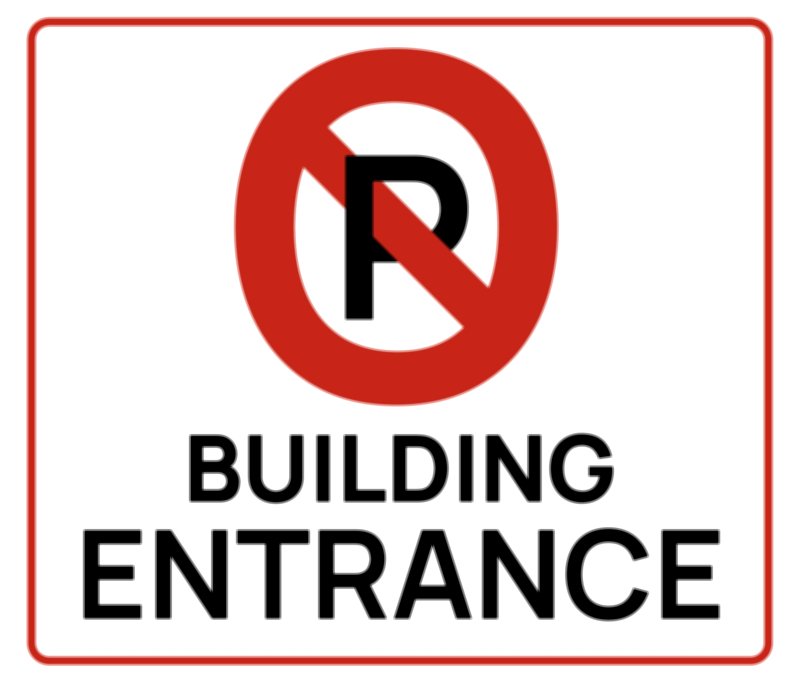
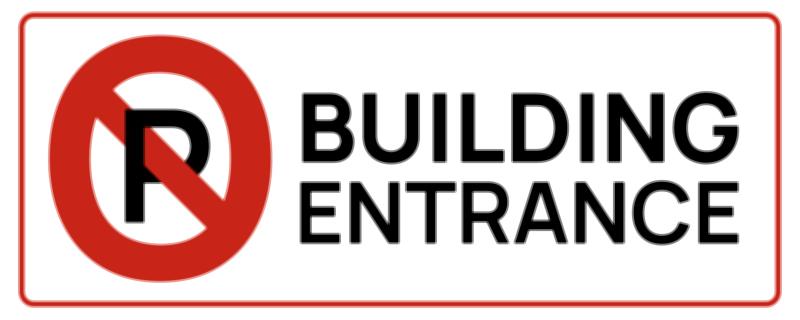
The sign also plays a central role in how entranceways and building approaches maintain their intended function. In many environments, especially places where people arrive in large numbers—schools, shopping centers, residential complexes, office buildings, hospitals, transport hubs, and event venues—the entrance is an orchestrated transition point between foot traffic and vehicular access. If cars group near entrances because parking zones are not well marked, families, children, senior citizens, wheelchair users, and individuals walking from public transit are forced to weave among stationary vehicles, and the separation that urban design creates between moving cars and walking humans collapses. When a properly placed Four Wheeler Parking Lot sign is used, vehicles gravitate toward a safe and structured holding zone, leaving sidewalks, ramps, stairs, and doors open for pedestrians to move freely and predictably. This not only reduces the risk of injury but also preserves the welcoming atmosphere and comfort of buildings that depend on stress-free arrival experiences. In institutions like hospitals or schools, such predictability becomes essential because vulnerable groups cannot be expected to navigate complex or unsafe vehicle-dominated spaces.
The sign further protects critical emergency processes that rely on dependable access. Fire lanes, ambulance docking spaces, hydrants, disaster evacuation gates, loading zones for emergency equipment, and entrances used by first responders must remain open every moment of every day. When cars drift toward those spaces due to lack of clear parking instructions elsewhere, seconds are lost that cannot be recovered in moments of crisis. A stretched timeline for an ambulance due to parked cars, even by a minute, can alter survival outcomes for a patient. Firefighters cannot afford to reposition trucks or extend heavy hoses around parked vehicles while a structure burns. During evacuations, a blocked exit zone turns an organized path to safety into a dangerous bottleneck. The Four Wheeler Parking Lot sign silently protects the network of emergency readiness by removing uncertainty for drivers and by guiding vehicles toward zones where their presence will not compromise emergency access. The sign does not merely allocate parking; it preserves the openings that society may not notice every day but relies on completely when disaster strikes.
Commercial and economic efficiency are also deeply supported by the presence of this sign. Urban supply systems depend on predictable curb management, whether for delivery trucks, courier services, cleaning crews, maintenance personnel, or customer approach routes. A poorly parked car at the wrong location can block an unloading gate, consume the turning radius needed for a goods carrier, slow down inventory movement into a storefront, or obscure shop entrances from customer view. This interference can accumulate rapidly, turning what should be smooth logistics into avoidable operational delays. Conversely, a clearly marked Four Wheeler Parking Lot sign encourages cars to settle in zones that do not obstruct deliveries and do not overlap with commercial logistics pathways. Customers who arrive by car can park without guessing or stopping in unsafe areas, while businesses retain clear access for supplies and workers. Order in parking supports order in trade, and the sign acts as a small but powerful anchor of urban economic efficiency.
The role of the sign expands further when considering accessibility. Inclusive mobility requires that buildings and public spaces support independent use by people of all physical strengths and needs. Wheelchair ramps, tactile guiding surfaces, anti-slip floor finishes, widened doors, stroller-friendly entrances, and low-gradient sidewalks exist to remove physical barriers, yet these features become unusable if cars park near or across them. A Four Wheeler Parking Lot sign provides an alternative to the temptation of stopping near accessibility features by giving drivers a clear destination where the parking demand can be satisfied without encroaching on accessibility infrastructure. When cars follow this guidance, accessibility becomes a reality rather than an architectural ideal. It protects the independence and autonomy of people who deserve equal access rather than forcing them to ask drivers to move or to navigate unsafe detours created by parked vehicles.
Traffic engineering further validates why this sign is essential for urban stability. Modern traffic planning is not solely about enabling movement; it is about ensuring predictability. When drivers know exactly where to park, they no longer suspend their decision-making until the last second while circling congested corridors. This reduces impulsive lane changes, sudden stops, and erratic maneuvering, which are leading contributors to urban collisions. The Four Wheeler Parking Lot sign absorbs parking patterns in a planned manner and keeps road behavior predictable, which is one of the highest priorities in transportation science. Predictability decreases collision risk, prevents bottlenecks, preserves travel time efficiency, reduces stress among drivers, and lowers fuel consumption caused by cars circling in search of an uncertain spot.
In the era of smart mobility, the role of the sign extends beyond the physical world of painted boards and into the digital architecture of movement. Navigation services, GPS assistants, ride-sharing systems, and delivery-fleet management tools incorporate designated parking lots into route guidance algorithms. By directing vehicles toward known parking locations—many of them marked by vector-icon identifiers—the sign reduces the likelihood that drivers will block pathways while searching for space. Parking-management apps use this zone to calculate real-time occupancy and availability, informing drivers even before they arrive. Meanwhile, autonomous and semi-autonomous vehicles depend heavily on sign recognition to determine where stopping or waiting is permitted. The clarity of the vector illustration ensures that both humans and machines can interpret the symbol instantaneously, making the sign part of the evolving language of automated mobility.
At the social level, the Four Wheeler Parking Lot sign represents more than traffic control; it represents a shared ethic of respect for common space. When a driver follows the signage and parks in the designated zone instead of pushing their vehicle into the nearest convenience point, they express consideration for the safety and comfort of pedestrians, children, disabled individuals, emergency responders, shop owners, delivery workers, and other drivers who depend on unobstructed corridors. When signs are ignored, disorder expands outward: space becomes contested, movement becomes unpredictable, and safety becomes fragile. Through consistent guidance and predictable placement, this sign transforms what might otherwise be a source of friction into a system of fairness—everyone gains access without anyone imposing inconvenience on others.
Ultimately, the vector illustration of the Four Wheeler Parking Lot sign captures within its simple lines a complete understanding of how modern cities balance mobility, safety, emergency readiness, accessibility, commerce, and social harmony. It does not merely tell a driver where to park; it shapes how the city moves, protects how the city breathes, and organizes how people and machines coexist. When drivers follow the sign, they are not only complying with regulation but participating in a collective effort that keeps the entranceways open, sidewalks walkable, roadways fluid, businesses efficient, emergency teams unhindered, and neighborhoods comfortable for everyone who uses them. The design may be visually minimal, but its influence is profound: it ensures that the presence of four-wheeled vehicles remains controlled, safe, and beneficial rather than disruptive to the shared spaces through which daily life continually flows.