Building Entrance No Parking — Traffic Safety and Access Control Sign
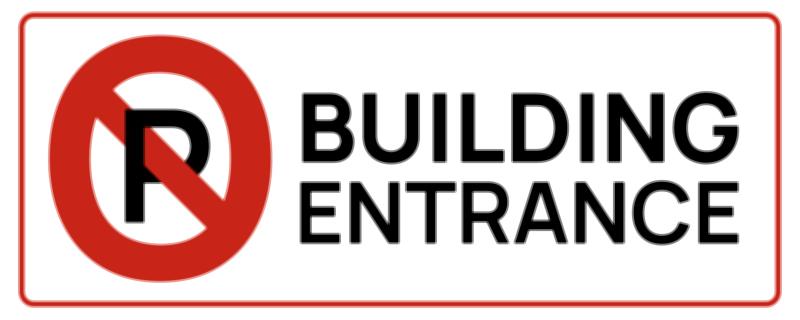
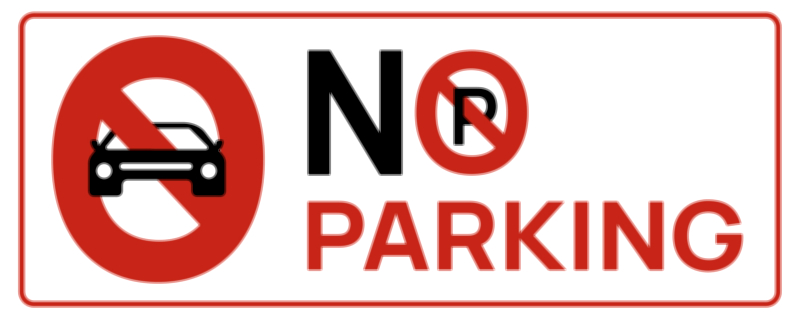
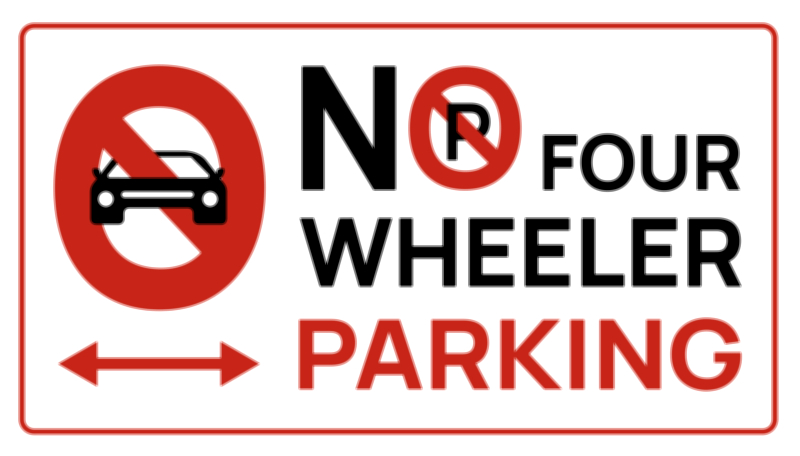
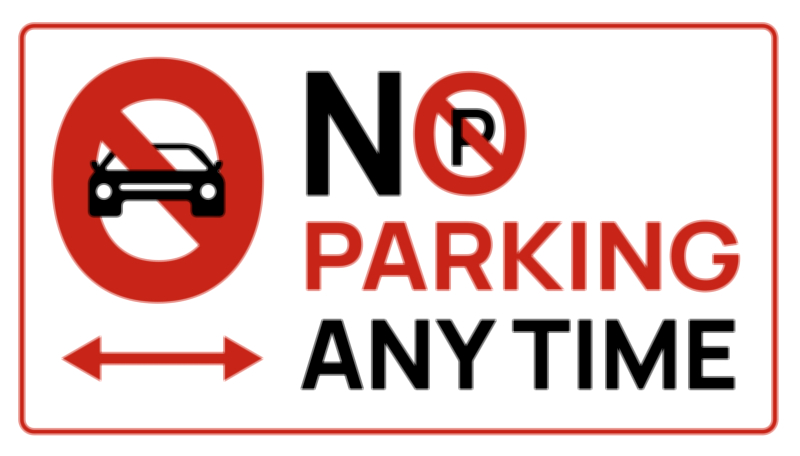
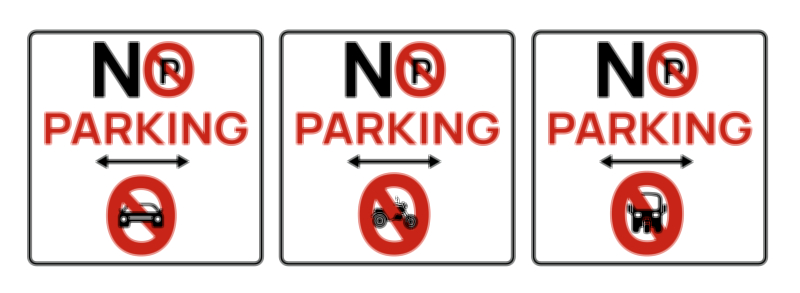
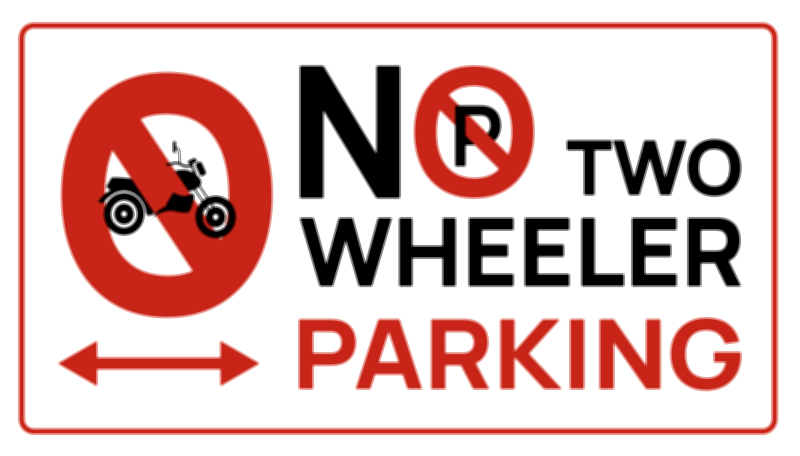
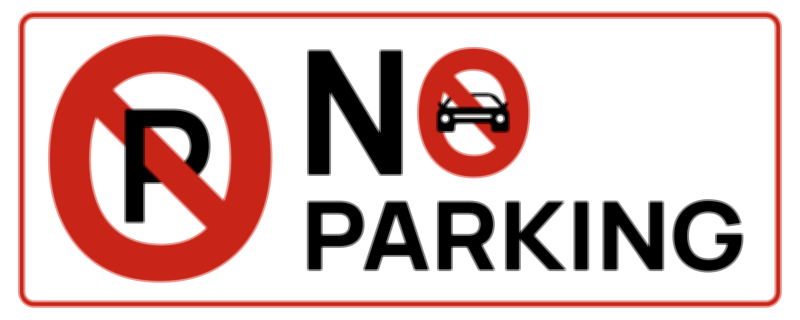
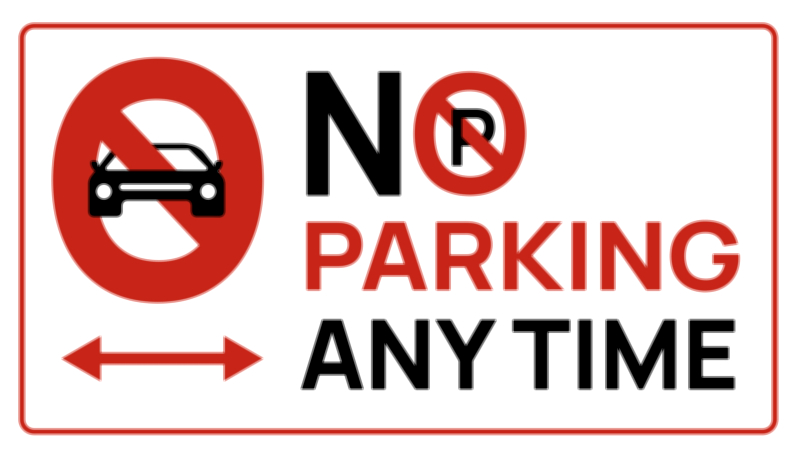
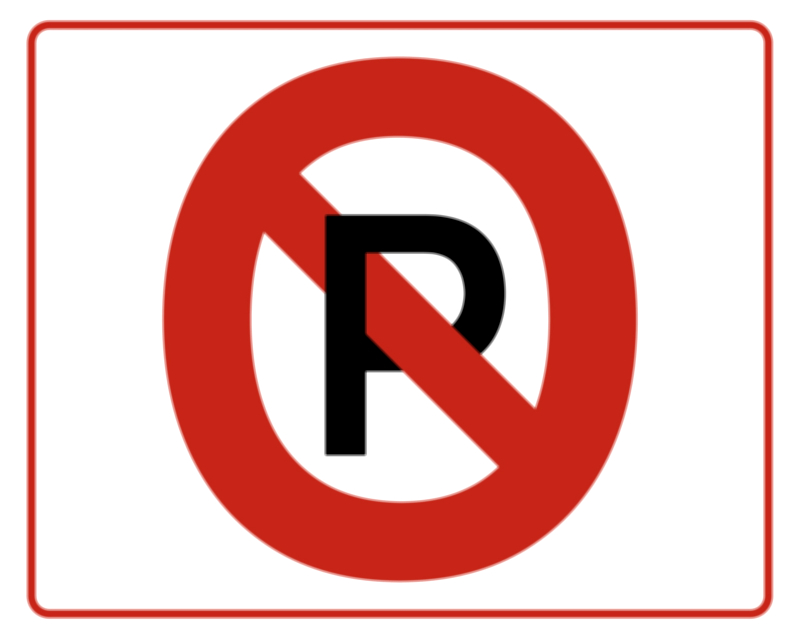
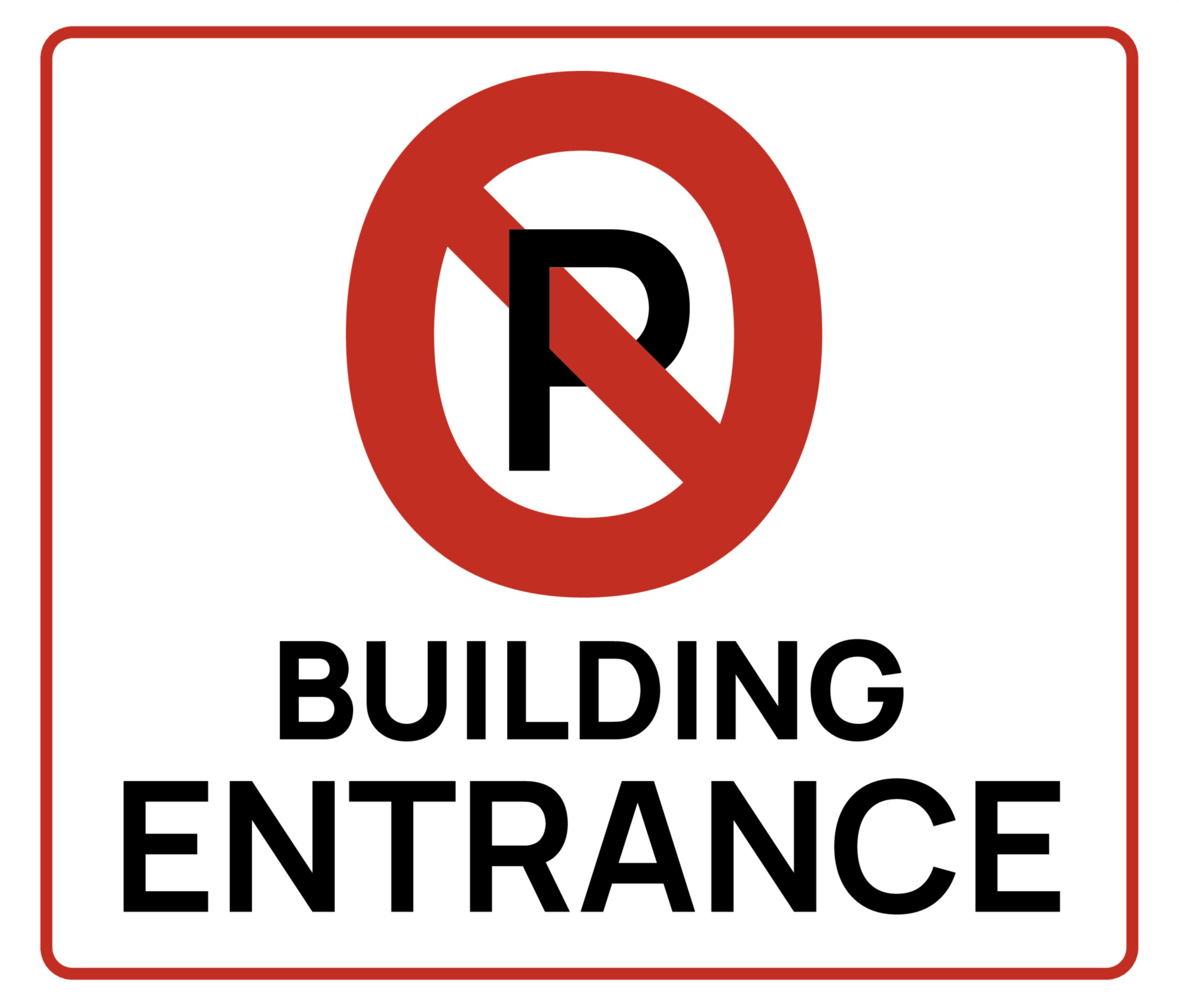
A Building Entrance No Parking sign may appear at first to be a straightforward instruction intended to prevent drivers from leaving their vehicles in front of an entryway, but the meaning embodied in this symbol reaches far beyond the simple prohibition of parking. In a vector illustration format, the sign typically features a bold red circular border, a diagonal slash cutting across the letter “P,” or alternately a clear red prohibition bar over the words “No Parking” with a silhouette of a vehicle near a doorway or entry icon. The colors, shapes, and typography are not aesthetic choices but carefully engineered communication tools designed to transmit a message instantly to any driver, regardless of language, literacy level, or cultural background. The red border universally signals restriction and hazard awareness, the diagonal red slash communicates denial of an action, and the presence of a door, gate, or building silhouette visually clarifies that the prohibition specifically protects an entrance rather than a general stretch of roadway. In vector format, every line is sharp, every angle balanced, and every color contrast deliberate, because this symbol must remain legible not only on printed signage but across digital maps, navigation screens, parking management systems, and architectural plans. Its simplicity serves urgency, and its immediate recognizability ensures that drivers understand that leaving a vehicle in such an area poses safety risks and access obstruction far beyond personal inconvenience.
The presence of a Building Entrance No Parking sign is rooted in road engineering analysis, pedestrian safety design, and emergency response planning. A building entrance is not simply a door or gate; it is an access point to the interior of a structure that people must be able to reach unhindered. When a vehicle parks in front of an entrance, it obstructs not just space but movement, vision, and crucial response sequences. For residential complexes, offices, shopping centers, apartment buildings, hospitals, and educational institutions, entrances serve as high-traffic points where people continually walk, wheel strollers, push carts, carry goods, or hold mobility aids. Even a single parked vehicle can force pedestrians into the path of moving traffic, narrowing walkways, disrupting safe wheelchair passage, and increasing risk for elderly individuals or children who require unobstructed pathways. In buildings that serve the public, pedestrian safety depends on clear sightlines and predictable movement patterns, and restricting parking at entrances maintains that protective order. When the sign is respected, there is enough space for people to enter and exit comfortably; when it is ignored, the entire building frontage becomes pressured and unsafe, proving that the sign’s function forms an invisible barrier that preserves safe mobility for everyone who uses the space.
The importance of this sign becomes even more critical when emergency preparedness is considered. Fire exits, hospital entrances, disaster evacuation routes, and service access points are placed according to safety building codes, and they must remain unobstructed around the clock. A single incorrectly parked vehicle in front of a building entrance can prevent firefighters, paramedics, or rescue personnel from reaching individuals in distress quickly enough to save lives. In the event of a fire, smoke inhalation, medical emergency, or structural hazard, seconds matter, and a blocked entrance can turn an emergency into a tragedy. Fire codes and municipal regulations therefore require strict enforcement of no parking zones at building entrances, and in many jurisdictions, these signs include warnings of immediate towing or penalties because the consequences of violation are severe. The symbolism of the sign becomes deeply humanitarian when viewed from this perspective: its role is not to limit privilege but to protect the vulnerable and ensure that help can reach people when they need it most. In this sense, a Building Entrance No Parking sign is as much a lifesaving device as it is a traffic control symbol.
Commercial and logistical efficiency also depend heavily on maintaining unobstructed building entrances. Many buildings receive deliveries, shipments, and service visits that require smooth access to front entries or service docks. When private vehicles occupy these spaces illegally, delivery schedules break down, shipment vehicles cannot approach access doors, and businesses face delays that extend outward into economic loss. In shopping arcades, office complexes, and manufacturing facilities, a blocked entrance affects not just foot traffic but supply chain function. Couriers are forced to leave heavy packages far from intended drop-off points, increasing the risk of accidents and injuries. Maintenance teams cannot bring equipment where needed, delaying repairs and causing inconvenience to building occupants. In hospitality settings such as hotels and event venues, blocked entrances disrupt guest arrivals and create bottlenecks in already sensitive passenger zones. The Building Entrance No Parking sign therefore guarantees not only physical safety but predictable logistics, helping buildings operate smoothly by ensuring that entrances remain free for their intended purpose rather than being repurposed as personal parking space.
Accessibility considerations form another crucial dimension of the sign’s importance. A growing number of building entrances incorporate wheelchair ramps, tactile paving for visually impaired individuals, widened paths for mobility assistance, and automatic doors designed to serve people with disabilities. A parked car blocking such an entrance is more than an inconvenience: it denies access to individuals who depend on these features to navigate society independently. The visual cue of the No Parking sign near a building entrance is therefore not simply regulatory but inclusively protective. It preserves the dignity of individuals who require barrier-free access and ensures that society’s built spaces remain welcoming to everyone. In public service buildings such as government offices, hospitals, and community centers, this commitment to accessibility carries strong ethical weight. The sign allows these values to become enforceable, visible, and unambiguous in daily life.
The impact of the Building Entrance No Parking sign extends to fire safety beyond emergency vehicle access. Many building entrances double as designated assembly areas during fire drills or real evacuations, allowing occupants to gather in organized fashion away from immediate risk. When vehicles occupy these areas, emergency coordinators lose essential space for guiding individuals to safety. Additionally, blocked entrances can prevent exterior fire suppression systems, utility shutoffs, hydrant connections, or building sprinkler controls from being reached in time. These systems are strategically positioned according to approved architectural plans, and they are predicated on the assumption that no vehicle will obstruct the pathway to them. The No Parking sign therefore protects not just the doorway itself but the full safety infrastructure that surrounds it.
Urban mobility and city design further highlight why this symbol is necessary. In crowded metropolitan areas where roads are narrow and space is limited, vehicles parked in front of building entrances can force cyclists or pedestrians off their lanes, cause vehicles to stop unpredictably, and create cascading congestion effects. Ride-share services, taxis, goods vehicles, and private cars all interact with building entrances, and clear signage ensures that these interactions occur only where allowed. When the sign is ignored, the curbside becomes chaotic; when respected, order returns and city life flows smoothly. In dense living environments, these signs play a substantial role in maintaining coexistence among diverse forms of transportation and diverse groups of road users.
Digital transportation and autonomous mobility further magnify the importance of this signage. Navigation apps and smart traffic systems now represent No Parking zones visually through the digital equivalent of vector icons used in physical signage. Self-driving vehicles depend on these markers to determine where they may stop or wait, meaning that the sign has evolved into an intelligent transportation communication component that informs machines rather than humans alone. Smart city networks detect violations automatically and perform real-time regulation through cameras and sensors because safety is too important to rely solely on after-the-fact correction. The visual grammar of the No Parking symbol becomes the interface between infrastructure and machines at the same time that it continues to instruct human drivers. Through this dual function, the sign protects entrances from becoming traffic conflict zones in a world where human and automated mobility are becoming increasingly intertwined.
Enforcement and social responsibility also surround the meaning of the Building Entrance No Parking sign. Fines, towing, and penalties exist not to punish but to reinforce a shared understanding that ignoring the sign places others at risk. A driver may park for convenience, but the cost is transferred to vulnerable individuals, emergency responders, business operators, and every other person depending on the entrance. When the sign is followed, it becomes evidence of cooperation; when ignored, it becomes a marker of disregard for community safety. The sign therefore helps maintain civic awareness that public spaces must be shared with discipline and empathy.
A vector illustration of the Building Entrance No Parking sign captures all of this—safety, accessibility, logistical necessity, emergency readiness, and mutual respect—through a minimalist visual language. The clean geometry communicates urgency and clarity, the strong colors signify seriousness, and the imagery of a crossed-out “P” near a doorway instantly defines the area as protected. Though visually simple, this symbol manages the complex interaction between buildings and traffic, between human convenience and collective safety. It stands silently at building fronts to ensure that clear access is preserved at every moment of the day, demonstrating that road safety is not only about movement but also about guaranteeing that people can reach the places they need to go.