No Parking for Four Wheeler — Vehicle Restriction and Traffic Regulation Sign
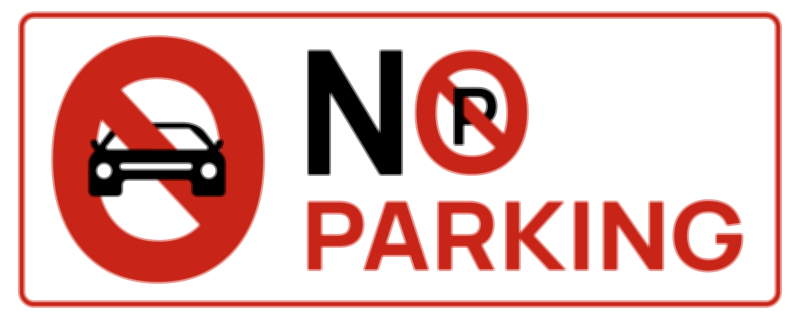
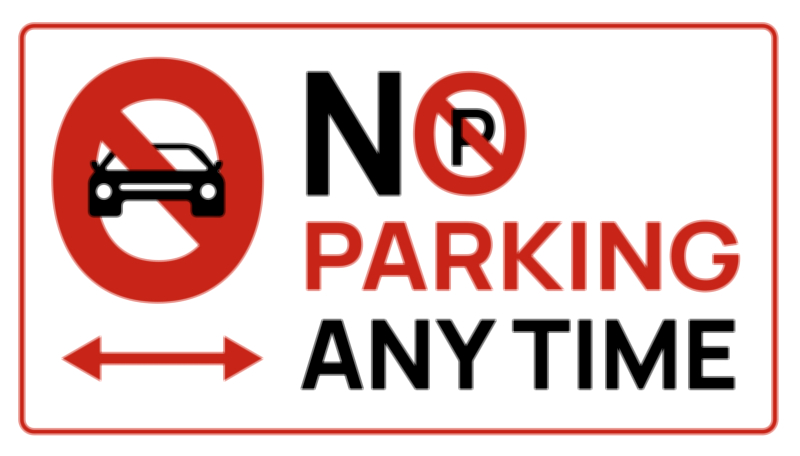
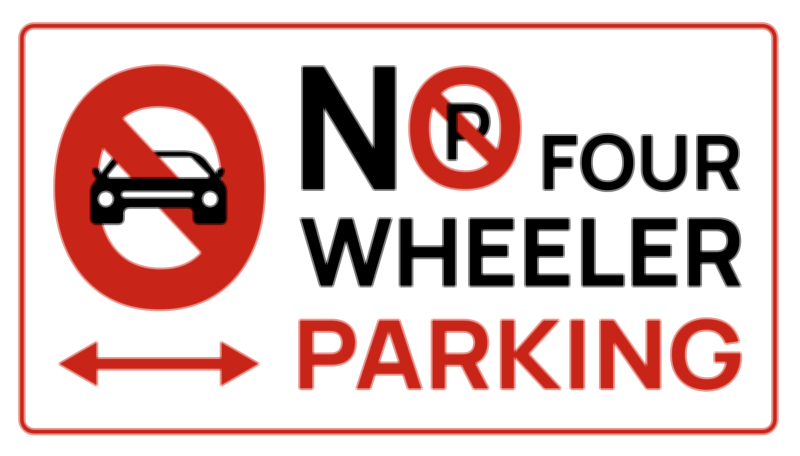
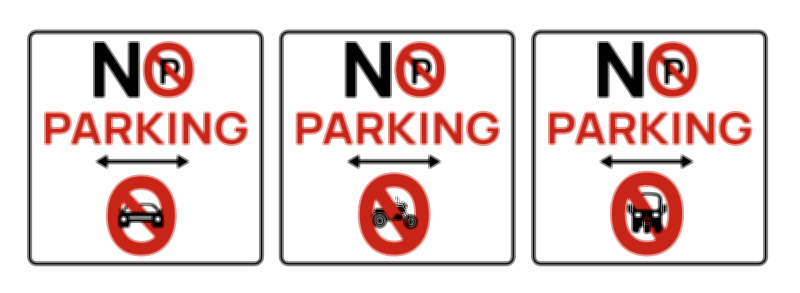
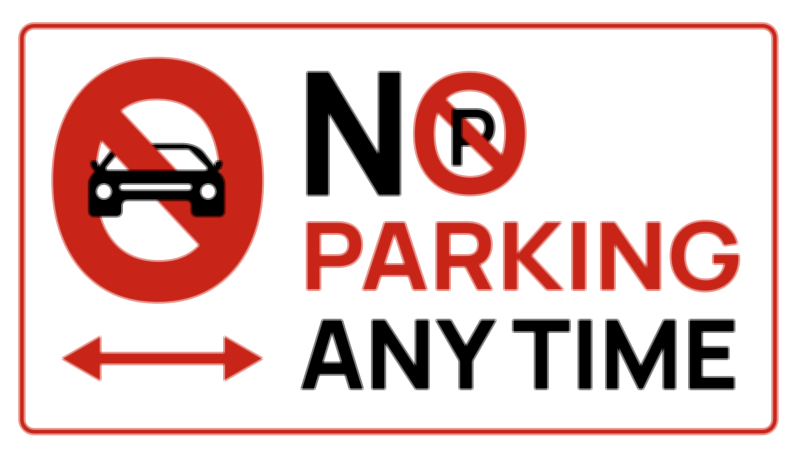
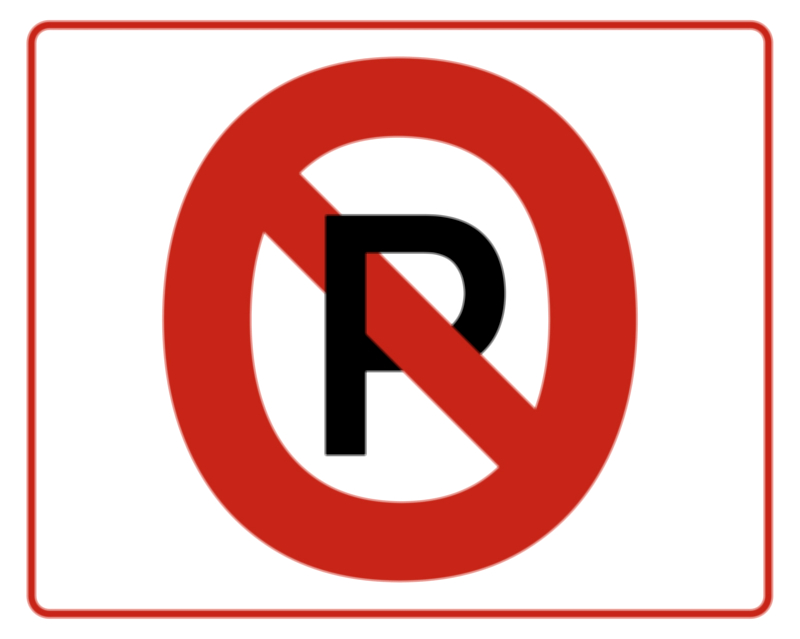
A No Parking for Four Wheeler sign is a traffic regulation symbol designed to prevent cars and other four-wheeled motor vehicles from being left stationary in specific areas where their presence would interfere with road safety, building access, emergency movement, or the general functioning of shared public space. In a vector illustration, the sign often appears as a bold red circle or square border containing an image of a car crossed by a diagonal prohibition line, or the letter “P” combined with a four-wheeler silhouette and a red slash to specifically convey that the restriction applies to cars but not necessarily to two-wheelers or pedestrians. Unlike a general No Parking symbol, this one adds a vehicle-type identifier so that drivers instantly understand that the prohibition targets automobiles, jeeps, vans, SUVs, and other four-wheelers without restricting motorcycles, bicycles, or delivery carts if such access is permitted. This distinction is especially important in regions with mixed traffic patterns where motorbikes and small delivery vehicles outnumber cars, and where blanket restrictions could disrupt essential access. The clarity of vector artwork — clean icons, standardized line thicknesses, high contrast between red prohibitive marks and the vehicle graphic — ensures that the message is instantly recognized in physical signage and digital navigation systems alike. The strength of this visual communication lies in the simplicity of its geometry and its ability to guide behavior without requiring words, ensuring that the meaning stays consistent across language, literacy conditions, and diverse road cultures.
The placement of a No Parking for Four Wheeler sign reflects precise engineering decisions rather than arbitrary restrictions. Urban roads, commercial spaces, residential complexes, transit stations, markets, schools, hospitals, and emergency access lanes all experience distinct flows of people and vehicles, and cars have a disproportionately greater footprint than two-wheelers due to their width, turning radius, and parking space requirements. A four-wheeler parked in a narrow lane can compress traffic so severely that buses cannot pass, delivery vehicles seize up the road behind them, and pedestrians spill into unsafe driving zones to navigate around the obstruction. Even a single parked car can reduce a usable two-way street into a dangerous one-way bottleneck. In areas with high pedestrian density, such as school entrances and neighborhood sidewalks, the presence of a parked four-wheeler blocks sightlines and exposes children, elderly people, and individuals with disabilities to collision risk as drivers approaching the location cannot see them clearly until too late. Where motorcycles or cycles could park briefly without obstructing safe movement, a car cannot; therefore the sign prevents the hazard at its source. The symbol functions as a guardian of predictable road behavior, securing space where four-wheelers would create unacceptable levels of risk or congestion.
Emergency access is also central to the purpose of the No Parking for Four Wheeler sign. In front of hospitals, clinics, fire stations, public service buildings, and rescue entrances, a car parked at the curbside can block the essential landing space needed for ambulances, stretchers, and firefighting equipment. During a life-threatening emergency, seconds matter, and a single parked four-wheeler can delay responders long enough to affect survival outcomes. Even in apartment complexes and gated communities, a prohibited-parking zone preserved by this sign ensures that firefighters can expand hoses or paramedics can transfer patients without navigating physical barriers. In locations where the sign appears repeatedly along a curb or entry gate, it marks an invisible corridor reserved for emergency and operational access that must remain clear at all times. The sign becomes an extension of building safety regulations, ensuring that evacuation routes and service points remain reachable regardless of rush hours, public gatherings, or unexpected crowding. Through its simple appearance, the sign protects the mechanisms of emergency rescue that citizens depend on without knowing how closely they are linked to something as basic as parking discipline.
Commercial and logistical efficiency also depend heavily on the presence of such signage. In marketplaces and shopping streets, a four-wheeler parked improperly can block unloading bays, disrupt supply chains, delay vendors, and push delivery trucks into moving traffic. In corporate districts and industrial hubs, unauthorized car parking outside loading docks or service entrances forces maintenance personnel and couriers to carry equipment long distances, reducing productivity and increasing injury risk. Hotels, educational institutions, wedding halls, and event arenas often require uninterrupted drop-off and pick-up zones, and if cars occupy these areas as parking spaces, movement of people becomes chaotic, crowds linger in the roadway, and safety rapidly deteriorates. The No Parking for Four Wheeler sign therefore stabilizes commercial activity by protecting entranceways, logistics zones, and flow-through spaces from being misused as parking areas. It supports the efficiency of daily operations even though the symbol itself never announces that ambition; it merely keeps the curb clear so that the supply chain remains functional.
Accessibility considerations further reinforce the importance of this sign. Many modern buildings include wheelchair ramps, tactile walkways, widened door pathways, stroller-friendly slopes, and mobility-assistance passages positioned directly at entrances. A four-wheeler parked in such a location does not simply break a rule — it steals access from those who need it most. Wheelchair users may be forced to seek alternative entry points that are unsafe or impossible to reach. Parents guiding strollers may struggle to navigate around a large parked car, increasing their exposure to traffic. Visually impaired individuals who rely on tactile ground surface indicators may find such pathways blocked completely. The No Parking for Four Wheeler sign therefore helps protect inclusivity and dignity by preserving accessible infrastructure that must remain barrier-free in both everyday life and emergencies. It ensures that the needs of vulnerable road users are protected instead of being overshadowed by the convenience of motorists.
Beyond safety and accessibility, this sign also facilitates predictable traffic behavior. In congested zones where both two-wheelers and four-wheelers operate, a blanket prohibition on parking may be unnecessarily restrictive, while allowing cars but banning bikes may create inconsistent expectations. By specifying vehicle type visually, the No Parking for Four Wheeler sign reduces confusion and prevents disputes among drivers competing for curbside space. It eliminates the need for drivers to guess whether a parking ban applies to them and helps law enforcement regulate behavior consistently and fairly. The consistency of the sign across physical and digital environments — roadside posts, painted curbs, parking garage entrances, building layouts, and mobile navigation apps — strengthens public awareness and reduces violations born of misunderstanding rather than disregard.
Digital mobility and smart-city tools further increase the relevance of such vector signage. Navigation platforms now display parking restrictions to drivers in real time, and autonomous vehicles rely on detailed symbol libraries to determine legal stopping zones. High-resolution vector illustrations of the No Parking for Four Wheeler sign appear on screens to alert drivers before they reach the restricted zone, helping prevent accidental violations and improving circulation flow. Camera-assisted enforcement systems also monitor such locations, and digital mapping databases incorporate these zones into routing logic for delivery services, taxi fleets, and emergency vehicles.
The social dimension of this sign is perhaps the least visible yet most significant. Respecting the sign expresses responsibility toward others: toward pedestrians who need visibility and space to walk safely, toward emergency responders who require rapid access, toward business operators who depend on reliable logistics, and toward neighbors and communities who share public space that must remain fair and orderly. Violating the sign transfers personal convenience onto others in the form of inconvenience, risk, delay, or danger. Following the sign demonstrates civic maturity — the understanding that roads are shared environments where compliance ensures the safety, mobility, and dignity of everyone.
Thus, even though a No Parking for Four Wheeler sign appears simple in vector form, it encodes a complex network of intentions that protect the functioning of society. The clean curves of the prohibition circle, the diagonal slash, and the unmistakable silhouette of a car collectively form a compact system of communication that reduces collisions, improves flow, preserves emergency access, protects vulnerable pedestrians, sustains commercial activity, safeguards accessibility, and reinforces shared responsibility. The sign’s power lies in its ability to guide behavior instantly and universally without words, ensuring that roads remain not only efficient but humane.